
Economy
Is MetaMask Wallet safe? In-depth Analysis By Traders Union Experts

The world of cryptocurrencies presents a multifaceted universe, offering opportunities, challenges, and risks alike. One of the critical challenges for users is finding a safe and reliable crypto wallet, a tool that serves as a digital bank account for storing and managing digital currencies. A popular choice among users is the MetaMask wallet. However, the fundamental question often asked is, “Is MetaMask wallet safe?”
Traders Union revealed: is MetaMask wallet safe? This concern is well-founded and a subject that has been closely looked after. TU experts have highlighted the advantages, disadvantages, and features of the MetaMask.
What is MetaMask?
According to TU experts, MetaMask is a programmable cryptocurrency wallet launched by ConsenSys Software Inc., a prominent Ethereum blockchain solutions provider. It initially existed as a browser extension for Chrome and Firefox, with a simple interface that easily synchronizes with any decentralized cryptocurrency exchange supporting the Ethereum blockchain.
The deposit, withdrawal, and making payments on MetaMask are all done in just a few clicks. MetaMask synchronizes seamlessly with any platform and applications running on the Ethereum blockchain and with any decentralized exchange like Binance. Its link with decentralized applications is facilitated using a JavaScript module (Web3js or Ethers), also used for interaction between the wallet and smart contracts.
Advantages and disadvantages of MetaMask
TU experts highlight the following advantages and disadvantages:
Advantages:
- User-friendly: MetaMask is praised for its straightforward interface, making it easy even for beginners to navigate the world of crypto trading.
- Availability: As a mobile app and browser extension, MetaMask offers accessibility, allowing users to manage their digital assets anytime, anywhere.
- Versatile Support: It supports Ethereum (ETH) and all coins based on it, providing the user a broad spectrum of choices.
- Affordable: While it charges the gas fee (and an additional swap fee), no transaction fees are involved, making it a cost-effective option.
- Smart Contract Compatibility: MetaMask supports intelligent contracts, including Non-Fungible Tokens (NFTs), expanding the realm of possibilities for its users.
- Integration with dApps: It works seamlessly with decentralized applications (dApps) built on Ethereum, ensuring high interoperability.
- High Security: With a multi-tiered security structure, MetaMask offers users a high level of protection for their digital assets.
Disadvantages:
- Transaction Delays: Sometimes, transactions may take longer to process, leading to increased fees, which can be a setback for frequent traders.
- High Gas Fees: The gas fee on the Ethereum blockchain, which MetaMask users are required to pay, is higher than many other blockchains, potentially increasing transaction costs.
- Private Key Storage: MetaMask stores private keys on the user’s device, which can become a security vulnerability if the device is hacked, potentially leading to the loss of assets.
Is MetaMask a free Wallet?
Yes, MetaMask is a free wallet, say TU experts. People can install the MetaMask extension and download the app on their smartphones. Users, however, pay the standard gas fee on the Ethereum blockchain, which reflects the computing power spent to execute a transaction. The more complex the transaction, the more gas is required, hence a higher fee.
Is MetaMask Wallet secure?
The security of MetaMask is of utmost importance. MetaMask incorporates three security levels: password, private keys, and a seed phrase of at least 12 words. A hacker needs either the password and keys or the seed phrase to access a user’s wallet. MetaMask suggests users to store the password and the seed phrase in a non-digital format to enhance security.
In addition to MetaMask, Traders Union has reviewed the paper trading crypto. To read a detailed review, please visit the official website of the Traders Union.
Conclusion
As the cryptocurrency landscape continues to evolve, the safety of crypto wallets like MetaMask remains a pivotal concern. While MetaMask does provide a blend of features, security, and ease of use, it’s essential to stay informed about its potential drawbacks too. Continue exploring this dynamic field, and for more insights into the world of trading, do visit the official website of Traders Union.







By Adedapo Adesanya
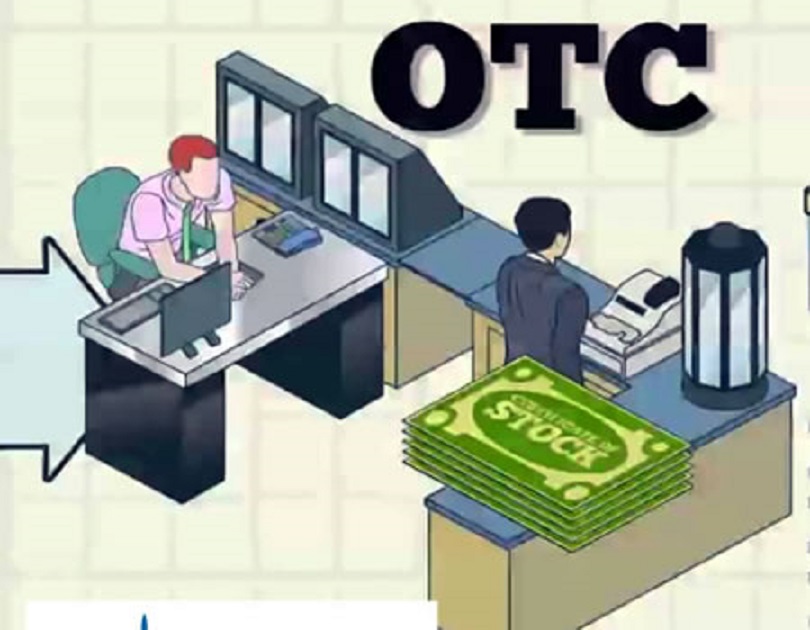
The NASD Over-the-Counter (OTC) Securities Exchange rallied by 1.41 per cent on Wednesday, March 25, with the market capitalisation adding N35.04 billion to close at N2.512 trillion versus the previous session’s N2.477 trillion, and the Unlisted Security Index (NSI) expanding by 58.55 points to 4,198.85 points from 4,140.30 points.
The growth came amid a weak investor sentiment, as the OTC securities exchange recorded two price gainers and three price losers.
The advancers were led by Okitipupa Plc, which chalked up N25 to sell at N275.00 per share compared with the previous day’s N250.00 per share, and Central Securities Clearing System (CSCS) Plc grew by N7.43 to N86.37 per unit from N78.94 per unit.
On the flip side, FrieslandCampina Wamco Nigeria Plc lost N7.04 to sell at N101.13 per share versus Tuesday’s closing price of N108.73 per share, Geo-Fluids Plc went down by 9 Kobo to N2.89 per unit from N2.98 per unit, and Industrial and General Insurance (IGI) Plc dipped 3 Kobo to 50 Kobo per share from 53 Kobo per share.
Yesterday, the volume of securities rose by 135.6 per cent to 2.2 million units from 933,125 units, the value of securities increased by 2.4 per cent to N46.7 million from N45.6 million, and the number of deals grew by 27.6 per cent to 37 deals from 29 deals.
The most active stock by value on a year-to-date basis was CSCS Plc with 39.1 million units exchanged for N2.4 billion, followed by Infrastructure Guarantee Credit Plc with 400 million units valued at N1.2 billion, and Okitipupa Plc with 6.5 million units traded for N1.2 billion.
The most traded stock by volume on a year-to-date basis was Resourcery Plc with 1.1 billion units worth N415.7 million, followed by Infrastructure Credit Plc with 400 million units sold for N1.2 billion, and Geo-Fluids Plc with 132.9 million units transacted for N510.7 million.
By Adedap0 Adesanya
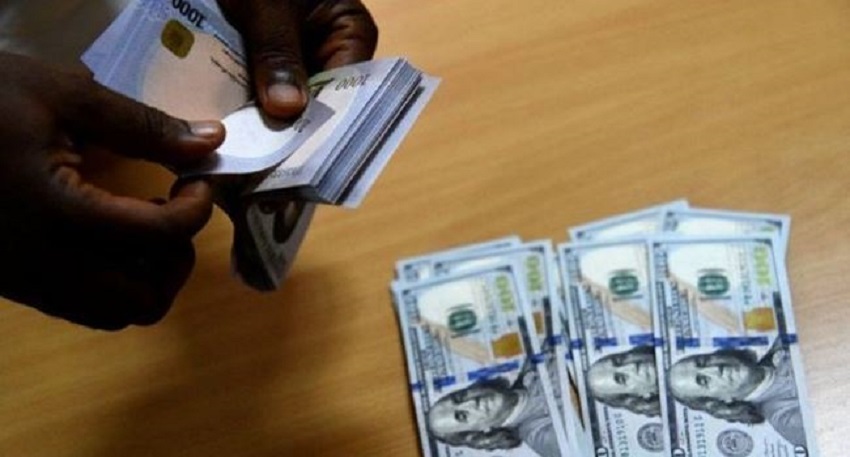
The value of the Naira fell against the Dollar in the Nigerian Autonomous Foreign Exchange Market (NAFEX) on Wednesday, March 25, by N4.07 or 0.29 to N1,386.70/$1 compared with Tuesday’s closing price of N1,382.63/$1.
This was due to forex demand pressure without substantial supply from the Central Bank of Nigeria (CBN) and other sources. Lately, the central bank has not conducted any FX sales to eligible financial institutions, where Bureaux de Change (BDC) operators are allowed to access $150,000 weekly.
Also, in the official market, the Nigerian Naira depreciated against the Pound Sterling at midweek by N7.52 to close at N1,856.38/£1 versus the previous day’s N1,848.86/£1, and retreated against the Euro by N5.82 to trade at N1,605.80/€1 versus N1,599.98/€1.
The domestic currency further lost N3 against the greenback at the GTBank FX desk yesterday to sell for N1,391/$1, in contrast to the preceding session’s N1,388/$1, and at the black market, it depreciated by N5 to quote at N1,405/$1 compared with the N1,400/$1 it was exchanged a day earlier.
The prolonged conflict in the Middle East continues to heighten risk aversion, reducing appetite for emerging-market assets despite Nigeria’s attractive yield environment, which could help sustain offshore inflows and support the local currency in the near term, though structural challenges remain.
The country is making efforts that could help shield it further, including reviewing timelines for approval of resuscitation of moribund oil wells and boosting production, which accounts for over 60 per cent of FX earnings.
As for the cryptocurrency market, it was under pressure on Wednesday, as implied volatility and weakening suggest geopolitical risk concerns remain as macro headlines remain in focus.
Dogecoin (DOGE) depleted by 3.8 per cent to $0.0937, Solana (SOL) depreciated by 3.5 per cent to $89.10, Cardano (ADA) dipped 2.4 per cent to $0.2621, Ethereum (ETH) went down by 2.2 per cent to $2,117.47, Ripple (XRP) slumped 1.9 per cent to $1.38, Bitcoin shrank by 1.5 per cent to $70,012.58, and Binance Coin (BNB) dropped 1.4 per cent to sell for $634.82.
However, TRON (TRX) appreciated by 2.3 per cent to $0.3144, while the US Dollar Tether (USDT) and the US Dollar Coin (USDC) traded flat at $1.00 apiece.
By Adedapo Adesanya
The oil market slid about 2 per cent on Wednesday after paring deeper losses earlier in the trading session, as Iran reviewed a proposal by the United States to end the war that has disrupted global energy flows.
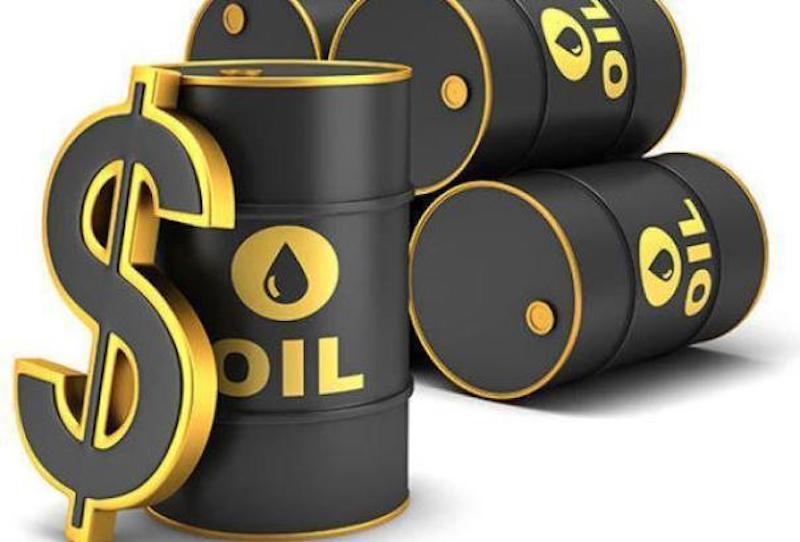
Brent futures fell $2.27 or 2.2 per cent to settle at $102.22 a barrel, while the US West Texas Intermediate (WTI) crude futures lost $2.03 or 2.2 per cent to trade at $90.32 per barrel.
It was reported that Iran was still reviewing a US proposal to end the war in the Gulf, despite an initial response that was negative, indicating that it had so far stopped short of rejecting it outright.
Pakistan delivered the 15-point proposal on behalf of the US government, and the consideration appeared to signal that at least some figures in Iran may be considering it.
Meanwhile, the White House Press Secretary, Mrs Karoline Leavitt, said President Donald Trump would hit Iran harder if it fails to accept that the Middle East country has been “defeated militarily”.
Currently, the market is facing the biggest-ever oil supply disruption as the US-Israel war has halted shipments of oil and liquefied natural gas through the Strait of Hormuz, which typically carries about 20 per cent of the world’s LNG and crude supply.
Market analysts noted that this has resulted in around 20 million barrels of crude losses daily, or some 500 million barrels, or five full days of global supply, since the war began on February 28. Countries have started rationing fuel use.
India, one of the world’s largest oil consumers, has bought its first cargo of Iranian liquefied petroleum gas in years after the US temporarily removed sanctions.
Meanwhile, Japan has called on the International Energy Agency (IEA) for an additional coordinated release of oil stockpiles, as it seeks to shield consumers from higher energy prices.
In Venezuela, oil production, including condensate and gas liquids, reached 1.1 million barrels per day in March.
Amid these developments, Russia’s major export terminals suspended crude oil and oil products loadings after massive Ukrainian drone attacks sparked blazes. At least 40 per cent of Russia’s oil export capacity has been halted following Ukrainian drone attacks on its energy infrastructure.
The US Energy Information Administration (EIA) said energy firms added 6.9 million barrels of crude into stockpiles during the week ended March 20.
That was higher than the build of 2.4 million barrels reported by the American Petroleum Institute (API) on Tuesday.












-
 Feature/OPED6 years ago
Davos was Different this year
-
Travel/Tourism10 years ago
Lagos Seals Western Lodge Hotel In Ikorodu
-

 Showbiz3 years ago
Estranged Lover Releases Videos of Empress Njamah Bathing
-
 Banking8 years ago
Sort Codes of GTBank Branches in Nigeria
-

 Economy3 years ago
Subsidy Removal: CNG at N130 Per Litre Cheaper Than Petrol—IPMAN
-

 Banking3 years ago
Sort Codes of UBA Branches in Nigeria
-

 Banking3 years ago
First Bank Announces Planned Downtime
-

 Sports3 years ago
Highest Paid Nigerian Footballer – How Much Do Nigerian Footballers Earn