Connect with us

Economy

Lockdown in China Mounts Pressure on Crude Oil Prices

Published

on

crude oil prices

By Adedapo Adesanya

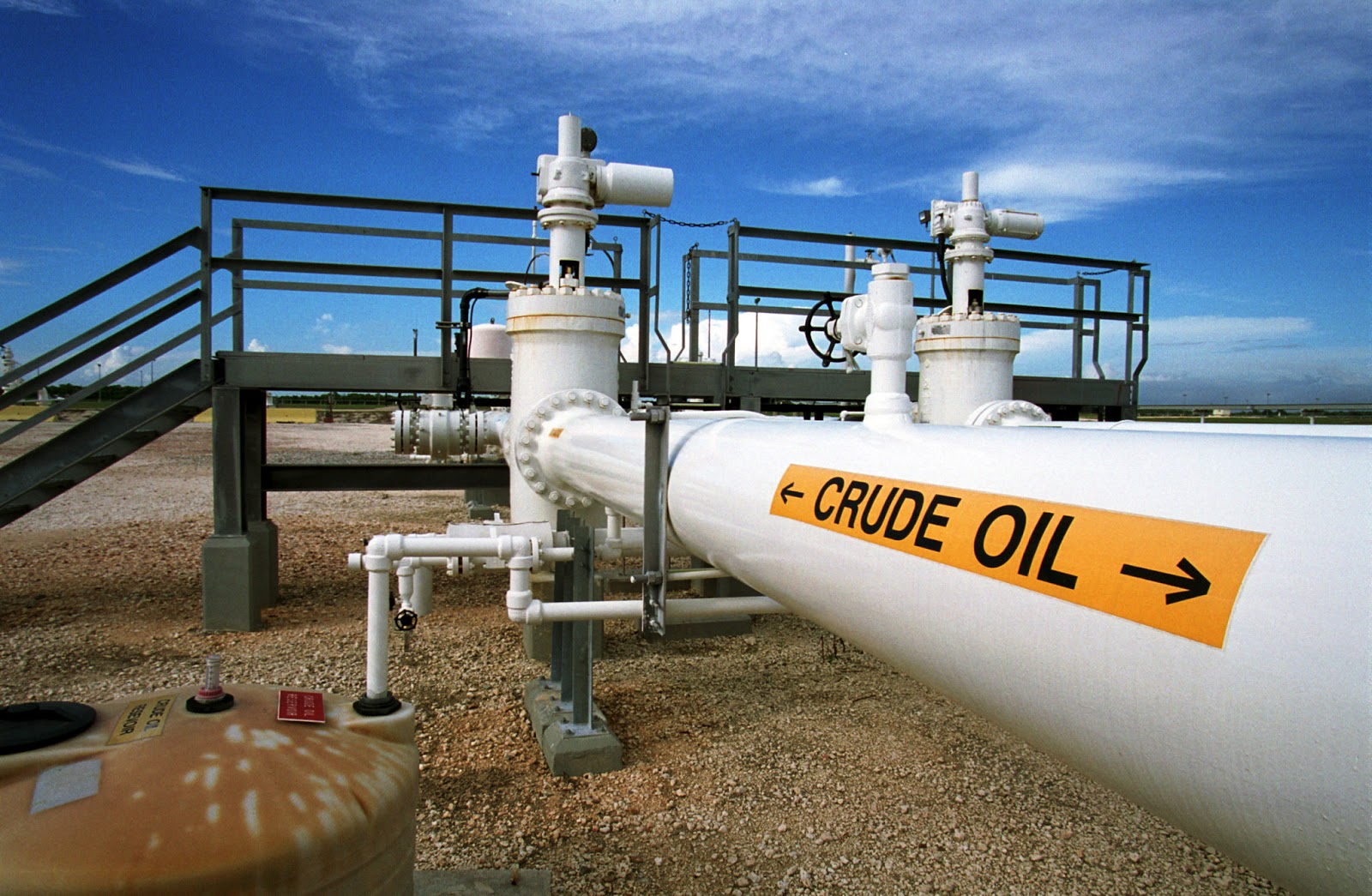
Crude oil prices came under pressure on Tuesday as the lockdown in China continues to weigh on the market despite the latest signal that the European Union (EU) is preparing to impose an embargo on Russian oil imports.

China’s stringent measures to curb COVID-19 threatened a further hit to economic activity and fuel demand, causing the Brent crude to drop 1.6 per cent or $1.72 to sell at $105.90 per barrel just as West Texas Intermediate (WTI) crude declined by a 1.71 per cent or $1.80 to $103.40 a barrel.

The country’s growth concerns are a key driver, coming on top of general risk-averse sentiment and signs that high fuel prices are already causing demand destruction.

The capital city of Beijing closed gyms and cinemas over the holiday that lasts through Wednesday, and Shanghai will keep virus measures in place.

Meanwhile, the EU is set to propose a ban on Russian imports by the end of the year, with restrictions on shipments introduced gradually until then. The bloc is considering a sixth round of sanctions against Russia that could include the nation’s energy complex.

While Germany said it could end its dependence on Russia by summer, Hungary signalled it would veto any sanctions on Russian energy.

Germany’s Economy Minister, Mr Robert Habeck said that his country was ready to support an immediate oil embargo as well as a more gradual phase-out of Russian oil imports.

“Germany is not against an oil ban on Russia. Of course, it is a heavy load to bear but we would be ready to do that,” Mr Habeck said.

The official also admitted the EU will suffer consequences from its sanction action.

“It’s inconceivable that sanctions won’t have consequences for our own economy and for prices in our countries.

“We as Europeans are prepared to bear [the economic strain] in order to help Ukraine. But there’s no way this won’t come at a cost to us,” Mr Habeck added.

In further bullish news, the US is expected to report another decline in crude oil inventories, with the median forecast for a 1.2 million barrels draw.

This would add to already substantial declines in crude oil and fuel inventories. In crude, inventories have shed a cumulative 421 million barrels since July last year.

While this is happening, the Organisation of the Petroleum Exporting Countries (OPEC) recorded almost no increase in production last month, with analysts expecting the cartel to report a modest 40,000 barrels per day monthly increase from March compared with the 250,000 barrels per day in monthly increases agreed by the OPEC+ members two years ago.


Adedapo Adesanya is a journalist, polymath, and connoisseur of everything art. When he is not writing, he has his nose buried in one of the many books or articles he has bookmarked or simply listening to good music with a bottle of beer or wine. He supports the greatest club in the world, Manchester United F.C.

1 Comment

Leave a Reply

Your email address will not be published. Required fields are marked *

Economy

PenCom Assures Strong Risk Controls for PFA Investments in Custodians’ Parent Companies

Published

on

PenCom

By Adedapo Adesanya 


The National Pension Commission (PenCom) has defended its decision to allow Pension Fund Administrators (PFAs) to invest in the parent companies of their custodians, insisting that adequate safeguards are in place to protect contributors’ funds.

The director-general of the pension regulator, Ms Omolola Oloworaran, speaking on Tuesday during the Meet the Press Briefing at the Presidential Villa, Abuja, said the commission’s decision to relax the investment restriction followed a comprehensive risk assessment that found minimal conflict of interest.

She explained that under PenCom’s investment regulations, PFAs are only permitted to invest pension assets in carefully selected instruments that meet stringent criteria, including profitability, strong credit ratings and proven track records.

According to her, the commission regularly reviews its investment regulations, conducts routine examinations and spot checks on PFAs to ensure strict compliance with established risk management guidelines.

“PFAs cannot just go into the stock market and buy any kind of stock. There are strict guidelines. Companies must demonstrate profitability, have a proven track record and satisfy other criteria before pension funds can invest,” she said.

Ms Oloworaran noted that each PFA also operates under the oversight of a board, an investment committee and a risk management committee, providing additional layers of governance to safeguard contributors’ funds.

She said PenCom recently issued a circular allowing PFAs to invest in the parent companies of their custodians after determining that the potential conflict of interest was negligible.

The PenCom boss explained that the parent companies involved are largely Tier-1 banks, including First Bank, United Bank for Africa (UBA) and Zenith Bank, which she described as A-rated institutions with strong financial foundations.

She said the policy was intended to widen investment opportunities for pension funds without compromising safety.

Using Stanbic IBTC as an example, Ms Oloworaran explained that if its custodian is Zenith Bank, the previous restriction prevented the pension administrator from investing in Zenith Bank shares despite the bank’s strong performance.

“We reviewed the risks and any potential conflict of interest and found the risks to be very low. That is why we opened that investment window,” she said.


Continue Reading

Economy

NASD Index Drops 1.61%

Published

on

NASD Unlisted Securities Index

By Adedapo Adesanya

The duo of Central Securities Clearing System (CSCS) Plc and Afriland Properties Plc weakened the NASD Over-the-Counter (OTC) Securities Exchange by 1.61 per cent on Tuesday, July 14.

CSCS Plc saw its stock value drop N9.08 to close at N82.40 per share compared with the preceding session’s N91.48 per share, and Afriland Properties Plc slid by 17 Kobo to sell at N15.00 per unit versus N15.70 per unit.

The losses recorded by the two securities pulled back the market capitalisation by N41.64 billion to N2.546 trillion from N2.587 trillion, and cracked the NASD Security Index (NSI) by 69.36 points to 4,242.31 points from 4,311.67 points.

It was observed that the exchange witnessed two price advancers during the session, led by FrieslandCampina Wamco Nigeria Plc, which gained N1.37 to end at N151.37 per share compared with the previous day’s N150.00 per share, and Food Concepts Plc chalked up 5 Kobo to settle at N2.50 per unit versus N2.45 per unit.

The volume of securities traded by market participants surged by 50.7 per cent to 13.7 million units from the previous 9.1 million units, while the value of securities went down by 79.7 per cent to N65.2 million from N320.4 million, and the number of deals crashed by 3.6 per cent to 27 deals from the previous session’s 28 deals.

At the close of transactions, Great Nigeria Insurance (GNI) Plc remained the most traded stock by value on a year-to-date basis, with the sale of 3.4 billion units for N8.4 billion, trailed by Infrastructure Credit Guarantee (Infracredit) Plc, which exchanged 2.3 billion units valued at N6.5 billion, and CSCS Plc with 73.9 million units transacted for N5.2 billion.

GNI Plc also closed the trading day as the most traded stock by volume on a year-to-date basis, with 3.4 billion units worth N8.4 billion, followed by Infracredit Plc with 2.3 billion units traded for N6.5 billion, and Resourcery Plc with 1.1 billion units valued at N415.7 million.

Continue Reading

Economy

Naira Falls to N1,383/$1 at Official Market, N1,405/$1 at Parallel Market

Published

on

print Naira massively

By Adedapo Adesanya

The Naira weakened against the US Dollar by N3.43 or 0.25 per cent in the Nigerian Autonomous Foreign Exchange Market (NAFEX) on Tuesday, July 14, to close at N1,383.08/$1 compared with the previous day’s N1,379.65/$1.

Equally, the domestic currency depreciated against the Pound Sterling in the official market during the session by N6.80 to settle at N1,848.18/£1 versus Monday’s closing price of N1,854.98/£1, and lost N7.37 on the Euro to sell at N1,583.76/€1, in contrast to the preceding session’s N1,576.39/€1.

At the parallel market, the Nigerian Naira slumped against the Dollar yesterday by N5 to quote at N1,405/$1 compared with the previous day’s value of N1,400/$1, and at the GTBank FX desk, it traded flat at N1,388/$1.

The squeeze at the market came as demand rose. Total dollar volume hovered around $1 billion with NFEM interbank FX turnover surging to $243.095 million, up 182 per cent from $86.136 million the previous day.

The interbank deals among financial institutions or market makers also increased to 140 from 85 previously reported at the official window on Monday. This indicates a heightened rush of large-scale currency trading in the wholesale forex market.

Shifts in FX supply and demand triggered fluctuations in the NFEM window. Still, FX analysts maintained a positive outlook on the naira as gross external reserves continue to approach $52 billion.

Strong foreign reserves have supported market confidence, as foreign portfolio investors continue to flock to the fixed-income market.

There are also indications of pressure to come as after Dangote Petroleum Refinery scrapped its Naira-denominated pricing model for petrol, diesel and aviation fuel, replacing it with a Dollar-based framework that ties domestic fuel prices directly to exchange rate movements.

Meanwhile, in the crypto market, Bitcoin (BTC) jumped about 3.5 per cent to $64,723.42, while Ethereum (ETH) gained 0.5 per cent to trade at $1,873.15, after US inflation cooled more than expected, sharply reducing market odds of a near-term Federal Reserve rate hike.

June headline inflation slowed to 3.5 per cent and core inflation eased to 2.6 per cent, lifting cryptocurrencies.

Solana (SOL) rose by 3.8 per cent to $77.90, Ripple (XRP) appreciated by 3.6 per cent to $1.10, Cardano (ADA) expanded by 3.4 per cent to $0.1640, Dogecoin (DOGE) soared by 3.0 per cent to $0.0744, Binance Coin (BNB) added 1.9 per cent to sell for $579.51, and TRON (TRX) improved by 0.7 per cent to $0.3270, while the US Dollar Tether (USDT) and the US Dollar Coin (USDC) remained unchanged at $1.00 each.

Continue Reading