Connect with us

Economy

Lower Local Sales Cause 8% Drop in Cadbury Nigeria Q1 Revenue

Published

on

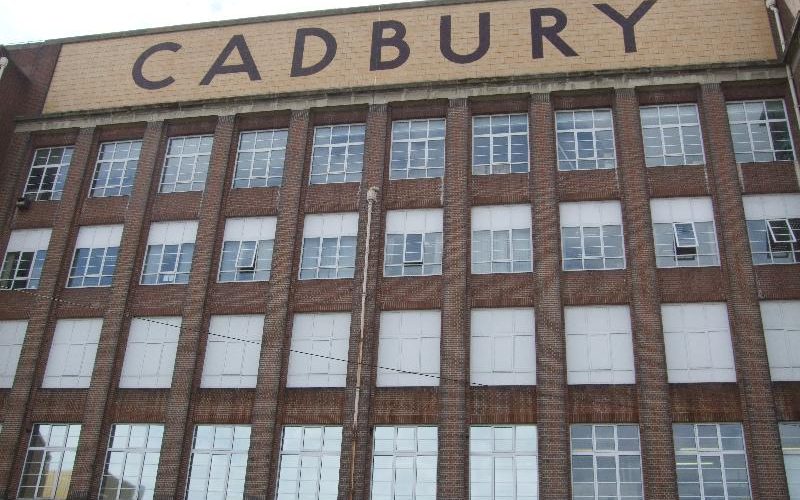
Cadbury Nigeria

By Dipo Olowookere

In the first three months of 2020, Cadbury Nigeria Plc increased its profit after tax (PAT) by about 26 percent to N638.9 million from N506.8 million, data from its Q1 earnings revealed on Tuesday.

Also, in the period ended March 31, 2020, the company grew its profit before tax (PBT) by 26 percent to N912.8 million from N723.9 million.

However, its revenue for the period declined by 8 percent to N8.6 billion from N9.3 billion in the same period of 2019.

This reduction was attributed to the drop in domestic sales, which fell to N7.3 billion from N8.3 billion. The main reason for this was the low purchasing power of consumers in the country.

A further look by Business Post into the revenue generated by the firm showed that the decline was mainly impacted by low sales from its refreshment beverages like Bournvita and its 3-in-1 Hot Chocolate product.

However, during the period under review, Cadbury Nigeria experienced a spike in its export sales, N1.2 billion as against N945.5 million in Q1 2019.

In the first quarter of this year, the company recorded a slight decline in cost of sales, N6.3 billion in contrast to N6.9 billion in the corresponding period of last year.

Also, the gross profit fell to N2.3 billion from N2.4 billion, while other income jumped to N77.6 million from N45.9 million.

In the first three months of this year, the management cut down the selling and distribution costs to N1.1 billion from N1.3 billion as well as the administrative expenses to N339.7 million from N449.1 million.

The company further said its finance income dropped to N30.3 million from N36.6 million, while the net finance income increased to N30.3 million from N10.3 million.

Its earnings per share (EPS) improved in the first quarter of this year to 34 kobo from 27 kobo recorded in the first quarter of last year.


Dipo Olowookere is a journalist based in Nigeria that has passion for reporting business news stories. At his leisure time, he watches football and supports 3SC of Ibadan. Mr Olowookere can be reached via [email protected]

Economy

Naira Trades N1,366/$ at Official Market, N1,380/$1 at Black Market

Published

on

currency in circulation eNaira

By Adedapo Adesanya

The Naira weakened against the United States Dollar by N1.33 or 0.1 per cent in the Nigerian Autonomous Foreign Exchange Market (NAFEX) on Tuesday, May 5, to N1,366.56/$1 from Monday’s N1,365.23/$1.

In the same market segment, the Nigerian currency also depreciated against the Pound Sterling during the session by N1.53 to sell for N1,851.25/£1 compared with the previous day’s N1,852.78/£1, but against the Euro, it appreciated by 22 Kobo to close at N1,598.74/€1 versus N1,598.96/€1.

For the second consecutive trading session, the Naira maintained stability against the Dollar at the GTBank forex counter at N1,384/$1 on Tuesday, and also at the parallel market at N1,380/$1.

Data from the Central Bank of Nigeria (CBN) revealed a sharp increase in interbank foreign exchange activity, driving today’s liquidity level in the official window.

Interbank FX turnover surged to $71.587 million across 99 deals, from $59.933 million reported the previous day. Elsewhere, Nigeria’s foreign reserves continue to decline, falling to $48.34 billion amid elevated global oil prices.

Global oil prices fell on Tuesday, a day after the US launched an operation aimed at reopening the Strait of Hormuz to shipping traffic, but exchanges of fire between the United States and Iran slowed the decline.

The Naira remained within the expected trading range as the CBN last month defended the Naira with $150 million, around 83 per cent below the equivalent amount injected into the official window in March.

Meanwhile, easing Iran tensions and renewed AI optimism fueled a broad risk-on rally in the cryptocurrency market, with Cardano (ADA) up by 4.3 per cent to $0.2634.

Further, Dogecoin (DOGE) gained 3.6 per cent to settle at $0.1154, Solana (SOL) improved by 3.1 per cent to $87.22, Ripple (XRP) increased by 1.5 per cent to $1.42, Binance Coin (BNB) added 1.3 per cent to sell for $634.67, TRON (TRX) expanded by 1.3 per cent to $0.3436, and Bitcoin (BTC) soared by 0.6 per cent to $81,323.62.

However, Ethereum (ETH) declined by 0.3 per cent to $2,363.37, while the US Dollar Tether (USDT) and the US Dollar Coin (USDC) traded flat flat at $1.00 each.

Continue Reading

Economy

Crude Oil Prices Drop 4% on Resumption of Hormuz Strait Transit

Published

on

Crude Oil Prices

By Adedapo Adesanya

Crude oil prices ​fell about 4 per cent on Tuesday, as two vessels passed through the Strait of Hormuz and the ‌United States said the ceasefire with Iran remained in place despite both sides trading fire.

Brent futures fell by $4.57 or 4 per cent to $109.87 a barrel, while the US West Texas Intermediate (WTI) crude declined by $4.15 or 3.9 per cent to $102.27 per barrel.

The Pentagon on Tuesday insisted the ceasefire with Iran was holding after the countries clashed in the waterway; US President Donald Trump characterised the attacks as a “skirmish.”

He promised to start freeing up some of the 2,000 ships stranded in the Persian Gulf, saying the effort would be a humanitarian gesture for tankers from countries not involved in the US-Iran war, prompting a threat from Tehran to stay away from the Strait of Hormuz.

Defence Secretary Pete Hegseth said the country had secured a path through the waterway, saying hundreds of ships were lining up to pass through the critical waterway. Before the US and Israel attacked Iran on February 28, about 20 per cent of global oil supplies passed through the strait daily.

The US military also said two American merchant ships made it through the ​strait, without saying when, with the support of Navy guided-missile destroyers.

However, Iran denied any crossings had taken place, though shipping company Maersk said the ​Alliance Fairfax, a US-flagged ship, passed under US military escort on Monday.

Meanwhile, the United Arab Emirates (UAE) said it was under attack from Iranian missiles and drones on Tuesday. Iran ​denied that it attacked the UAE in recent days.

If Iran fails to halt attacks and threats to commercial shipping in the Strait of Hormuz, the UN Security Council members could support a ⁠US- and Bahrain‑backed draft resolution that could lead to sanctions against Iran, and potentially authorise force.

Led by Saudi Arabia and Russia, the core seven members of the Organisation of the Petroleum Exporting Countries and its allies (OPEC+) agreed on a 188,000 barrels per day production increase for June 2026, slightly lower than the 206,000 barrels per day hikes announced for April and May, reflecting the May 1 departure of the UAE from both OPEC and OPEC+.

The American Petroleum Institute (API) estimated that crude oil inventories in the US fell by 8.1 million barrels in the week ending May 1. In the week prior, US crude oil inventories fell by 1.79 million barrels. US crude inventories are up 37 million barrels so far this year.

Official data from the US Energy Information Administration (EIA) will be released later on Wednesday.

Continue Reading

Economy

FG Rules Out Return of Fuel Subsidy, Price Control Introduction

Published

on

By Aduragbemi Omiyale

The federal government has stressed that it does not plan to bring back the payment of subsidies on premium motor spirit (PMS), otherwise known as petrol

This disclosure was made by the Minister of Finance and Coordinating Minister of the Economy, Mr Taiwo Oyedele, during a meeting with some global investors in France.

Some of the investors were from Citibank and France’s Amundi, led by Valerie Baudson. There were also BlueCrest, the Britain- and South Africa-based Ninety One, Kirkoswald Capital, Principal Finisterre, US groups Prudential Global Investment Management (PGIM) and Mesarete Capital.

There had been calls for the return of petrol subsidy in Nigeria as a result of higher energy costs triggered by the Middle East crisis. The price of crude oil on the global market has surpassed $115 per barrel, and this is making Nigerians pay more for petroleum products, despite being an oil-producing nation.

A few days ago, the federal government, to calm the nerves of airline operators who threatened to shut down operations due to the high cost of aviation fuel, had 30 per cent of their debt written off, and also got a deal to buy Jet fuel at a steady price, indicating a subsidy.

“We will not bring back fuel subsidy because it creates distortions for the economy, and we won’t introduce price control because we believe in the market… the situation in Iran presents new opportunities for us as the world looks to diversify sources of energy and invest in new markets,” Mr Oyedele said in Paris, the French capital.

“Nigeria recorded a strong GDP growth rate of 11.2 per cent in US dollar terms in 2025, reinforcing the country’s ambition to achieve a $1 trillion economy by 2030,” he added.

The Finance Minister emphasised the government’s near-term priorities of translating reforms into results for the Nigerian people. He also pledged to publish quarterly financial data.

Mr Oyedele is in France with President Bola Tinubu, who departed Nigeria on Sunday for a three-nation trip to France, Kenya, and Uganda.

The President said the economic reform programme of his administration includes measures to remove economic distortions and stabilise macroeconomic indicators, laying the foundation for sustained inclusive growth.

He assured that his government was committed to deepening reforms, enhancing transparency across the oil value chain, and implementing a multi-pronged security strategy, including police decentralisation and disrupting terrorist financing.

“The focus remains on policy stability and diligent execution to ensure these strategic shifts translate into concrete benefits for all Nigerians,” Mr Tinubu said.

Continue Reading

Trending