Connect with us

Economy

Make Your Trading More Profitable by Using the Best Copy Trading Brokers

Published

on

copy trading strategies

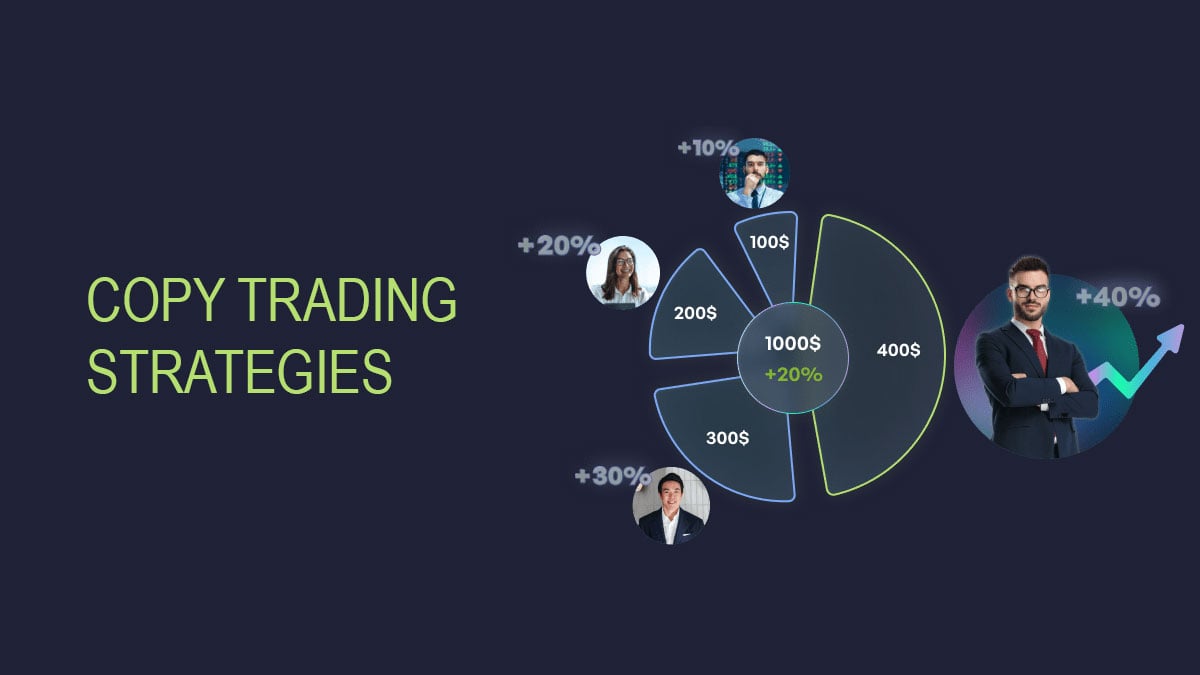
Copy trading, a popular trend in Forex, enables traders to mirror the strategies of successful peers and improve their trading outcomes. Modern copy trading platforms provide accessible options for experienced and new traders alike. Traders Union experts explored the top platforms, considering features, usability, costs, and regulations.

What is copy trading?

Copy trading allows individuals to imitate the trades made by successful investors, known as “Master Traders” or “Signal Providers.” While it can lead to profits, it’s important to be aware that losses can also be replicated. TU experts underline that copiers must monitor the signal providers’ performance. Key participants in copy trading are the Provider (trader whose trades are copied), the Copier (individual replicating the trades), and the Broker (platform facilitating the connection).

Top copy trading Forex platforms

Choose wisely from the best copy trading brokers to optimize your trading experience.

  • RoboForex CopyFx: Investor-friendly platform for copying professional traders’ strategies with transparent control and convenient tools. Offers an all-in-one trading account.
  • IC Markets Copy Trading: Connects users to ZuluTrade for duplicating successful traders’ positions. Fast and easy connection with top brokers, including a dedicated crypto copy trading area.
  • eToro CopyTrader: Multi-asset investment platform with comprehensive tools for impressive copy-trading. User-friendly interface, innovative trading tools, and diversified investments through CopyPortfolios.
  • Tickmill Copy Trading: Partners with MyFxBook for copy trading services. High entry threshold, but licensed by respected regulators for safety and regulation.
  • AvaTrade Copy Trading: Leading platform offering social and copy trading services. User-friendly mobile social trading platform, collaboration with top copy trading providers, and access to thousands of signal providers and investors.
  • Pepperstone Copy Trading: Prominent copy trading platform with access to renowned platforms like MyFxBook, MQL5, and DupliTrade. Extensive selection of markets and strategy providers, but requires a minimum investment of $1000.
  • FXTM Copy Trading: Beginner-friendly platform with a low minimum investment of $100. Offers convenient deposit and withdrawal options, access to over 250 instruments, and is regulated by reputable authorities.

Is copy trading easy?

Analysts at Traders Union assured that copy trading offers a simple and user-friendly way to benefit from the expertise of experienced traders while retaining control over one’s own decisions. It eliminates the need for in-depth market analysis and is suitable for beginners. However, it does not guarantee profits, so monitoring signal providers and customizing the portfolio based on risk tolerance and goals is essential for successful copy trading. This level of flexibility empowers individuals to optimize their copy trading experience and achieve favorable results.

How to copy trade successfully?

Traders Union analysts provided tips for successful copy trading.

  • Choose a reputable copy trading platform that aligns with your goals.
  • Determine your initial investment amount, starting small and gradually increasing as you gain confidence.
  • Observe and evaluate different traders’ performance on the platform before selecting whom to follow.

This guide will help you begin a successful copy trading journey, diversify your portfolio, and create potential profits.

Benefits of copy trading

TU analysts determined the main advantages:

  • Accessible adaptability: Copiers can adjust trading parameters to suit their preferences and risk tolerance, aligning trades with their financial situation.
  • Time-efficient trading: It provides an efficient solution for busy individuals with limited time, as they can follow successful traders without extensive research.
  • Transparent insights: Leaderboards and performance rankings offer transparency on providers’ track records, aiding informed decision-making.
  • Portfolio diversification: Copiers can select traders with different styles or market focuses to diversify their investments and mitigate risks.
  • Learning opportunities: It serves as a valuable learning experience for new or improving traders, observing and analyzing successful providers’ strategies for market insights.

Conclusion

Сopy trading has emerged as a popular trend in Forex, offering traders the opportunity to mirror successful strategies and improve their trading outcomes. The top copy trading platforms mentioned provide accessible options for traders of all levels of experience.


Click to comment

Leave a Reply

Your email address will not be published. Required fields are marked *

Economy

Lagos Illustrates Digital Expansion Plans With $22m FDI Commitments

Published

on

Lagos State government

By Adedapo Adesanya

The Lagos State Government has secured about $22 million in Foreign Direct Investment (FDI) commitments to expand digital infrastructure across the state, in a move aimed at strengthening its position as Nigeria’s leading technology and innovation hub.

The investment was facilitated through the Lagos State Infrastructure Maintenance and Regulatory Agency (LASIMRA) and is expected to accelerate the deployment of fibre optic networks, improve broadband penetration and support smart-city development initiatives.

Speaking recently during the 2026 Ministerial Press Briefing held in Alausa, Ikeja, the Special Adviser to the Governor on Infrastructure, Mr Olufemi Daramola, disclosed that LASIMRA attracted foreign direct investment commitments worth about $22 million targeted at the rollout of high-capacity fibre optic infrastructure across Lagos State.

He said the development aligns with the government’s broader strategy to expand the state’s digital economy and enhance technology-driven growth in Africa’s most populous commercial centre.

Mr Daramola explained that the agency also facilitated additional investments for the deployment of about 30,000 kilometres of 28-way fibre duct infrastructure along strategic corridors across the state, building on the existing 3,000 kilometres of fibre already installed.

He noted that the expansion would significantly improve internet connectivity, boost broadband access and strengthen operations within Lagos’ rapidly growing digital ecosystem.

Beyond foreign investment inflows, he revealed that LASIMRA recorded a 300 per cent increase in revenue generation during the review period, driven by improved permit processing systems, enhanced regulatory compliance and the introduction of digital workflow platforms.

He further disclosed that the agency is advancing the Automated Telecom Infrastructure Registration System (TIRS), a digital platform designed to automate infrastructure registration, improve compliance monitoring and accelerate permit approvals for telecom operators.

“As part of its smart-city agenda, Lagos has deployed Geographic Information System (GIS) technology for mapping and monitoring fibre routes, telecommunications masts and towers, while also advancing the rollout of 5G-enabled smart poles across the state,” he said.

Mr Daramola added that the ongoing initiatives are aimed at building a resilient and future-ready digital infrastructure ecosystem capable of attracting further investments, fostering innovation and supporting long-term economic growth.

This marks the latest government move in tech following its plans to expand the city’s data centre capacity to over 250 megawatts (MW) by 2030 as part of efforts to strengthen the digital infrastructure ecosystem.

Continue Reading

Economy

Nigeria’s Capital Market Leads Africa with Transition to T+1 Settlement Cycle

Published

on

Nigeria capital market T+1 settlement cycle

By Aduragbemi Omiyale

On Monday, June 1, 2026, the Nigerian capital market achieved a historic milestone with the successful transition to a T+1 settlement cycle.

With this feat, it becomes the first market in Africa to implement the shortened settlement framework designed to enhance efficiency, reduce risk, and improve global competitiveness.

This is part of efforts to align the ecosystem with global best practices, where shorter settlement cycles are increasingly being adopted to improve post-trade efficiency, reduce counterparty risk, and strengthen investor confidence, reaffirming regulators’ commitment to continued modernisation of market systems and processes.

The transition follows six months of coordinated industry-wide preparations involving regulators, exchanges, depositories, custodians, registrars, and other market participants, positioning Nigeria among global markets adopting shorter settlement cycles to improve post-trade efficiency and market resilience

At a ceremony to mark this achievement through a symbolic closing gong ceremony yesterday, the Director-General of the Securities and Exchange Commission (SEC), Mr Emomotimi Agama, described the development as a defining moment in the market’s evolution.

“The era of T+1 has begun. In just six months, Nigeria has successfully progressed from T+2 to T+1 settlement, joining a growing group of markets embracing faster and more efficient settlement cycles.

“This achievement signals that Nigeria is prepared to undertake the structural reforms required to compete for global capital,” Mr Agama enthused.

In his goodwill message, the chairman of the Nigerian Exchange (NGX) Group Plc, Mr Umaru Kwairanga, described the transition as a key step in the ongoing transformation of Nigeria’s capital market.

He said the development underscores the shared commitment of stakeholders to strengthening market institutions, deepening investor confidence, and enhancing the market’s role in supporting economic growth and capital formation.

“Milestones such as this reinforce confidence in our institutions and demonstrate our collective determination to build a more efficient and globally competitive capital market,” he stated.

Also speaking at the event, the Chairman of Central Securities Clearing System (CSCS) Plc and chief executive of NGX Group, Mr Temi Popoola, said the transition represents a critical step in the broader evolution of Nigeria’s capital market.

He noted that while the achievement marks a significant milestone, it is part of a longer journey toward building a deeper, more liquid, and more globally competitive market capable of supporting sustained economic growth and capital formation.

“While today is a significant milestone, it is not the destination. It is part of a broader journey toward building a deeper, more liquid, efficient, and globally competitive capital market capable of supporting long-term economic growth and capital formation,” Mr Popoola stated.

On his part, the chief executive of CSCS Plc, Mr Shehu Shantali, said the milestone reflects the strength and operational readiness of Nigeria’s post-trade ecosystem, noting that the new settlement cycle would enhance transaction speed, improve liquidity efficiency, and reduce settlement exposure across the market.

“This transition is far more than a reduction in settlement timelines. It represents a strategic upgrade to market infrastructure and reinforces our commitment to building a more efficient, resilient, and globally competitive capital market,” he disclosed.

Continue Reading

Economy

NASD OTC Market Declines 0.21% as Capitalisation Falls to N2.587tn

Published

on

Nigeria's Unlisted Securities Market Sheds 0.78%, NASD Shares up 8.31%

By Adedapo Adesanya

The NASD Over-the-Counter (OTC) Securities Exchange recorded a loss of 0.21 per cent on Monday, June 1, with the market capitalisation down by N5.44 billion to N2.587 trillion from N2.592 trillion, and the Unlisted Security Index (NSI) falling by 9.10 points to close at 4,324.68 points compared with last Friday’s 4,333.78 points.

The unlisted securities exchange came under selling pressure yesterday, as investors trimmed their exposure to the landscape, with the volume of securities rising by 438.3 per cent to 3.6 million units from 666,853 units. Also, the value of securities increased by 465.9 per cent to N177.4 million from N31.4 million, and the number of deals surged by 37.0 per cent to 37 deals from 27 deals.

Great Nigeria Insurance (GNI) Plc closed the session as the most traded stock by value on a year-to-date basis with 3.4 billion units worth N8.4 billion, followed by Infrastructure Credit Guarantee (Infracredit) Plc with 2.3 billion units sold for N6.5 billion, and Central Securities Clearing System (CSCS) Plc with 61.2 million units exchanged for N4.4 billion.

GNI Plc also closed the day as the most traded stock by volume on a year-to-date basis with 3.4 billion units valued at N8.4 billion, followed by Infracredit Plc with 2.3 billion units transacted for N6.5 billion, and Resourcery Plc with 1.1 billion units traded at N415.7 million.

There were three price gainers and four losers on the first trading day of the new month yesterday, with FrieslandCampina Wamco Nigeria Plc up by N10.60 to N186.68 per share from N176.08 per share. MRS Oil Plc added N1.90 to close at N180.00 per unit versus N178.10 per unit, and Afriland Properties Plc grew by 5 Kobo to sell at N16.0o per share versus N15.90 per share.

On the flip side, CSCS Plc dropped N4.83 to trade at N72.97 per unit compared with the previous session’s N77.80 per unit, IPWA Plc lost 21 Kobo to sell at N2.03 per share versus N2.24 per share, Industrial and General Insurance (IGI) Plc fell by 6 Kobo to 54 Kobo per unit from 60 Kobo per unit, and Food Concepts Plc declined by 2 Kobo to N2.68 per share from N2.70 per share.

The market has commenced the T+1 settlement cycle, meaning securities transactions will be executed within one business day as part of efforts to enhance efficiency and speed in the Nigerian capital market.

Continue Reading

Trending