Connect with us

Economy

Malawi’s Real GDP May Hit 5% in 2017—IMF

Published

on

By Dipo Olowookere

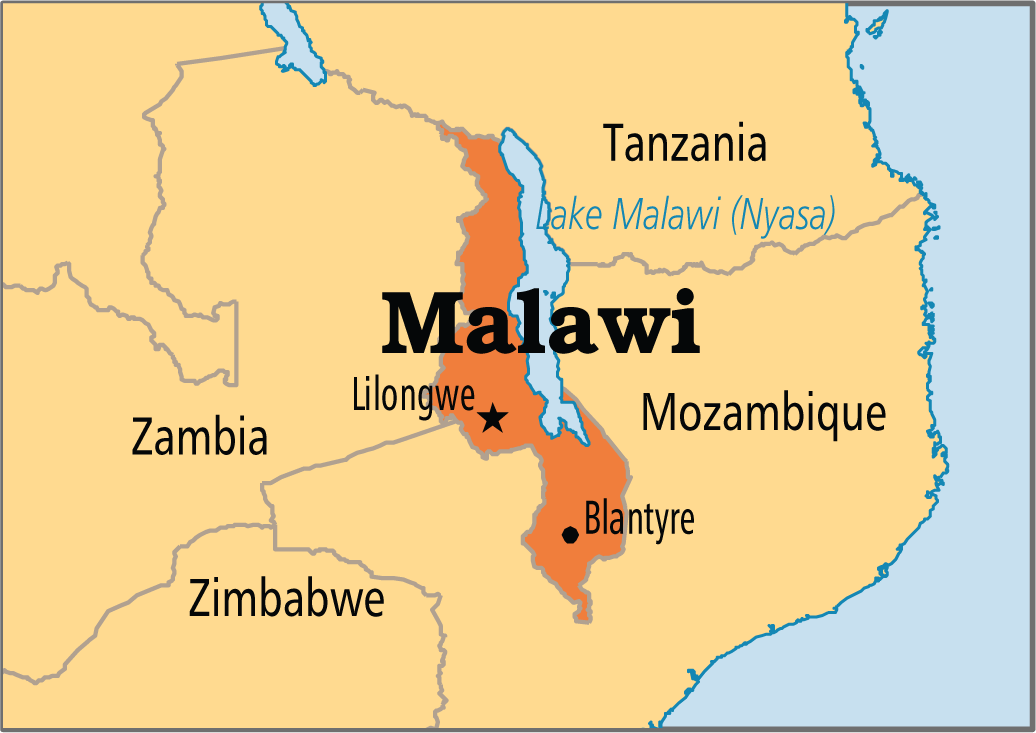
A team from the International Monetary Fund (IMF), led by Mr Oral Williams, visited Lilongwe from March 8–23, 2017, to conduct discussions on the ninth and final review under the Extended Credit Facility (ECF) arrangement.

At the end of the visit, Mr Williams said, “Malawi, with the help of development partners, effectively addressed the worst humanitarian crisis in the country’s history.”

He pointed out that the crisis was caused by the second consecutive year of the El Niño-induced drought that placed an estimated 6.7 million people—or 40 percent of the population—at risk of food insecurity.

The intervention helped stabilize maize prices, as evident in recent weeks, and alleviated the adverse impact of the drought on the vulnerable population. The authorities have expressed gratitude for the support of the IMF and development partners for their sizable contributions in addressing the humanitarian crisis, he said.

According to him, “Malawi’s economy was hit hard by the negative impacts of the drought, but the economic outlook is improving with better prospects of agricultural output including the maize harvest.”

“Real GDP growth after two consecutive years of drought, fell below 3 percent in 2016 but is expected to pick up in the range of 4 to 5 percent in 2017.

“The consumption-led recovery is expected to be driven mainly by a rebound in the agriculture, wholesale and retail, and telecommunications sectors.

“Annual inflation has now fallen to 16.1 percent (year-on-year) in February 2017—its lowest level in recent years.

“Both food and non-food inflation rates have contributed to the downward trend, reflecting prudent monetary and fiscal policies and the stabilization of food prices on account of humanitarian response,” Mr Williams said.

He said further that, “Tight monetary policy, which kept short-term money market rates positive in real terms and stronger fiscal management, was key to restoring confidence in the exchange rate that has remained stable. Commitment to the flexible exchange rate regime and the automatic fuel pricing mechanism continued to help Malawi to respond to external shocks as evidenced by the foreign exchange reserve cover that stabilized at about three months of imports.

“The team reached staff level understandings with the authorities to ensure that recent improvements in macroeconomic policy and outcomes are sustained. Solidifying the gains in macroeconomic stability by limiting spending to available resources and safeguarding external and financial sector stability will continue to be the key policy objectives in the near term. Prudent fiscal policy, when combined with monetary policy geared toward maintaining positive real interest rates, should facilitate the achievement of the program’s objective of single digit inflation. Discussions also focused on measures to ensure that progress in public financial management reforms is sustained.

“Discussions also focused on the broad parameters of the FY17/18 budget. In so doing, the team emphasized the need consolidate recent improvements in revenue mobilization to contain current expenditures and reorient the budget toward development spending in order to improve resilience and to address critical infrastructure gaps. The team also underscored the need to clear past arrears, implement expenditure commitment controls to prevent their re-emergence and to safeguard debt sustainability in light of the increase in the level of domestic debt.

“Completing bank reconciliations for FY15/16 is critical for presenting the review to the IMF Executive Board. Based on progress to date, it is anticipated that a request to complete the ninth review under the ECF-supported program could be submitted for consideration by the Executive Board in June 2017. The team would like to thank the authorities for their hospitality and constructive cooperation.

“The team met with President Arthur Peter Mutharika, Minister of Finance Goodall Gondwe, Governor of the Reserve Bank of Malawi (RBM) Charles Chuka, other senior government and RBM officials, a broad range of national stakeholders outside government, as well as representatives of Malawi’s development partners.”


Dipo Olowookere is a journalist based in Nigeria that has passion for reporting business news stories. At his leisure time, he watches football and supports 3SC of Ibadan. Mr Olowookere can be reached via [email protected]

Economy

Investors Eye Investment Opportunities in Dangote Refinery

Published

on

South African investors dangote refinery

By Aduragbemi Omiyale

The planned listing of the Dangote Petroleum Refinery & Petrochemicals on the Nigerian Exchange (NGX) Limited is already attracting interest from South African investors and others.

The leadership of South Africa’s Government Employees Pension Fund (GEPF), alongside the Public Investment Corporation and Alterra Capital Partners, were recently at the Lagos-based facility.

The chairperson of GEPF, Mr Frans Baleni, said that the refinery stands as evidence that Africa can execute transformational infrastructure projects when backed by visionary leadership, long-term investment and strong technical expertise.

According to him, the significance of the project extends well beyond Nigeria’s borders, noting that it should reshape how Africa thinks about itself.

“The Dangote Refinery and Petrochemicals Complex is a powerful demonstration that, with visionary leadership and long-term capital, that perception no longer holds. This is the kind of African-led industrial scale that institutional investors on this continent should be backing,” he said.

Also speaking, the chief executive of PIC, Mr Patrick Dlamini, described the refinery as one of the most transformative industrial projects undertaken on the continent, saying it is reshaping global perceptions about Africa’s industrial capabilities and economic potential.

He said PIC, which manages about $230 billion in assets largely on behalf of South Africa’s Government Employees Pension Fund, is actively seeking long-term partnerships aligned with infrastructure development, industrialisation and economic transformation across Africa.

“There is real strategic alignment between Dangote’s industrial agenda and how we are positioning our portfolio, and we look forward to exploring meaningful avenues for collaboration,” he stated.

While receiving his visitors, the chief executive of Dangote Group, Mr Aliko Dangote, said the proposed listing is designed to democratise wealth creation and give Africans direct access to participate in the continent’s industrial transformation.

“We are opening the doors for investors to participate directly in Africa’s industrial future and the prosperity it will create,” Mr Dangote said, adding that the refinery project reflects the scale of untapped opportunities within Africa’s energy market, particularly as most countries on the continent remain dependent on imported refined petroleum products despite growing industrial demand and rising consumption.

The billionaire industrialist noted that demand for products such as polypropylene, aviation fuel and refined petroleum products has exceeded earlier projections, reinforcing the commercial viability of the refinery and shaping future expansion plans.

Continue Reading

Economy

Nigeria’s Oil Exploration Declines 41.7% as Rig Counts Falls to 12 in April

Published

on

rig count

By Adedapo Adesanya

Nigeria’s oil exploration and drilling activities declined by 41.7 per cent in April 2026, following reduced upstream operations and investment activities.

According to the May 2026 Monthly Oil Market Report (MOMR) of the Organisation of the Petroleum Exporting Countries (OPEC), Nigeria’s rig count, a major indicator of upstream oil and gas activities, dropped to 12 in April 2026 from 17 recorded in March 2026.

The decline came amid persistent upstream investment and operational challenges, according to the latest monthly report released by OPEC.

Earlier data contained in the May 2026 edition of the MOMR also showed that Nigeria’s average rig count declined to 13 in 2025 from 15 recorded in 2024, indicating reduced exploration and drilling activities in the upstream petroleum sector.

The report showed that Nigeria’s rig count fell by five rigs month-on-month, from 17 rigs in March 2026 to 12 rigs in April 2026.

Rig count is widely regarded in the petroleum industry as a key indicator of exploration, field development and investment activities.

The decline comes despite ongoing efforts by the Nigerian government and industry operators to raise crude oil production, boost reserves and attract fresh upstream investments under the Petroleum Industry Act (PIA)

Nigeria’s performance contrasted with the broader African trend, where total rig count increased marginally from 42 in March 2026 to 48 in April 2026.

However, Nigeria accounted for a significant share of the continent’s decline in operational rigs during the period.

Within OPEC, Nigeria remained behind major producers such as Saudi Arabia, which recorded 265 rigs in April 2026, the United Arab Emirates with 66 rigs, and Iraq with 19 rigs.

The development also comes at a time when Nigeria is struggling to meet its crude oil production quota allocated by OPEC consistently.

Continue Reading

Economy

Nigeria’s Central Bank Holds Rate at 26.50% Despite Heightened Disruptions

Published

on

CBN MPC meeting May 20

By Adedapo Adesanya

The Monetary Policy Committee (MPC) of the Central Bank of Nigeria (CBN) has retained the headline interest rate, the Monetary Policy Rate (MPR), at 26.50 per cent.

This was disclosed by the Governor of Nigeria’s central bank, Mr Yemi Cardoso, on Wednesday, after the conclusion of the MPC meeting. He noted that the decision was hinged on Nigeria being largely insulated from external shocks relating to developments in the Middle East.

He also acknowledged that inflation and exchange rate stability were put into consideration during the two-day meeting.

The committee reduced the benchmark interest rate by 50 basis points from 27.0 per cent to 26.5 per cent at its 304th MPC gathering in February.

Nigeria’s inflation rose to 15.69 per cent in April 2026, affected by the fallout from the Iran war, which continued to impact the global economy. Noting that year-on-year, the figures show a moderation rather than worry.

The headline inflation rate for April on a month-on-month basis was 2.13 per cent, while the food inflation rate in the review month was 16.06 per cent on a year-on-year basis.

Mr Cardoso noted that the Cash Reserve Ratio (CRR) was also retained at 45 per cent for commercial Banks, 16 per cent for Merchant Banks, and 75 per cent for non-TSA public sector deposits.

He added that the Standing Facilities Corridor was also held flat at +50 / -450 basis points around the MPR.

Continue Reading

Trending