Economy
Mastering Futures and Options: A Guide to Starting Your Trading Journey
Introduction
Trading in futures and options (F&O) has become a popular way to diversify investments and hedge risks in the financial markets. With the right knowledge and strategy, anyone can start trading and leverage F&O to maximize returns. This guide will walk you through the fundamentals of business with futures and options, how to start trading, and essential strategies for success.
Understanding Futures and Options
What Are Futures?
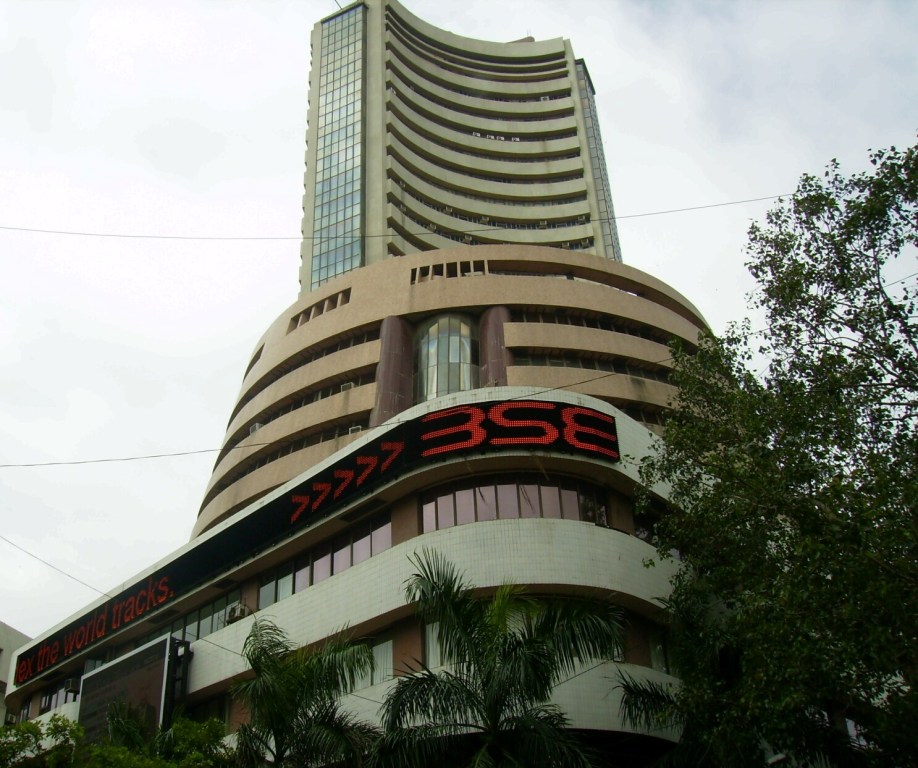
A futures contract is a financial agreement to buy or sell an asset (stocks, commodities, or indices) at a predetermined price on a future date and to start future and option trading futures and options. Futures are standardized contracts traded on exchanges like NSE (National Stock Exchange) and BSE (Bombay Stock Exchange).
Key Features of Futures Contracts:
- Obligatory Execution: Buyers and sellers must fulfill the contract on the expiry date.
- Margin Trading: Traders only pay a fraction of the total contract value as a margin.
- Leverage: Investors can take large positions with limited capital.
What Are Options?
Options give traders the right (but not the obligation) to buy or sell an asset at a specific price before or on the contract expiry date.
Types of Options:
- Call Options – Gives the right to buy an asset at a fixed price.
- Put Options – Gives the right to sell an asset at a fixed price.
Why Trade Futures and Options?
- Hedging Against Market Risks: Investors use F&O to hedge risks in volatile markets.
- High Leverage: Traders can control large positions with minimal capital.
- Profit in Bull and Bear Markets: Options trading allows earning from both rising and falling markets.
- Portfolio Diversification: F&O trading provides exposure to various asset classes.
How to Start Trading in Futures and Options
1. Open a Trading and Demat Account
To trade in F&O and how to start trading you need a Demat and trading account with a registered stockbroker.
Steps to Open an Account:
- Choose a SEBI-registered stockbroker (e.g., Zerodha, Upstox, Angel Broking).
- Submit KYC documents (PAN, Aadhaar, bank details, income proof).
- Complete account verification and receive login credentials.
2. Understand Market Fundamentals
Before trading, gain knowledge about:
- Stock Market Trends: Track NIFTY, SENSEX, and India VIX to understand volatility.
- Fundamental and Technical Analysis: Learn to analyze financial reports and price charts.
- Option Greeks (Delta, Gamma, Theta, Vega): These help in assessing option price movements.
3. Learn About Margin Requirements
Trading in F&O requires margin money, which varies based on contract size and market conditions. Stockbrokers provide margin calculators to help traders plan their positions.
4. Choose the Right Trading Strategy
Popular Futures Trading Strategies:
- Trend Following Strategy – Buy futures in an uptrend, sell in a downtrend.
- Spread Trading – Buy and sell futures contracts simultaneously to minimize risk.
- Scalping – Profit from small price movements by making multiple trades.
Popular Options Trading Strategies:
- Covered Call Strategy – Holding a stock while selling call options to earn premiums.
- Straddle Strategy – Buying both a call and put option to profit from high volatility.
- Iron Condor Strategy – Combining multiple options contracts to limit risk and enhance returns.
5. Start Trading with a Demo Account
Most stockbrokers provide paper trading accounts where beginners can practice trading without real money. This helps in understanding price movements, placing orders, and managing risk.
6. Monitor and Manage Risks
- Stop-Loss Orders: Protect against significant losses by setting stop-loss levels.
- Position Sizing: Avoid investing all capital in a single trade.
- News & Events: Track financial news, RBI policies, and corporate earnings reports.
Essential Tips for Successful F&O Trading
- Start Small: Begin with a few contracts and increase exposure gradually.
- Stay Updated: Follow market news, economic indicators, and stock trends.
- Avoid Overtrading: Excessive trading can lead to high brokerage fees and losses.
- Maintain a Trading Journal: Keep records of trades to analyze mistakes and improve strategies.
- Use Hedging Techniques: Reduce risk by using protective puts and call options.
Conclusion
Trading in futures and options is a powerful way to maximize investment opportunities and manage risks. By understanding market trends, choosing the right strategies, and practicing risk management, traders can build a profitable trading career. If you’re new to F&O trading, start with a Demat account, practice with demo trades, and gradually scale up as you gain confidence.
With the right approach, trading in futures and options can be a lucrative business venture and a strong financial tool for long-term success.
Economy
Nigeria Records 3.89% GDP Growth in Q1 2026
By Adedapo Adesanya
Nigeria’s economic growth rate eased in the first quarter of 2026 to 3.89 per cent year-on-year, as a slowdown in the oil sector offset gains recorded in the non-oil sector.
The economy, measured by Gross Domestic Product (GDP), slowed in the first three months of this year from the 4.07 per cent recorded in the previous quarter (Q4 2025), according to data released by the National Bureau of Statistics (NBS) on Monday. However, it was higher than the 3.13 per cent recorded in the first quarter of 2025.
In the first quarter of 2026, Nigeria recorded an average daily oil production of 1.55 million barrels per day, lower than 1.62 million barrels per day in the same quarter of 2025 and lower than the 1.58 million barrels per day in the fourth quarter of 2025.
The real growth of the oil sector was 2.57 (year-on-year) in Q1 2026, indicating an increase of 0.70 per cent compared with the 1.87 per cent in the corresponding quarter of 2025.
However, growth decreased by 4.22 per cent compared to 6.79 per cent in Q4 2025, and on a quarter-on-quarter basis, the oil sector recorded a growth rate of 9.31 per cent.
For the non-oil sector, it contributed 96.08 per cent to the nation’s GDP between January and March 2026, versus 96.03 per cent in the same period of last year and lower than 97.13 per cent in the fourth quarter of last year.
During the quarter under review, agriculture grew by 3.15 per cent. The growth of the industry sector stood at 3.50 per cent versus 3.42 per cent in the first quarter of last year, while the services sector recorded a growth of 4.31 per cent, in contrast to 4.33 per cent in the same quarter of 2025.
In terms of share of the GDP, the services sector contributed 57.73 per cent compared to 57.50 per cent in the first quarter of 2025.
In the quarter under review, aggregate GDP at basic price stood at N110.79 trillion in nominal terms, higher than N94.1 trillion in the first quarter of 2025 by 17.79 per cent.
Economy
CPPE Warns Against Rising Push for Petrol Importation
By Adedapo Adesanya
The Centre for the Promotion of Private Enterprise (CPPE) has warned that Nigeria must not forgo its commitment to boosting domestic refining capacity amid growing advocacy for the importation of petroleum products.
In a statement, the centre explained that Nigeria must, therefore, avoid drifting into a policy regime that undermines domestic production in the name of competition or liberalisation.
The Chief Executive Officer (CEO) of the think tank, Mr Muda Yusuf, in a press release, warned that Nigeria is signalling to investors what happens if a multi-billion-dollar Dangote refinery investment of continental significance is confronted with regulatory uncertainty and policy headwinds.
The development comes as the management of the refinery has approached the court to battle against regulators, including the Nigerian National Petroleum Company (NNPC) and the Nigerian Midstream and Downstream Petroleum Regulatory Authority (NMDPRA), over their decision to allow importation.
The dispute stems from a lawsuit filed by Dangote Refinery against the Attorney-General of the Federation, Mr Lateef Fagbemi, over fuel import licences granted to six marketers and the state oil company. The case has since widened the debate around local refining, market competition and the future direction of Nigeria’s downstream petroleum industry.
According to the centre, the increased call speaks to the very architecture of Nigeria’s economic philosophy, the future of industrialisation, the resilience of the macroeconomy and, ultimately, the preservation of the country’s economic sovereignty.
“No nation has ever imported its way to industrial greatness. Prosperous economies are built on production, refining, manufacturing, value addition and the strengthening of domestic productive capacity.
“Countries that become excessively dependent on imports inevitably export jobs, weaken domestic industries, erode local investments and mortgage their economic sovereignty.
“Nigeria must therefore avoid drifting into a policy regime that undermines domestic production in the name of competition or liberalisation,“ Mr Yusuf noted.
Economy
Airtel Africa Moves to Return Cash to Shareholders With $110m Buyback
By Adedapo Adesanya
Airtel Africa has launched a share buyback programme worth up to $110 million, signalling confidence in its strong balance sheet and financial flexibility as the telco seeks to return value to shareholders.
The company disclosed in a notice filed on the portal of the Nigerian Exchange (NGX) Limited that the programme would involve the repurchase of up to 1 per cent of its issued share capital as part of its capital allocation policy.
The telco further stated that all shares repurchased under the programme would be cancelled as the sole purpose of the exercise is to reduce the company’s capital base.
“The sole purpose of the buyback programme is to reduce the capital of the company. As such, all shares purchased under the buyback programme will be cancelled,” the notice stated.
According to the organisation, the initiative reflects the board’s confidence in the group’s financial position and its ability to continue investing across its African operations while rewarding shareholders.
“The board’s decision reflects the continued strength of the Group’s balance sheet and its ability to preserve financial flexibility while supporting ongoing investment to capitalise on the compelling growth outlook across the Group’s footprint,” the notice stated.
Airtel Africa said it had entered into an agreement with Barclays Capital Securities Limited to execute the programme through on-market purchases of its ordinary shares, which would subsequently be acquired by the company. The agreement, according to the notice, consists of two parallel elements.
Under the non-discretionary arrangement, Barclays will independently purchase between $50 million and $60 million worth of ordinary shares without influence from the company.
The second component is a discretionary arrangement under which Airtel Africa may instruct Barclays to purchase up to an additional $50 million worth of shares, subject to the provisions of the Market Abuse Regulation.
The programme commenced on May 22, 2026, and is expected to run until no later than November 27, 2026, unless terminated earlier in line with the terms of the agreement.
Airtel Africa said further tranches of the programme could be announced later to enable it fulfil its objective of repurchasing up to one per cent of its issued share capital as at the date of the announcement.
The telecommunications company also explained that the purchases would be carried out in line with shareholder approvals, UK listing regulations and market abuse rules. It noted that shareholders had earlier granted the company authority at its annual general meeting held on July 9, 2025, to repurchase a maximum of 366.07 million ordinary shares.
Following the completion of an earlier buyback programme, Airtel Africa said the remaining authority available for repurchases currently stands at 357.04 million ordinary shares.
The company further disclosed that Barclays may continue executing the discretionary portion of the buyback autonomously during closed periods under irrevocable and non-discretionary instructions permitted by regulation.
The new buyback announcement comes weeks after Airtel Africa reported strong financial and operational performance for the year ended March 31, 2026 (Q1), supported by growth in data usage, mobile money services and improved profitability across its markets.
According to its audited financial statement, the group recorded a 29.5 per cent increase in revenue to $6.42 billion from $4.96 billion in the previous year, while profit after tax (PAT) rose by 147.4 per cent to $813 million from $328 million.
-
Feature/OPED6 years agoDavos was Different this year
-
Travel/Tourism10 years ago
Lagos Seals Western Lodge Hotel In Ikorodu
-
Showbiz3 years agoEstranged Lover Releases Videos of Empress Njamah Bathing
-
Banking8 years agoSort Codes of GTBank Branches in Nigeria
-
Economy3 years agoSubsidy Removal: CNG at N130 Per Litre Cheaper Than Petrol—IPMAN
-
Banking3 years agoSort Codes of UBA Branches in Nigeria
-
Banking3 years agoFirst Bank Announces Planned Downtime
-
Sports3 years agoHighest Paid Nigerian Footballer – How Much Do Nigerian Footballers Earn