Economy
Multiple Taxes Don’t Exit in Nigeria—LIRS Director
The Sun
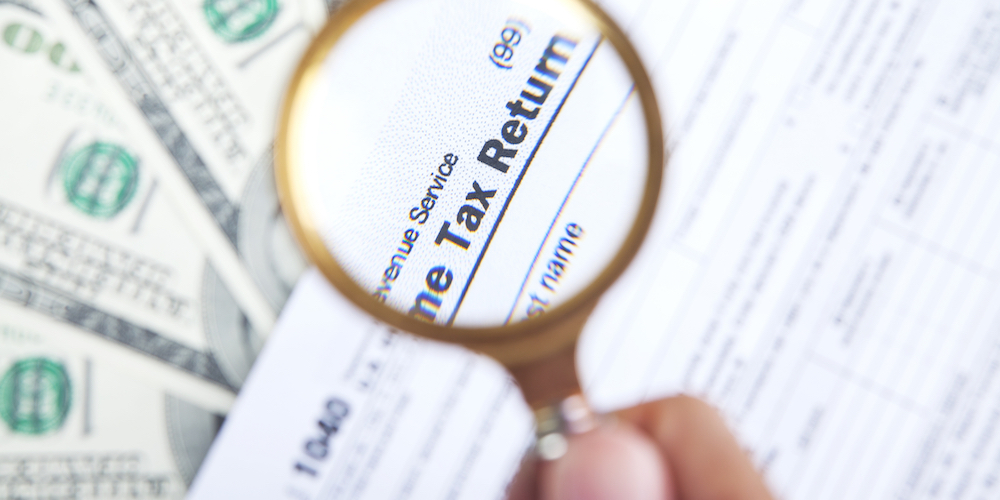
A director at the Lagos Inland Revenue Service (LIRS), Mrs Shade Coker, has declared that there are no cases of multiple taxation in the nation contrary to the widely spread believe, alleging that people use the advantage of lack of information to spread the misinformation.
Mrs Coker who stated this during the official launch of Tax pal Nigeria, a platform that makes tax solution easy stated that taxation is Nigeria seems cumbersome due to inadequate information about system of taxation in the country.
She said that tax Taxpal is that friendly tax café that serves taxable Nigerians and Nigerian residents with spot on tax information required to help them fulfil their end of the social contract – pay their taxes.
She said the law requires records to document all of tax deductions, urging Nigerians to demand payment details and report any agency they feel their transaction is not transparent in order to remove the challenge of the multiple taxation they experience.
On complaints of multiple taxation, Mrs Coker said “Let me say once again that we do not really have a situation of multiple taxation. You only have multiple taxation when you pay the same tax to different tiers of government.
“What we have found out is that a lot of people categorise any payment to government as a tax. “For example if you receive fine, a penalty they call it a tax. If you pay for the parking space, they call it a tax. Those are the things you refer to as user charges and not taxes.”
Also, she identified taxation of electronic related businesses as one of the greatest challenges confronting the payment of tax in Nigeria.
Tax problem increase because this online transaction and businesses are difficult at the moment for one to capture, so their payment becomes really difficult to track.
However, she said the Federal Government has through the ministry of information and also through the office of the Vice President have been talking about the different projects that have been financed with tax revenues and I think as Nigerians begin to see those dividends of democracy, very good spending, people will be more encouraged to pay more taxes.”
In the same vein, the Chief Operating Officer of the Firm, Mr Jide Banjo said the government has the responsibility of being transparent and efficient with how the taxes are spent. Tax apathy and evasion can be reduced where there is high level of transparency and visible development.
Mr Banjo stressed the importance of taxation in any economy, which cannot be overemphasized, noting its effects remain significant.
“It helps greatly in the redistribution of income and gives the government funds that it can use to finance public services such as provision of adequate national security, public infrastructure, social security services, power, roads network and a host of other social amenities.
“The ability of the state or in broader view, a nation to generate a substantial amount of revenue from taxes opens up opportunities for it to provide public services and improve the economy.
He said at a recent tax stakeholder forum organized by PwC, a survey was conducted to find out why many Nigerians do not pay tax.
The result was insightful but not surprising; 70% said it is because people cannot see taxpayers’ money at work, 22.5% said it was due to the tax rules that are unclear and compliance process being too complex while 7.5% said it is due to poor enforcement by tax authorities.
More so, Mr Banjo stated that the National Bureau of Statistics (NBS) recently released tax collection data of all 36 states of the federation, which totalled N683.6 billion out of which Lagos state accounted for N268 bn.
Uniquely, Lagosians amongst many other states can see infrastructural advancement as dividends of their tax remittance.
“We believe that this development is only a tip of the iceberg when over 50% taxable residents pay their taxes instead of the 10million footing the bills of 77million as earlier mentioned. He citing the Vice Presidents Yemi Osinbajo statement while he was speaking at the 20th annual tax conference of the Chartered Institute of Taxation of Nigeria (CITN) held in May this year, Osinbajo said, “as of May 2017, only 14 million economically-active Nigerians paid taxes. That number is now in excess of 19 million, and still growing,” That is good news for us at Taxpal. We are charged to help increase that number exponentially he said.
Economy
NASCON Targets Deeper Cost Optimisation, Accelerated Digital Transformation, Others
By Aduragbemi Omiyale
One of the leading salt makers in Nigeria, NASCON Allied Industries Plc, has set its eyes on some strategies aimed to deliver more value to shareholders.
The chief executive of the company, Mrs Aderemi Saka, said efforts are being made to surpass the performance of last year.
In the 2025 financial year, the organisation recorded a 27 per cent growth in revenue, while post-tax profit grew by over 100 per cent to N33.5 billion, with the earnings per share (EPS) expanding by 115 per cent to N12.41 from N5.77 Kobo in the previous year.
The impressive performance, attributed to a clear strategic vision, disciplined execution and sustained focus on cost-saving initiatives across production, logistics and fleet management, resulted in a 200 per cent increase in dividend payout to shareholders to N6 per share.
Mrs Saka, at the firm’s Annual General Meeting (AGM) in Lagos, said the strategic priorities for the coming year include deeper cost optimisation, expanded market penetration, strengthened energy diversification and sustainability initiatives, as well as accelerated digital transformation and process automation.
Earlier, the chairman of NASCON, Mr Olakunle Alake, informed shareholders that the achievements for last year were due to improved operational efficiency, strict cost management and the dedication of the company’s workforce.
“The operating environment in 2025 was characterised by economic volatility, persistent inflation and structural changes across key sectors. Yet, NASCON remained resilient and strategically focused, delivering outstanding value to shareholders,” Mr Alake said.
He noted that operational sustainability remains a core pillar of the organisation’s strategy, stressing that during the year, NASCON introduced Compressed Natural Gas (CNG) trucks into its logistics fleet to reduce fuel costs and minimise exposure to diesel price volatility.
In addition, the company’s state-of-the-art salt refinery, its largest production facility, now runs entirely on natural gas, significantly boosting efficiency while reinforcing NASCON’s commitment to environmental sustainability.
A director in the organisation, Mrs Tonya Lawani, emphasised that the firm remains firmly committed to the principles that have driven its excellent performance, noting that NASCON approaches the new financial year from a position of strength, with further opportunities for growth and improvement.
Speaking on behalf of shareholders, Mr Faruk Umar expressed strong confidence in the company’s trajectory, citing NASCON’s rising share price, which recently crossed the N100 mark, and projecting further appreciation.
He commended the quality of the Board and management team, noting that strong leadership and recent executive appointments have positioned the entity to deliver even greater value to all stakeholders.
Economy
Brent Nears $110 on Stalled Diplomacy, Tight Global Supply
By Adedapo Adesanya
Brent futures gained $2.90 or 2.8 per cent to trade at $108.23 a barrel on Monday as peace talks between the United States and Iran stalled and shipments through the Strait of Hormuz remained limited, keeping global oil supplies tight.
Also, the US West Texas Intermediate crude rose by $1.97 or 2.1 per cent to $96.37 per barrel after Iran reportedly offered to reopen the Strait of Hormuz, but insisted US nuclear talks be postponed, a condition the Americans are unlikely to accept.
Iran presented the proposal through regional mediators to reopen the waterway and move toward ending the war first, while postponing nuclear negotiations. The proposal would separate shipping security from the dispute over uranium enrichment, where negotiations have deadlocked.
The stalled negotiations are leading to fears for the global economy as both nations are no closer to a lasting truce after US President Donald Trump cancelled American participation in talks with Iran.
President Trump discussed a new Iranian proposal on resolving the war with Iran with his top national security aides, with the conflict currently in a stalemate and energy supplies from the Middle East region reduced.
The market is also beginning to price the supply story beyond crude. Higher petrol and heating oil prices are feeding concern that the conflict is moving into transport, manufacturing, and consumer costs.
At least seven ships – mainly dry bulk vessels – have crossed the Strait of Hormuz in the past 24 hours, in line with muted activity in recent days. That represents a fraction of the average 140 daily passages before the Iran war began on February 28, when around 20 per cent of global oil supplies passed through the strait.
In addition, six tankers loaded with Iranian oil have been forced back to Iran by the US blockade in recent days.
Also, Russian President Vladimir Putin praised the Iranian people for battling to stay independent in the face of US and Israeli pressure and said Russia would do all it could to help Iran.
Major global central banks are set to hold interest rates steady this week.
The European Central Bank (ECB) will meet on Thursday, with a ceasefire easing the pressure on it for an immediate interest rate hike. Higher interest rates increase consumer borrowing costs, which can reduce economic growth and oil demand.
Traders are betting that the US Federal Reserve, ECB, Bank of Japan, and Bank of England will all maintain rates at current levels.
Economy
Stocks Sheds 0.94% on Commencement of NGX Extended Market Session
By Dipo Olowookere
The Nigerian Exchange (NGX) Limited suffered a 0.94 per cent loss on Monday, April 27, 2026, which marked the commencement of an extended market session.
A few weeks ago, it was announced that trading activities on Customs Street would now be from 9:00 am to 4:00 pm instead of the usual 9:30 am to 2:30 pm.
This action was taken to allow market participants more time to explore the bourse and further make it robust, especially after the restoration of Nigeria’s frontier market status by FTSE Russell.
The NGX came under selling pressure, which resulted in 35 equities finishing on the gainers’ chart and 40 equities ending on the losers’ table, indicating a negative market breadth index and weak investor sentiment.
Trans-Nationwide Express, First Holdco, and UBA were the worst-performing equities after giving up 10.00 per cent each to trade at N7.11, N67.50, and N49.50, respectively. Access Holdings depreciated by 9.90 per cent to N28.20, and Fidelity Bank crashed by 9.87 per cent to N20.10.
The best-performing equity for the session was Abbey Mortgage Bank, which gained 9.26 per cent to N5.90, Zichis went up by 8.91 per cent to N16.99, Wema Bank expanded by 8.80 per cent to N34.00, NPF Microfinance Bank soared by 8.19 per cent to N5.68, and Coronation Insurance grew by 7.27 per cent to N2.66.
It was observed that the profit-taking was mainly from banking stocks, as the index shed 6.49 per cent. The consumer goods sector lost 0.41 per cent, and the energy counter depreciated by 0.24 per cent.
However, the industrial goods space improved by 0.85 per cent, and the insurance segment appreciated by 0.15 per cent.
But at the close of business, the All-Share Index (ASI) slipped by 2,120.20 points to 223,602.29 points from 225,722.49 points, and the market capitalisation shrank by N1.365 trillion to N143.970 trillion from N145.335 trillion.
A total of 678.2 million shares worth N44.1 billion were traded in 82,838 deals on Monday compared with 627.6 million shares valued at 44.5 billion transacted in 55,232 deals last Friday, representing a drop in the trading value by 0.90 per cent, and a surge in the trading volume and number of deals by 8.06 per cent and 49.98 per cent, respectively.
Zenith Bank was at the zenith of the activity chart yesterday with 76.1 million units sold for N9.5 billion. Wema Bank traded 49.9 million units worth N1.7 billion, Access Holdings exchanged 39.1 million units valued at N1.1 billion, Tantalizers transacted 30.0 million units worth N113.9 million, and AIICO Insurance traded 28.3 million units valued at N118.3 million.
-
Feature/OPED6 years agoDavos was Different this year
-
Travel/Tourism10 years ago
Lagos Seals Western Lodge Hotel In Ikorodu
-
Showbiz3 years agoEstranged Lover Releases Videos of Empress Njamah Bathing
-
Banking8 years agoSort Codes of GTBank Branches in Nigeria
-
Economy3 years agoSubsidy Removal: CNG at N130 Per Litre Cheaper Than Petrol—IPMAN
-
Banking3 years agoSort Codes of UBA Branches in Nigeria
-
Banking3 years agoFirst Bank Announces Planned Downtime
-
Sports3 years agoHighest Paid Nigerian Footballer – How Much Do Nigerian Footballers Earn