
Economy
Mutual Funds Investments to Hit N2trn in 2020—SEC


By Adedapo Adesanya
The Securities and Exchange Commission (SEC) has noted that despite present realities, mutual funds invested in the capital market could reach N2 trillion this year.
This was made by the Acting Director of the Commission, Ms Mary Uduk, over the weekend while speaking at the Capital Market Correspondents Association of Nigeria (CAMCAN) forum sponsored by the commission in Lagos.
Represented by the Head, Office of Economics of the SEC, Mr Okey Umeano, she noted that the segment, which currently stands at N1.2 trillion, is growing and urged retail investors to use the funds as a means to access the market.
She assured that the commission was setting up more strategies to develop the Collective Investment Scheme, which the mutual fund segment is under, in the Nigerian capital market so as to boost the economic situation in the country.
“In any advanced market, the Collective Investment Scheme (CIS) form a very big part of the market.
“We at the commission have discovered that some of the investors who lost their savings during the crisis in 2008 are low on confidence.
“That is the reason why we are encouraging retail investors to go through these mutual funds because they are set up and approved by capital market operators and the SEC and the SEC regulates them (operators).
“Currently the size of the segment stands at N1 trillion but we expect it to grow much higher.
“So, we are urging retail investors and high net worth investors to use the mutual funds the route to enter the market,” Ms Uduk said.
She further lauded the impact of local investors as they outperformed foreign investors by 40 percent or N70.3 billion so far.
She said domestic investors transactions show that the domestic institutional transactions accounted for N83.47 billion, while domestic retail transactions stood at N81.67 billion.
“In spite of these trends, clearly, the fundamentals of our markets and economies remain solid and promising as astute investors know.
“I therefore, urge retail investors to leverage on this and invest in the capital market, which is one of the avenues to build sustainable and long-term wealth,” Ms Uduk added.
Also speaking at the event, the Divisional Head, Economic, Research and Policy Management at the Commission, Mr Afolabi Olowookere, noted that the commission expects to see a significant rise of N1.5 trillion or N2 trillion in mutual funds.
“We still expect that size to get to N1.5 or N2 trillion and the reason is that it provides an avenue for retail investors to buy.
“The mutual fund may not have very high return but definitely it won’t have low return and with the SEC at the forefront of financial inclusion, we are pushing collective investment scheme because it brings some form of stability for investments,” he said.
He noted that close to 480,000 investors have trusted their money into the market and there are expectations to see a rise.
“The number of units of account in that segment currently stands at 480,000 investors and it would likely increase,” he added.






By Adedapo Adesanya
A 1.61 per cent fall was recorded by the NASD Over-the-Counter (OTC) Securities Exchange on Tuesday, April 7, on the back of selling pressure.
The profit-taking chopped off N38.87 from the market capitalisation of the trading platform, leaving it at N2.378 trillion compared with the N2.417 trillion it ended last Thursday, when the bourse last witnessed trading activity.
Similarly, the NASD Unlisted Security Index (NSI) dropped 22.57 points to close the session at 3,975.34 points, in contrast to the preceding session’s 4,040.30 points.
The market breadth index was at equilibrium yesterday after recording three price gainers and three price losers, led by Okitipupa Plc, which depleted by N15.00 to N260.00 per share from N275.00 per share. Central Securities Clearing System (CSCS) Plc dipped by N6.31 to N71.69 per unit from N78.00 per unit, and FrieslandCampina Wamco Nigeria Plc went down by N1.00 to N92.00 per share from N93.00 per share.
Conversely, First Trust Mortgage Bank Plc appreciated by 20 Kobo to N2.28 per unit from N2.08 per unit, UBN Property Plc also improved by 20 Kobo to N2.18 per share from N1.98 per share, and Impresit Bakalori Plc gained 19 Kobo to sell at N2.20 per unit versus N2.01 per unit.
During the session, the volume of securities dipped by 99.7 per cent to 797,264 units from 260.2 million units, the value of securities went down by 83.1 per cent to N26.1 million from N154.2 million, and the number of deals decreased by 28.3 per cent to 33 deals from 46 deals.
Great Nigeria Insurance (GNI) Plc remained the most traded stock by value (year-to-date) with 3.4 billion units worth N8.4 billion, trailed by CSCS Plc with 57.1 million units sold for N3.9 billion, and Okitipupa Plc with 27.5 million units valued at N1.8 billion.
GNI Plc was also the most traded stock by volume (year-to-date) with 3.4 billion units traded for N8.4 billion, followed by Resourcery Plc with 1.1 billion units exchanged for N415.7 million, and Infrastructure Guarantee Credit Plc with 400 million units transacted for N1.2 billion.
By Adedapo Adesanya
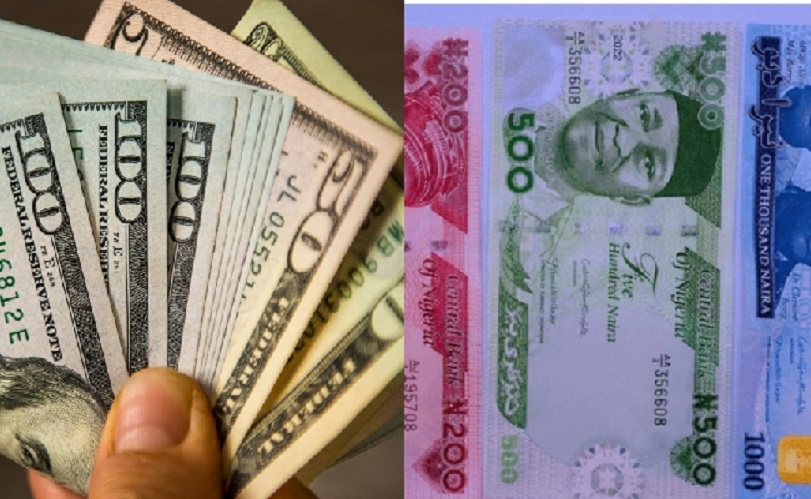
The Naira suffered a decline of N5.87 or 0.43 per cent against the US Dollar in the Nigerian Autonomous Foreign Exchange Market (NAFEX) on Tuesday, April 7, to trade at N1,386.66/$1 compared with the previous value of N1,380.79/$1.
It was the first trading day in the local currency market after it closed last Friday and Monday for the Easter holiday.
In the same market window, the Nigerian Naira also depreciated against the Pound Sterling during the session by N13.71 to sell for N1,838.57/£1 versus N1,824.86/£1, and lost N13.69 on the Euro to quote at N1,605.61/€1 versus N1,591.92/€1.
In the black market, the Nigerian currency maintained stability against the Dollar yesterday to remain unchanged at N1,4010/$1.
Despite the recent movement, analysts remain optimistic about the outlook of the currency in 2026, citing ongoing reforms by the Central Bank of Nigeria (CBN).
The Centre for the Promotion of Private Enterprise (CPPE) said Naira stability in the first quarter of the year boosted business confidence, noting that the currency remains relatively stable during the period, trading within the N1,340 to N1,430 per Dollar band.
It attributed the stability to improved foreign exchange liquidity, stronger oil earnings, and rising external reserves, which had climbed above 50 billion dollars.
In the cryptocurrency market, prices rose after US President Donald Trump announced a two-week cease-fire with Iran, abruptly reversing days of bearish positioning.
The spike triggered roughly $595 million in crypto liquidations, with short positions making up about $427 million, marking the most aggressive short squeeze since early March. Short positions occur when investors profit from a decline in the price of an asset, so when prices rise, losses occur for the shorts.
Cardano (ADA) rose by 8.3 per cent to $0.2629, Ethereum (ETH) appreciated by 7.3 per cent to $2,249.69, Solana (SOL) added 6.6 per cent to sell for $84.67, Ripple (XRP) jumped 5.8 per cent to $1.38, Dogecoin (DOGE) expanded by 5.1 per cent to $0.0949, Bitcoin (BTC) grew by 5.0 per cent to $71,897.41, Binance Coin (BNB) increased by 3.3 per cent to $616.35, and TRON (TRX) gained 0.1 per cent to trade at $0.3160, while the US Dollar Tether (USDT) and the US Dollar Coin (USDC) traded flat at $1.00 apiece.

By Dipo Olowookere
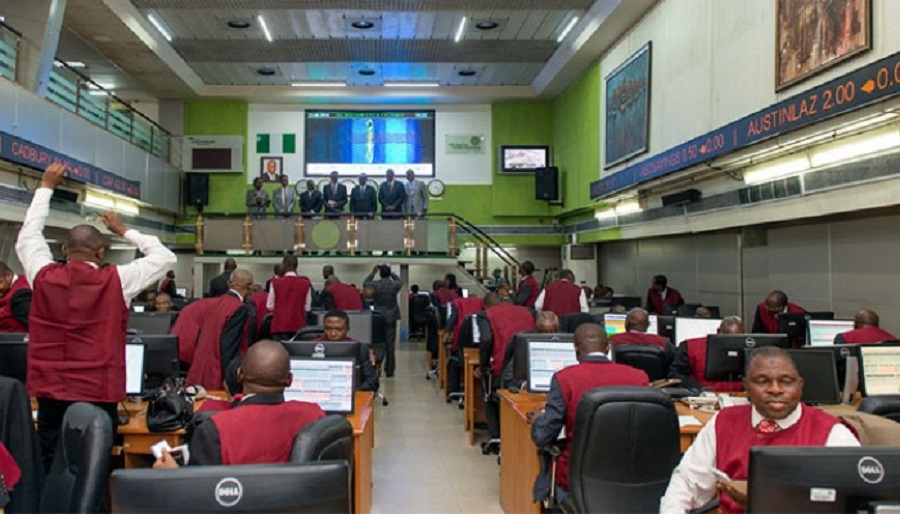
The first trading session on the floor of the Nigerian Exchange (NGX) Limited after the two-day break for Easter ended on a positive note, with a 0.16 per cent rise on Tuesday, April 7, 2026.
The local stock exchange last opened its doors to investors last Thursday, and at the resumption of trading activities yesterday, market participants showed enthusiasm, mopping up shares in the banking ecosystem, and rescuing the bourse from the bears.
This returned Customs Street to the green territory, with the All-Share Index (ASI) growing by 324.21 points to 202,023.10 points from 201,698.89 points, and the market capitalisation up by N209 billion to N130.015 trillion from N129.806 trillion.
The expansion experienced during the session was inspired by three sectors, with the banking index up by 1.46 per cent, the energy space up by 0.12 per cent, and the consumer goods counter up by 0.10 per cent. But the insurance sector lost 1.37 per cent, and the industrial goods sector depreciated by 0.31 per cent.
Business Post reports that investor sentiment was bearish on Tuesday after a negative market breadth index caused by 25 price gainers and 36 price losers.
Ellah Lakes slumped by 10.00 per cent to N10.80, DAAR Communications gave up 9.95 per cent to trade at N1.72, Chams decreased by 9.87 per cent to N3.38, John Holt lost 9.71 per cent to finish at N13.95, and Sunu Assurances slipped by 9.68 per cent to N4.20.
On the flip side, Trans Nationwide Express gained 9.86 per cent to quote at N3.12, Omatek appreciated by 9.76 per cent to N2.25, Cadbury Nigeria improved by 9.53 per cent to N75.25, First Holdco rose by 9.10 per cent to N54.55, and Fortis Global Insurance chalked up 6.50 per cent to close at N1.31.
Trading data revealed that activity level improved during the session, with the trading volume up by 114.29 per cent to 1.2 billion shares from 560.0 million shares, the trading value surged by 108.81 per cent to N40.3 billion from N19.3 billion, and the number of deals soared by 57.03 per cent to 78,006 deals from 49,676 deals.
Wema Bank transacted 282.6 million equities valued at N7.3 billion, Access Holdings exchanged 125.2 million stocks worth N3.3 billion, VFD Group traded 106.8 million shares for N1.1 billion, First Holdco sold 63.0 million equities worth N3.2 billion, and GTCO exchanged 56.6 million shares valued at N7.1 billion.
-
 Feature/OPED6 years ago
Davos was Different this year
-
Travel/Tourism10 years ago
Lagos Seals Western Lodge Hotel In Ikorodu
-

 Showbiz3 years ago
Estranged Lover Releases Videos of Empress Njamah Bathing
-
 Banking8 years ago
Sort Codes of GTBank Branches in Nigeria
-

 Economy3 years ago
Subsidy Removal: CNG at N130 Per Litre Cheaper Than Petrol—IPMAN
-

 Banking3 years ago
Sort Codes of UBA Branches in Nigeria
-

 Banking3 years ago
First Bank Announces Planned Downtime
-

 Sports3 years ago
Highest Paid Nigerian Footballer – How Much Do Nigerian Footballers Earn