Connect with us

Economy

Naira Depreciates to N362/$ at Black Market

Published

on

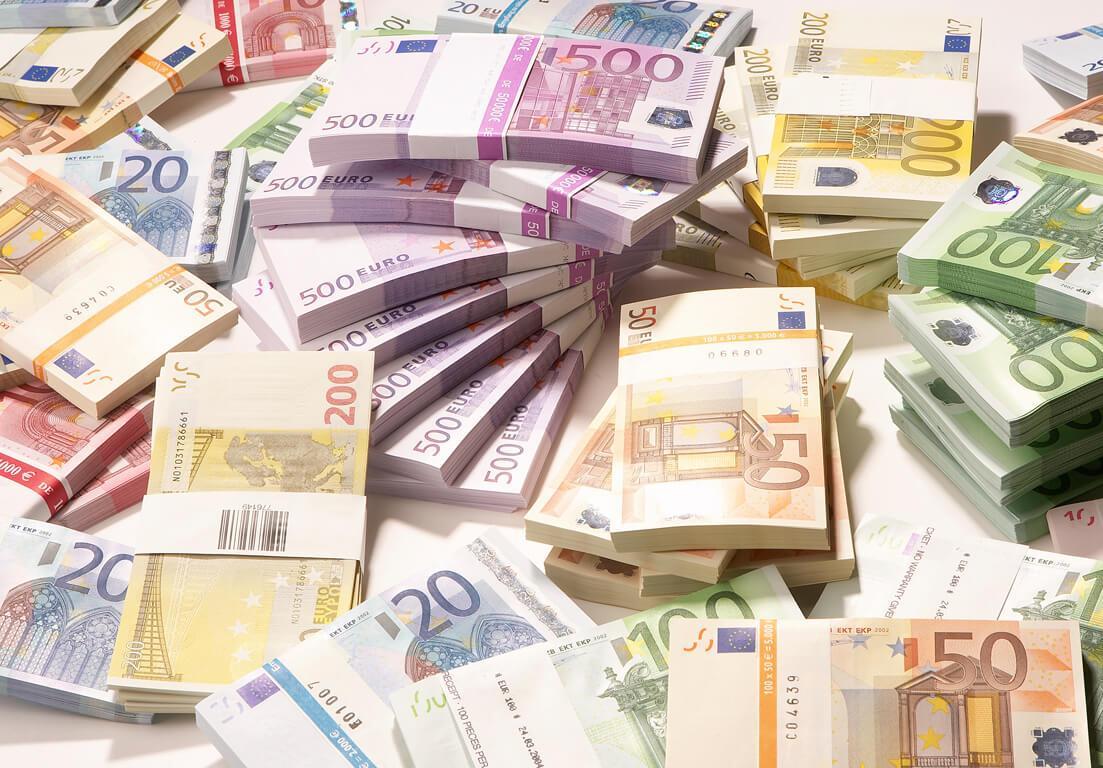
naira and euro

By Adedapo Adesanya

For the first time in several weeks, the Naira depreciated against the United States Dollar at the black market on Thursday. The the local currency, which had traded at N360/$ at the segment of the foreign exchange market, went down to N362/$1 at the close of business yesterday.

During the day’s session, the greenback was boosted against the Nigerian currency by N1 in the afternoon and by evening, when market activities were wrapping up, it stole another N1 from the domestic currency to settle at N362/$1, leaving the currency with 0.56 percent loss.

Also, at the parallel market, the Naira depreciated against the British Pound as the United Kingdom election held. The Naira further traded down to N473/£1 after dropping to N472 on Wednesday.

Possible Conservative Party victory led by Prime Minister Boris Johnson have pressured other currencies and brought about a strong performance for the Pound Sterling in recent weeks. The party’s victory spells the exit of the country from the European Union.

However, against the Euro, the local currency remained at N397/€1 at the black market on Thursday.

At the interbank segment of the market, the Nigerian currency remained stable at N306.95/$1.

But at the Investors and Exporters (I&E) window of the forex market, Business Post gathered from the FMDQ OTC Securities that the Naira further appreciated against the Dollar. The local currency gained 13 Kobo against the greenback yesterday to trade at N363.35/$1 in contrast to N363.48/$1 it was sold the previous session.

The daily market turnover during the day reduced by 20.6 percent or $127.54 million to $490.54 million from $618.08 million exchanged at the previous session.


Adedapo Adesanya is a journalist, polymath, and connoisseur of everything art. When he is not writing, he has his nose buried in one of the many books or articles he has bookmarked or simply listening to good music with a bottle of beer or wine. He supports the greatest club in the world, Manchester United F.C.

Click to comment

Leave a Reply

Your email address will not be published. Required fields are marked *

Economy

Nigeria’s Textile Industry Needs Structural Reforms, Not Bailouts—MAN

Published

on

textile park kano

By Adedapo Adesanya

The Manufacturers Association of Nigeria (MAN) has urged the federal government to shift its focus from periodic bailout packages to comprehensive structural reforms, warning that financial interventions alone will not revive Nigeria’s struggling textile industry.

The association argued that years of intervention funds have failed to restore the industry’s competitiveness because the core challenges confronting manufacturers remain unresolved.

The Director-General of MAN, Mr Segun Ajayi-Kadir, said the textile sector’s long-term recovery depends on tackling persistent structural constraints, including unreliable electricity supply, inadequate local cotton production, smuggling, obsolete machinery and limited access to affordable long-term financing.

According to him, while intervention programmes such as the Central Bank of Nigeria’s Cotton, Textile and Garment (CTG) Policy and the N100 billion Real Sector Support Facility have provided temporary relief, they have not addressed the underlying factors driving high production costs and weakening the industry’s competitiveness.

“Key challenges that need attention include the high costs and inadequacies of energy supply, rampant smuggling and counterfeiting, a lack of quality raw cotton, outdated machinery and inefficient loan structures. While aid funds may help with immediate needs like fuel and debt repayments, they do not resolve the core issues of energy supply, cotton availability or market access,” Mr Ajayi-Kadir said.

He outlined a package of reforms that, according to him, would rebuild the textile value chain and improve manufacturers’ competitiveness.

Among the recommendations is the development of gas-powered Independent Power Plants (IPPs) in key textile hubs such as Kano, Kaduna, Aba and Ogun, as well as the creation of industrial parks with shared infrastructure, including Effluent Treatment Plants (ETPs), steam utilities and machinery maintenance workshops to lower production costs.

Mr Ajayi-Kadir also called for measures to revive domestic cotton production through the introduction of high-yield, pest-resistant seed varieties and contract farming arrangements between textile mills and farmers to ensure a reliable supply of raw materials while reducing dependence on imports and exposure to foreign exchange volatility.

On financing, he urged the government to restructure industry loans by extending repayment tenures to between 10 and 15 years and permitting duty-free importation of modern spinning, weaving and printing equipment to boost productivity.

To protect local manufacturers from unfair competition, he advocated stronger anti-smuggling measures, including digital cargo tracking systems, border scanners and stricter enforcement of Executive Order 003 to prioritise locally produced uniforms and other government procurement.

The MAN chief further stressed the need to revive technical and vocational institutions to train textile engineers, weavers and computer-aided design (CAD) specialists capable of supporting a modern manufacturing industry.

He added that improving compliance with international quality and environmental standards would better position Nigerian textile manufacturers to benefit from export opportunities under the African Continental Free Trade Area (AfCFTA) and the African Growth and Opportunity Act (AGOA).

Mr Ajayi-Kadir pointed to Bangladesh, Vietnam and India as examples of countries that transformed their textile industries through sustained structural reforms rather than repeated financial bailouts.

According to him, Bangladesh emerged as the world’s second-largest garment exporter by providing duty-free access to production inputs and establishing special economic zones, while Vietnam built a globally competitive textile industry through reliable electricity, foreign direct investment and trade agreements.

India, he noted, strengthened its sector with PM MITRA textile parks, Production-Linked Incentive (PLI) schemes and investments in cotton production.

He maintained that Nigeria should concentrate on building a sustainable textile ecosystem instead of relying on temporary financial support for struggling manufacturers.

“With stable energy, reliable local cotton supply and protected markets, Nigeria’s textile industry has the potential to create millions of jobs and generate substantial foreign exchange earnings, just as Bangladesh and Vietnam have done,” he said.

Continue Reading

Economy

Dangote Allots $800m to Expand Itori Cement Plant Capacity to 12 MTA

Published

on

Dangote Cement Sinoma

By Aduragbemi Omiyale

Dangote Cement Plc has commenced the process of expanding the capacity of its Itori Cement Plant in Ogun State to 12 million metric tonnes per annum (12MTA).

Already, the cement firm has signed a memorandum of understanding of $800 million with Sinoma International Engineering Company Limited for the exercise.

The expansion project will enable Dangote Cement to further meet growing domestic demand while substantially strengthening its export capabilities. The investment is expected to reinforce Nigeria’s position as a leading cement-producing nation and expand the country’s footprint in regional and international cement markets.

The chairman of Dangote Cement, Mr Aliko Dangote, said the decision to embark on the project was driven by Nigeria’s new drive towards using concrete for its road construction and also the to export to needy African countries, all in line with the company’s vision 2030 of producing 90 to 100 metric tons per annum.

According to him, the expansion will not only boost production capacity but also enhance the company’s ability to serve key export markets, generate foreign exchange earnings, create employment opportunities, and contribute to economic growth across the continent.

Dangote noted that the partnership with Sinoma has been instrumental in the successful delivery of several world-class cement manufacturing facilities and that the new investment further demonstrates confidence in Nigeria’s economic potential and the future of Africa’s manufacturing sector.

“This $800 million investment represents another bold step in our commitment to strengthening Nigeria’s industrial base and reinforcing our leadership in Africa’s cement industry.

“The expansion of our Itori plant to 12 million from 6 million metric tons per annum will not only enhance our ability to meet growing domestic demand but also significantly increase our export capacity, thereby generating valuable foreign exchange for the country.

“This project reflects our unwavering confidence in the Nigerian economy and our determination to contribute meaningfully to economic growth, job creation, and regional trade across Africa,” the businessman said.

On his part, the chairman of Sinoma, Mr Lin Zhong, said his organisation remains committed to deploying its engineering expertise and cutting-edge technology to ensure the successful execution of the project, stressing that the expansion will strengthen the competitiveness of Dangote Cement and support the development of sustainable industrial infrastructure.

Upon completion, the expanded facility will serve as a major production and export hub, supplying high-quality cement to both domestic and international markets while further advancing Nigeria’s ambitions as an industrial and manufacturing powerhouse.

“We are honoured to deepen our collaboration with Dangote Group through this landmark expansion project. Over the years, our partnership has produced some of the most modern and efficient cement manufacturing facilities in Africa, and this new investment further demonstrates our shared commitment to industrial excellence.

“The expansion of the Itori plant will not only increase production capacity but also enhance Nigeria’s position as a strategic manufacturing and export hub for the African continent.

“Sinoma will deploy its world-class engineering expertise, advanced technology, and global experience to ensure the successful delivery of this project to the highest standards,” Mr Zhong stated.

Continue Reading

Economy

NGX Lauds Stanbic IBTC’s role in Enhancing Investor Confidence, Market Safety

Published

on

stanbic ibtc nominees at 30

By Aduragbemi Omiyale

Stanbic IBTC Nominees Limited has been commended for its critical role in the Nigerian capital market, especially for safely keeping non-pension assets.

For the past 30 years, the company has provided custody services in Nigeria, and to celebrate this milestone, it was honoured with a closing gong ceremony at the Nigerian Exchange (NGX) Limited.

The milestone reflects the institution’s longstanding contribution to investor confidence and the continued development of the nation’s capital market.

Welcoming the organisation to Customs Street, the chief executive of NGX, Mr Jude Chiemeka, commended its three decades of custody services, recognising the firm’s role in strengthening investor confidence and enhancing market safety.

He highlighted NGX’s continued investment in technology, which he said has enabled over 2.6 million active retail investors to trade on the platform.

“Technology continues to be at the heart of our strategy,” Mr Chiemeka said, noting that a vibrant and secure marketplace remains essential to investor participation.

In his remarks, the chief executive of Stanbic IBTC Bank, Mr Wole Adeniyi, thanked NGX for its continued partnership, saying, “We are thrilled to be here today, commemorating not just our journey, but also the remarkable progress made by the NGX.”

He noted that the collaboration between the two institutions has continued to drive innovation, product development and thought leadership across the industry.

“We are dedicated to raising standards within the industry as part of Standard Bank Group. Our focus remains driving the growth and development of Nigeria’s capital market. Indeed, Nigeria is our home, and we drive her growth,” he added.

The chief executive of Stanbic IBTC Nominees, Mr Babatunde Majiyagbe, reflected on the evolution of the business from the era of physical share certificates stored in fireproof vaults to today’s fully dematerialised market, where securities are held electronically.

“We started with holding custody of physical certificates, investing in vaults with fire and dust protection, so those certificates could be presented when needed,” Mr Majiyagbe recalled, noting that while the market has evolved significantly, the commitment to service excellence has remained unchanged.

“What has endeared a lot of investors to the market is that they are dealing with a reputable organisation like ours. We are high on good governance, and high on technology, making the process of investment in Nigeria easier,” he said.

Mr Majiyagbe added that Stanbic IBTC Nominees’ role goes beyond just attracting foreign portfolio investment (FPI) and capital.

“For us, it’s not just about FPI; but also about the value we have delivered over 30 years. Stanbic IBTC Nominees continue to be the eyes and ears of foreign and domestic investors in our market,” he stated.

Mr Majiyagbe added that the firm has also supported the development of market rules and safeguards, noting: “We have, over the years, advocated for growth, change, transformation and stability in our capability to provide services to domestic and foreign portfolio investors continuously.”

The deputy chief executive of Stanbic IBTC Bank and Chairman of Stanbic IBTC Nominees, Mrs Bunmi Dayo-Olagunju, said the next phase of growth will build on the institution’s legacy of trust.

“For 30 years, we’ve delivered growth, security, and client confidence. That’s why investors have stayed with us and why new business keeps coming.

“Our target for this new phase of growth is simple: build on that trust and ride the acceleration in Nigeria’s economic activity.

“With custody, settlement, capital raise, and advisory integrated on one platform, we’re not just a custodian. We’re an infrastructure. We look forward to building on that trust for generations to come, serving both local and international clients. Hopefully, we’ll have another 100 years of maintaining that trust with local and international markets,” Mrs Dayo-Olagunju said.

Continue Reading