
Economy
Naira Feels Effect of $3bn Injection, Gains at Official Market

By Adedapo Adesanya
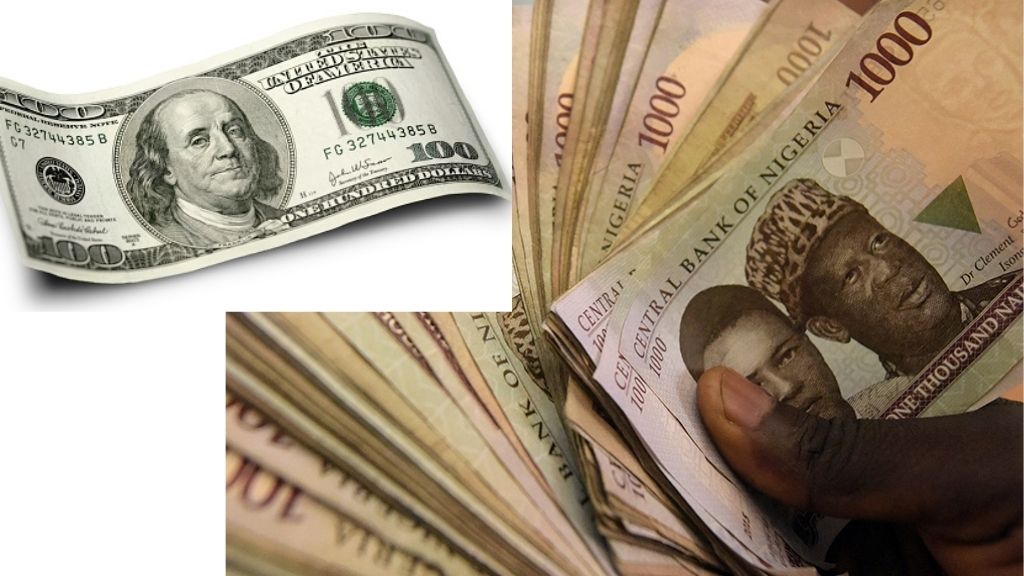
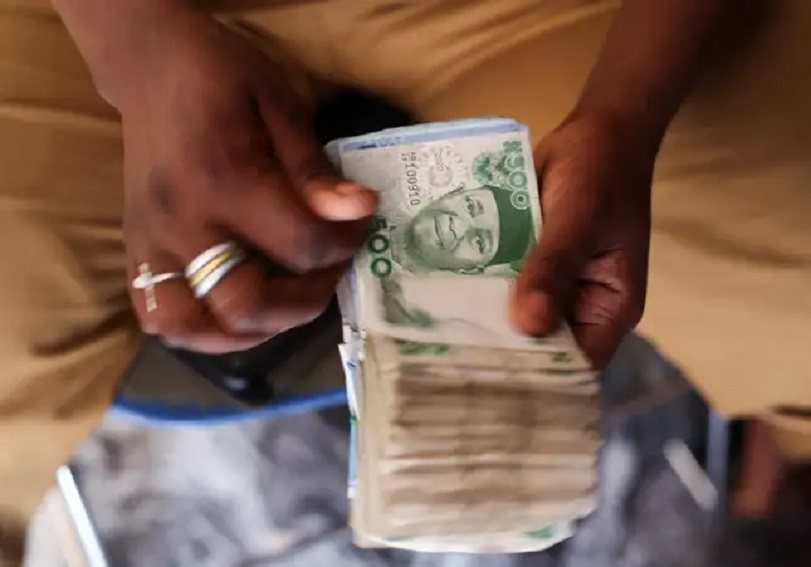
The $3 billion emergency loan secured by the Nigerian National Petroleum Company (NNPC) Limited from the Africa Export-Import Bank (Afreximbank) on Wednesday bolstered the Naira against the US Dollar at the Investors and Exporters (I&E) segment of the foreign exchange (FX) market on Friday.
The credit facility, which would be repaid from the proceeds of crude oil sales in Nigeria, was obtained by the oil firm to stabilise the local currency, which was losing its value at the parallel market because of a forex liquidity crisis.
On Thursday, the Central Bank of Nigeria (CBN), as part of an effort to arrest the situation, said from August 31, importers would have to use a price verification system portal to access FX.
The system will help to check round tripping and enable transparency in forex transactions, as it will have details of how customers obtained the foreign currencies and at what rate.
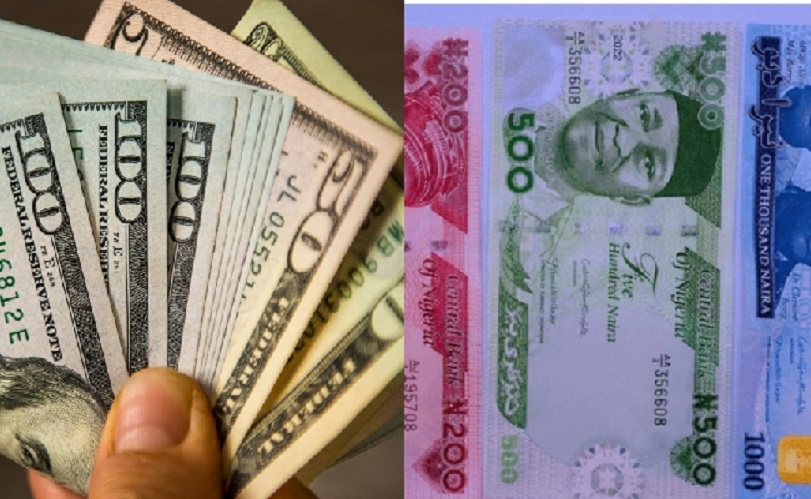
This move by the apex bank strengthened the domestic currency at the official market yesterday as it gained N1.15 or 0.15 per cent against the greenback to close at N739.52/$1 compared with the preceding day’s rate of N740.67/$1.
However, in the Peer-to-Peer (P2P) window, the Nigerian currency lost N3 against its American counterpart to sell at N844/$1, in contrast to Thursday’s value of N841/$1.
Also, in the black market, the Naira depreciated against the US Dollar during the session by N5 to quote at N845/$1 compared with the previous day’s rate of N840/$1.
The local currency was positive against the Pound Sterling in the spot market yesterday as it improved its value by N3.66 to finish at N948.07/£1 compared with Thursday’s rate of N951.73/£1 and chalked up N3.20 against the Euro to settle at N809.42/€1 versus N812.62/€1.
The digital currency market remained under pressure yesterday as China’s property developer, Evergrande Group, filed for Chapter 15 bankruptcy protection in the US.
Also, Mr Elon Musk’s SpaceX wrote down the value of its Bitcoin (BTC) holdings by $373 million and sold an unspecified amount, depleting the token by 2.3 per cent to $25,880.91 on Friday.
Ethereum (ETH) shed 2.1 per cent to $1,657.284, Solana (SOL) slumped by 2.3 per cent to $21.54, Litecoin (LTC) dropped 1.9 per cent to sell at $63.93, Binance Coin (BNB) depleted by 1.3 per cent to $215.26, Cardano (ADA) declined by 0.7 per cent to $0.2612, and Ripple (XRP) slipped by 0.08 per cent to $0.504.
Conversely, Dogecoin (DOGE) appreciated by 2.2 per cent to $0.0635, while Binance USD (BUSD) and the US Dollar Tether (USDT) finished flat at $1.00 apiece.



By Adedapo Adesanya
Nigeria’s Securities and Exchange Commission (SEC) has ordered an immediate asset freeze on 13 entities allegedly linked to terrorism financing across the capital market.
A directive titled Commission’s sweeping compliance directive issued to capital market operators noted that the move was after the 10 individuals and three entities were designated and blacklisted on the Nigeria Sanctions List by the Nigeria Sanctions Committee.
The commission anchored its directive on provisions of the Terrorism (Prevention and Prohibition) Act, 2022, which mandates the immediate freezing of all funds, assets, and economic resources linked to the named persons and organisations without prior notice.
The SEC stated that all Capital Market Operators (CMOs) and stakeholders have been notified that, pursuant to section 49 of the Terrorism (Prevention and Prohibition) Act, 2022, the Nigeria Sanctions Committee has approved the addition of entries and entities subject to asset freeze, travel ban, and arms embargo.
“The directive to free accounts and halt all transactions with the flagged entities is binding on all capital market operators and stakeholders, with strict reporting and compliance obligations, including: immediate identification and freezing of all assets linked to designated individuals and entities without prior notification. Mandatory reporting of frozen assets and attempted transactions to the Nigeria Sanctions Committee Secretariat.”
Details accompanying the designation reveal that several of the individuals were convicted by the Abu Dhabi Federal Court of Appeal in April 2019 for terrorism financing activities linked to Boko Haram.
The offences largely involved the alleged collection of funds in Dubai and transferring them to Nigeria to support terrorist operations. Sentences ranged from 10 years imprisonment to life sentences, underscoring the severity of the offences.
“This highlights a pattern where corporate vehicles are used as channels for financial flows, reinforcing the need for heightened scrutiny of business entities within the financial system.
“The SEC also emphasised that the asset-freezing mechanism is preventive rather than punitive, designed to disrupt financial support systems for terrorism before funds can be deployed.
“The implications for non-compliance are severe, including both civil and criminal liabilities, as well as reputational damage for institutions found wanting.
Additionally, the directive extends beyond traditional financial institutions to include Designated Non-Financial Businesses and Professions (DNFBPs), signalling a more comprehensive enforcement approach across Nigeria’s financial ecosystem.”
The latest alert, SEC noted, is in line with its zero-tolerance enforcement of anti-money laundering and counter-terrorism financing (AML/CFT) rules within Nigeria’s capital market, with emphasis on real-time compliance, detailed reporting, and continuous transaction monitoring.
“For market operators, the trading systems must be capable of rapid name screening, asset tracing, and reporting, while compliance teams are expected to act without delay or prior notice to affected clients.”
“It has to be noted that failure to comply not only exposes firms to regulatory sanctions but also risks damaging their credibility in both domestic and international markets,” the statement added.

By Dipo Olowookere
The trio of Access Holdings, Wema Bank, and Guaranty Trust Holding Company (GTCO) contributed 33.45 per cent and 32.54 per cent to the total trading volume and value, respectively, of the Nigerian Exchange (NGX) Limited last week, with the sale of 1.124 billion units worth N49.451 billion in 27,886 deals.
The market opened for four trading days in the week due to the public holiday observed last Monday for Easter.
The bourse recorded a turnover of 3.361 billion shares valued at N151.948 billion in 229,442 deals compared with the 2.856 billion shares worth N113.597 billion traded a week earlier in 215,287 deals.
Analysis showed that financial equities led the activity chart with 2.303 billion units sold for N90.467 billion in 98,175 deals, accounting for 68.54 per cent and 59.54 per cent of the total trading volume and value, respectively.
Services shares transacted 264.146 million units worth N1.977 billion in 12,638 deals, and ICT stocks traded 214.578 million units valued at N9.791 billion in 28,183 deals.
Business Post reports that 25 equities appreciated in the week versus 29 equities in the previous week, while 54 stocks depreciated versus 57 stocks of the preceding week, and 67 shares closed flat versus 62 stocks of the previous week.
Trans-Nationwide Express gained 32.75 per cent to close at N3.77, NGX Group appreciated by 13.94 per cent to N188.00, GTCO rose by 10.66 per cent to N135.00, NASCON expanded by 9.52 per cent to N161.00, and Guinness Nigeria grew by 9.38 per cent to N462.90.
On the flip side, DAAR Communications lost 21.47 per cent to finish at N1.50, RT Briscoe shrank by 20.00 per cent to N8.40, Deap Capital declined by 16.81 per cent to N5.00, Ellah Lakes went down by 16.67 per cent to N10.00, and Japaul crashed by 16.29 per cent to N2.93.
At the close of business for the week, the All-Share Index (ASI) was up on a week-on-week basis by 1.03 per cent to 203,770.43 points, and the market capitalisation soared by 1.05 per cent to N131.166 trillion.
Also, all other indices finished higher except the insurance and growth sectors, which fell by 3.64 per cent and 1.82 per cent apiece.
By Adedapo Adesanya
The Minister of State for Industry, Mr John Enoh, has tasked the Dangote Sugar Refinery to reach a production capacity of 600,000 metric tonnes (MT) per annum by 2030.
Speaking during a recent visit to the company’s complex in Numan, Adamawa State, Mr Enoh, who was accompanied by the Executive Secretary of the National Sugar Development Council, (NSDC), Mr Kamar Bakrinv, said he was at the sugar refiner as part of ongoing inspections of sugar projects nationwide, in line with President Bola Tinubu’s directive to accelerate Nigeria’s attainment of self-sufficiency in sugar production.
He said the country’s annual sugar consumption stood at about 1.8 million metric tonnes, far above current local production levels, noting that as a leading operator in the sector, Dangote Sugar must contribute significantly to bridging the supply gap.
“DSR is a very big player in the industry. Our circumstances in this sector will continue to depend on what DSR does.
“The company must deliver at least 600,000 metric tonnes annually by 2030 and sustain the output thereafter,” he said.
He commended the council for its role in driving the implementation of the Nigeria Sugar Master Plan, noting that collaboration among stakeholders remained critical.
“I have lost count of the number of times Mr President has spoken about the development of the sugar industry at Federal Executive Council (FEC) meetings,” he said.
The Minister described the infrastructure and level of investment at the Numan facility as evidence of commitment to the Backward Integration Programme.
He, however, stressed the need to accelerate efforts to meet national targets, assuring that the government will support operators to overcome existing challenges.
“We are aware that there are issues, including access to affordable long-term finance. Government is ready to work with stakeholders to address them,” he said.
Mr Enoh added that scaling up production was essential to meeting national expectations and reducing dependence on imports.
He said the programme had created employment opportunities and added value through local processing of sugarcane.
On his part, the Vice President of the Dangote Group, Mr Olakunle Alake, assured the minister of the company’s commitment to expand production capacity.
He said the firm would invest more resources to meet the 600,000 metric tonnes target by 2030.
The minister and his team inspected the new 6,000 tonnes-per-day factory expansion site, as well as harvest fields, mills and processing facilities during the visit.
The inspection also covered haulage systems, boilers, turbines and sugar bagging operations at the warehouse.
The NSMP was launched to achieve self-sufficiency, reduce reliance on imported sugar, and bridge the massive gap between local production and the national consumption rate of approximately 1.8 million metric tonnes annually.
-
 Feature/OPED6 years ago
Davos was Different this year
-
Travel/Tourism10 years ago
Lagos Seals Western Lodge Hotel In Ikorodu
-

 Showbiz3 years ago
Estranged Lover Releases Videos of Empress Njamah Bathing
-
 Banking8 years ago
Sort Codes of GTBank Branches in Nigeria
-

 Economy3 years ago
Subsidy Removal: CNG at N130 Per Litre Cheaper Than Petrol—IPMAN
-

 Banking3 years ago
Sort Codes of UBA Branches in Nigeria
-

 Banking3 years ago
First Bank Announces Planned Downtime
-

 Sports3 years ago
Highest Paid Nigerian Footballer – How Much Do Nigerian Footballers Earn