Economy
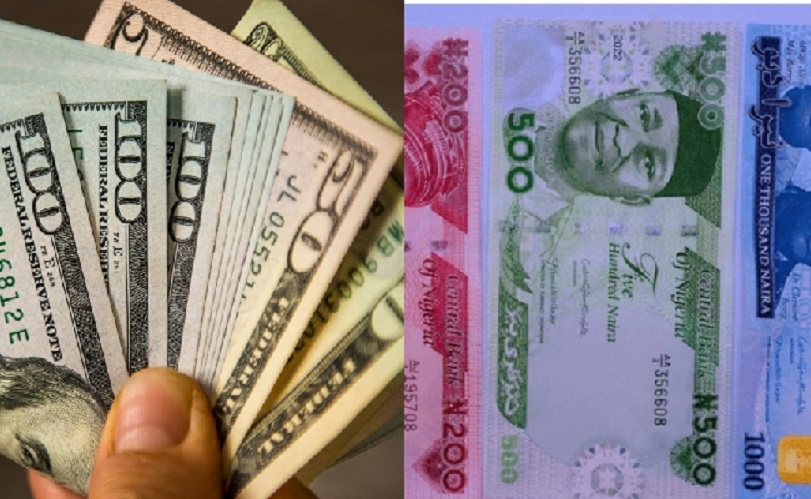
Naira Tumbles to N1,471/$1 at Official Market, N1,480/$1 at Black Market
By Adedapo Adesanya
It was not a good day for the Nigerian Naira in the currency market on Tuesday as its value further depreciated against the United States Dollar in the different segments of the foreign exchange (FX) landscape due to renewed forex demand pressure associated with this period.
In a note, Coronation Merchant Bank research unit said activity levels moderated as FX inflows declined to $835.60 million versus $1.18 billion in the prior week, and this may taper expectations that local currency may trade within the N1,470 and N1,480 range this week.
Recent strike action by the Petroleum and Natural Gas Senior Staff Association of Nigeria (PENGASSAN) impacted oil production by up to 200,000 barrels per day, which is responsible for a considerable amount of foreign earnings.
At the black market yesterday, the domestic currency lost N5 against the greenback to settle at N1,480/$1, in contrast to the N1,475/$1 it was traded on Monday.
In the Nigerian Autonomous Foreign Exchange Market (NAFEM) segment, the local currency tumbled against the Dollar during the session by 83 Kobo or 0.06 per cent to close at N1,471.09/$1 compared with the previous day’s N1,470.26/$1.
However, the Naira appreciated against the Pound Sterling in the official market yesterday by N2.27 to N1,974.64/£1 from N1,976.91/£1, and gained N1.82 against the Euro to finish at N1,716.47/€1 versus N1,718.29/€1.
At GTBank, the exchange rate of the Naira to the Dollar remained unchanged at N1,475/$1.
As for the cryptocurrency market, it was under pressure due to a strengthening of the US Dollar index, which weighs the American currency against other currencies. It hit 98.90 points for the first time since early August. Strength in the index always weigh on Dollar-denominated assets like cryptocurrency
Dogecoin (DOGE) slumped by 7.5 per cent to $0.2454, Cardano (ADA) depreciated by 6.4 per cent to $0.8141, Solana (SOL) fell by 5.8 per cent to $219.71, Ethereum (ETH) dropped 5.4 per cent to sell at $4,448.88, Ripple (XRP) shrank by 4.4 per cent to $2.85, Bitcoin (BTC) declined by 2.4 per cent to $121,407.32, and Litecoin (LTC) also slid by 2.4 per cent to $115.90.
But, Binance Coin (BNB) appreciated by 2.5 per cent to $1,286.12, while the US Dollar Tether (USDT) and the US Dollar Coin (USDC) remained at $1.00 each.
Economy
NESG Raises Alarm Over Nigeria’s Rising Debt Burden
By Adedapo Adesanya
Nigerian economic think-tank, Nigerian Economic Summit Group (NESG), has raised concerns about the country’s debt burden, with the outlook for 2026 indicating new borrowings of about N29 trillion.
In the May 2026 edition of its Debt Burden Monitor, the group said Nigeria’s debt pressure is persisting beneath surface stability, adding that the Debt Burden Index (DBI) is signalling elevated fiscal strain.
It stated: “Nigeria’s debt profile presents a nuanced but concerning picture as the economy transitions from 2024 into 2025. Headline indicators suggest a degree of stabilisation, yet underlying fiscal pressures remain elevated when assessed through a more comprehensive lens”.
Explaining the situation further in a historical perspective, NESG stated: “In 2024, the Debt Burden Index (DBI) declined to 70.9 points from a peak of 83.6points in 2023. At face value, this suggests an easing of debt stress. “However, this improvement was largely driven by a partial moderation in debt service pressures, rather than a fundamental strengthening of fiscal capacity.
“At the same time, public debt-to-GDP rose sharply to 40.6 per cent, reflecting continued reliance on borrowing to finance fiscal deficits and structural revenue weaknesses.
“This divergence highlights a central issue that the underlying fiscal vulnerability remained significant.
“The 2025 DBI trajectory reinforces concerns. Quarterly estimates show that the DBI remains elevated and volatile, rising to 78.4 points in Q1’25 and peaking at 79.6 points in Q2’25 before moderating to 76.2 points in Q3’25 and closing the year at an estimated 79.2 points in Q4’25.
‘’This pattern indicates that debt pressure has not structurally eased but instead fluctuates within a high-stress band.
“Overall, the 2024–2025 transition does not yet reflect a decisive shift toward debt sustainability. Rather, it signals a system making only marginal adjustments, with improvements in headline ratios masking persistent structural imbalances.
“The DBI captures this reality more effectively, signalling that Nigeria remains in a high-risk fiscal environment despite apparent stabilisation in conventional indicators”, NESG concluded.
As of early 2026, Nigeria’s total public debt stood at N159.28 trillion, with $51.86 billion as external debt, as of December 31, 2025.
The 2026 fiscal plan features a budget of N68.32 trillion, with a deficit of over N20 trillion set to be funded by new borrowing.
Actual new borrowing is approximately N17.8 trillion to N29.2 trillion, reflecting increased fiscal requirements.
Nigeria’s 2026 fiscal outlook came under sharp scrutiny after the Federal Government raised its borrowing plan to N29.2 trillion, far above the earlier projection of N17.89 trillion.
With total expenditure now estimated at N68.32 trillion and projected revenue at N36.87 trillion, the widening deficit is renewing concerns about debt sustainability, rising debt service obligations, inflation risks, exchange rate pressures, and the possible squeeze on private-sector credit.
Also, the country’s debt service for this year is estimated at N15.5 trillion to N15.9 trillion.
Economy
Dangote Refinery Target $50bn Valuation for Nigeria IPO
By Adedapo Adesanya
Dangote Refinery is targeting a $50 billion valuation ahead of the planned Initial Public Offering (IPO) in Nigeria later this year.
A report by Bloomberg, quoting sources, noted that the company wants to sell up to a 10 per cent stake, potentially raising around $5 billion in one of Nigeria’s biggest capital market deals.
The 650,000-barrels-per-day refinery has transformed Nigeria’s fuel supply chain by reducing dependence on imported petroleum products.
A senior executive at the Dangote Group confirmed to Bloomberg that the projected valuation reflects the company’s internal expectations but declined to comment further on the timing or structure of the transaction.
The planned listing comes as rising global crude oil prices and stronger domestic fuel consumption improve the refinery’s commercial outlook.
The Dangote Group has also appointed a consortium of three financial advisers to manage the offering. Stanbic IBTC Capital, operating under the Standard Bank umbrella, will handle the international book-building process and lead engagement with foreign portfolio investors.
Vetiva Capital Management, which has advised on previous Dangote listings, will manage retail investor distribution within Nigeria, while FirstCap will focus on placements with Nigerian institutional investors, particularly pension funds, according to the report
Located in the Lekki Free Zone in Lagos, the facility has a refining capacity of 650,000 barrels per day, making it Africa’s largest single-train refinery.
Since beginning large-scale production of petrol, diesel, and aviation fuel, the refinery has reshaped Nigeria’s fuel supply chain, reducing reliance on imported petroleum products and increasing local refining capacity in Africa’s biggest oil producer.
Last year, Mr Aliko Dangote, the majority stakeholder at the refinery, indicated that Nigerian investors would soon have an opportunity to buy shares directly in the refinery business, signalling a broader push to attract domestic participation in the energy sector.
The IPO is anchored by an unprecedented dividend structure that allows investors to purchase shares in Nigerian naira but receive returns in US Dollars, backed by an estimated $6.4 billion in annual petrochemical export revenues.
The prospectus has already been submitted for regulatory review, and a subscription window is expected to open by August 2026.
It will also be the first time that the Refinery will become available for public ownership. The refinery, located in the Lekki Free Trade Zone near Lagos, was commissioned in May 2023 after nearly a decade of construction and an investment of approximately $20 billion.
By February 2026, the facility had reached its full processing capacity of 650,000 barrels of crude oil per day, making it the world’s largest single-train refinery and Africa’s biggest refining complex.
Economy
Nigeria Runs to World Bank for Fresh $1.25bn Loan
By Adedapo Adesanya
Nigeria is currently in talks with the World Bank for a fresh $1.25 billion loan in June 2026.
According to a document titled Nigeria Actions for Investment and Jobs Acceleration, the proposed loan will finance ongoing economic reforms, job creation, and competitiveness.
Already, talks are at the critical stage for the loan facility expected to be presented for approval on June 26, 2026. The loan has progressed beyond the initial concept and appraisal phases.
If approved, it will come off as the second-largest loan facility after the approval of the ‘$1.5bn Reforms for Economic Stabilisation to Enable Transformation Development Policy Financing’ approved by the Bank in June 2024.
The borrower is listed as the Federal Republic of Nigeria, while the Federal Ministry of Finance will serve as the implementing agency.
This comes as the country’s debt profile remains high. As of December 31, 2025, external debt stood at $51.86 billion, while Nigeria’s total public debt in dollars is currently at $110.97 billion
The loan is now at the decision-meeting stage of the World Bank’s project cycle, a point at which the lender’s management reviews the final appraisal package and determines whether the project should proceed to the Board of Executive Directors for approval.
This stage comes after appraisal and negotiations have been concluded, with key policy actions, financing terms, and reform commitments already agreed in principle between the borrower and the World Bank team.
In the World Bank process, the decision meeting represents a near-final internal clearance, after which the project is prepared for formal Board consideration, where final approval is granted.
The World Bank document stated, “The review did authorise the team to appraise and negotiate,” meaning the project has successfully passed earlier internal checks and is advancing toward final approval.
According to the global lender, the loan is designed “to support the government’s efforts to expand access to finance, digital, and electricity services, and strengthen competitiveness through tax, trade, and agriculture reforms.”
Under President Bola Tinubu, the World Bank has approved about $9.35 billion in loans and credits for Nigeria between June 2023 and May 2026.
These approvals span multiple sectors, including power, education, healthcare, agriculture, social protection, renewable energy, MSME financing, and economic reform support.
Key packages include the $2.25 billion RESET and ARMOR reform financing in June 2024, $1.57 billion for HOPE and SPIN programmes in September 2024, and $1.08 billion for education and resilience programmes in March 2025.
-
Feature/OPED6 years agoDavos was Different this year
-
Travel/Tourism10 years ago
Lagos Seals Western Lodge Hotel In Ikorodu
-
Showbiz3 years agoEstranged Lover Releases Videos of Empress Njamah Bathing
-
Banking8 years agoSort Codes of GTBank Branches in Nigeria
-
Economy3 years agoSubsidy Removal: CNG at N130 Per Litre Cheaper Than Petrol—IPMAN
-
Banking3 years agoSort Codes of UBA Branches in Nigeria
-
Banking3 years agoFirst Bank Announces Planned Downtime
-
Sports3 years agoHighest Paid Nigerian Footballer – How Much Do Nigerian Footballers Earn