
Economy
NASD OTC Exchange Capitalisation Climbs to N2.185trn


By Adedapo Adesanya
The NASD Over-the-Counter (OTC) Securities Exchange further appreciated by 1.08 per cent on Wednesday, January 7, pushing the market capitalisation higher by N23.38 billion to N2.185 trillion from the preceding session’s closing value of N2.162 trillion.
Also during the trading session, NASD Unlisted Security Index (NSI) further went up by 39.08 points to close at 3,653.04 points compared with the 3,613.96 points recorded on Tuesday.
The midweek session witnessed a rise in the share prices of three securities on the unlisted securities market, with Central Securities Clearing System (CSCS) Plc adding N3.40 to close at N42.14 per share versus the preceding day’s N38.74 per share.
Further, FrieslandCampina Wamco Nigeria Plc expanded by N3.05 to finish at N59.92 per unit compared with the N56.87 per unit it ended a day earlier, and Geo-Fluids Plc jumped by 10 Kobo to end at N6.88 per share versus N6.78 per share.
Yesterday, the volume of securities rose by 39.0 per cent to 1.9 million units from the previous day’s 1.4 million units, the value of securities surged by 29.5 per cent to N36.3 million from N28.0 million, while the number of deals slid by 19.6 per cent to 45 deals from 56 deals.
The most active stock by value on a year-to-date basis was CSCS Plc with 1.1 million units exchanged for N41.6 million, followed by Geo-Fluids Plc with 2.9 million units valued at N19.4 million, and Okitipupa Plc with 49,424 units worth N11.0 million.
In terms of volume, Industrial and General Insurance (IGI) Plc led with 2.9 million units traded for N1.9 million, trailed by Geo-Fluids Plc with 2.9 million units sold for N2.9 million, and CSCS Plc with 1.1 million units traded for N41.6 million.









By Adedapo Adesanya
The Senate President, Mr Godswill Akpabio, has announced that the upper chamber will pass the 2026 Appropriation Bill on March 31, following a brief adjournment for the Sallah break.
Speaking before the Senate adjourned plenary, Mr Akpabio said standing committees would continue working during the recess, particularly on ongoing budget defence sessions and coordination with the Senate Committee on Appropriations.
“I hope the Leader will put pressure on the Committee on Appropriations to harmonise the report of the 2026 Appropriation Bill by that date.
“This is so that when we resume, we can try our best to pass the budget without requiring further concurrence or harmonisation.
“Leadership must work together to ensure everything is in order. The House of Representatives has already adjourned to conclude budget processes and will also reconvene on March 31.
“On that day, we hope to pass the national budget in tandem with the Senate.”
Earlier, the Senate Committee on Appropriations had tentatively fixed Tuesday, March 17, for the final consideration and passage of the N58.47 trillion 2026 Appropriation Bill.
To meet the timeline, the committee, at a special session held in January, approved February 2 to 13 for budget defence by Ministries, Departments and Agencies (MDAs) at the committee level.
As part of efforts to ensure an inclusive and transparent process, the committee also scheduled February 9, 2026, for a public hearing on the budget proposal.
President Bola Ahmed Tinubu, in December, presented the N58.47 trillion 2026 budget proposal to a joint session of the National Assembly, outlining the government’s priorities anchored on economic stability, infrastructure expansion, security and social investment.
The budget was hinged on assumptions including oil production of 1.84 million barrels per day, an oil price benchmark of $64.85 per barrel, and an exchange rate assumption of ₦1,400 to the Dollar.
Following the presentation, the Senate passed the appropriation bill for first and second readings, paving the way for detailed consideration by relevant committees.
By Adedapo Adesanya
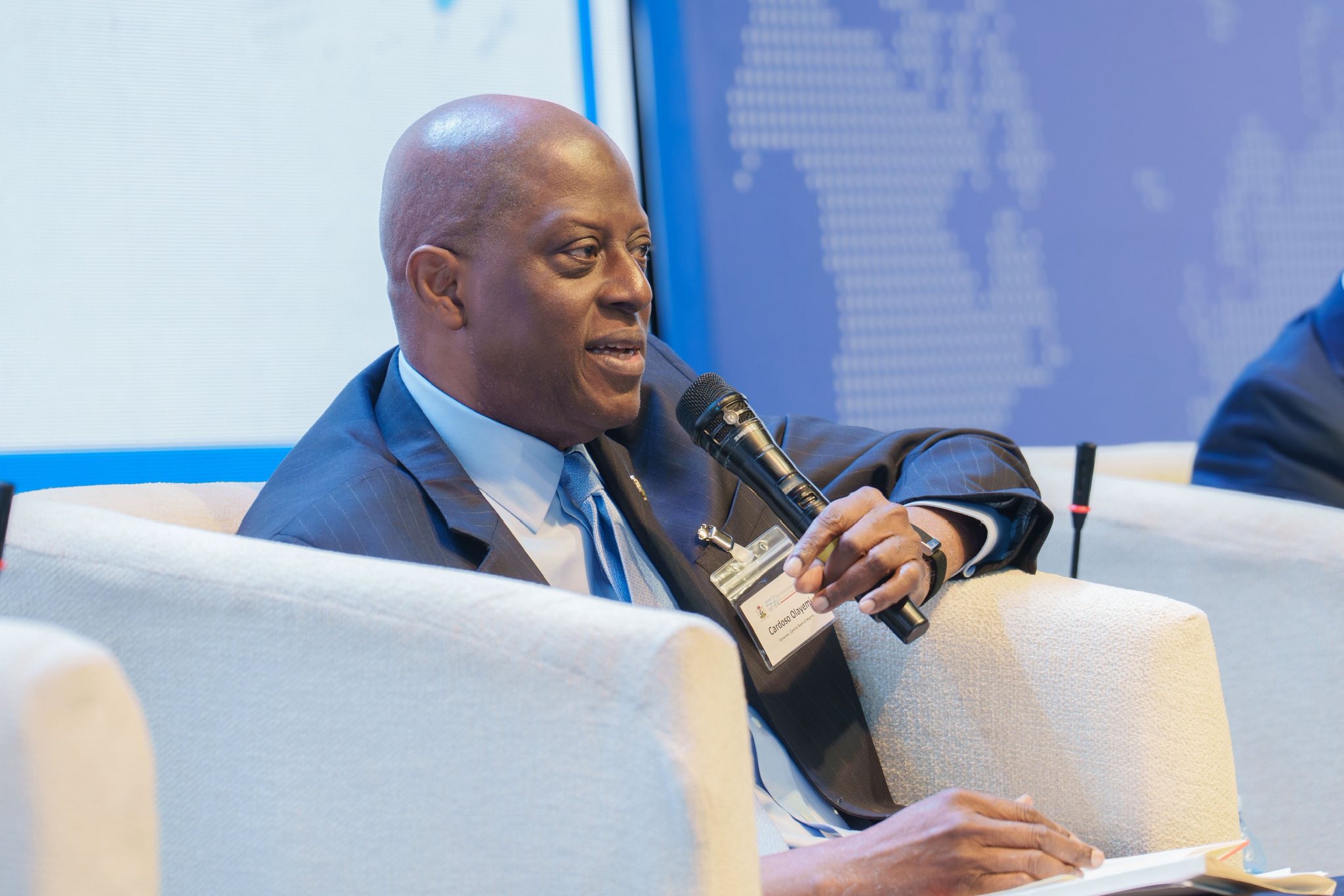
The Governor of the Central Bank of Nigeria, Mr Yemi Cardoso, has eased fears of any devaluation of the Naira anytime soon, saying the country’s ongoing monetary and foreign exchange reforms have restored confidence in the currency and strengthened the financial system.
Speaking while delivering a keynote address at the Annual Distinguished Alumni Lecture held in celebration of Founders’ Day of the St. Gregory’s College Old Boys Association in Lagos, the apex bank governor said, “These reforms have restored pride in our currency and strengthened confidence in our financial system.”
Mr Cardoso explained that the CBN remains focused on restoring price stability and bringing inflation down to single digits, noting that although the objective will take time to achieve, it remains central to the apex bank’s policy direction.
“Our goal remains to bring inflation down to single digits. This cannot happen overnight. External shocks will continue to occur, and global developments will always have some impact. But inflation is effectively a tax, and it disproportionately affects the most vulnerable members of society,” he said.
“That is why restoring price stability remains a central objective.”
He noted that the bank’s commitment to transparency and well-governed markets is evident in the reforms carried out in the foreign exchange market, including the elimination of the multiple exchange rate system that previously benefited only a few.
According to him, although some critics argue that the exchange rate appears higher today than it was before the reforms, the key difference lies in accessibility and transparency.
“Some critics argue that the exchange rate today appears higher than it was before the reforms. My response is simple: when the official rate was lower, how many people could actually access foreign exchange at that rate? The answer, in most cases, was very few,” he said.
“Today, the situation is fundamentally different. Foreign exchange is accessible through formal channels, and the system is far more transparent.”
He explained that many Nigerians travelling abroad can now use their naira cards directly instead of searching for foreign currency through informal channels, a development he said represents a major improvement compared to previous years when travellers struggled to access foreign exchange.
Mr Cardoso further revealed that the premium between the official and parallel markets has narrowed sharply from around 50 per cent in 2022 to less than 2 per cent on average in 2025, reflecting improved liquidity and efficiency in the FX market.
By Adedapo Adesanya
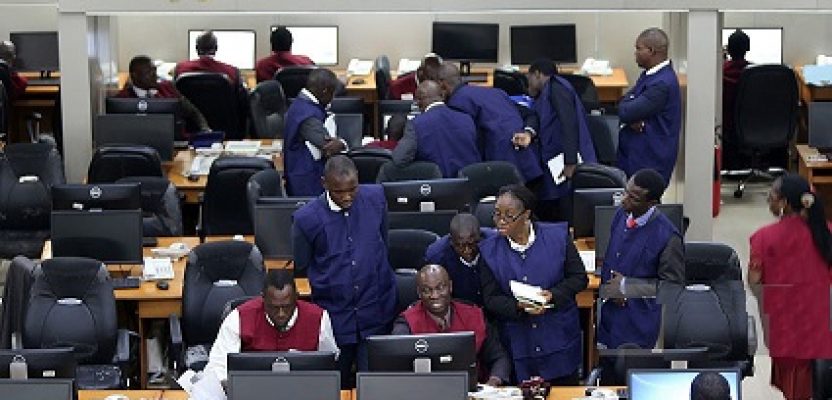
Four stocks weakened the NASD Over-the-Counter (OTC) Securities Exchange by 0.56 per cent on Thursday, March 12, making it the third consecutive loss this week.
The price losers were led by FrieslandCampina Wamco Nigeria Plc, which crumbled by N4.71 to N128.07 per share from N132.78 per share. Central Securities Clearing System (CSCS) Plc lost N1.98 to close at N78.02 per unit versus the previous day’s N80.00 per unit, First Trust Mortgage Bank Plc declined by 15 Kobo to N1.75 per share from N1.90 per share, and MRS Oil Plc crashed by 10 Kobo to settle at N210.00 per unit compared with the preceding session’s N210.10 per unit.
Consequently, the market capitalisation went down by N14.13 billion to N2.519 trillion from N2.533 trillion, and the NASD Unlisted Security Index (NSI) dipped by 23.61 points to 4,210.30 points from 4,233.91 points.
There were three price gainers yesterday, led by Okitipupa Plc, which gained N10.00 to N240.00 per share from N230.00 per share, IPWA Plc increased by 45 Kobo to N5.01 per unit from N4.56 per unit, and Afriland Properties Plc appreciated by 35 Kobo to N17.95 per share from N17.60 per share.
During the session, the value of securities surged by 197.4 per cent to N95.0 million from N31.9 million, the volume of securities grew by 185.8 per cent to 3.7 million units from 1.3 million units, and the number of deals improved by 44.4 per cent to 52 deals from 36 deals.
The most active stock by value (year-to-date) was CSCS Plc with 38.4 million units worth N2.4 billion, followed by Okitipupa Plc with 6.4 million units valued at N1.1 billion, and FrieslandCampina Wamco Nigeria Plc with 6.2 million units sold for N566.8 million.
The most traded stock by volume (year-to-date) was Resourcery Plc with 1.05 billion units traded for N408.7 million, trailed by Geo-Fluids Plc with 130.6 million units transacted for N503.8 million, and CSCS Plc with 38.4 million units worth N2.4 billion.











-
 Feature/OPED6 years ago
Davos was Different this year
-
Travel/Tourism10 years ago
Lagos Seals Western Lodge Hotel In Ikorodu
-

 Showbiz3 years ago
Estranged Lover Releases Videos of Empress Njamah Bathing
-
 Banking8 years ago
Sort Codes of GTBank Branches in Nigeria
-

 Economy3 years ago
Subsidy Removal: CNG at N130 Per Litre Cheaper Than Petrol—IPMAN
-

 Banking3 years ago
Sort Codes of UBA Branches in Nigeria
-

 Banking3 years ago
First Bank Announces Planned Downtime
-

 Sports3 years ago
Highest Paid Nigerian Footballer – How Much Do Nigerian Footballers Earn