Economy
We Need Inclusive Growth to Enable Economic Recovery—Uwais
By Modupe Gbadeyanka
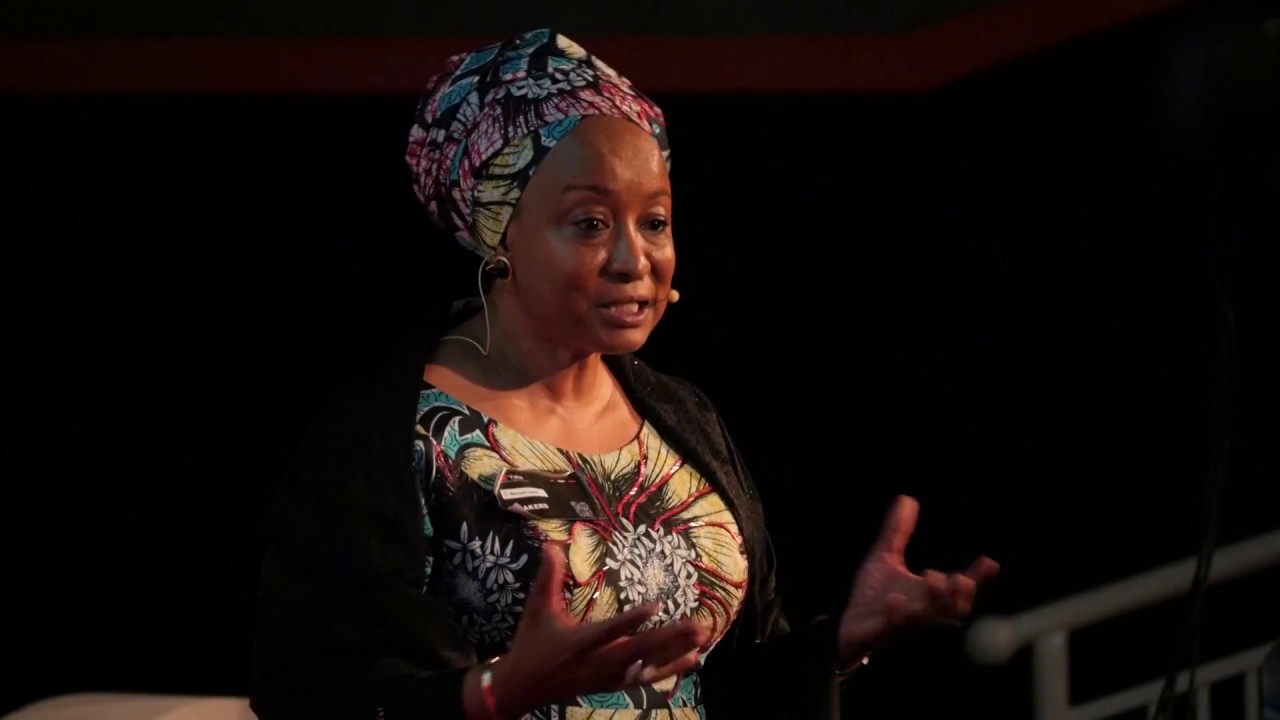
Special Adviser to President Muhammadu Buhari on Social Protection, Mrs Maryam Uwais, has charged Nigerians to embrace programmes of the present administration, noting that the nation needs inclusive growth which will enable economic recovery and growth of the country.
Addressing senior journalists in Lagos at a ‘Media Interaction’ held on Friday, February 2, 2018, the President’s aide disclosed that, “We researched and found 26 attempts at economic growth in the past but the problems with the past programme has been implementation as federal and state governments scuffled over who has control of the programme.
“N-Power is a job creation and youth employment programme and our target are 500,000 unemployed graduates; 100,000 artisans; 8 regional innovation hubs for one million primary and secondary students which offer access to computer, training in animation, coding and programming.”
According her, “Every minute, 6.8 million Nigerians enter the unemployment market and Nigeria needs to ensure that 11.9 people are graduated out of poverty per minute, to escape extreme poverty.”
She further said, “10.5 million Nigerian children are out of school and 20 percent of the world’s out-of-school children are in Nigeria.”
Mrs Uwais disclosed that, “The National Home Grown School Feeding Programme (NHGSFP) will see 5.5 million school children fed with nutritious meals.
“There are also secondary beneficiaries of the programme such as the cooks whom we pay directly and farmers who supply the food stuff.”
Speaking further on how government plans to assist Nigerians, Mrs Uwais said the Government Empowerment and Enterprise Programme (GEEP) is another programme designed for zero interest loan scheme for over 1.2 million Nigerian artisans, traders, market men and women, as well as women cooperatives.
She said it was discovered that 70 percent MSMEs in Nigeria cannot access loans facilities and financial support for business growth.
According to her, GEEP works with cooperatives to assist MSMEs and the Bank of Industry (BOI), manages it by verifying the membership of the cooperatives through BVN.
Those who default payment get blacklisted and prevented from further loans. GEEP targets 1.66 million micro, small and medium enterprises.
Also, Conditional Cash Transfer (CCT) is the fourth programme and it is designed to support one million of the most vulnerable and poorest Nigerians. CCT targets 1 million poorest households.
Human Development index (HDI) will decrease, meaning that inequalities would significantly increase, with implications such as increased poverty, crime and conflict.
Regional implications will include the overflow of poverty, crime and conflict to even poorer neighbouring countries.
Poverty rates will continue to increase, with Nigeria, consequently failing to meet SDG targets. The desperation for illegal and unsafe migration will continue to increase, underscoring the need for a very significant doubling down on social protection, as well as for creating employment and income pathways for Nigerians.
The Special Adviser highlighted economic overdependence on crude oil; absence of critical policies driving inclusive growth and changing demographic profile as challenges that could not be left unaddressed, hence President Buhari’s decision to act. Currently the programmes are operational in 14 states of the federation.
Economy
Oando H1 2026 Revenue Soars 20% to N2.1trn, Profit Rises 8% to N68.6bn
By Aduragbemi Omiyale
One of the leading local energy firms, Oando Plc, delivered an impressive financial performance in the first six months of 2026, according to details of its results filed to the Nigerian Exchange (NGX) Limited.
Between January and June 2026, revenue surged by 20 per cent to N2.1 trillion from N1.7 trillion in the same period of 2025, driven by growth in the Exploration & Production and Trading segments of the business.
Also, the net profit grew by 8 per cent year-on-year to N68.6 billion from N63.3 billion, supported by improved operating profits and tax credits.
It was observed that the organisation deepened its domestic gas monetisation portfolio with the commencement of long-term gas supply of 11.2 MMscfd to the newly commissioned 60 MW Bayelsa Independent Power Plant.
“The first half of 2026 marks an important inflexion point in Oando’s journey. Over the past two years, our priority has been to successfully integrate one of the most significant upstream acquisitions in Africa and unlock the full value of our expanded portfolio. The progress achieved during the period demonstrates that we are now delivering the operational and financial outcomes expected from that transformation,” the chief executive of Oando, Mr Adewale Tinubu, stated.
Commenting further on the results, Mr Tinubu said, “Operational efficiency underpinned our performance during the period as we strengthened asset integrity, improved facility reliability and reinforced security across our operating areas, resulting in average facility uptime of 92 per cent while reducing production operating costs by 18 per cent to $16.83 per boe.”
“Our development programme also gathered significant momentum during the period as we successfully drilled and completed two land development wells, with an additional land well currently being drilled, while mobilising a second drilling rig to accelerate activity across our operated portfolio.
“In parallel, we continued an extensive programme of rig-less well interventions designed to restore production, sustain plateau output and mitigate natural field decline. Together, these activities increased average production to 42,789 boepd, representing 16 per cent year-on-year growth.
“This translated into a stronger financial performance, with revenue increasing by 20 per cent to N2.1 trillion, while the business generated N179.5 billion in operating cash, improving liquidity. Profit after tax also increased by 8 per cent to N68.6 billion, reflecting the overall improvement in operating performance during the period,” he pointed out.
The Oando chief also said, “Looking ahead in 2026, our priorities remain firmly centred on completing our seven-well drilling programme and portfolio-wide well intervention campaign while delivering production of circa 50,000 boepd.
“Beyond 2026, our identified inventory of 62 development wells, supported by 55 planned well interventions, provides a clear pathway towards our medium-term production ambition of approximately 100,000 boepd.
“Furthermore, we shall execute an intensive fundraising and balance sheet restructuring programme to optimise our capital structure, strengthen our financial position, improve working capital, enhance financial flexibility and ensure the business is appropriately funded to accelerate growth and maximise long-term shareholder value.
“We have built a resilient operating platform and established a clear roadmap for growth. Our focus is now on translating our significant opportunities into higher production, a stronger balance sheet and superior long-term returns for our shareholders.”
Economy
PalmPay Hits $1bn Valuation, Eyes Hong Kong IPO
By Adedapo Adesanya
Africa-focused fintech company PalmPay has joined the ranks of unicorn startups after attaining a valuation of more than $1 billion, as the digital payment platform prepares for a potential initial public offering (IPO) in Hong Kong.
According to a report by Bloomberg on Tuesday, citing people familiar with the matter, the Hong Kong-headquartered company is in advanced discussions to raise about $200 million in a new funding round that would cement its unicorn status and support its next phase of expansion.
The planned fundraising comes as PalmPay accelerates its growth strategy across Africa and Asia, while positioning itself for a public listing that could become one of the most significant fintech IPOs involving an Africa-focused company in recent years.
PalmPay’s move follows a period of rapid growth in Nigeria, where it has become one of the country’s largest digital financial services providers. Alongside OPay and Moniepoint, the company forms the trio that dominates Nigeria’s retail digital payments and agency banking market, a segment driven by millions of point-of-sale (POS) transactions processed daily.
With PalmPay’s latest valuation milestone, all three leading Nigerian fintechs have now achieved unicorn status. While OPay has previously disclosed plans to pursue a listing in the United States, Moniepoint has remained focused on expanding its banking and business services without publicly indicating IPO ambitions.
Founded in 2019 after securing a Mobile Money Operator (MMO) licence from the Central Bank of Nigeria (CBN), PalmPay has built one of the country’s fastest-growing fintech ecosystems. The company says it now serves more than 35 million registered users and over 600,000 merchants, supported by an extensive network of more than 500,000 mobile money agents nationwide.
The platform offers a broad suite of financial services, including peer-to-peer transfers, bill payments, airtime purchases, savings, credit products, merchant payment solutions and agency banking services. PalmPay says it processes as many as 15 million transactions daily, reflecting the increasing adoption of digital payments across Nigeria.
Beyond its home market, the fintech has expanded into Tanzania, Ghana, and Bangladesh, underscoring its ambition to become a leading emerging-market digital bank. Industry analysts view the expansion as part of a broader strategy to diversify revenue streams while replicating its Nigerian success in other underbanked markets.
PalmPay has attracted backing from prominent global investors, including Taiwanese semiconductor manufacturer MediaTek and smartphone maker Transsion Holdings, whose Tecno, Infinix and itel brands command significant market share across Africa. Their support has helped PalmPay leverage smartphone penetration to drive financial inclusion through mobile-first banking services.
As part of efforts to strengthen its leadership ahead of its next growth phase, PalmPay recently appointed Mr Samuel Oluyemi as Chief Operating Officer (COO) for its Nigerian business. Mr Oluyemi joined the company after more than two decades at the Nigeria Inter-Bank Settlement System (NIBSS), where he played key roles in developing the country’s digital payments infrastructure.
If completed, the fundraising and eventual Hong Kong listing would further underscore growing international investor confidence in African fintech companies despite a more cautious global venture capital environment. The proceeds are expected to support PalmPay’s geographical expansion, deepen its product offerings, invest in technology infrastructure and strengthen its competitive position in Africa’s rapidly evolving digital financial services industry.
Economy
CSCS, FrieslandCampina Lead OTC Exchange’s 2.08% Leap
By Adedapo Adesanya
Market bellwethers, Central Securities Clearing System (CSCS) Plc and FrieslandCampina Wamco Nigeria Plc, lifted the NASD Over-the-Counter (OTC) Securities Exchange by 2.08 per cent on Monday, August 3.
CSCS Plc, the Nigerian securities depository company, gained N10.00 to close at N112.00 per share compared with the previous session’s N102.00 per share, and FrieslandCampina Wamco Nigeria Plc advanced by N4.71 to quote at N152.64 per unit versus last Friday’s N147.93 per unit.
As a result, the NASD Security Index (NSI) added 92.14 points to finish at 4,523.85 points compared with the preceding session’s 4,431.71 points, and the market capitalisation appreciated by N55.31 billion to N2.715 trillion from N2.659 trillion.
Business Post reports that the price of MRS Oil Plc crashed during the trading day by N12.00 to N120.00 per share from N132.00 per share, and UBN Property Plc dipped by 3 Kobo to N1.90 per unit from N1.93 per unit.
Trading data showed that the volume of securities exchanged rose by 113.1 per cent to 1.5 million units from 690,990 units, and the number of deals climbed by 19.2 per cent to 31 deals from 26 deals, while the value of securities slid by 13.1 per cent to N65.2 million from N75.0 million.
Great Nigeria Insurance (GNI) Plc remained the most traded stock by value on a year-to-date basis, with 3.4 billion units valued at N8.4 billion, followed by Infrastructure Credit Guarantee (Infracredit) Plc with 2.3 billion units sold for N6.5 billion, and CSCS Plc with 76.8 million units traded for N5.5 billion.
GNI Plc also closed the session as the most traded stock by volume on a year-to-date basis, with 3.4 billion units worth N8.4 billion, followed by Infracredit Plc with 2.3 billion units exchanged for N6.5 billion, and Resourcery Plc with 1.1 billion units transacted for N415.7 million.