Connect with us

Economy

NGX Group’s Profit Rises 82.4% in Six Months

Published

on

Nigerian Exchange 1

By Adedapo Adesanya

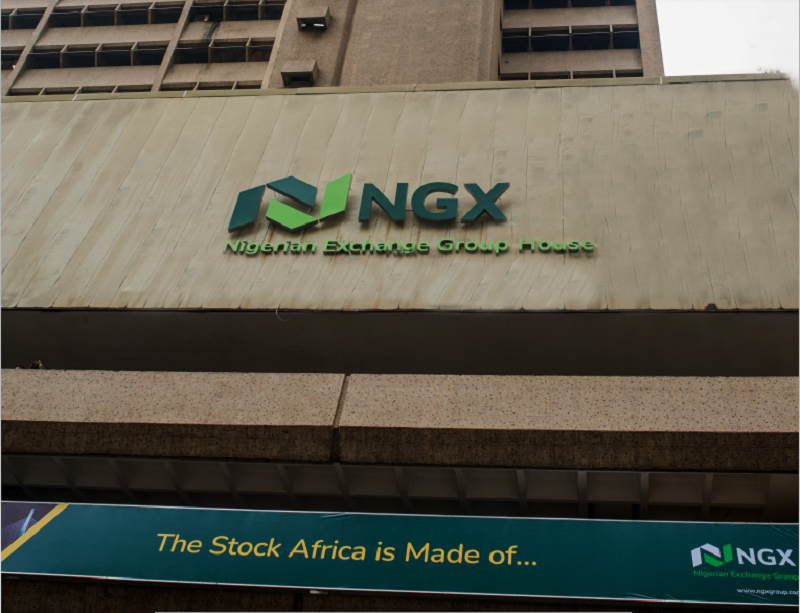
Nigerian Exchange (NGX) Group Plc has recorded an 82.4 per cent growth in profit in the first six months of the year, rising to N820.167 million from N449.658 million in H1 2021.

This information was contained in the NGX group’s unaudited results for the half-year ended June 30, 2022, which noted that revenue rose by 140.4 per cent to N3.823 billion during the period from N1.59 billion in 2021.

Highlights of the result included gross earnings of 138.3 per cent improvement to N4.22 billion from N1.77 billion, driven by 165.1 per cent growth in treasury investment income (26.6 per cent of revenue) to N1,017.4 million in June 2022 relative to N383.7 million in the comparative period in 2021 driven largely by relatively higher yields on the Group’s treasury bills, bonds and fixed deposit investments.

There was a 198.4 per cent growth in transaction fees (60.7 per cent of revenue) to N2.3 billion in June 2022 from N777.7 million recorded in June 2021 due to a significant increase in trading activities in the Exchange.

The company also saw an 18.6 per cent increase in listing fees (9.5 per cent of revenue) to N363.8 million in June 2022 from N306.8 million in June 2021 buoyed by improved listing on the Exchange in the first half of 2022 relative to the first half of 2021.

Rental income (1.4 per cent of revenue) earned from NGX Real Estate lease of office floor spaces recorded a 60.5 per cent increase from N32.2 million in June 2021 to N51.7 million.

However, there was a 15.4 per cent decline in other fees (1.8 per cent of revenue) to N69.7 million in June 2022 from N82.4 million in June 2021 which represents rental income from the trading floor, annual charges from brokers, dealing license and membership fees earned by the Group.

There was a 119.6 per cent increase in other income (9 per cent of gross earnings) driven primarily by a 376.5 per cent improvement in market data income (56 per cent of other income) to N220.94 million from N46.3 million reported in June 2021 which is made up of technology income, other sub-lease income, and penalty fees.

There was a 15.99 per cent growth in other operating income (31 per cent of other income) from N105.6 million in June 2021 to N122.5 million in June 2022.

Also, total expenses grew by 102.6 per cent from N1.9 billion in June 2021 to N3.9 billion in June 2022 primarily driven by a 231.6 per cent growth in operating expenses (59.1 per cent of total expenses) to N2.3 billion from N702.9 million in June 2021. This was largely as a result of a finance cost (57 per cent of operating expenses) of N1.3 billion related to a term loan taken during the period. Personnel expenses (34.4 per cent of total expenses) also grew by 27 per cent from N1.01 billion in June 2021 to N1.35 billion during the period under review.

The exchange’s made an operating profit of N273.2 million in June 2022 compared to an operating loss of N177.2 million in June 2021, as a result of 138.3 per cent growth in gross earnings.

Profit before income tax grew by 134.4 per cent to N1.22 billion in June 2022 from N521.9 million in the corresponding period in 2021 due to an impressive growth in the top line which was more than sufficient to mitigate the impact of the increases in key expense lines.

Despite an increase in effective tax rate to 32.9 per cent relative to 13.8 per cent in June 2021, profit after income tax grew by 82.4 per cent to N820.2 million from N449.7 million. This resulted in a decline in profit after tax margin to 19.5 per cent from 25.4 per cent recorded in June 2021.

Total assets rose by 59.9 per cent to N39.8 billion from N24.9 billion in December 2021, driven primarily by 91.3 per cent growth in investment in associates to N31.99 billion from N14.8 billion in Dec. 2021, and 116.8 per cent growth in Cash and Cash equivalent to N4.3 billion from N2.2 billion in December 2021.

Total liabilities recorded a 394.7 per cent increase from N3.8 billion in December 2021 to N18.6 billion as a result of a N14.5 billion term loan used to facilitate the increase in investment in select associates.

Speaking on the result, the Group Managing Director/Chief Executive Officer, Mr Oscar Onyema said, “In 2021, we took strategic steps to reorganise our business by laying the foundation for the rebirth of our franchise as we became a fully-fledged for-profit making company with a clear focus on maximizing resources and improving stakeholder returns.

“Our performance in the first half of 2022 is a testament to our ability to deliver long-term value. We recorded impressive growth in our top line to deliver a profit before tax of N1.22 billion despite the peculiar challenges inherent in our operating environment.

“Our goal remains to sustain our position as a leading integrated market infrastructure group in Africa, by diversifying our revenue streams, and identifying and investing in new businesses. We remain focused on building formidable businesses through broader and deeper involvement in every sphere of the capital market value chain through informed investments in profitable verticals and enhanced risk management practices, without losing sight of emerging opportunities in unrelated businesses within the Sub-Saharan African region.”


Adedapo Adesanya is a journalist, polymath, and connoisseur of everything art. When he is not writing, he has his nose buried in one of the many books or articles he has bookmarked or simply listening to good music with a bottle of beer or wine. He supports the greatest club in the world, Manchester United F.C.

Economy

Investors Eye Investment Opportunities in Dangote Refinery

Published

on

South African investors dangote refinery

By Aduragbemi Omiyale

The planned listing of the Dangote Petroleum Refinery & Petrochemicals on the Nigerian Exchange (NGX) Limited is already attracting interest from South African investors and others.

The leadership of South Africa’s Government Employees Pension Fund (GEPF), alongside the Public Investment Corporation and Alterra Capital Partners, were recently at the Lagos-based facility.

The chairperson of GEPF, Mr Frans Baleni, said that the refinery stands as evidence that Africa can execute transformational infrastructure projects when backed by visionary leadership, long-term investment and strong technical expertise.

According to him, the significance of the project extends well beyond Nigeria’s borders, noting that it should reshape how Africa thinks about itself.

“The Dangote Refinery and Petrochemicals Complex is a powerful demonstration that, with visionary leadership and long-term capital, that perception no longer holds. This is the kind of African-led industrial scale that institutional investors on this continent should be backing,” he said.

Also speaking, the chief executive of PIC, Mr Patrick Dlamini, described the refinery as one of the most transformative industrial projects undertaken on the continent, saying it is reshaping global perceptions about Africa’s industrial capabilities and economic potential.

He said PIC, which manages about $230 billion in assets largely on behalf of South Africa’s Government Employees Pension Fund, is actively seeking long-term partnerships aligned with infrastructure development, industrialisation and economic transformation across Africa.

“There is real strategic alignment between Dangote’s industrial agenda and how we are positioning our portfolio, and we look forward to exploring meaningful avenues for collaboration,” he stated.

While receiving his visitors, the chief executive of Dangote Group, Mr Aliko Dangote, said the proposed listing is designed to democratise wealth creation and give Africans direct access to participate in the continent’s industrial transformation.

“We are opening the doors for investors to participate directly in Africa’s industrial future and the prosperity it will create,” Mr Dangote said, adding that the refinery project reflects the scale of untapped opportunities within Africa’s energy market, particularly as most countries on the continent remain dependent on imported refined petroleum products despite growing industrial demand and rising consumption.

The billionaire industrialist noted that demand for products such as polypropylene, aviation fuel and refined petroleum products has exceeded earlier projections, reinforcing the commercial viability of the refinery and shaping future expansion plans.

Continue Reading

Economy

Nigeria’s Oil Exploration Declines 41.7% as Rig Counts Falls to 12 in April

Published

on

rig count

By Adedapo Adesanya

Nigeria’s oil exploration and drilling activities declined by 41.7 per cent in April 2026, following reduced upstream operations and investment activities.

According to the May 2026 Monthly Oil Market Report (MOMR) of the Organisation of the Petroleum Exporting Countries (OPEC), Nigeria’s rig count, a major indicator of upstream oil and gas activities, dropped to 12 in April 2026 from 17 recorded in March 2026.

The decline came amid persistent upstream investment and operational challenges, according to the latest monthly report released by OPEC.

Earlier data contained in the May 2026 edition of the MOMR also showed that Nigeria’s average rig count declined to 13 in 2025 from 15 recorded in 2024, indicating reduced exploration and drilling activities in the upstream petroleum sector.

The report showed that Nigeria’s rig count fell by five rigs month-on-month, from 17 rigs in March 2026 to 12 rigs in April 2026.

Rig count is widely regarded in the petroleum industry as a key indicator of exploration, field development and investment activities.

The decline comes despite ongoing efforts by the Nigerian government and industry operators to raise crude oil production, boost reserves and attract fresh upstream investments under the Petroleum Industry Act (PIA)

Nigeria’s performance contrasted with the broader African trend, where total rig count increased marginally from 42 in March 2026 to 48 in April 2026.

However, Nigeria accounted for a significant share of the continent’s decline in operational rigs during the period.

Within OPEC, Nigeria remained behind major producers such as Saudi Arabia, which recorded 265 rigs in April 2026, the United Arab Emirates with 66 rigs, and Iraq with 19 rigs.

The development also comes at a time when Nigeria is struggling to meet its crude oil production quota allocated by OPEC consistently.

Continue Reading

Economy

Nigeria’s Central Bank Holds Rate at 26.50% Despite Heightened Disruptions

Published

on

CBN MPC meeting May 20

By Adedapo Adesanya

The Monetary Policy Committee (MPC) of the Central Bank of Nigeria (CBN) has retained the headline interest rate, the Monetary Policy Rate (MPR), at 26.50 per cent.

This was disclosed by the Governor of Nigeria’s central bank, Mr Yemi Cardoso, on Wednesday, after the conclusion of the MPC meeting. He noted that the decision was hinged on Nigeria being largely insulated from external shocks relating to developments in the Middle East.

He also acknowledged that inflation and exchange rate stability were put into consideration during the two-day meeting.

The committee reduced the benchmark interest rate by 50 basis points from 27.0 per cent to 26.5 per cent at its 304th MPC gathering in February.

Nigeria’s inflation rose to 15.69 per cent in April 2026, affected by the fallout from the Iran war, which continued to impact the global economy. Noting that year-on-year, the figures show a moderation rather than worry.

The headline inflation rate for April on a month-on-month basis was 2.13 per cent, while the food inflation rate in the review month was 16.06 per cent on a year-on-year basis.

Mr Cardoso noted that the Cash Reserve Ratio (CRR) was also retained at 45 per cent for commercial Banks, 16 per cent for Merchant Banks, and 75 per cent for non-TSA public sector deposits.

He added that the Standing Facilities Corridor was also held flat at +50 / -450 basis points around the MPR.

Continue Reading

Trending