
Economy
NGX Wants Synchronisation of Fintech, Capital Market


By Ashemiriogwa Emmanuel
The Nigerian Exchange (NGX) Limited has said it sees the advent of financial technology (fintech) in the country as a potential partner to capital market infrastructure providers in building a digital economy.
This was disclosed by the Chief Executive Officer of NGX, Mr Temi Popoola, during the 2021 Chartered Institute of Stockbrokers national workshop held recently in Abuja.
Represented by the Divisional Head, Trading Business at NGX, Mr Jude Chiemeka, he noted that fintech companies focus on specified products and services, automating and commoditizing high margin processes, and strategic use of data which brings about transformation in the financial services industry.
Referencing the performance of the FinTech report for the second half of last year, Mr Chiemeka further cited that Nigerian Fintechs raised about $439 million in 2020 and that the global investments by fintech stood at $105 billion despite a significant drop compared to $165 billion recorded in 2019.
“As Africa’s largest economy and with a population of 200 million—40 per cent of which is financially excluded, Nigeria is classified as a developing FinTech economy compared to its more mature global peers such as the United Kingdom (UK), Singapore, Australia, Sweden, and India.
“Ernst & Young Global Limited (EY) estimates that Nigerian FinTech revenues will reach $543 million by 2022, driven by increasing smartphone penetration, unbanked populations, and a focused regulatory drive to increase financial inclusion and cashless payments.
“In line with the evolution of FinTech in other markets, FinTech activity in Nigeria started in payments and moved into other areas. consumer lending—and, increasingly, asset management—are focal points for FinTech activity,” Mr Chiemeka said.
He, thereafter, said that the synchronisation of FinTech and the capital market will effectively create a digital economy as well as increase financial inclusion and cashless payments, reiterating that the regulatory company will continue to adopt technology to improve market accessibility and transparency.
To actualize this, he said that the NGX will continue to set up its solutions and innovations that create avenues to cryptocurrency and artificial intelligence with the aim of improving financial inclusion and a digital economy.



By Adedapo Adesanya
Vert, a global cross-border payments platform, has announced a new solution under Verto Business Accounts that enables US-registered businesses to move money seamlessly between the United States and Africa.
With the ability to open a US Dollar account in their business name and have access to trusted emerging market payment rails, companies can now receive, hold, and transfer funds faster, more cost-effectively, and with greater control.
US-registered businesses with operations in Africa often encounter significant banking limitations, with US banks frequently delaying or blocking transactions to or from African markets, imposing high or hidden FX costs, and offering limited access to Emerging Market payment corridors. Businesses without a US bank account registered in their own name must rely on fragmented tools or intermediaries to move funds to Africa, creating operational inefficiencies and slowing growth.
Verto’s new solution directly addresses these challenges by giving US-domiciled businesses access to named USD accounts and a robust cross-border payment infrastructure, enabling them to move funds and settle transactions in local currencies with speed and efficiency.
Built for venture-backed startups, import-export SMEs, and investors funding emerging market innovation, this solution will enable clients to receive funds directly into a named USD business account from US based customers or investors, convert and settle between USD and local currencies such as NGN and KES quickly and at lower cost, as well as hold, receive, and pay in 48 currencies from a single dashboard.
The solution will also allow users to pay contractors, suppliers, and offshore teams instantly via local payment rails. It also equips teams with virtual cards to spend in 11 currencies without fees and leverage specialised onboarding and monitoring that navigates both US and African regulatory requirements
By combining US and African compliance expertise, Verto’s Business Accounts empowers companies to maintain a US domestic presence for investors, customers, and suppliers while using deep-liquidity rails to pay global contractors and settle trades in local currencies efficiently, ensuring uninterrupted trade, payroll, and investment flows, without the risk of blocked or delayed transactions.
“We believe founders building across borders should not be constrained by the limitations of traditional banking,” said Ola Oyetayo, CEO of Verto. “Providing named accounts in the US empowers businesses with the funds they need to operate globally, connecting the US and Africa more efficiently without friction.”
With over 8 years of experience and $25 billion in annual global cross-border transaction volume, Verto continues to provide the infrastructure, expertise, and trusted payment rails businesses need to operate confidently across borders and scale globally.
By Adedapo Adesanya
The Presidential Enabling Business Environment Council (PEBEC) has directed Ministries, Departments, and Agencies (MDAs) to suspend the introduction of new policies and regulatory changes to prevent disruptions to businesses.
The directive was issued in a statement by PEBEC director-general, Mrs Zahrah Mustapha-Audu, on Monday in Abuja, noting that the move is part of the Federal Government’s broader effort to improve regulatory quality, ensure policy consistency, and strengthen Nigeria’s ease of doing business environment.
The council emphasised that the suspension will remain in place until all MDAs fully comply with the Regulatory Impact Analysis (RIA) Framework, which governs evidence-based policymaking across government institutions.
The council said the directive is aimed at ensuring that all government policies are backed by verifiable data and do not negatively impact businesses or investors.
“It is imperative to emphasise that no new reform or policy will be permitted to proceed without being grounded in clear, verifiable evidence,” said Mrs Mustapha-Audu.
“The framework provides the structured mechanism through which such evidence-based decisions can be rigorously developed, assessed, and validated.
“This directive is necessary to prevent policy shocks that may adversely affect businesses, investors, and citizens, as well as to eliminate policy inconsistencies and frequent reversals.”
She added that the government remains committed to working collaboratively with regulators and does not intend to embarrass any institution.
The Regulatory Impact Analysis (RIA) Framework, introduced in January 2025, is designed to improve transparency and ensure that policies undergo proper evaluation before implementation.
All MDAs are required to align new policies and amendments with the RIA framework before approval and rollout.
The framework has been circulated by the Office of the Secretary to the Government of the Federation (SGF) and is available on the PEBEC website.
MDAs are encouraged to seek technical support from the PEBEC Secretariat to ensure proper implementation.
Exceptions to the directive will only be granted in cases of urgent national interest, subject to appropriate approvals.
PEBEC noted that the framework will help institutionalise evidence-based policymaking, enhance transparency, and improve stakeholder confidence in government decisions.

By Aduragbemi Omiyale
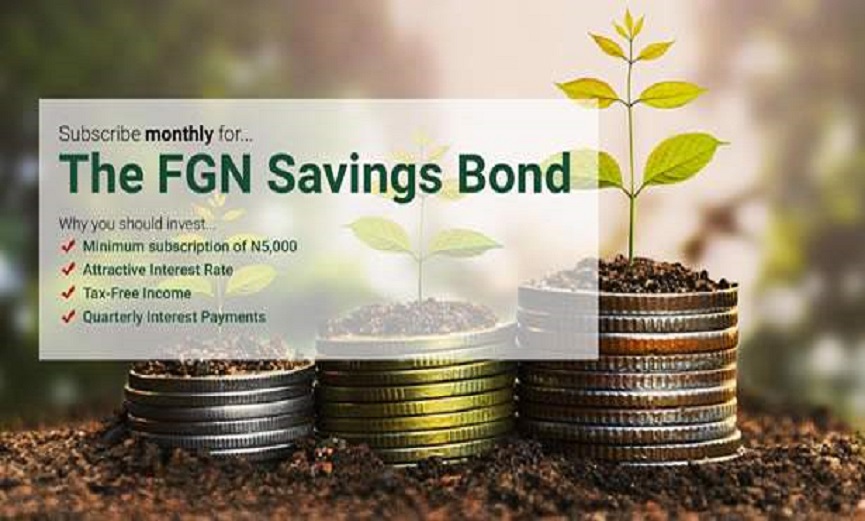
Subscription for the Federal Government of Nigeria (FGN) savings bonds for April 2026 has opened, a circular from the Debt Management Office (DMO) on Tuesday, April 7, 2026, confirmed.
The debt office is selling the retail debt instrument for this month in two tenors of two years and three years.
Offer for the savings bonds opened today and will close on Friday, April 10, 2026, a part of the disclosure stated.
The 2-year FGN savings bond due April 15, 2028, is being sold at a coupon rate of 13.082 per cent per annum, while the 3-year FGN savings bond due April 15, 2029, is being sold at a coupon rate of 14.082 per cent per annum.
The interests are paid every quarter, and the bullet repayment to subscribers on the maturity date.
The bonds are sold at N1,000 per unit, subject to a minimum subscription of N5,000 and in multiples of N1,000 thereafter, subject to a maximum subscription of N50 million.
Interested investors are required to reach out to the stockbroking firms appointed as distribution agents by the DMO via the agency’s website.
An FGN savings bond qualifies as securities in which trustees can invest under the Trustee Investment Act. It also qualifies as government securities within the meaning of the Company Income Tax Act (CITA) and the Personal Income Tax Act (PITA) for tax exemption for pension funds, amongst other investors, meaning it is tax-free.
It can be used as a liquid asset for liquidity ratio calculation for banks, and is listed on the Nigerian Exchange (NGX) Limited to allow for easy exit (liquidation) before maturity by selling at the secondary market.
-
 Feature/OPED6 years ago
Davos was Different this year
-
Travel/Tourism10 years ago
Lagos Seals Western Lodge Hotel In Ikorodu
-

 Showbiz3 years ago
Estranged Lover Releases Videos of Empress Njamah Bathing
-
 Banking8 years ago
Sort Codes of GTBank Branches in Nigeria
-

 Economy3 years ago
Subsidy Removal: CNG at N130 Per Litre Cheaper Than Petrol—IPMAN
-

 Banking3 years ago
Sort Codes of UBA Branches in Nigeria
-

 Banking3 years ago
First Bank Announces Planned Downtime
-

 Sports3 years ago
Highest Paid Nigerian Footballer – How Much Do Nigerian Footballers Earn