Connect with us

Economy

Nigeria Approves Over $57bn in Upstream Projects Since 2024

Published

on

oritsemeyiwa Eyesan nuprc

By Adedapo Adesanya

The Nigerian Upstream Petroleum Regulatory Commission (NUPRC) says it has approved more than $57 billion in Field Development Plans (FDPs) since 2024, amid Nigeria’s aggressive push to attract fresh investment and expand oil and gas production.

The commission said 22 major offshore projects are expected to come on stream between 2026 and 2030, with an estimated investment potential of between $30 billion and $50 billion.

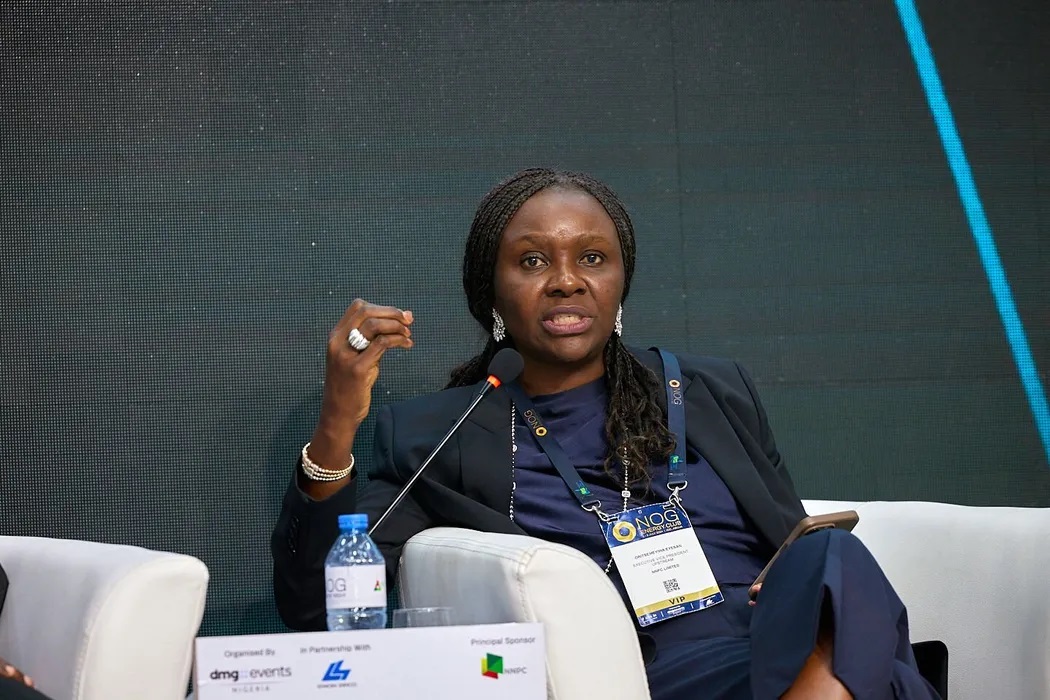
Speaking at the Society of Petroleum Engineers’ Nigeria Annual International Conference and Exhibition (NAICE 2026) in Lagos on Wednesday, the chief executive of the NUPRC, Mrs Oritsemeyiwa Eyesan, said the approved development plans were expected to increase production, create jobs, expand infrastructure and strengthen Nigeria’s energy security.

Mrs Eyesan, represented at the event by the NUPRC’s Executive Commissioner for Development and Production, Mr Enorense Amadasu, said some of the approved FDPs had progressed to Final Investment Decisions (FIDs).

“Since 2024, the NUPRC has approved over US$57 billion in Field Development Plans (FDPs), some of which have translated to Final Investment Decisions. Twenty-two major offshore projects are expected between 2026 and 2030, with an estimated investment potential of $30–50 billion,” she said.

“Beyond increasing production, these investments will create jobs, expand infrastructure, strengthen energy security and reinforce Nigeria’s position as a leading global upstream investment destination.”

The NUPRC chief said Nigeria was also building a resilient energy future by maintaining a strong pipeline of exploration opportunities to support long-term growth and energy security, as well as developing its proven oil and gas reserves.

She said successive licensing rounds since 2022 had opened access to some of Nigeria’s most prospective oil and gas acreages.

Mrs Eyesan referred to the 2025 Licensing Round, in which 31 companies emerged as successful bidders for 37 oil and gas blocks after undergoing what she described as a robust, data-driven and technology-enabled evaluation process.

She said preparations were already underway for the 2026 Licensing Round, which is expected to build on the transparency introduced in recent bidding exercises.

“With preparations already underway for the 2026 Licensing Round, Nigeria is demonstrating that investment certainty is no longer an aspiration; it is becoming an enduring feature of our regulatory framework,” she said.

Mrs Eyesan said inadequate infrastructure continued to undermine Africa’s energy potential, but noted that Nigeria was implementing measures to address the challenge.

She said the country was expanding gas gathering systems, processing facilities, pipelines and export infrastructure while promoting shared facilities, open access, third-party access and field tiebacks.

According to her, the measures are expected to reduce project costs, accelerate development timelines, maximise the use of existing infrastructure and bring stranded oil and gas resources into production.

“We are expanding gas gathering systems, processing facilities, pipelines and export infrastructure, while promoting shared facilities, open access, third-party access and field tiebacks to reduce costs, speed up project delivery, maximise the use of existing infrastructure and help bring stranded oil and gas resources into production,” she said.

The NUPRC chief also said improved collaboration among government agencies, security operatives, oil and gas operators, host communities, and private-sector partners had strengthened the protection of critical energy assets.

She added that the implementation of the Host Community Development Trust had helped improve the resilience of Nigeria’s upstream petroleum sector.

In July, the NUPRC announced that 31 companies had emerged as winners of 37 oil and gas blocks in Nigeria’s 2025 Licensing Round, following the conclusion of the commercial bid conference held in Abuja.

The NUPRC described the outcome as significant, noting that it is the first time Nigeria’s frontier basins—including the Benue Trough, Chad Basin, Anambra Basin and Benin Basin—have attracted such strong investor interest.

At the time, Mrs Eyesan stated that the assets on offer have the potential to add about 500 million barrels to Nigeria’s crude oil reserves and unlock an additional 300,000 barrels of oil per day within the next three years.

“The assets available in the licensing round have the potential to add about 500 million barrels to Nigeria’s reserves. Today, our reserves stand at 37.01 billion barrels. We also expect that from this exercise, we will unlock about 300,000 barrels of oil production per day. We are looking at 37 assets that can come into production in the next three years.”

She said the licensing round is central to Nigeria’s ambition of increasing crude oil production to three million barrels per day by 2030, whilst broadening participation across both small and large fields.

According to her, the commission is focused not only on increasing production but also on producing “efficient barrels” — those that deliver value to all stakeholders, including the government.


Adedapo Adesanya is a journalist, polymath, and connoisseur of everything art. When he is not writing, he has his nose buried in one of the many books or articles he has bookmarked or simply listening to good music with a bottle of beer or wine. He supports the greatest club in the world, Manchester United F.C.

Click to comment

Leave a Reply

Your email address will not be published. Required fields are marked *

Economy

Senate Probes N1.2trn Fuel Subsidy Deductions as NEITI Claims N1.16tn Spent in 2021

Published

on

NEITI

By Adedapo Adesanya

The Senate Public Accounts Committee has heard that Nigeria spent N1.16 trillion on fuel subsidy in 2021, while N1.20 trillion was deducted from federation crude oil sales proceeds during the same period.

The disclosure came from the Chairman of the Revenue Mobilisation Allocation and Fiscal Commission (RMAFC), Mr Mohammed Bello Shehu, during the committee’s ongoing investigation into the 2021 to 2023 Nigeria Extractive Industries Transparency Initiative (NEITI) audit reports on the oil and gas sector.

According to the commission, crude and petroleum product losses cost N16.2 billion, pipeline repairs accounted for N22.05 billion, while strategic stock holding attracted N6.75 billion.

The revelations come against the backdrop of Nigeria’s long-running fuel subsidy regime, which successive governments maintained to keep the pump price of petrol artificially low despite mounting fiscal pressures.

Over the years, subsidy payments consumed trillions of Naira, significantly reducing revenues available to the three tiers of government and contributing to widening budget deficits.

The issue reached a turning point in May 2023 when President Bola Tinubu announced the removal of fuel subsidy during his inauguration speech, declaring that “fuel subsidy is gone.” The decision followed years of concerns over the rising cost of the programme, allegations of fraud, and repeated recommendations by fiscal authorities and international financial institutions that the subsidy had become unsustainable.

The removal triggered a sharp increase in the pump price of Premium Motor Spirit (petrol), leading to higher transportation and living costs across the country. In response, the federal government introduced a series of palliative measures, including cash transfers, support for mass transit, and wage-related interventions, while arguing that savings from the subsidy would be redirected to infrastructure, education, healthcare, and other critical sectors of the economy.

The commission also argued that the current method of calculating the 13 per cent derivation fund undermines the constitutional intention of the policy.

Meanwhile, the committee stood down the Niger Delta Development Commission’s presentation until next Wednesday to allow lawmakers review its submission.

The committee also expressed displeasure over the absence of the Auditor-General of the Federation, warning that he must appear before lawmakers next Tuesday or face compulsory appearance through the constitutional powers of the National Assembly.

Continue Reading

Economy

Nigerian Businesses Expect Naira to Appreciate on Dollar Till January 2027

Published

on

Naira 4 Dollar

By Adedapo Adesanya

Businesses in the country expect the Naira to gradually appreciate against the US Dollar between now and January 2027, according to the Central Bank of Nigeria’s (CBN) July 2026 Business Expectations Survey Report released on Thursday.

The report showed that the Business Confidence Index (BCI) remained positive throughout the review period despite perceived macroeconomic challenges. It noted that all sectors expressed optimism about the economy, with the electricity, gas and water sector posting the highest Business Confidence Index of 59.4 points and the strongest expansion prospects for August 2026.

According to the report, “In July 2026, the Business Confidence Index was 5.7 points, reflecting continued optimistic sentiment among formal businesses.”

It attributed the positive sentiment mainly to increased demand (22.3 per cent), economic diversification (21.4 per cent), and improved access to finance (15.0 per cent). However, respondents identified inflation (27.7 per cent), energy-related challenges (23.4 per cent), insecurity (22.4 per cent), and heightened geopolitical uncertainties (16.5 per cent) as the major factors weighing on business confidence.

On the outlook by broad sector, the central bank said confidence remained positive across all sectors in July. The Industry sector recorded a modest improvement, with its index rising to 11.5 points from 10.5 points, while the Services sector increased to 3.6 points from 2.9 points.

By contrast, the Agriculture sector recorded a significant moderation, with its index falling to 3.4 points from 12.2 points.

Despite this, the apex bank said the six-month outlook remained upbeat, with confidence indices across all sectors indicating positive expectations over the review period.

On the macroeconomic outlook by region, the report noted a divergence in sentiment, with businesses in Northern Nigeria expressing stronger confidence than their Southern counterparts in July. Nevertheless, respondents across all regions maintained positive expectations for August.

Continue Reading

Economy

SEC Engages Abuja Investors on Unclaimed Capital Market Assets

Published

on

Investments and Securities Act 2025

By Aduragbemi Omiyale

A programme, tagged Probate and Unclaimed Monies Awareness and Investor Clinic, has been organised by the Securities and Exchange Commission (SEC).

The event, held on Thursday, August 6, 2026, was put together to educate investors and beneficiaries on how to recover unclaimed monies and inherited investments in the Nigerian capital market.

It is part of a nationwide awareness campaign launched by the capital market regulator in collaboration with Meristem Registrars and Probate Services Limited to improve investor protection, financial literacy and confidence in the capital market.

According to the Director General of the agency, Mr Emomotimi Agama, the campaign is to help investors and beneficiaries understand the procedures for recovering investments due to them while strengthening public confidence in the Nigerian capital market.

Thousands of investors and beneficiaries across the country remain unaware that they may be entitled to unclaimed funds arising from scheme consideration, return monies or inherited investments belonging to deceased relatives, largely because they are unfamiliar with the required documentation and claims procedures.

“Investor protection remains at the heart of the Commission’s mandate. Through this awareness campaign and Investor Clinic, we are bringing regulators and market operators together to help investors and beneficiaries understand the claims process, recover investments due to them and strengthen public confidence in the Nigerian capital market,” the SEC DG stated.

At the programme, participants received one-on-one support from SEC officials, registrars and other capital market professionals on issues relating to unclaimed investments, share ownership, probate, share transmission and beneficiary claims.

Continue Reading