
Economy
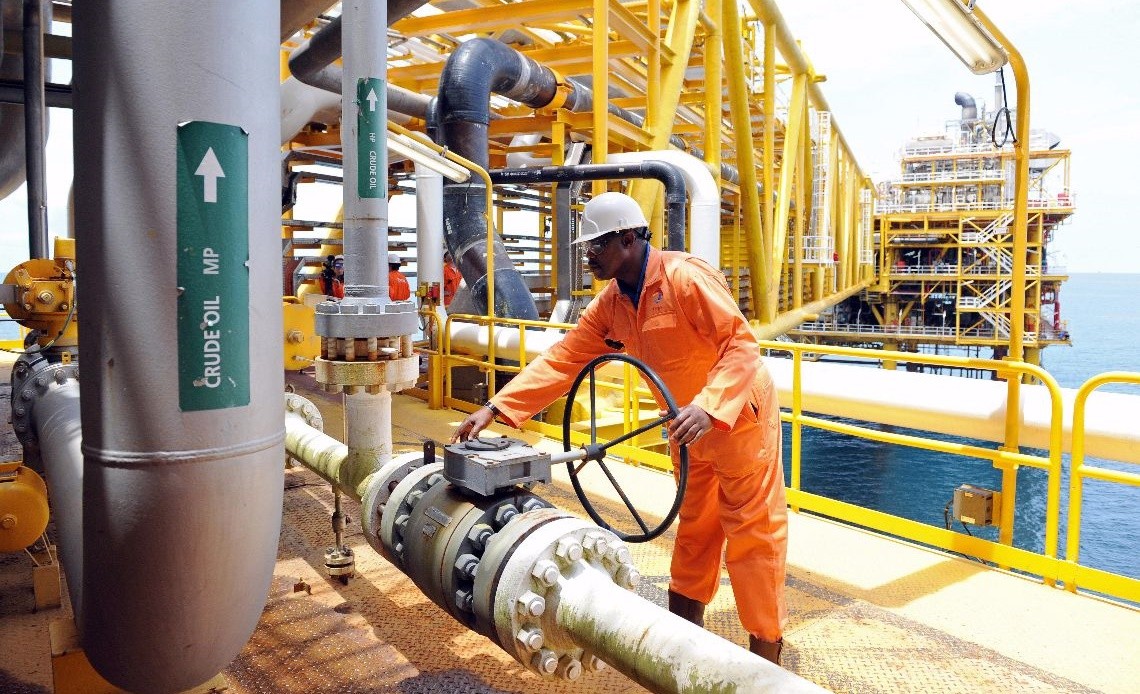
Nigeria Boosts Crude Production by 170,000 in September

By Adedapo Adesanya
Nigeria recorded the highest crude production in the month of September as its production jumped by more than 170,000 barrels per day, according to a survey by Reuters.
The Reuters survey aims to track supply to the market and is based on shipping data provided by external sources, Refinitiv Eikon flows data, information from tanker trackers such as Petro-Logistics and Kpler, and information provided by sources at oil companies, the Organisation of the Petroleum Exporting Countries (OPEC) and consultants.
The country, which produces around 1.6 million barrels per day, was scheduled to rise by roughly 17,000 barrels per day each month, in line with the OPEC+ alliance’s plans to gradually ease back on production cuts implemented in April 2020.
However, there were over 200,000 barrels per day higher after Forcados and other problems in August, Reuters cited a firm that tracks OPEC supply.
Nigerian output recovered from involuntary losses and the group’s top producers further eased supply curbs under a pact with its allies.
The Forcados terminal export outlet was under force majeure in August, limiting supply. Even so, Nigeria is pumping almost 100,000 barrels per day less than its OPEC target as under-investment restrains output.
The second-largest increase came from a top exporter, Saudi Arabia, which further raised supply as part of the September OPEC+ boost. Iraq, Kuwait, the United Arab Emirates and Algeria made smaller increases.
They pumped 27.31 million barrels per day, the survey found, up 420,000 barrels per day from August’s revised estimate.
As a result, output has risen every month since June 2020, apart from in February.
Output declined or did not increase in Angola, Congo, Equatorial Guinea and Gabon, due to a lack of production capacity to add more supply.
Iran, which has managed to raise exports since the fourth quarter despite the US sanctions, posted slightly higher output under the month in review.
The country is exempt from OPEC supply curbs due to the sanctions, although a larger export recovery depends on progress in talks to revive its 2015 nuclear deal with world powers which are currently stalled.
Among the other two producers exempt from curbs, Libyan and Venezuelan output also slightly increased.
The OPEC+ agreement allows for a 400,000 barrels per day production increase in September from all members, of which 253,000 barrels per day is shared by the 10 OPEC members covered by the deal, OPEC figures seen by Reuters showed.
While the 10 OPEC members raised output by more than this in September, they are still pumping less than called for under the latest deal.
OPEC compliance with pledged cuts was 114 per cent versus 115 per cent in August, the survey found.
OPEC+ meets on Monday, October 4 to review its policy and is expected to re-confirm plans for the monthly increases.



By Adedapo Adesanya
Oil prices climbed on Monday’s short trade as the United States and Iran threatened more attacks, as the two countries are engaging in indirect talks that could lead to the de-escalation of hostilities.
Brent crude futures settled at $109.77 a barrel after chalking up 74 cents or 0.68 per cent, while the US West Texas Intermediate (WTI) crude futures traded at $112.40 after growing by 87 cents or 0.78 per cent.
The US and Iran received a framework from Pakistan to end hostilities, but this was rejected by Iran, especially the idea of immediately reopening the strait after President Donald Trump threatened to rain “hell” on the nation if it did not make a deal by the end of Tuesday.
Iran said it had formulated its positions and demands in response to recent ceasefire proposals conveyed via intermediaries.
The US is eyeing an agreement to open the crucial Strait of Hormuz, the shipping artery used by one-fifth of the world’s oil and gas supply, but the strait, which carries oil and petroleum products from Iraq, Saudi Arabia, Qatar, Kuwait and the United Arab Emirates, remains largely closed due to Iranian attacks on shipping after the U.S.-Israel attacks began on February 28.
Some vessels, however, including an Omani-operated tanker, a French-owned container ship and a Japanese-owned gas carrier, have passed through the strait since Thursday.
Meanwhile, major oil consumers, particularly in Asia, are conserving barrels or cutting consumption in response to the closure of the strait.
The Middle East supply disruptions have led refiners to seek alternative sources for crude, particularly for physical cargoes in the US and Britain’s North Sea.
Indian refiners have also postponed maintenance shutdowns of their units to meet local fuel demand.
On Sunday, the Organisation of the Petroleum Exporting Countries and its allies (OPEC+) agreed to a modest rise of 206,000 barrels per day for May. However, this will only appear on paper as the disruption is limiting the ability of the top producers to add the needed output.
OPEC’s combined oil output losses for March were estimated at 7.2 million barrels daily. The biggest production cuts were made by Kuwait, Iraq, the United Arab Emirates, and Saudi Arabia, for a total OPEC output of 21.57 million barrels daily for March. This is the lowest OPEC production rate since June 2020.
By Adedapo Adesanya
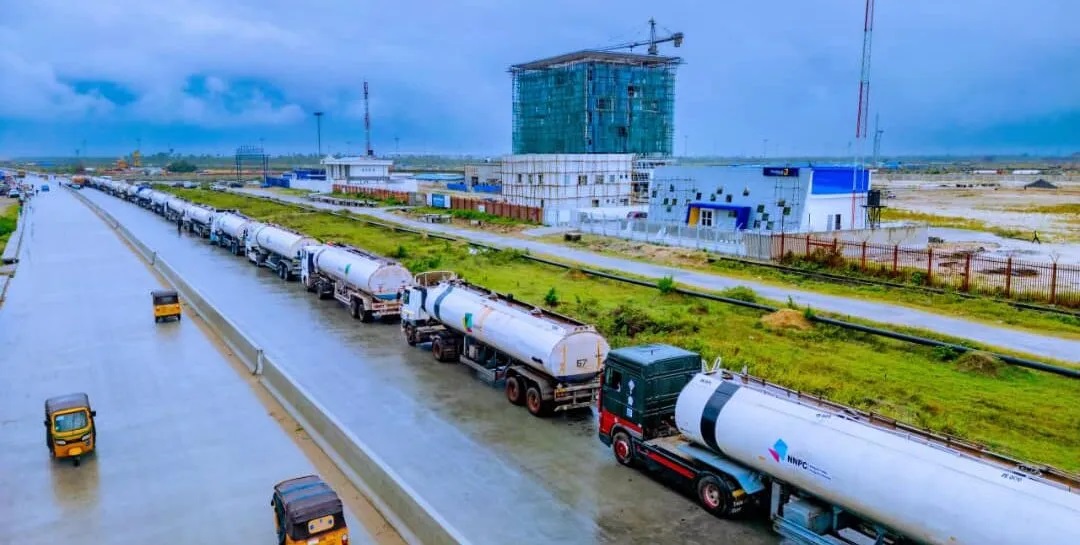
The owner of the $20 billion Dangote Refinery, Mr Aliko Dangote, said on Monday that the facility has increased exports of premium motor spirit (PMS), otherwise known as petrol, and urea to African countries hit by supply disruptions caused by the Iran war.
Speaking during a tour of the refinery on the edge of commercial capital Lagos, Mr Dangote said the refinery, which is operating at its maximum capacity of 650,000 barrels a day, had helped cushion the full impact of the crisis both in Nigeria and across the continent.
“What I can do is assure Nigerians … and most of West Africa, Central Africa, and East Africa, we have the capacity to supply them,” he said, as per Reuters.
The businessman further said the facility had shipped some 17 cargoes of gasoline to other African nations, and exports of urea fertiliser had also recently risen, as buyers sought alternative sources of supply.
“In the last couple of days, we’ve been looking to mostly African countries, which we were not doing before,” he said, referring to the fertiliser shipments, without giving figures.
The refinery has the capacity to produce up to 3 million metric tons of urea annually, most of which is typically exported to the United States and South America, officials say.
Mr Dangote said the refinery hoped to get more crude cargoes to help curb rising fuel costs under the Crude-for-Naira initiative of the Nigerian government.
Last week, the Nigerian National Petroleum Company (NNPC) Limited allocated seven May cargoes for the refinery, up from five in previous months.
The majority of Nigeria’s crude production is tied to Joint Venture (JV) contracts, which constrain the optimal supply of crude oil to the Dangote Refinery. This increase in crude allocations to the 650,000 barrel per day refinery could curb volumes of Nigerian crude available for export at a time when the Iran war has drastically cut supply from the Middle East.
The company is still purchasing crude at international benchmark prices from Brazil, Equatorial Guinea, Angola, Algeria, and the US, among others.
By Adedapo Adesanya
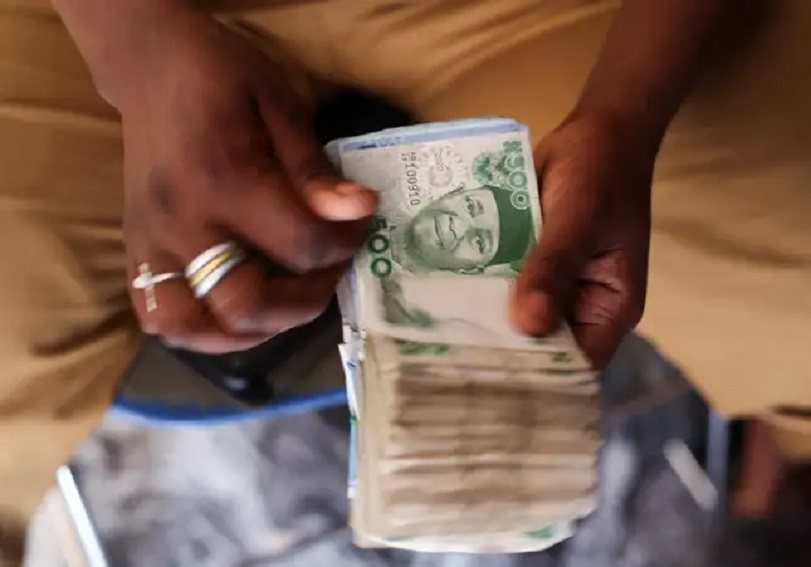
The Centre for the Promotion of Private Enterprise (CPPE) has projected relative stability for the Naira exchange rate in the second quarter of the year, supported by improved foreign reserves and liquidity, but cautioned that volatility risks remain.
In its Q1 2026 Economic Review and Q2 Outlook: Macro Stability Gains Amid Persistent Cost Pressures and Rising Geopolitical Risks report released on Sunday, the think-tank’s chief executive, Mr Muda Yusuf, said exchange rate conditions also improved significantly as the Naira, which experienced substantial volatility during the reform transition period, stabilised within a relatively narrow band of about N1,340–N1,430 per Dollar in the official market during Q1 2026.
“This stability has helped to moderate imported inflation and restore a measure of business confidence. External reserves strengthened considerably, rising above $50 billion in early 2026,” he stated.
The group said that the Nigerian economy in the first quarter of 2026 reflected a blend of improving macroeconomic stability and persistent structural constraints.
It said that proof of a more stable macroeconomic environment is increasingly evident, underpinned by the cumulative gains from foreign exchange reforms, a sustained period of monetary tightening, and the gradual normalisation of key economic indicators.
However, it noted that these improvements continue to coexist with significant headwinds, adding that the country’s economic growth will remain positive in the next three months, but the pace of expansion may slow due to mounting downside risk
The report also warned of a growing risk of stagflation, as persistent cost pressures combine with fragile growth conditions. It added that rising political activities ahead of the 2027 general elections could weaken reform momentum and distract from economic management.
The CPPE noted that rising global crude oil prices, triggered by the ongoing Middle East conflict, pose a major threat to Nigeria’s fragile disinflation process. While higher oil prices could boost export earnings and government revenue, the think tank stressed that the domestic impact would be adverse.
“The cost pass-through effect poses a significant threat to the fragile disinflation process, potentially reversing recent gains in price stability, weakening real incomes, and further exacerbating the cost-of-living pressures facing households and businesses,” the organisation said.
Highlighting monetary policy concerns, CPPE said the current inflationary trend is largely driven by structural and cost-related factors rather than excess demand, observing that, “Additional monetary tightening would have limited effectiveness in addressing the underlying drivers of inflation, while potentially exacerbating constraints on investment, credit expansion, and overall economic growth.”
The CPPE further raised concerns over the implementation of the proposed N68 trillion 2026 budget, citing weak revenue performance, delays in capital releases, and growing political influence on spending priorities.
“As political pressures intensify, there is a risk of weakening fiscal discipline, with greater emphasis on recurrent and politically expedient spending,” the group stated, advising businesses to shift focus towards resilience and efficiency, urging firms to prioritise cost containment, adopt alternative energy sources, and strengthen foreign exchange risk management strategies.
It also called on policymakers to take urgent steps to safeguard economic stability and protect vulnerable groups.
“Policy priorities should therefore focus on consolidating macroeconomic stability, addressing structural bottlenecks, and implementing targeted measures to protect vulnerable populations,” it noted.
The CPPE concluded that while macroeconomic stability gains recorded in the first quarter of 2026 are notable, the outlook for the second quarter remains cautiously positive but increasingly uncertain due to geopolitical tensions, fiscal risks, and domestic political dynamics.
-
 Feature/OPED6 years ago
Davos was Different this year
-
Travel/Tourism10 years ago
Lagos Seals Western Lodge Hotel In Ikorodu
-

 Showbiz3 years ago
Estranged Lover Releases Videos of Empress Njamah Bathing
-
 Banking8 years ago
Sort Codes of GTBank Branches in Nigeria
-

 Economy3 years ago
Subsidy Removal: CNG at N130 Per Litre Cheaper Than Petrol—IPMAN
-

 Banking3 years ago
Sort Codes of UBA Branches in Nigeria
-

 Banking3 years ago
First Bank Announces Planned Downtime
-

 Sports3 years ago
Highest Paid Nigerian Footballer – How Much Do Nigerian Footballers Earn