

Economy
Nigeria Overhauls Trade Talks Framework

By Adedapo Adesanya
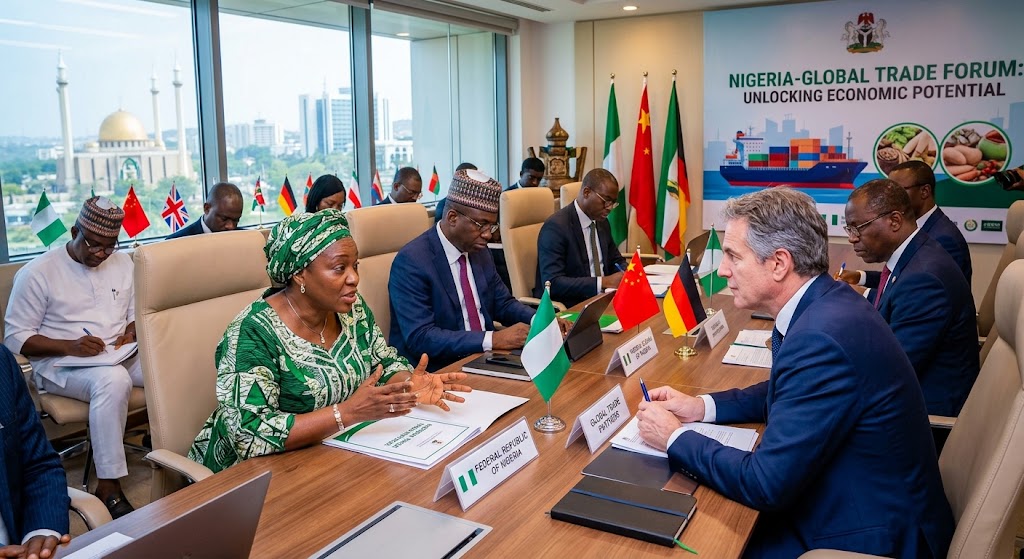
Nigeria is overhauling its trade negotiation framework, introducing a more coordinated system designed to ensure the country enters international trade talks with clear economic priorities, stronger evidence and a unified negotiating position.
The new Nigeria Trade Negotiation Architecture, unveiled by the Minister of Industry, Trade and Investment, Mrs Jumoke Oduwole, seeks to address longstanding gaps in the way Nigeria coordinates its interests across trade negotiations.
Mrs Oduwole, who announced the framework during a stakeholder engagement involving government agencies, the organised private sector, labour, academia and research institutions, said Nigeria could no longer afford fragmented approaches to negotiations that have implications for domestic industries, jobs, exports and investment.
She said the country must approach every negotiation with a clearly defined national interest, supported by reliable data and coordinated institutions.
“We must approach every trade negotiation with a clear understanding of our national interests, backed by strong evidence, coordinated institutions and clearly defined responsibilities,” Mrs Oduwole said.
The minister said the framework was designed to ensure that trade policy translates into stronger industrial production, increased non-oil exports, improved competitiveness and more jobs.
The reform builds on the former Enlarged National Focal Point on Trade Matters but introduces a clearer institutional structure to tackle delays in decision-making, overlapping responsibilities, inconsistent technical representation and the loss of institutional knowledge.
Under the new arrangement, the Director of the Trade Department will chair the negotiation architecture, while the Trade Department and the Nigerian Office for Trade Negotiations will serve as co-technical leads.
The Nigerian Office for Trade Negotiations will also function as the secretariat, providing continuity and coordination across Nigeria’s various trade engagements.
A key feature of the new framework is a regular reporting and consultation mechanism. It provides for monthly briefings on the status of Nigeria’s ongoing trade negotiations and quarterly engagements with businesses, labour, academia, government institutions and other stakeholders.
The federal government said the engagements would provide a structured avenue for stakeholders to review developments in international trade negotiations and contribute to the positions Nigeria adopts at the negotiating table.
The reforms come as Nigeria seeks to use trade policy more deliberately to support domestic production, expand its export base and improve the competitiveness of Nigerian businesses in international markets.


