
Economy
Nigeria Poultry Sector Worth N1.2tr—Farmer

By Dipo Olowookere
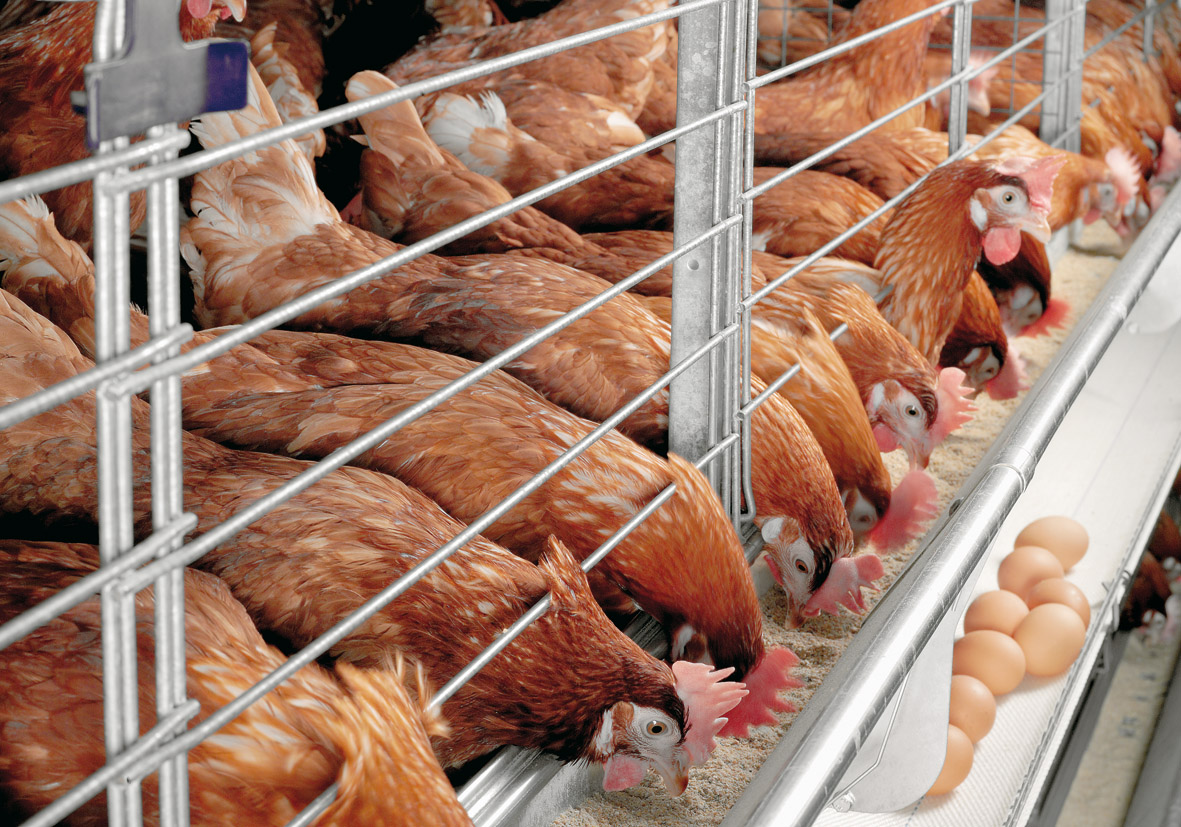
Coordinator of the natnuPreneur Broiler Outgrower Scheme by natnudO Foods, Mr Gbolade Adewole, has put the value of the Nigerian poultry industry at over N1.2 trillion.
Mr Gbolade, during a media chat with Business Post, disclosed that the Nigerian poultry industry has the capacity to generate more than N1.2 trillion in revenue if fully exploited.
“It is important to state that the opportunities in the broiler market are substantial and all we need to do is to take a closer look at the value chain. Take for example, the Feed Mills. If we are allowed to produce the 1.5 million tons of chickens consumed locally, the feed mills will have to supply about N700 billion worth of feed, the hatchery N145billion worth of Day Old Chicks (DOCs) and the animal pharmaceutical industry will have to deliver drugs and vaccines worth about N45 – N55 billion.
“Those numbers that I have given you put together is about N900 billion and that is just on the input side of the business but 70 percent of that money is not allowed to be made in our system because of the imported chickens blocking the flow.
“Ideally, Nigeria has enough poultry farmers who are ready to breed broilers because they have the space and the farm but because of this constraint, nobody is willing to fully exploit that market.
“From available statistics, Nigeria consumes about 1.5 million tons of chicken annually but Nigeria produces only 30 percent of that. It is not that we do not have the capacity to produce 100 percent of what we consume, it is just that 70 percent of the chickens that we consume are imported (smuggled).
“Some people call them ‘cadaver’ chickens because of the long and poor storage process that they must go through before they get into the country. This is basically one of the biggest challenges confronting the broiler market in Nigeria. So, from an economic perspective, it’s affecting all the stakeholders in the value chain, namely: farmers, farm workers, transporters, input suppliers (feed, DOC), laboratories, extension officers, veterinary doctors, financial service providers, processing plants etc.”
Analyzing further, Mr Gbolade said “1.5 million metric tons of chicken is 1.5 billion kilograms of chicken. The average breast chicken is 1.4 kg so that gives us 1, 071,428,000. That is the amount of chicken that we consume every year. Give or take, plus or minus 25 percent that depends on whose statistics you are looking at.
“So, revenue on input alone will be about N900 billion if we were producing 100 percent of what we consume, since we are producing 30 percent of N900 billion that means we are losing N600 billion that cannot be done here.
“For example, people are opening feed-mills all over Nigeria which has brought about competitiveness among market forces, which is good for the farmers.
“However, it also means that some people will be knocked out of the feed market despite all the investments they have made. The ripple effect is what is more dangerous like job loss.
“Let us do some ballpark numbers together, stay with me on this, 1.5 million metric tons of chicken is 1.5 billion kilograms of chicken, the average dressed chicken weighs 1.4 kg so that gives us 1,071,428,000 birds consumed annually. That is the amount of chicken that we consume every year. Give or take, plus or minus 20 percent – 25 percent, depending on whose statistics you are looking at.
“So, revenue to input suppliers alone will be about N900 billion if we were producing 100 percent of what we consume. Since we are producing 30 percent of N900 billion, that means we are losing N600 billion just on the input side of the business alone.
“The Feed side of the business has become highly competitive which is good for the farmers on the short to medium term.
“However, it also means that some firms will be knocked out of the feed market despite all the investments they have made. The ripple effect is what is more dangerous, like heavy job losses along every point of the value chain.
“If Nigerian farmers are allowed to produce what we consume (1.5 million tons of chicken) this will translate into a lot of job opportunities. For instance, we should have well over 1 million attendants working on different farms.
“That is what we meant when we said across the value chain, our natnuPreneur scheme alone has the capacity to employ well over 2 million people. if we are to produce approximately, 1,071,428,000 chickens, you can imagine the number of people that we will need to produce them – the number of people we will need at the hatcheries, the feed-mills, in logistics, laboratories, extension officers, veterinary doctors etc., can only be imagined.
“In terms of revenue, how many farmers do we need to rear 1.5 million metric tons of chicken? if we assume, for argument’s sake, that an average capacity farm supplies twenty thousand birds every circle which is about 100,000 birds a year at 5 cycles per annum, if you divide 1,071,428,000 birds by a 100,000 that is approximately 11,000 broiler farms.
“These numbers are taken from a pessimistic perspective, since we know that the average Nigerian broiler farmer based on our scheme does about 5000 birds per cycle, approximately 25,000 birds per annum.
“On inputs alone, I easily calculated N900 billion. Take another example – transportation – movement of Day old Chicks, Feed, and Live birds back to the processing plants. The average cost of transportation in a cycle is 6.85 percent of the total cost of production, if we add the other nodes in the value chain, in terms of percentage, we get a revenue of about N1.3 trillion swirling around in this value chain.
“But, alas, we are doing only 30% of this. Thus, the revenue we are generating for the players in this broiler sub segment of the poultry business is only about N430 billion which is still miniscule compared to what we can do as a country. This is where we have a problem,” he said.
While highlighting the efforts of natnuPreneur in bridging the gap in the Nigerian chicken market, Mr Gbolade said, “We have reached out to the Consumer Protection Council and some members of the House of Representatives. The Group Managing Director of Amo Group, Dr Ayoola Oduntan, has also served on a Senate subcommittee on this smuggling issue.
“So, what we have done is provide government with as much information as possible because they are concerned about what is happening. We are also working with the CBN and NIRSAL on the Anchor Borrowers Programme (ABP) to help increase local production as much as we can.
Speaking further, Mr Gbolade said, “I will like to begin with the interesting hypothesis that says that smuggling of chicken has been banned.
“The goal is to focus, as we have done, at AMO Farms, through the NatnuPreneur scheme, on farmer profitability. As long as we can work out how the average broiler farmer can make and increase his profit, year by year, then we can be sure that the production will grow to fill this 70 percent gap created by the importation of ‘cadaver chickens’.
“The core focus on farmer profitability is the main building block of the natnuPreneur scheme. Based on the research we undertook at inception, we discovered that a substantial number of broiler operations of various sizes around the country had failed. So, it was in a bid to unravel and solve the causes of these farm failures that we designed our system.
“Firstly, even if they had everything working for them, the market wasn’t there for them to sell into in bulk at the time, problem solved by our guaranteed off taking, we are not talking about rearing 5-10 chickens to sell during festive season.
“Rather, we are talking about rearing 10,000-20,000 chickens and not having a ready market to sell it to. Secondly, the quality of inputs fluctuates depending on the source, thereby harming the final result for the farmers, problem solved, we provide high quality inputs that has been tested through over 10,000 cycles.
“Apart from the very good farms such as Amo Group and a few other notable companies who mill for their farms, farmers often get bad inputs. The practice of getting maize from different places and mixing them up generally reduces the quality and results in all kinds of lapses.
“Thirdly, management practices were a major point of failure, many of them had no training on the basics of broiler management, most especially bio-security.
“Funding was also one of the issues, problem solved, we provide extension officers that visit these farms weekly to monitor and train and advise the farmers, each cluster of extension officers is headed by a veterinary doctor.
“So, based on these findings, we now tried to design a system to resolve these challenges. It is this system that we designed to help that we adjust everyday as we move along. So, we need more companies to do what Amo Group is doing with the natnuPreneur scheme.
“One of the major discoveries that has turned out to be our driving force is that the smallest unit in the whole value chain is the farmer and the farmer must be profitable for the scheme to be successful.
“So, when we did all that designing, experimenting, training extension officers, process optimization etc., we realized that farmer profitability was the key. To ensure that this happens consistently, we focused on getting our trained extension officers to enlighten them on the reasons why their farms should not fail and how they can ensure they make profit consistently.
“We introduced our farmers to ‘NUMBERS’, We developed our economics of production template as a guide for them. We also developed a buy back price equation to enable the farmers have a clear idea of the purchase price to expect at the end of the cycle.
“We also provided a farm management process and helped them monitor their progress with tables and charts, such that farmers that used to make 2 percent profit and thought they were making money started making more money and increased their capacity, we always say we expect our farmers to make between, 7.5 -15 percent profit per cycle, and some even perform better. So, if we have more companies doing these things, we will solve this problem.
“Farmers have given us feedbacks on how they have increased their capacity following our template and systems. It is important to note that, after the delivery, we usually write what we call a post evaluation report to show the high capacity farmers how well they performed in the cycle and where they need to do better to make more profit.
“Lastly, we also learn from the farmers through the feedback we receive and use this to consciously improve the process, and I must say, while its not perfect yet, we have come a long way via a steep learning curve on both sides of the equation.
“What we are saying, in other words, is that we need more AMO FARM type operations in the country to bridge the gap.
“As clearly stated for this Scheme; ‘developing passionate and knowledgeable farmers towards sustained profitability’, emphasis on sustained profitability.”
When asked what has made the natnuPreneur scheme successful so far, Mr Gbolade said, “While they were carrying out the Anchor Borrowers Scheme for rice, they recorded some successes. They didn’t commence that of poultry until last year and we were the first anchor team for poultry with the CBN.
“What they have done is extensive because we rolled out at two poultry estates in Lagos state, as pilots and now we are about to embark on the rollout of a list of over 1000 broiler farmers who are prepared to join the scheme across all geo-political zones outside the north-east. Thus, CBN is doing a lot for poultry just like they are doing for rice.
“There are about 1000 farmers who are prepared to breed a minimum of about 2000 birds each which will give 1.96 million birds per cycle and they are ready because the funds are available. The farmers have gathered themselves together and they are running it through both CBN and NIRSAL.
“Apart from our own team, NIRSAL have also appointed project management teams across the whole country. The programme has been very successful and profitability has been very reasonable for our farmers. Another thing we need to address is that some of these farmers are just getting on board after many years of abandoning their farms so it’s taking them time to understand best practices.
“The CBN approached us because of the success we have recorded with the natnuPreneur programme and so far, the Anchor Borrowers Programme (ABP) with natnuPreneur scheme has been very successful.”
Responding to the question of the possibility of fraud on the scheme, the natnuPreneur coordinator said, “Everybody comes to the programme with a different model but I will tell you why our system works. In our model, we are the anchor, the suppliers, the monitoring team and the off-takers- it is end to end with us.
“The way CBN runs this ABP for broiler production is that they pay us (AMO) for input directly, we supply and monitor and then we pay back into the farmers’ accounts after off-taking. In this model, farmers can only access their profit. Thus, the chances of what transpired in the rice sector to occur here is close to zero.”
Revealing their projections for the country and natnuPreneur scheme, Mr Gbolade said, “The projection for the future for the country is that from January next year, Nigeria will consume 1,071,000,000 chicken pieces and for us at Amo Group, we will like to produce a good chunk of the one billion locally consumed chickens in the country in the long run. We believe that the production of 50 million broiler chickens is not out of our reach.”
On the challenge of Avain Influenza in poultry farming, MrGbolade said, “Firstly, Amo Farms have never experienced avian influenza and that is because of the effective bio-security system that we have in place.
“I am also not in a position to discuss this thoroughly, as I am not a veterinary doctor neither am I an animal scientist?
“My background is in Chemical Engineering and Project Management, with basic understanding of business processes and system optimization.
“That being said, let me state here that we cannot stop the disease from occurring because it is a bird migration related issue. However, what farmers can do is have very sound bio-security practices. Once that is done, the chances of the disease occurring on their farm will be minimal.
“What we do in natnuPreneur is that we try to replicate what we have in Amo Farms in each one of our natnuPreneur farms.
“Therefore, if you visit any natnuPreneur farm, what you will notice is strict adherence to bio-security. This is to ensure that the chances of Avian-Influenza or any other disease getting into the farms are reduced to the minimum.
“Another reason why we do this is because we don’t want unhealthy broilers. We only accept healthy chickens that are produced in healthy environments for processing at our abattoirs. We are very particular about quality and we don’t compromise the standard of the natnudO brand of chickens that we sell. Again, we also want to ensure that our farmers do not lose money. Like I said earlier, farmer profitability is very important to us at natnuPreneur.”
Mr Gbolade, while highlighting some of the challenge faced by the natnuPreneur scheme, stated that, “Our farmers’ state of happiness ranges from between reasonably happy to ecstatic.
“It’s not a perfect system yet. Hence, as expected, there will be hiccups from time to time as we learn more about the farmers and general operating environment.
“A case in point is the smuggled chickens’ saga currently creating a glut in the market. We have been a bit slack in keeping with our five working days post-delivery payment agreement due to slow sales.
“This we have started working upon by recalibrating our system to adjust to the market forces and we should be back on track with reasonable adjustment to our agreements by January 2018. I must say that our relative success has been part of our problems.
“We don’t want to be flouting agreements with our farmers because it is very dangerous for our reputation and bad for their farm’s profitability. Hence, we would rather not take on new farmers until we are ready.
“All these boil down to the same thing we have been harping on about and which seems to be the recurrent theme which is smuggling. If our output in terms of sales is moving as fast as we want, then it will be easy to take all these farmers on. Some of our farmers are very unhappy now because we have refused to give them birds because we cannot afford to delay their payment due to slow sales after they deliver.
“Furthermore, some of our farmers used to have issues of buy back pricing, but because we developed what we call a ‘buy-back price equation,’ the process is now transparent enough to them that they can put in the variables into the equation and the buy-back price will be computed automatically.
“In addition, I will like to state that we are constantly in a ‘work in progress’ mode. We are doing our best to improve the process everyday but everybody cannot be satisfied at the same time.
“In the middle of the decision making, when we suddenly decided to cut short the journey, some people became upset, but on our part, we didn’t want to flout the agreement we had with the farmers. When a farmer cannot get back his money on time, what it means is that he will not be able to restock as and when due.
“The reasonable time between delivery of mature broilers and restocking to the next circle is two weeks. Within those two weeks, the farmer needs his money to arrange and stock for the next round.
“For farmers who are funded by commercial institutions, if their payment is delayed, it becomes bad.
“So, these are some of the things we are trying to work on. We are improving and as I said earlier, our system is not perfect yet, but I’m yet to see a system that is as good as the one that we have so far. We are not boasting but the facts are all verifiable with real farmers on the field” he said.
“Apart from natnuPreneur Broiler Outgrower Scheme, there is another natnuPreneur scheme called “natnuPreneur Seller.”
According to him, “For natnuPreneur seller scheme, we noticed that we are okay on the supply side, at least for now. Currently, if we want to do 50,000 chickens daily, there are farms to do it, there are processing plants to process it and there are storage rooms to keep them.
“Now we have designed what we call natnuPreneur seller which is to provide an opportunity for the neighbourhood sellers who have freezers and generators to sell NatnudO chicken products and make profit. Using the same piloting model and testing, we have designed and tested our system over the past 7 months and we are ready to launch.
“Presently, we have a woman who started just over a month ago with a sale of 200kg/week but now she buys close to 500kg/ week to resell, in her neighbourhood. With an average of N100/ kg profit, she is laughing all the way to the bank.
“Also, we have a seller in Ekpoma who started with just 3 bags of chicken and 1 bag of gizzard. Now, he is ordering 1 ton every two weeks. He has also expanded his business outside Ekpoma to Irua and will be opening a new branch in Auchi by January next year.
“In Benin City, we just launched a seller called “Just Protein” who sells between 4-5 tons every month.
“In short, what we are trying to do is make sure that at the end of the value chain, the people selling also find the business profitable, making 15- 20% profit per kg.
“With the experiment cum pilot completed, we are confident that the natnuPreneur seller scheme will also record successes similar to those achieved with the farming side of the business, thereby completing our loop.
“We are trying our best at AMO to make our natnudO brand of protein products available to Nigerians. However, if there are smuggled chickens in our markets, it will be difficult for our products to sell well especially to those who are not literate enough to understand the dangers of eating imported smuggled chickens.”



By Dipo Olowookere
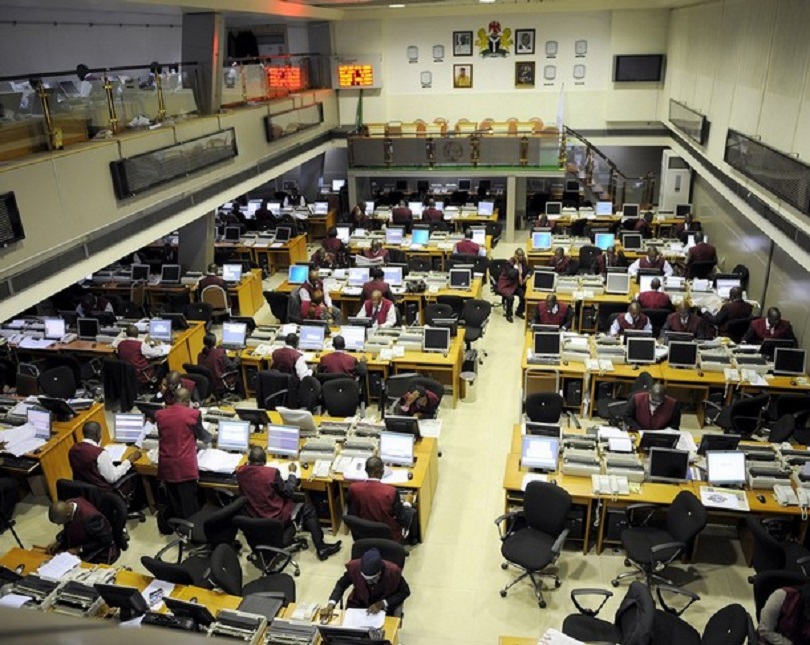
Nigerian stocks shrank by 0.02 per cent as a result of renewed selling pressure, after the consumer goods index crumbled by 0.89 per cent, and the banking space contracted by 0.23 per cent.
Business Post reports that the Nigerian Exchange (NGX) Limited weakened yesterday despite the energy sector closing 1.78 per cent higher, the insurance segment increasing by 0.31 per cent, and the industrial goods counter closing flat.
The All-Share Index (ASI) eased by 44.83 points to 200,913.06 points from 200,957.89 points, and the market capitalisation decreased by N29 billion to N128.969 trillion from N128.998 trillion.
eTranzact lost 10.00 per cent to trade at N20.70, Abbey Mortgage Bank declined by 10.00 per cent to N9.90, Cadbury Nigeria retreated by 10.00 per cent to N63.00, Eterna also fell by 10.00 per cent to N33.75, and DAAR Communications dipped by 9.50 per cent to N1.81.
Conversely, Premier Paints appreciated by 9.97 per cent to N37.50, Zichis gained 9.97 per cent to trade at N13.79, McNichols improved by 9.93 per cent to N7.42, John Holt chalked up 9.86 per cent to close at N18.95, and Trans Nationwide Express went up by 9.75 per cent to N2.59.
On the last day of the week, 595.2 million equities valued at N24.5 billion were transacted in 43,440 deals versus the 678.1 million equities worth N33.1 billion traded in 42,222 deals in the previous session.
This showed an improvement in the number of deals by 2.89 per cent, and a cut in the trading volume and value by 12.22 per cent and 25.98 per cent, respectively.
Wema Bank ended the day as the busiest stock after a turnover of 131.5 million units worth N3.5 billion, Legend Internet traded 41.6 million units valued at N339.2 million, Zichis sold 35.2 million units for N485.6 million, Access Holdings exchanged 29.4 million units worth N764.8 million, and Japaul transacted 21.5 million units valued at N74.6 million.


By Adedapo Adesanya
A loss recorded by market bellwether, Central Securities Clearing System (CSCS) Plc, outweighed the presence of three price gainers, weakening the NASD Over-the-Counter (OTC) Securities Exchange by 0.73 per cent on Friday, March 27.
The Nigerian securities depository firm lost N6.27 during the session to close at N80.10 per share compared with the previous day’s N86.37 per share.
As a result, the market capitalisation shrank by N18.41 billion to N2.512 trillion from the previous session’s N2.531 trillion, and the NASD Unlisted Security Index (NSI) declined by 30.77 points to 4,199.69 points from 4,230.46 points.
The green side of the price movement log showed 11 Plc appreciating by N31.92 to N351.17 per unit from N319.25 per unit, Nigeria Mortgage Refinance Company Plc (NMRC) rose by 55 Kobo to sell at N6.05 per share compared with Thursday’s closing price of N5.50 per share, and IPWA Plc recorded a 50 Kobo growth to end at N5.51per unit, in contrast to the preceding day’s N5.01 per unit.
When the bourse closed for the day, there was a 17,067.5 per cent surge in the voluime of transactions to 58.6 million units from 342,825 units, the value of trades increased by 6,895.4 per cent in the value of securities traded as it closed at N1.6 billion compared to N23.0 million, and the number of deals executed at the session rose 85.2 per cent to 50 deals compared to the preceding session’s 27 deals.
CSCS Plc remained the most active stock by value on a year-to-date basis with 56.2 million units exchanged for N3.8 billion, Infrastructure Guarantee Credit Plc followed with 400 million units valued at N1.2 billion, and Okitipupa Plc came next with 6.5 million units traded at N1.2 billion.
Resourcery Plc closed the trading session as the most traded stock by volume on a year-to-date basis with 1.1 billion units sold for N415.7 million, followed by Infrastructure Credit Plc with 400 million units sold for N1.2 billion, and Geo-Fluids Plc with 133.0 million units at N511.1 million.

By Adedapo Adesanya
The Naira maintained stability against the United States Dollar in the black market segment of the foreign exchange (FX) market on Friday, March 27, data obtained by Business Post showed. It also remained unchanged at the GTBank FX counter at N1,401/$1.
However, it further appreciated in the Nigerian Autonomous Foreign Exchange Market (NAFEX) during the session by N3.30 or 0.2 per cent to N1,380.58/$1 from the previous day’s rate of N1,383.88/$1.
In the same vein, the domestic currency improved its value against the Pound Sterling in the spot market yesterday by N10.77 to trade at N1,836.99/$1 compared with the preceding session’s N1,847.76/£1, and gained N5.06 against the Euro to sell at N1,592.08/€1 versus N1,597.14/€1.
The Naira remains under pressure, but the current range indicates a form of stability as the Central Bank of Nigeria (CBN) reiterated its promise to anchor reforms around FX rate stability and stronger reserves to support financial markets.
Amid the currency pressures, the apex bank introduced a series of measures aimed at improving liquidity and strengthening the FX market. In a key move, the apex bank removed the cash pooling requirement for International Oil Companies (IOCs), allowing them full access to their repatriated export proceeds from the previous 50 per cent.
However, the country could see less short-term Dollar supply staying in the country and may invite pressure on the Naira if outflows exceed inflows.
The pressure on the currency comes amid a sustained decline in Nigeria’s external reserves, which provide the central bank with the buffer to support the naira. The reserves fell for the ninth consecutive day to $49.48 billion as of March 26, 2026, marking a decline of $540 million, or 1.08 per cent, from $50.02 billion recorded on March 11.
Meanwhile, the cryptocurrency market tumbled on Friday due to a broader sell-off in US equities, which recorded a $17 trillion loss. The Friday plunge fits into a pattern since the war in Iran broke out, with gains on Monday turning into losses by the end of the week.
Ethereum (ETH) depreciated by 3.2 per cent to $2,003.73, Bitcoin (BTC) fell by 3.1 per cent to $66,439.48, Solana (SOL) dropped by 2.9 per cent to $83.44, Cardano (ADA) crashed to $0.2474, Binance Coin (BNB) went down by 2.4 per cent to $613.17, TRON (TRX) dipped 1.5 per cent to $0.3113, Dogecoin (DOGE) declined by 1.4 per cent to $0.0908, and Ripple (XRP) slumped 1.4 per cent to sell at $1.33, while the US Dollar Tether (USDT) and the US Dollar Coin (USDC) closed flat at $1.00 each.










-
 Feature/OPED6 years ago
Davos was Different this year
-
Travel/Tourism10 years ago
Lagos Seals Western Lodge Hotel In Ikorodu
-

 Showbiz3 years ago
Estranged Lover Releases Videos of Empress Njamah Bathing
-
 Banking8 years ago
Sort Codes of GTBank Branches in Nigeria
-

 Economy3 years ago
Subsidy Removal: CNG at N130 Per Litre Cheaper Than Petrol—IPMAN
-

 Banking3 years ago
Sort Codes of UBA Branches in Nigeria
-

 Banking3 years ago
First Bank Announces Planned Downtime
-

 Sports3 years ago
Highest Paid Nigerian Footballer – How Much Do Nigerian Footballers Earn