Connect with us

Economy

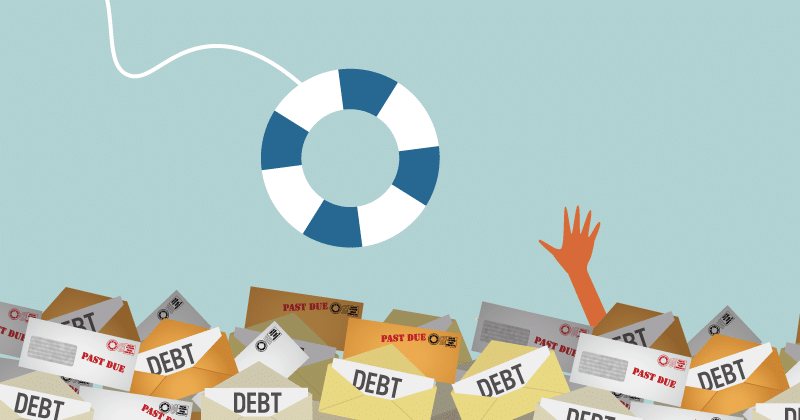
Nigeria Reduces Debt-to-GDP Ratio to 19%

Published

on

Debts

By Dipo Olowookere

The debt-to-GDP (gross domestic product) ratio of Nigeria has slightly reduced to 19.00 per cent from 19.09 per cent within a period of 12 months, Business Post investigation has shown.

According to a document from the Budget Office sighted by Business Post, in 2019, the debt-to-GDP ratio, which measures the ability of the country to repay its debts when compared with the value of goods and services it produces, was trimmed to 19.00 per cent in 2019 from 19.09 per cent in 2018.

This newspaper gathered that in 2018, the total debt profile of the country, according to data obtained from the Debt Management Office (DMO), stood at N24.4 trillion, while the nominal GDP, as data from the National Bureau of Statistics (NBS) showed, was N127.8 trillion.

A year later, according to the debt office, the nation’s total debt profile rose to N27.4 trillion, while the nominal GDP was N144.2 trillion.

In 2017, the debt-GDP ratio of Nigeria was at 21 per cent, according to the then Minister of Finance, Mrs Kemi Adeosun, while speaking at an event in Ogun State, which took place in March 2018.

In recent times, there have been talks about the rising debt profile of Nigeria, especially under the present administration of President Muhammadu Buhari, who some observers said has a huge appetite for borrowing.

They claimed that with the present rate of borrowing, both from domestic and foreign sources, there would be a time Nigeria will not be able to payback.

One of the loans that got many people talking was the ones from China, a country most analysts said does not have mercy on loan defaulters, citing the experiences of Zambia, Djibouti and others as examples.

But the Nigerian authorities have said there’s nothing to fret about because the country, which is Africa’s largest economy and producer of crude oil, was capable of meeting its loan obligations.

Last Monday, the stats office said the country’s economy as measured by the GDP, contracted in the second quarter of 2020 by 6.10 per cent. This was in contrast to the 1.87 per cent growth achieved in the first quarter of this year.

The decline was largely attributable to significantly lower levels of both domestic and international economic activity during the quarter, which resulted from nationwide shutdown efforts aimed at containing the COVID-19 pandemic.

But the presidency has asked Nigerians not to panic over the depression suffered by the nation’s economy in the second quarter of the year, saying when compared with other better economies, the country fared better.

According to the Special Adviser to the President on Media and Publicity, Mr Femi Adesina, “It also appears muted compared to the outcomes in several other countries, including large economies such as the US (-33 per cent), UK (-20 per cent), France (-14 per cent), Germany (-10 per cent), Italy (-12.4 per cent), Canada (-12.0 per cent), Israel (-29 per cent), Japan (-8 per cent), South Africa (projection -20 per cent to -50 per cent), with the notable exception of only China (+3 per cent).”

For the debt-to-GDP ratio, the Budget Office headed by Mr Ben Akabueze, the percentage “is within the country-specific debt limit of 40 per cent and below the maximum threshold of 55 per cent recommended by the International Monetary Fund (IMF) and the World Bank for countries in Nigeria’s peer group, as well as the West African Monetary Zone Convergence threshold of 70 per cent.”

Last month, the Mission Chief and Senior Resident Representative of the IMF for Nigeria, Ms Jesmin Rahman, projected that Nigeria’s debt-to-GDP ratio may rise to 36.5 per cent in 2020 as a result of the spike in government borrowing in the short-term, describing it as worrisome and should be closely monitored.

“We project this (debt-to-GDP ratio) to increase to 36.5 per cent this year, which is a jump and then stay around 38 per cent of GDP in the medium term,” she was quoted as saying during an interview hosted by Citibank Nigeria in collaboration with the American Business Council.


Dipo Olowookere is a journalist based in Nigeria that has passion for reporting business news stories. At his leisure time, he watches football and supports 3SC of Ibadan. Mr Olowookere can be reached via [email protected]

Click to comment

Leave a Reply

Your email address will not be published. Required fields are marked *

Economy

Lokpobiri Hails Petroleum Reforms Amid Surge in Investments

Published

on

petroleum products

By Adedapo Adesanya

The Minister of State for Petroleum Resources (Oil), Mr Heineken Lokpobiri, has said ongoing reforms and strategic policy implementation in Nigeria’s petroleum sector are driving significant investments and strengthening the country’s position as a leading energy destination in Africa.

Mr Lokpobiri stated this at the Management Retreat of the Ministry of Petroleum Resources, where he stressed the need for improved institutional performance and accountability to sustain growth in the sector.

According to the Minister, the federal government has deliberately pursued far-reaching reforms aimed at creating a stable and investor-friendly environment capable of attracting local and foreign capital into the oil and gas industry.

“From far-reaching institutional reforms to the effective implementation of strategic policies, we have remained committed to carrying all stakeholders along, fostering a conducive environment for investments to flourish,” Mr Lokpobiri said.

“As a result, our petroleum sector has witnessed significant investments that continue to strengthen Nigeria’s position as a leading energy destination.”

The Minister noted that the gains recorded in the sector were the product of collective efforts across the Ministry and its agencies, commending staff for their dedication and professionalism.

“The Management Retreat of the Ministry of Petroleum Resources provided an important platform to reiterate that these accomplishments would not have been possible without the collective dedication, professionalism and teamwork of every staff member across the Ministry and its agencies,” he stated.

Mr Lokpobiri said the retreat, themed Driving Institutional Performance and Accountability in the Petroleum Sector for Sustainable National Development, underscored the importance of continuous improvement in service delivery and operational efficiency.

Drawing lessons from the theme, he urged officials of the Ministry and regulatory agencies to intensify efforts toward enhancing institutional effectiveness and strengthening governance frameworks.

“I encouraged that we must redouble our efforts, continuously improve the quality of our services, and strengthen institutional performance,” he said.

The Minister further emphasised the continued relevance of fossil fuels in the global energy mix, stressing that Nigeria must leverage its hydrocarbon resources to drive economic growth while ensuring citizens benefit from ongoing reforms.

“With fossil fuel as the dominant source of energy, we must ensure that Nigerians experience the benefits of our progress and that Nigeria remains the preferred investment destination in Africa and a globally competitive hub for energy investments,” Mr Lokpobiri added.

Continue Reading

Economy

Universal Insurance Extends N3.2bn Rights Issue to June 22

Published

on

Universal Insurance shares

By Aduragbemi Omiyale

The N3.2 billion rights issue of Universal Insurance Plc has been extended by almost two weeks after securing regulatory approval.

The exercise was earlier scheduled to close on June 10, 2026, but will now close on Monday, June 22, 2026.

The extension was granted by the Securities and Exchange Commission (SEC) after a request from the underwriting organisation.

In the rights issue, Universal Insurance is offering to shareholders 2,666,666,667 ordinary shares of 50 Kobo each at N1.20 per share on the basis of one new ordinary share for every existing six ordinary shares held as of the close of business on Monday, March 30, 2026.

Subscription for the acquisition of the company’s extra shares opened on Wednesday, May 13, 2026.

The extension gives investors more time to increase their stake in the insurance firm, which intends to use proceeds from the exercise to boost its capital base, as mandated by the National Insurance Commission (NAICOM).

Insurance companies operating in Nigeria have been given till July 31, 2026, to shore up their capital base or pack up. Operators can also explore a merger if they wish.

Continue Reading

Economy

4.964 billion Shares Worth N207.5bn Exchange Hands in 235,966 deals in Four Days

Published

on

nigerian shares

By Dipo Olowookere

The Nigerian Exchange (NGX) Limited opened its doors to market participants in four days last week as a result of a public holiday observed on Friday, June 12, for 2026 Democracy Day in the country.

In the week, investors bought and sold 4.964 billion shares worth N207.521 billion in 235,966 deals, as against the 3.966 billion shares valued at N175.659 billion that exchanged hands in 343,587 deals a week earlier.

Analysis showed that the financial services industry led the activity chart with 4.116 billion shares valued at N84.607 billion in 96,165 deals, contributing 82.92 per cent and 40.77 per cent to the total trading volume and value, respectively.

The services sector transacted 232.479 million shares worth N4.955 billion in 17,614 deals, while the industrial goods segment exchanged 144.988 million shares worth N39.077 billion in 24,775 deals.

Sterling Holdings, FCMB, and Access Holdings were the most traded stocks with 2.883 billion units sold for N36.188 billion in 15,533 deals, accounting for 58.09 per cent and 17.44 per cent of the total trading volume and value, respectively.

A total of 40 equities appreciated in the week versus 23 equities in the previous week, 53 equities depreciated versus 65 equities a week earlier, and 53 equities remained unchanged versus 58 equities in the preceding week.

ABC Transport was the best-performing equity for the week after it gained 25.60 per cent to trade at N7.80, Consolidated Hallmark appreciated by 23.13 per cent to N8.25, Abbey Mortgage Bank rose by 21.93 per cent to N11.40, Infinity Trust Mortgage Bank grew by 20.32 per cent to N11.25, and Austin Laz soared by 15.16 per cent to N4.33.

The worst-performing equity last week was Fidson Healthcare because of its 25.86 per cent loss, closing at N101.20. Neimeth declined by 19.14 per cent to N8.55, Union Homes REIT shed 17.36 per cent to close at N70.00, SUNU Assurances slipped by 11.38 per cent to N3.97, and Unilever Nigeria dropped 10.26 per cent to trade at N140.00.

As for the index movement, the All-Share Index (ASI) and the market capitalisation chalked up 0.88 per cent each to settle at 244,738.74 points and N156.970 trillion, respectively.

Similarly, all other indices finished higher apart from the pension, AFR Bank Value, MERI Growth, MERI Value, consumer goods, Lotus II, industrial goods, sovereign bond and commodity indices, which fell by 0.03 per cent, 1.20 per cent, 0.21 per cent, 1.61 per cent, 0.54 per cent, 0.51 per cent, 1.00 per cent, 2.04 per cent and 0.34 per cent, respectively.

Continue Reading

Trending