Connect with us

Economy

Nigeria to Open 2025 Oil Licensing Round December 1

Published

on

Oil Licensing Round

By Adedapo Adesanya

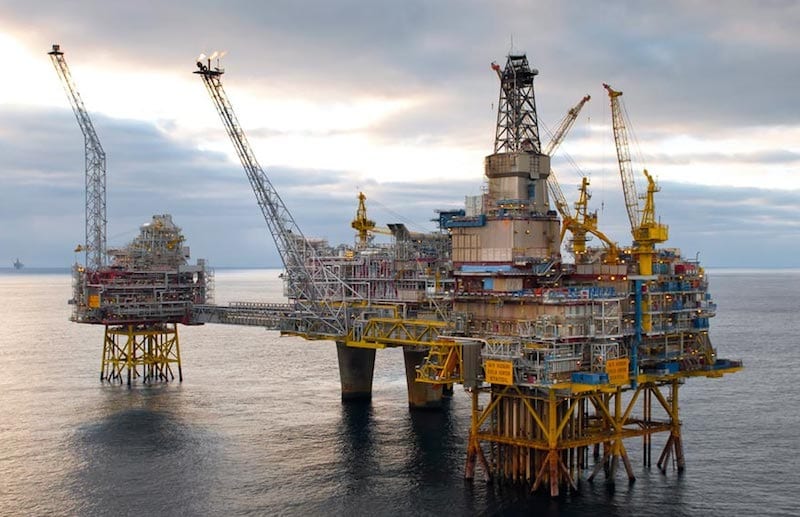
The Nigerian Upstream Petroleum Regulatory Commission (NUPRC) has announced the commencement of the 2025 Licensing Round, effective December 1.

The commission’s chief executive, Mr Gbenga Komolafe, made the announcement at the NUPRC’s Project 1MMBOPD Additional Production Investment Forum in London on Tuesday.

In a statement issued today, the NUPRC Head of Media and Strategic Communication, Mr Eniola Akinkuotu, quoted Mr Komolafe as saying the announcement followed the approval of President Bola Tinubu, who also serves as the Minister of Petroleum Resources, in accordance with the Petroleum Industry Act.

“We are announcing that we are ready, following the approval of the Minister of Petroleum Resources in line with the Petroleum Industry Act, to commence the 2025 Licensing Round beginning from December 1, 2025,” he said.

The 2025 Licensing Round is aimed at unlocking Nigeria’s undeveloped and fallow oil and gas fields, with a particular focus on gas assets.

Earlier, Business Post reported that there were expectations that fresh licensing would add 1.7 million barrels and 7.7 trillion cubic feet of gas from 43 Field Development Plans (FDPs).

According to Mr Komolafe, the initiative seeks to accelerate upstream production and bring previously discovered but unexploited fields into commercial operation.

Licensing rounds have been a key feature of Nigeria’s upstream sector for decades. Major rounds were conducted in 2000, 2005 and 2007, while the 2010s saw smaller, targeted rounds for marginal fields and deepwater assets.

These exercises were designed to attract investors and stimulate production, although some blocks awarded in earlier rounds stalled due to technical, financial or regulatory challenges.

The NUPRC is expected to publish detailed guidelines, including the list of blocks on offer, pre-qualification requirements, and submission timelines, ahead of the licensing round to ensure transparency and clarity for all prospective investors.


Adedapo Adesanya is a journalist, polymath, and connoisseur of everything art. When he is not writing, he has his nose buried in one of the many books or articles he has bookmarked or simply listening to good music with a bottle of beer or wine. He supports the greatest club in the world, Manchester United F.C.

Click to comment

Leave a Reply

Your email address will not be published. Required fields are marked *

Economy

FrieslandCampina Wamco, CSCS Lift NASD OTC Market by 1.05%

Published

on

FrieslandCampina WAMCO

By Adedapo Adesanya

The duo of FrieslandCampina Wamco Nigeria Plc and the Central Securities Clearing System (CSCS) Plc boosted the NASD Over-the-Counter (OTC) Securities Exchange by 1.05 per cent on Monday, May 11.

FrieslandCampina Wamco added N13.07 to sell N146.00 per share versus the previous price of N132.98 per share, and CSCS Plc rose by 10 Kobo to close at N76.00 per unit compared with last Friday’s N75.90 per unit.

As a result, the market capitalisation increased by N26.20 billion to N2.514 trillion from N2.488 trillion, and the NASD Unlisted Security Index (NSI) went up by 48.80 points to 4,202.57 points from 4,158.77 points.

The volume of securities bought and sold by market participants decreased by 55.2 per cent yesterday to 236,921 units from 528,891 units, the value of securities slid by 51.5 per cent to N16.5 million from N34.0 million, and the number of deals contracted by 20 per cent to 20 deals from 25 deals.

Great Nigeria Insurance (GNI) Plc ended the day as the most traded stock by value on a year-to-date basis, with 3.4 billion units traded for N8.4 billion, followed by CSCS Plc with 60.5 million units exchanged for N4.1 billion, and Okitipupa Plc with 27.8 million units transacted for N1.9 billion.

GNI Plc also closed the session as the most traded stock by volume on a year-to-date basis with 3.4 billion units worth N8.4 billion, followed by Resourcery Plc with 1.1 billion units valued at N415.7 million, and Infrastructure Guarantee Credit Plc with 400 million units sold for N1.2 billion.

Continue Reading

Economy

FX Pressure Weakens Naira to N1,373/$ at Official Market

Published

on

Foreign-reserves-decline-to-35.92bn-as-naira-gains-N1.50k.jpg

By Adedapo Adesanya

The Naira opened the week on a negative note on Monday after it depreciated against the US Dollar in the Nigerian Autonomous Foreign Exchange Market (NAFEX) by 0.86 per cent or N11.77 to sell for N1,373.16/$1 compared with the preceding session’s value of N1,361.39/$1.

It also weakened against the Pound Sterling in the official market during the session by N17.39 to quote at N1,871.07/£1 versus last Friday’s rate of N1,853.68/£1, and against the Euro, it slumped by N15.78 to close at N1,618.41/€1 versus N1,602.63/€1.

At the black market, the Nigerian currency lost N5 against the Dollar yesterday, settling at N1,385/$1 compared with the previous rate of N1,380/$1. At the GTBank forex desk, it depreciated by N3 to sell at N1,375/$1 compared with the previous value of N1,372/$1.

Nigeria’s external reserves have fallen below $48.4 billion as of May 8, driven by interventions and external obligations by the Central Bank of Nigeria (CBN). In the first three weeks of April, the country’s FX reserves lost about $731 million.

Softer liquidity conditions have also dampened foreign investors’ appetite, with data from the FMDQ Securities Exchange showing that total foreign exchange inflows declined by 30.1 per cent month-on-month to $2.86 billion in April from $4.09 billion in March. Out of this, foreign inflows weakened by 21.9 per cent to $1.63 billion from $2.09 billion in March.

As for the cryptocurrency market, prices were largely up as global equity markets and other risk assets came under pressure. Rising oil prices, higher treasury yields and renewed US-Iran tensions, along with a key inflation report from the world’s largest economy due on Tuesday, applied pressure.

Binance Coin (BNB) jumped 1.5 per cent to $662.80, Solana (SOL) appreciated by 0.9 per cent to $96.63, Dogecoin (DOGE) added 0.7 per cent to close at $0.1104, Bitcoin (BTC) improved by 0.5 per cent to $81,221.78, and Ripple (XRP) gained 0.5 per cent to sell at $1.46.

On the flip side, Ethereum (ETH) went down by 0.9 per cent to $2,310.49, Cardano (ADA) weakened by 0.4  per cent to $0.2776, and TRON (TRX) slid by 0.3 per cent to $0.3487, the US Dollar Tether (USDT) and the US Dollar Coin (USDC) closed flat at $1.00 each.

Continue Reading

Economy

Crude Oil Prices Climb 2% as Middle East Ceasefire Prospects Fade

Published

on

Crude Oil Prices

By Adedapo Adesanya

Crude oil prices rose more than 2 per cent on Monday after US President Donald Trump said the ceasefire with Iran was “on life support,” leaving ‌the Strait of Hormuz largely closed with no clear end in sight to the war.

Brent crude futures went up by $2.92 or 2.88 per cent to $104.21 a barrel, while the US West Texas Intermediate (WTI) crude futures increased by $2.65 or 2.78 per cent to settle at $98.07 a barrel.

President Trump on Monday said the ceasefire with ​Iran was “on life support,” after dismissing Iran’s response to a US peace proposal as “stupid.”

This came after the US floated a proposal ⁠aimed at reopening negotiations with Iran. The Middle East country on Sunday released a response focused on ending the war on all fronts, including one where America’s top ally, Israel, is fighting Iran-backed ​Hezbollah militants.

Iran also demanded compensation for war damage, emphasised its sovereignty over the strait, and called on the US to end its naval blockade, guarantee no further ​attacks, lift sanctions and remove a ban on Iranian oil sales.

After this, President Trump dismissed the offer in a social media post as “totally unacceptable.”

He also emphasised that the US continues to monitor Iran’s enriched uranium stockpiles via Space Force surveillance and warned of further strikes if a real end to the nuclear issue is not reached.

The war has impacted oil output by the Organisation of the Petroleum Exporting Countries (OPEC) as it declined to its lowest level since 2000, with production falling by 830,000 barrels per day to an average of 20.04 million barrels per day in April, according to a Reuters survey published Monday.

Kuwait, Saudi Arabia, and Iraq all saw significant output decreases as they were forced to shut in production due to the war, which started in late February.

The United Arab Emirates (UAE) was the only Gulf member that was able to increase production in April. The UAE was able to leverage the Fujairah terminal on the Gulf of Oman to bypass the bottleneck, allowing it to export more crude than its peers. The Emirate is targeting a production capacity of 5 million barrels per day by 2027 after it exited OPEC and OPEC+ this month.

Continue Reading

Trending