
Economy
Nigeria will Get $3.5b Foreign Loan with Ease—Moody’s

By Dipo Olowookere
Moody’s Investors Service has said Nigeria will easily achieve its target of borrowing about $3.5 billion loan abroad in 2017.
Nigeria has been negotiating $1.25 billion in budget support from the World Bank and expects to get the remaining $400 million of a $1 billion credit facility from the African Development Bank (AfDB).
According to the Vice President of the Moody’s Investors Service, Mr Aurelien Mali, who is also the Senior Analytical Adviser for Africa, stated that, “The international financial institutions are ready to support Nigeria.”
He said further that, As long as it is project-based lending, the funding will be available from lenders such as the African Development Bank (AfDB), and the budget support from the World Bank will come on top of that.”
Since the prices of crude oil slumped in the international and the production of oil fell in Nigeria, the West African biggest economy declined into recession.
This has forced the government to look outside for funds to carry out some capital projects.
At the moment, Moody’s rates Nigeria’s debt at B1, four levels below investment grade.
Last month, S&P Global Ratings kept its assessment of the nation’s credit at one step lower than Moody’s.







By Adedapo Adesanya
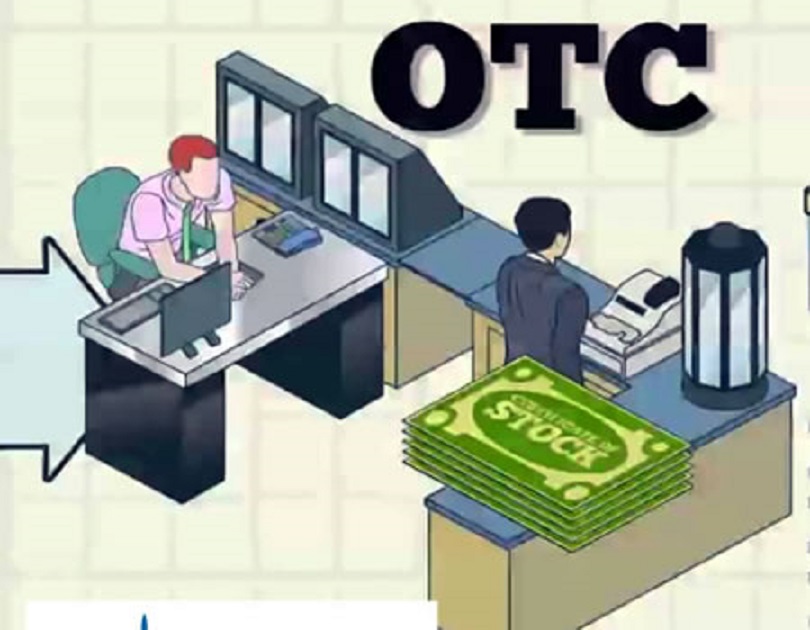
The NASD Over-the-Counter (OTC) Securities Exchange rallied by 1.41 per cent on Wednesday, March 25, with the market capitalisation adding N35.04 billion to close at N2.512 trillion versus the previous session’s N2.477 trillion, and the Unlisted Security Index (NSI) expanding by 58.55 points to 4,198.85 points from 4,140.30 points.
The growth came amid a weak investor sentiment, as the OTC securities exchange recorded two price gainers and three price losers.
The advancers were led by Okitipupa Plc, which chalked up N25 to sell at N275.00 per share compared with the previous day’s N250.00 per share, and Central Securities Clearing System (CSCS) Plc grew by N7.43 to N86.37 per unit from N78.94 per unit.
On the flip side, FrieslandCampina Wamco Nigeria Plc lost N7.04 to sell at N101.13 per share versus Tuesday’s closing price of N108.73 per share, Geo-Fluids Plc went down by 9 Kobo to N2.89 per unit from N2.98 per unit, and Industrial and General Insurance (IGI) Plc dipped 3 Kobo to 50 Kobo per share from 53 Kobo per share.
Yesterday, the volume of securities rose by 135.6 per cent to 2.2 million units from 933,125 units, the value of securities increased by 2.4 per cent to N46.7 million from N45.6 million, and the number of deals grew by 27.6 per cent to 37 deals from 29 deals.
The most active stock by value on a year-to-date basis was CSCS Plc with 39.1 million units exchanged for N2.4 billion, followed by Infrastructure Guarantee Credit Plc with 400 million units valued at N1.2 billion, and Okitipupa Plc with 6.5 million units traded for N1.2 billion.
The most traded stock by volume on a year-to-date basis was Resourcery Plc with 1.1 billion units worth N415.7 million, followed by Infrastructure Credit Plc with 400 million units sold for N1.2 billion, and Geo-Fluids Plc with 132.9 million units transacted for N510.7 million.
By Adedap0 Adesanya
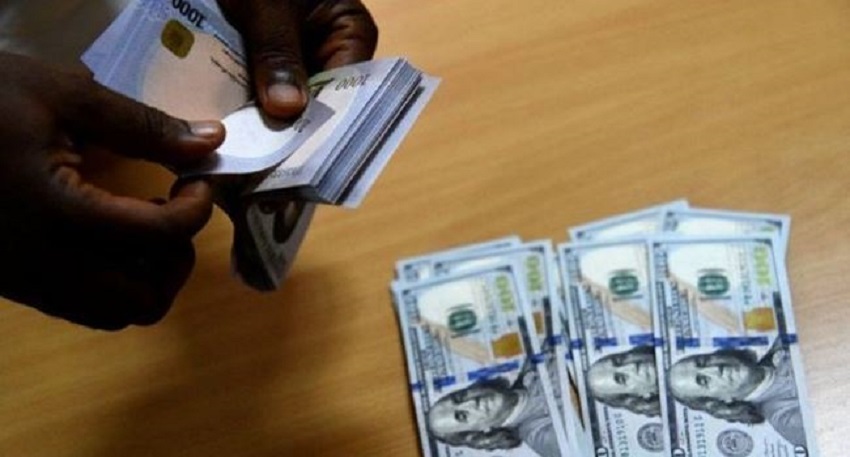
The value of the Naira fell against the Dollar in the Nigerian Autonomous Foreign Exchange Market (NAFEX) on Wednesday, March 25, by N4.07 or 0.29 to N1,386.70/$1 compared with Tuesday’s closing price of N1,382.63/$1.
This was due to forex demand pressure without substantial supply from the Central Bank of Nigeria (CBN) and other sources. Lately, the central bank has not conducted any FX sales to eligible financial institutions, where Bureaux de Change (BDC) operators are allowed to access $150,000 weekly.
Also, in the official market, the Nigerian Naira depreciated against the Pound Sterling at midweek by N7.52 to close at N1,856.38/£1 versus the previous day’s N1,848.86/£1, and retreated against the Euro by N5.82 to trade at N1,605.80/€1 versus N1,599.98/€1.
The domestic currency further lost N3 against the greenback at the GTBank FX desk yesterday to sell for N1,391/$1, in contrast to the preceding session’s N1,388/$1, and at the black market, it depreciated by N5 to quote at N1,405/$1 compared with the N1,400/$1 it was exchanged a day earlier.
The prolonged conflict in the Middle East continues to heighten risk aversion, reducing appetite for emerging-market assets despite Nigeria’s attractive yield environment, which could help sustain offshore inflows and support the local currency in the near term, though structural challenges remain.
The country is making efforts that could help shield it further, including reviewing timelines for approval of resuscitation of moribund oil wells and boosting production, which accounts for over 60 per cent of FX earnings.
As for the cryptocurrency market, it was under pressure on Wednesday, as implied volatility and weakening suggest geopolitical risk concerns remain as macro headlines remain in focus.
Dogecoin (DOGE) depleted by 3.8 per cent to $0.0937, Solana (SOL) depreciated by 3.5 per cent to $89.10, Cardano (ADA) dipped 2.4 per cent to $0.2621, Ethereum (ETH) went down by 2.2 per cent to $2,117.47, Ripple (XRP) slumped 1.9 per cent to $1.38, Bitcoin shrank by 1.5 per cent to $70,012.58, and Binance Coin (BNB) dropped 1.4 per cent to sell for $634.82.
However, TRON (TRX) appreciated by 2.3 per cent to $0.3144, while the US Dollar Tether (USDT) and the US Dollar Coin (USDC) traded flat at $1.00 apiece.
By Adedapo Adesanya
The oil market slid about 2 per cent on Wednesday after paring deeper losses earlier in the trading session, as Iran reviewed a proposal by the United States to end the war that has disrupted global energy flows.
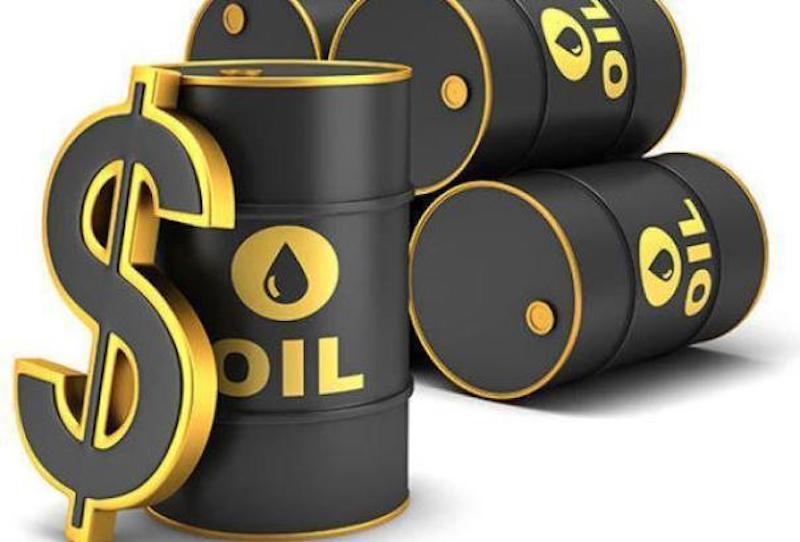
Brent futures fell $2.27 or 2.2 per cent to settle at $102.22 a barrel, while the US West Texas Intermediate (WTI) crude futures lost $2.03 or 2.2 per cent to trade at $90.32 per barrel.
It was reported that Iran was still reviewing a US proposal to end the war in the Gulf, despite an initial response that was negative, indicating that it had so far stopped short of rejecting it outright.
Pakistan delivered the 15-point proposal on behalf of the US government, and the consideration appeared to signal that at least some figures in Iran may be considering it.
Meanwhile, the White House Press Secretary, Mrs Karoline Leavitt, said President Donald Trump would hit Iran harder if it fails to accept that the Middle East country has been “defeated militarily”.
Currently, the market is facing the biggest-ever oil supply disruption as the US-Israel war has halted shipments of oil and liquefied natural gas through the Strait of Hormuz, which typically carries about 20 per cent of the world’s LNG and crude supply.
Market analysts noted that this has resulted in around 20 million barrels of crude losses daily, or some 500 million barrels, or five full days of global supply, since the war began on February 28. Countries have started rationing fuel use.
India, one of the world’s largest oil consumers, has bought its first cargo of Iranian liquefied petroleum gas in years after the US temporarily removed sanctions.
Meanwhile, Japan has called on the International Energy Agency (IEA) for an additional coordinated release of oil stockpiles, as it seeks to shield consumers from higher energy prices.
In Venezuela, oil production, including condensate and gas liquids, reached 1.1 million barrels per day in March.
Amid these developments, Russia’s major export terminals suspended crude oil and oil products loadings after massive Ukrainian drone attacks sparked blazes. At least 40 per cent of Russia’s oil export capacity has been halted following Ukrainian drone attacks on its energy infrastructure.
The US Energy Information Administration (EIA) said energy firms added 6.9 million barrels of crude into stockpiles during the week ended March 20.
That was higher than the build of 2.4 million barrels reported by the American Petroleum Institute (API) on Tuesday.











-
 Feature/OPED6 years ago
Davos was Different this year
-
Travel/Tourism10 years ago
Lagos Seals Western Lodge Hotel In Ikorodu
-

 Showbiz3 years ago
Estranged Lover Releases Videos of Empress Njamah Bathing
-
 Banking8 years ago
Sort Codes of GTBank Branches in Nigeria
-

 Economy3 years ago
Subsidy Removal: CNG at N130 Per Litre Cheaper Than Petrol—IPMAN
-

 Banking3 years ago
Sort Codes of UBA Branches in Nigeria
-

 Banking3 years ago
First Bank Announces Planned Downtime
-

 Sports3 years ago
Highest Paid Nigerian Footballer – How Much Do Nigerian Footballers Earn