
Economy
Nigerian Banks Lead In Equities’ N372b Loss


By Dipo Olowookere
Banking stocks suffered the most among 25 top losers in the equities’ market as share price decline left investors with a net capital loss of N372 billion.
There were 10 banking stocks among the top 25 that lost 30 per cent and above in the past eight months. Some of the top losers recorded as much as 60.1 per cent in equities price reduction.
Conversely, only one banking stock made the few top gainers’ within the period. Altogether, there are 15 banking stocks quoted on the Nigerian stock market.
Three other banking stocks recorded various gains, while a bank dropped by 12.3 per cent.
The Nation’s market intelligence at the weekend indicated that investors in banking stocks have suffered the highest losses with nearly three-quarters of quoted banking stocks running with double-digit losses. Losses in the banking sector generally significantly outweighed the overall market’s average loss, according to data review by The Nation.
The benchmark indices for the Nigerian stock market indicated eight-month average decline of 3.64 per cent, equivalent to a loss of N372 billion.
Aggregate market value of all quoted companies on the Nigerian Stock Exchange (NSE) closed August at N9.479 trillion as against its year’s opening value of N9.851 trillion. The All Share Index (ASI), which tracks prices at the Exchange, dropped to 27,599.03 points by the month-end as against its year’s opening index of 28,642.25 points.
Banking stocks were deep in the red with the troubled Skye Bank leading the top 25 losers with year-to-date loss of 60.13 per cent. The Central Bank of Nigeria (CBN) had sacked the board and management of Skye Bank over corporate governance issues. Diamond Bank followed with a loss of 54.35 per cent.
Other top losers in the banking sector included Ecobank Transnational Incorporate, -31.3 per cent; Fidelity Bank, -40.67 per cent; Sterling Bank, -49.18 per cent; Union Bank of Nigeria, -39.13 per cent; Unity Bank, -30.36 per cent; Wema Bank, -34.0 per cent; FBN Holdings, -40.53 per cent and FCMB Group, which market value had dropped by 39.64 per cent.
Stanbic IBTC Holdings meanwhile dropped by 12.3 per cent within the period.
While consolidation, steep price declines and emergence of highly capitalised non-bank stocks such as Dangote Cement had reduced the hitherto overwhelming dominance of the market by banking stocks, banking stocks still account for some 25 per cent of the total market value of the Nigerian equities market.
Head, financial advisory group, GTI Capital Group, Mr Kehinde Hassan, said the negative performance of the banking sector was weighing heavily on the overall market performance.
He noted that the unstable policy environment and the knee-jerk approach of the Central Bank of Nigeria (CBN) to regulatory decisions have compounded the tough operating environment for banks, many of which had warned of lower earnings due to the headwinds.
Only Guaranty Trust Bank (GTB) ranked within the top gainers’ list with 8-month gain of 45.76 per cent. United Bank for Africa (UBA) meanwhile posted a heart-warming return of 28.7 per cent. Access Bank followed with 14 per cent while Zenith Bank, against all expectations, trailed with a modest gain of 6.05 per cent.
Other top losers for the period included Livestock Feeds, -33.1 per cent; UACN Property Development Company, -42.5 per cent; Honeywell Flour Mills, -35.12 per cent; Vitafoam Nigeria, -43.99 per cent; AIICO, -30.77 per cent; Union Homes and Savings, -39.24; Fidson Healthcare, -32 per cent; GlaxoSmithKline Consumer Nigeria, -45.88 per cent; Berger Paints, -31.1 per cent; Cement Company of Northern Nigeria, -35.8 per cent; Lafarge Africa, -40.1 per cent; Portland Paints and Products Nigeria, -53.2 per cent; Forte Oil, -47 per cent; Tourist Company of Nigeria, -43.1 per cent and Caverton Offshore Support Group, which lost 40.9 per cent.
Nigerian equities have writhed under sustained losses in the past 32 months. Aggregate market value of all quoted equities on the NSE closed 2015 at N9.851 trillion as against its opening value of N11.478 trillion for the year, representing a loss of N1.627 trillion. The ASI indicated a negative full-year average return of -17.36 per cent. The ASI closed 2015 at 28,642.25 points as against its opening index of 34,657.15 points.
The losses in 2015 worsened the downtrend that had in 2014 marked out Nigerian equities among the worst-performing stocks globally with average full-year decline of 16.14 per cent. Aggregate market value of all quoted equities had closed 2014 at N11.478 trillion as against its opening value of N13.226 trillion for the year, indicating a loss of N1.75 trillion during the year.
Altogether, investors have lost more than N3.75 trillion in the past 32 months as the stock market groaned under political tension, steep decline in crude oil prices, foreign exchange crisis, uncertain policies and other domestic and global macroeconomic concerns.
The second half of 2016 has however seen considerable share price recovery compared with the steep losses in the first half. In the first quarter alone, Nigerian equities had recorded a net loss of N1.15 trillion.
Notwithstanding the negative overall market situation, many stocks have posted substantial returns so far this year. Dangote Flour Mills, which saw the re-emergence of Aliko Dangote’s Dangote Industries Limited as the core investor, recorded the highest gain of 240.7 per cent. E-Tranzact followed with a gain of 97.4 per cent. United Capital returned 74.8 per cent while Total Nigeria posted eight-month return of 63.3 per cent. Other top gainers included Presco, 37.2 per cent; AG Leventis, 43.6 per cent; Union Dicon Salt, 39.3 per cent; Neimeth International Pharmaceutical, 32.6 per cent; DN Meyer, 30 per cent; Seplat Petroleum Development Company, 49.4 per cent; Eterna, 33.7 per cent and RAK Unity, a second-tier stock that posted a year-to-date return of 61.3 per cent.












By Adedapo Adesanya
A 1.61 per cent fall was recorded by the NASD Over-the-Counter (OTC) Securities Exchange on Tuesday, April 7, on the back of selling pressure.
The profit-taking chopped off N38.87 from the market capitalisation of the trading platform, leaving it at N2.378 trillion compared with the N2.417 trillion it ended last Thursday, when the bourse last witnessed trading activity.
Similarly, the NASD Unlisted Security Index (NSI) dropped 22.57 points to close the session at 3,975.34 points, in contrast to the preceding session’s 4,040.30 points.
The market breadth index was at equilibrium yesterday after recording three price gainers and three price losers, led by Okitipupa Plc, which depleted by N15.00 to N260.00 per share from N275.00 per share. Central Securities Clearing System (CSCS) Plc dipped by N6.31 to N71.69 per unit from N78.00 per unit, and FrieslandCampina Wamco Nigeria Plc went down by N1.00 to N92.00 per share from N93.00 per share.
Conversely, First Trust Mortgage Bank Plc appreciated by 20 Kobo to N2.28 per unit from N2.08 per unit, UBN Property Plc also improved by 20 Kobo to N2.18 per share from N1.98 per share, and Impresit Bakalori Plc gained 19 Kobo to sell at N2.20 per unit versus N2.01 per unit.
During the session, the volume of securities dipped by 99.7 per cent to 797,264 units from 260.2 million units, the value of securities went down by 83.1 per cent to N26.1 million from N154.2 million, and the number of deals decreased by 28.3 per cent to 33 deals from 46 deals.
Great Nigeria Insurance (GNI) Plc remained the most traded stock by value (year-to-date) with 3.4 billion units worth N8.4 billion, trailed by CSCS Plc with 57.1 million units sold for N3.9 billion, and Okitipupa Plc with 27.5 million units valued at N1.8 billion.
GNI Plc was also the most traded stock by volume (year-to-date) with 3.4 billion units traded for N8.4 billion, followed by Resourcery Plc with 1.1 billion units exchanged for N415.7 million, and Infrastructure Guarantee Credit Plc with 400 million units transacted for N1.2 billion.
By Adedapo Adesanya
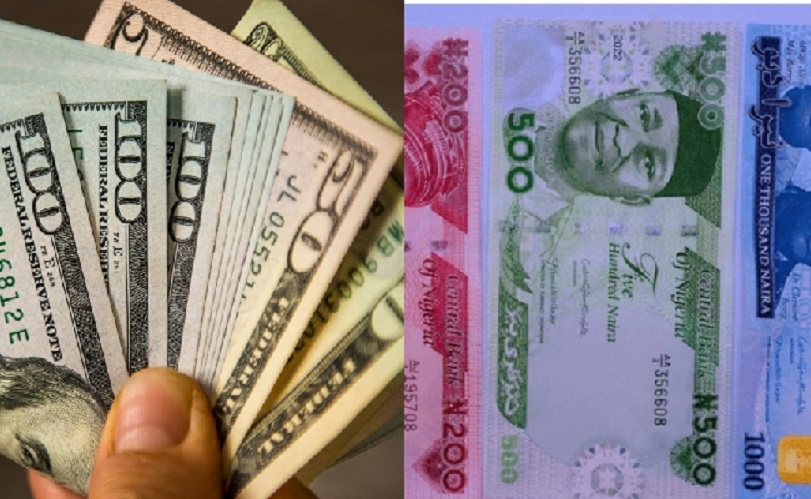
The Naira suffered a decline of N5.87 or 0.43 per cent against the US Dollar in the Nigerian Autonomous Foreign Exchange Market (NAFEX) on Tuesday, April 7, to trade at N1,386.66/$1 compared with the previous value of N1,380.79/$1.
It was the first trading day in the local currency market after it closed last Friday and Monday for the Easter holiday.
In the same market window, the Nigerian Naira also depreciated against the Pound Sterling during the session by N13.71 to sell for N1,838.57/£1 versus N1,824.86/£1, and lost N13.69 on the Euro to quote at N1,605.61/€1 versus N1,591.92/€1.
In the black market, the Nigerian currency maintained stability against the Dollar yesterday to remain unchanged at N1,4010/$1.
Despite the recent movement, analysts remain optimistic about the outlook of the currency in 2026, citing ongoing reforms by the Central Bank of Nigeria (CBN).
The Centre for the Promotion of Private Enterprise (CPPE) said Naira stability in the first quarter of the year boosted business confidence, noting that the currency remains relatively stable during the period, trading within the N1,340 to N1,430 per Dollar band.
It attributed the stability to improved foreign exchange liquidity, stronger oil earnings, and rising external reserves, which had climbed above 50 billion dollars.
In the cryptocurrency market, prices rose after US President Donald Trump announced a two-week cease-fire with Iran, abruptly reversing days of bearish positioning.
The spike triggered roughly $595 million in crypto liquidations, with short positions making up about $427 million, marking the most aggressive short squeeze since early March. Short positions occur when investors profit from a decline in the price of an asset, so when prices rise, losses occur for the shorts.
Cardano (ADA) rose by 8.3 per cent to $0.2629, Ethereum (ETH) appreciated by 7.3 per cent to $2,249.69, Solana (SOL) added 6.6 per cent to sell for $84.67, Ripple (XRP) jumped 5.8 per cent to $1.38, Dogecoin (DOGE) expanded by 5.1 per cent to $0.0949, Bitcoin (BTC) grew by 5.0 per cent to $71,897.41, Binance Coin (BNB) increased by 3.3 per cent to $616.35, and TRON (TRX) gained 0.1 per cent to trade at $0.3160, while the US Dollar Tether (USDT) and the US Dollar Coin (USDC) traded flat at $1.00 apiece.
By Dipo Olowookere
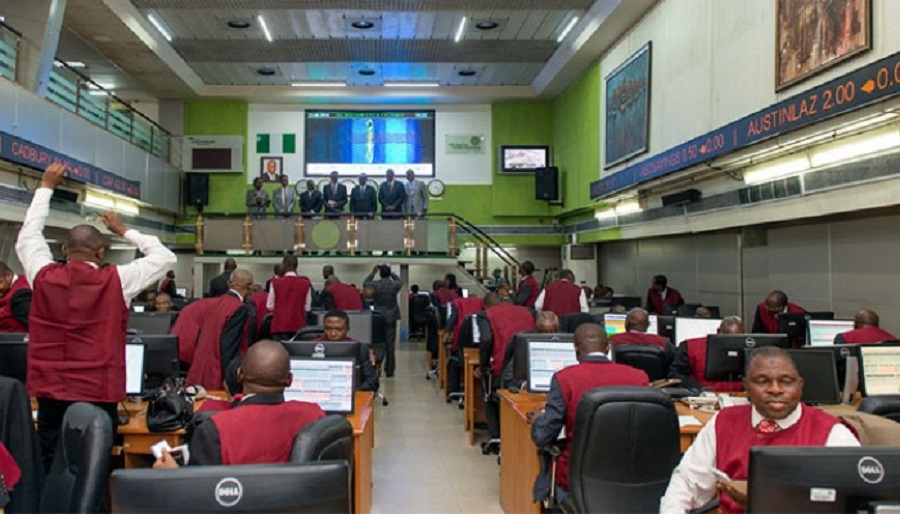
The first trading session on the floor of the Nigerian Exchange (NGX) Limited after the two-day break for Easter ended on a positive note, with a 0.16 per cent rise on Tuesday, April 7, 2026.
The local stock exchange last opened its doors to investors last Thursday, and at the resumption of trading activities yesterday, market participants showed enthusiasm, mopping up shares in the banking ecosystem, and rescuing the bourse from the bears.
This returned Customs Street to the green territory, with the All-Share Index (ASI) growing by 324.21 points to 202,023.10 points from 201,698.89 points, and the market capitalisation up by N209 billion to N130.015 trillion from N129.806 trillion.
The expansion experienced during the session was inspired by three sectors, with the banking index up by 1.46 per cent, the energy space up by 0.12 per cent, and the consumer goods counter up by 0.10 per cent. But the insurance sector lost 1.37 per cent, and the industrial goods sector depreciated by 0.31 per cent.
Business Post reports that investor sentiment was bearish on Tuesday after a negative market breadth index caused by 25 price gainers and 36 price losers.
Ellah Lakes slumped by 10.00 per cent to N10.80, DAAR Communications gave up 9.95 per cent to trade at N1.72, Chams decreased by 9.87 per cent to N3.38, John Holt lost 9.71 per cent to finish at N13.95, and Sunu Assurances slipped by 9.68 per cent to N4.20.
On the flip side, Trans Nationwide Express gained 9.86 per cent to quote at N3.12, Omatek appreciated by 9.76 per cent to N2.25, Cadbury Nigeria improved by 9.53 per cent to N75.25, First Holdco rose by 9.10 per cent to N54.55, and Fortis Global Insurance chalked up 6.50 per cent to close at N1.31.
Trading data revealed that activity level improved during the session, with the trading volume up by 114.29 per cent to 1.2 billion shares from 560.0 million shares, the trading value surged by 108.81 per cent to N40.3 billion from N19.3 billion, and the number of deals soared by 57.03 per cent to 78,006 deals from 49,676 deals.
Wema Bank transacted 282.6 million equities valued at N7.3 billion, Access Holdings exchanged 125.2 million stocks worth N3.3 billion, VFD Group traded 106.8 million shares for N1.1 billion, First Holdco sold 63.0 million equities worth N3.2 billion, and GTCO exchanged 56.6 million shares valued at N7.1 billion.
-
 Feature/OPED6 years ago
Davos was Different this year
-
Travel/Tourism10 years ago
Lagos Seals Western Lodge Hotel In Ikorodu
-

 Showbiz3 years ago
Estranged Lover Releases Videos of Empress Njamah Bathing
-
 Banking8 years ago
Sort Codes of GTBank Branches in Nigeria
-

 Economy3 years ago
Subsidy Removal: CNG at N130 Per Litre Cheaper Than Petrol—IPMAN
-

 Banking3 years ago
Sort Codes of UBA Branches in Nigeria
-

 Banking3 years ago
First Bank Announces Planned Downtime
-

 Sports3 years ago
Highest Paid Nigerian Footballer – How Much Do Nigerian Footballers Earn