Economy
Nigerian Breweries, 20 Others Restore Sanity to Stock Market
By Dipo Olowookere
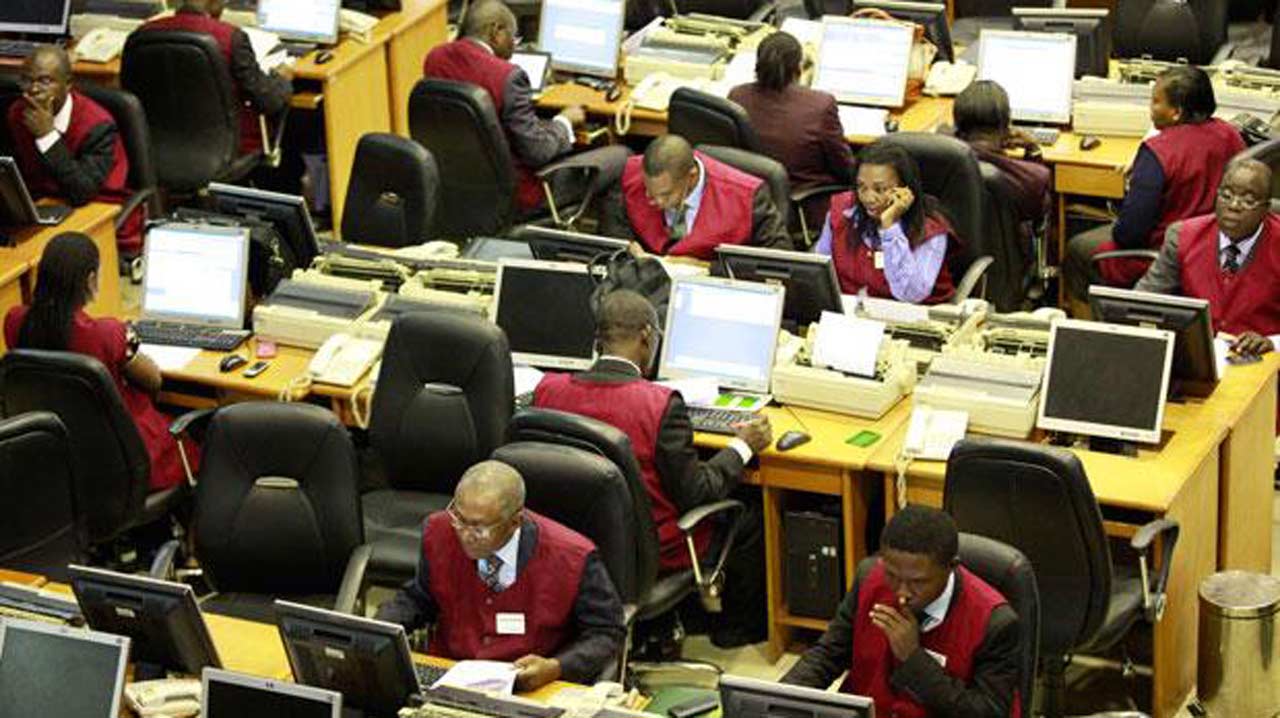
Sanity was restored to the Nigerian Stock Exchange (NSE) on Friday after some blue-chip stocks led by Nigerian Breweries rescued the market from further fall.
Business Post reports that for the first time in eight consecutive sessions and the second time in the month of September 2018, the market closed in the green territory.
At the close of transactions on Friday, the equities market appreciated by 0.95 percent, shrinking the Year-to-Date (YtD) returns to -15.47 percent.
This was after the All-Share Index (ASI) increased by 305.36 points to close at 32,327.59 points and the market capitalisation advanced by N111 billion to settle at N11.802 trillion.
The market breadth, unlike the past sessions, finished positive with 21 price gainers against 16 price losers.
Topping the price gainers’ chart was Nigerian Breweries, which appreciated by N8.40k to settle at N92.50k per share.
It was followed by GTBank, which rose by N1.80k to end at N34.75k per share, and Stanbic IBTC, which moved up by N1.25k to close at N42.25k per share.
Zenith Bank added 45 kobo to its share value to end at N20.05k per share, while UBA went up by 25 kobo to close at N7.40k per share.
On the flip side, Nestle Nigeria led the price losers’ list after going down by N28 to settle at N1370 pr share.
Unilever Nigeria depressed by N3.80k to close at N43 per share, while CCNN deflated by N2.50k to finish at N22.60k per share.
Flour Mills went down by 80 kobo to end at N19 per share, while NASCON decreased by 75 kobo to close at N19.25k per share.
During last Friday’s trading session, the volume of shares transacted by investors appreciated by 45.31 percent from 173.6 million to 252.9 million, while the total value of the trades moved up by 27.50 percent from N3.7 billion to N4.7 billion.
A further breakdown showed that the Financial Services sector led the activity chart with 216.7 million shares exchanged for N3.7 billion, while the Conglomerates sector followed with 18.4 million shares transacted for N29 million.
Shares of GTBank, Zenith Bank, Transcorp, Fidelity Bank and Custodian Investment were the most traded on the floor of the NSE during the day’s trading.
GTBank sold 68.7 million equities worth N2.3 billion, Zenith Bank transacted 51.8 million units worth N1 billion, Transcorp exchanged 17.3 million shares valued at N20.4 million, Fidelity Bank swapped 15 million equities for N23.7 million, while Custodian Investment traded 9.9 million shares for N56.1 million.
Economy
Investors Eye Investment Opportunities in Dangote Refinery
By Aduragbemi Omiyale
The planned listing of the Dangote Petroleum Refinery & Petrochemicals on the Nigerian Exchange (NGX) Limited is already attracting interest from South African investors and others.
The leadership of South Africa’s Government Employees Pension Fund (GEPF), alongside the Public Investment Corporation and Alterra Capital Partners, were recently at the Lagos-based facility.
The chairperson of GEPF, Mr Frans Baleni, said that the refinery stands as evidence that Africa can execute transformational infrastructure projects when backed by visionary leadership, long-term investment and strong technical expertise.
According to him, the significance of the project extends well beyond Nigeria’s borders, noting that it should reshape how Africa thinks about itself.
“The Dangote Refinery and Petrochemicals Complex is a powerful demonstration that, with visionary leadership and long-term capital, that perception no longer holds. This is the kind of African-led industrial scale that institutional investors on this continent should be backing,” he said.
Also speaking, the chief executive of PIC, Mr Patrick Dlamini, described the refinery as one of the most transformative industrial projects undertaken on the continent, saying it is reshaping global perceptions about Africa’s industrial capabilities and economic potential.
He said PIC, which manages about $230 billion in assets largely on behalf of South Africa’s Government Employees Pension Fund, is actively seeking long-term partnerships aligned with infrastructure development, industrialisation and economic transformation across Africa.
“There is real strategic alignment between Dangote’s industrial agenda and how we are positioning our portfolio, and we look forward to exploring meaningful avenues for collaboration,” he stated.
While receiving his visitors, the chief executive of Dangote Group, Mr Aliko Dangote, said the proposed listing is designed to democratise wealth creation and give Africans direct access to participate in the continent’s industrial transformation.
“We are opening the doors for investors to participate directly in Africa’s industrial future and the prosperity it will create,” Mr Dangote said, adding that the refinery project reflects the scale of untapped opportunities within Africa’s energy market, particularly as most countries on the continent remain dependent on imported refined petroleum products despite growing industrial demand and rising consumption.
The billionaire industrialist noted that demand for products such as polypropylene, aviation fuel and refined petroleum products has exceeded earlier projections, reinforcing the commercial viability of the refinery and shaping future expansion plans.
Economy
Nigeria’s Oil Exploration Declines 41.7% as Rig Counts Falls to 12 in April
By Adedapo Adesanya
Nigeria’s oil exploration and drilling activities declined by 41.7 per cent in April 2026, following reduced upstream operations and investment activities.
According to the May 2026 Monthly Oil Market Report (MOMR) of the Organisation of the Petroleum Exporting Countries (OPEC), Nigeria’s rig count, a major indicator of upstream oil and gas activities, dropped to 12 in April 2026 from 17 recorded in March 2026.
The decline came amid persistent upstream investment and operational challenges, according to the latest monthly report released by OPEC.
Earlier data contained in the May 2026 edition of the MOMR also showed that Nigeria’s average rig count declined to 13 in 2025 from 15 recorded in 2024, indicating reduced exploration and drilling activities in the upstream petroleum sector.
The report showed that Nigeria’s rig count fell by five rigs month-on-month, from 17 rigs in March 2026 to 12 rigs in April 2026.
Rig count is widely regarded in the petroleum industry as a key indicator of exploration, field development and investment activities.
The decline comes despite ongoing efforts by the Nigerian government and industry operators to raise crude oil production, boost reserves and attract fresh upstream investments under the Petroleum Industry Act (PIA)
Nigeria’s performance contrasted with the broader African trend, where total rig count increased marginally from 42 in March 2026 to 48 in April 2026.
However, Nigeria accounted for a significant share of the continent’s decline in operational rigs during the period.
Within OPEC, Nigeria remained behind major producers such as Saudi Arabia, which recorded 265 rigs in April 2026, the United Arab Emirates with 66 rigs, and Iraq with 19 rigs.
The development also comes at a time when Nigeria is struggling to meet its crude oil production quota allocated by OPEC consistently.
Economy
Nigeria’s Central Bank Holds Rate at 26.50% Despite Heightened Disruptions
By Adedapo Adesanya
The Monetary Policy Committee (MPC) of the Central Bank of Nigeria (CBN) has retained the headline interest rate, the Monetary Policy Rate (MPR), at 26.50 per cent.
This was disclosed by the Governor of Nigeria’s central bank, Mr Yemi Cardoso, on Wednesday, after the conclusion of the MPC meeting. He noted that the decision was hinged on Nigeria being largely insulated from external shocks relating to developments in the Middle East.
He also acknowledged that inflation and exchange rate stability were put into consideration during the two-day meeting.
The committee reduced the benchmark interest rate by 50 basis points from 27.0 per cent to 26.5 per cent at its 304th MPC gathering in February.
Nigeria’s inflation rose to 15.69 per cent in April 2026, affected by the fallout from the Iran war, which continued to impact the global economy. Noting that year-on-year, the figures show a moderation rather than worry.
The headline inflation rate for April on a month-on-month basis was 2.13 per cent, while the food inflation rate in the review month was 16.06 per cent on a year-on-year basis.
Mr Cardoso noted that the Cash Reserve Ratio (CRR) was also retained at 45 per cent for commercial Banks, 16 per cent for Merchant Banks, and 75 per cent for non-TSA public sector deposits.
He added that the Standing Facilities Corridor was also held flat at +50 / -450 basis points around the MPR.
-
Feature/OPED6 years agoDavos was Different this year
-
Travel/Tourism10 years ago
Lagos Seals Western Lodge Hotel In Ikorodu
-
Showbiz3 years agoEstranged Lover Releases Videos of Empress Njamah Bathing
-
Banking8 years agoSort Codes of GTBank Branches in Nigeria
-
Economy3 years agoSubsidy Removal: CNG at N130 Per Litre Cheaper Than Petrol—IPMAN
-
Banking3 years agoSort Codes of UBA Branches in Nigeria
-
Banking3 years agoFirst Bank Announces Planned Downtime
-
Sports3 years agoHighest Paid Nigerian Footballer – How Much Do Nigerian Footballers Earn