Connect with us

Economy

Nigerian Startups to Benefit from IFC $225m Venture Capital Funding

Published

on

venture capital funding

By Adedapo Adesanya

Nigerian tech startups will be among the many eligible parties that can get funding from the International Finance Corporation (IFC), a subsidiary of the World Bank, new $225 million platform.

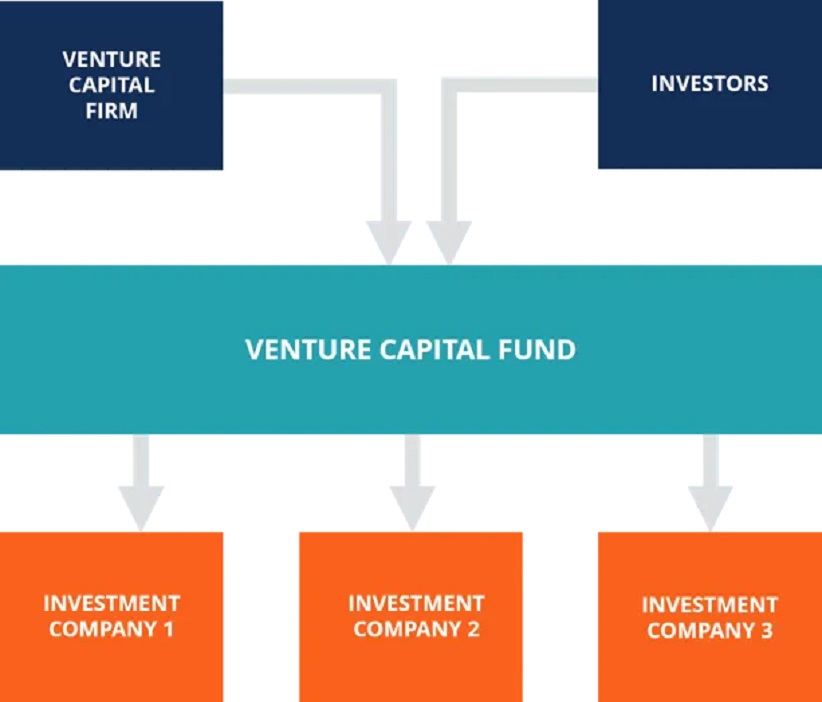
In a release seen by Business Post, IFC has launched a new $225 million platform to strengthen venture capital ecosystems and invest in early-stage companies addressing development challenges through technological innovations in climate, health care, education, agriculture, e-commerce, and other sectors.

The platform will strengthen digital economies in Africa, the Middle East, Central Asia, and Pakistan.

According to the IFC, in 2021, these regions collectively received less than 2 per cent of $643 billion of global venture capital funding. Access to capital has been exacerbated by a slowdown in global venture capital investment, the COVID-19 pandemic, the rise in food and supply chain costs, higher interest rates, and currency depreciation.

The growth potential, however, is enormous across these regions. In Africa, for example, the digital economy has the potential to contribute $712 billion to the continent’s gross domestic product (GDP) by 2050.

Meanwhile, in the Middle East and North Africa (MENA), technology could boost GDP by 40 per cent, or $1.6 trillion, and create 1.5 million manufacturing jobs in the next 30 years. In Pakistan, the digital transformation can unlock up to $59.7 billion in annual economic value by 2030, equivalent to about 19% of the country’s GDP.

According to Mr Makhtar Diop, IFC’s Managing Director, the platform aims to strengthen these regions’ nascent venture capital markets, which have demonstrated early growth potential but face challenging global economic conditions.

“Support for entrepreneurship and digital transformation is essential to economic growth, job creation, and resilience. IFC’s Venture Capital Platform will help tech companies and entrepreneurs expand during a time of capital shortage, creating scalable investment opportunities and backing countries’ efforts to build transformative tech ecosystems.

“We want to help develop homegrown innovative solutions that are not only relevant to emerging countries but can also be exported to the rest of the world.”

IFC will make equity or equity-like investments in tech startups and help them grow into scalable ventures that can attract mainstream equity and debt financing.

The financer will also use the platform to collaborate with other teams in the World Bank Group to create and bolster venture capital ecosystems through regulatory reforms, sector analyses, and other tools. The platform will also focus on investments in low-income and fragile countries and help generate a pipeline of credible early-stage companies.

The platform will be backed by an additional $50 million from the Blended Finance Facility of the International Development Association’s Private Sector Window, which helps de-risk investments in low-income countries.

IFC will also mobilize capital from other development institutions and the private sector to support entrepreneurs and tech companies in those countries.


Adedapo Adesanya is a journalist, polymath, and connoisseur of everything art. When he is not writing, he has his nose buried in one of the many books or articles he has bookmarked or simply listening to good music with a bottle of beer or wine. He supports the greatest club in the world, Manchester United F.C.

Economy

Ellah Lakes Records Stronger Revenue Momentum Amid N273m Operating Loss

Published

on

Ellah Lakes

By Aduragbemi Omiyale

Nigeria’s integrated agro-industrial company, Ellah Lakes Plc, significantly improved its revenue in the first quarter of 2026 to N359.49 million from N19.61 million in the same period of 2025.

The revenue growth was driven by initial harvests and sales of Crude Palm Oil (CPO), reflecting stronger commercial activity and improved pace of revenue generation as operations continue to scale.

The improved sales activity was supported by growing commercial output from its operating platform and continued focus on disciplined execution.

It was observed that while the gross profit rose to N285.35 million from N19.61 million, the operating loss moderated to N273.42 million from the N514.12 million recorded in the first quarter of last year.

“The first quarter represents another important step in Ellah Lakes’ transition into commercial execution. The stronger revenue momentum recorded during the period was supported by improved production stability, better operational uptime and more disciplined sales execution.

“Importantly, we also narrowed our operating loss year-on-year, reflecting the benefit of higher gross profit and continued cost discipline. These results provide an encouraging early indication that the business is gaining operating momentum,” the chief executive of Ellah Lakes, Mr Chuka Mordi, said.

Ellah Lakes continued to focus on scaling output, improving efficiency, and converting its agricultural asset base into stronger commercial performance.

The quarter’s results show early evidence of this transition, with revenue increasing significantly year-on-year and operating loss narrowing compared with the prior-year quarter.

“Our CPO mill is now operational, piggery operations continue to scale, and we are advancing the next stage of our processing roadmap through the planned installation of a 40 tonnes-per-day Palm Kernel Oil (PKO) mill in Q2 2026.

“In parallel, we are strengthening our operating systems and exploring technical partnerships to improve asset utilisation and execution as the business scales.

“Our focus remains on disciplined execution, prudent capital stewardship and long-term value creation for shareholders,” Mr Mordi stated.

Continue Reading

Economy

CAC Introduces Direct Payment Option to Ease Business Registration

Published

on

business registration in Nigeria

By Adedapo Adesanya

Businesses operating in Nigeria can now register easily as the Corporate Affairs Commission (CAC) introduces a direct payment option on its portal.

A statement posted on the commission’s handle on X (formerly Twitter) on Wednesday noted that the move is aimed at streamlining registration services as well as optimising the portal for efficiency.

“The Corporate Affairs Commission (CAC) wishes to notify its esteemed customers that payments for the following filings can now be conveniently made directly on our portal via ReVOps on the Intelligent Company Registration Portal (iCRP),” it announced.

The Revenue Optimisation and Assurance Project (REV-OP) was launched last year to strengthen public financial management.

The initiative focuses on blocking revenue leakages and improving transparency across government agencies.

It is built on three pillars: transparency, efficiency, and digital transformation.

The new payment systems allow users to pay for services through ReVOps on its Intelligent Company Registration Portal (iCRP).

Before now, the previous payment structure relied on the Remita gateway, which supported debit cards, bank transfers, and branch payments.

According to the Commission, the initiative is part of efforts to improve service delivery and streamline its processes for users.

The CAC listed services now eligible for direct payment include Annual Returns Filing, Change of Business Address, Cessation of Business, Change of Name, and Change of Objects.

It added that other services, such as Change of Proprietor or Partner details, are Certified True.

The move aligns with the federal government’s broader push to digitise public finance and improve revenue collection through technology.

REV-OP enables real-time monitoring and data-driven decision-making, marking a shift toward a more technology-driven approach to government revenue systems.

Continue Reading

Economy

Nigerians Pay More to Buy Eggs, Beans, Garri

Published

on

garri beans eggs

By Adedapo Adesanya

Nigerians paid more to buy staple foods, including eggs, beans, and garri, in March 2026 compared with what they paid in the preceding month, according to the National Bureau of Statistics (NBS).

The agency, in its Selected Food Prices Watch report for March 2026, released on Wednesday, said that the average price of eggs (a crate of 30 pieces) on a month-on-month basis went up by 2.00 per cent from N6,007.35 in February 2026.

However, the price of the proteinous meal decreased by 20.12 per cent on a year-on-year basis from N7,670.56 recorded in March 2025 to N6,127.63 in March 2026.

Similarly, the report said that the average price of 1kg of brown beans decreased by 49.39 per cent on a year-on-year basis from N2,616.26 in March 2025 to N1,325.85 in March 2026, but on a month-on-month basis, the price increased by 1.41 per cent from the N1,307.44 recorded in February 2026. It also showed the average price of 1kg of white garri decreased by 41.19 per cent on a year-on-year basis from N1,362.96 in March 2025 to N801.4 in March 2026, and on a month-on-month basis, it rose by 1.38 per cent from the N790.62 recorded in February 2026.

The report said that the average price of 1kg of onion decreased by 19.63 per cent from N1,434.85 recorded in March 2025 to N1,153.14 in March 2026. On a month-on-month basis, 1kg of onions increased by 1,59 per cent in March from the N1,135.12 recorded in February 2026.

The report said the average price of 1kg of fresh ginger increased by 20.46 per cent from the N4,600.23 recorded in March 2025 to N5,541.25 in March 2026. On a month-on-month basis, 1kg of ginger increased by 0.61 per cent in March from the N5,507.43 recorded in February 2026.

However, it said the average price of one litre of palm oil decreased by 4.71 per cent on a year-on-year basis from N2,511.77 recorded in March 2025 to N2,393.38 in March 2026.

Continue Reading

Trending