Connect with us

Economy

Nigeria’s Capital Market Contributes Less Than 10% to GDP—SEC DG

Published

on

sec capital market

By Adedapo Adesanya

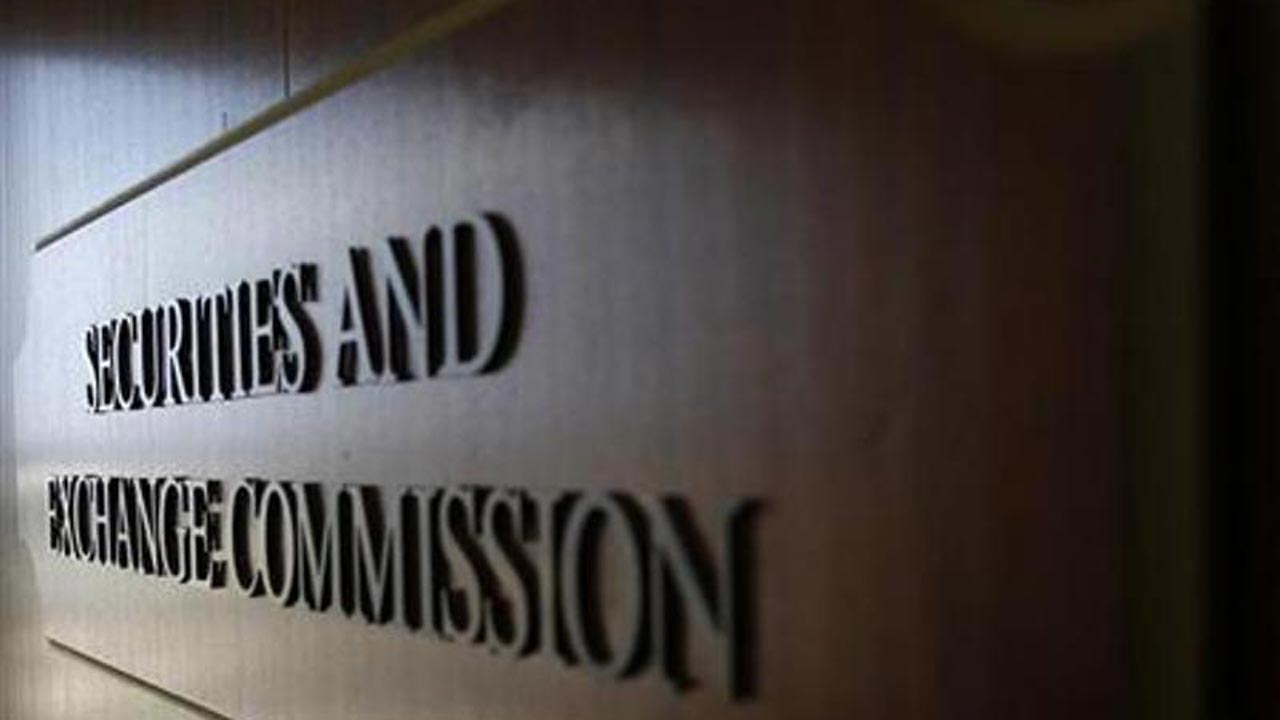
Acting Director-General of the Securities and Exchange Commission (SEC), Ms Mary Uduk, has said Nigeria was not utilising its full economic potential despite being able to accommodate a bigger and more attractive capital market.

Head of Corporate Communications of SEC, Mrs Efe Ebelo, quoted Ms Uduk as saying in a statement that the country’s capital market contributes less than 10 percent to the Gross Domestic Product (GDP).

She said Nigeria needs a larger capital market, pointing out that, “We think our economy is big enough to have a much bigger market.”

“The capital market makes up less than 10 percent of the GDP of the country. If you look at other countries, even South Africa, it is over 100 percent of GDP.

“We believe we have a large room for expansion and that is what we are pursuing,” the capital market expert said.

Giving an update on the electronic filing system that will ensure efficiency, account for unclaimed dividends and curb any foul play in the capital market, Ms Uduk said the commission was working hard to ensure its met its planned commencement.

The SEC chief said the regulatory body was also in the process of deploying software that would help to actualise the plan, saying, “That will make filing more efficient, easier for capital market operators to send in returns to us and make the market more transparent”.

Ms Uduk said the commission was excited about electronic offering and was in support hence the need to develop the rules to guide its implementation, noting that, “We believe that electronic offerings will help solve the problems of unclaimed dividends so it is something we are backing seriously.”

“Through electronic offerings, we will not have the problems of identity as we had in previous listings. It has a lot of advantages; it means that people who are not close by during an offering can invest.

“We will be able to get the data we need for regulation; the offering is more efficient and it is cost saving. It is something we are working on; the rules will soon be out for everyone to use,’’ she said.


Adedapo Adesanya is a journalist, polymath, and connoisseur of everything art. When he is not writing, he has his nose buried in one of the many books or articles he has bookmarked or simply listening to good music with a bottle of beer or wine. He supports the greatest club in the world, Manchester United F.C.

Click to comment

Leave a Reply

Your email address will not be published. Required fields are marked *

Economy

OTC Securities Exchange Falls 2.48%

Published

on

Nigerian OTC securities exchange

By Adedapo Adesanya

The NASD Over-the-Counter (OTC) Securities Exchange was down by 2.48 per cent on Friday, June 19, with the Unlisted Security Index shedding 108.36 points to close at 4,252.73 points compared with the previous day’s 4,361.09 points.

During the trading day, the market capitalisation of the OTC securities exchange dropped 2.18 per cent or N67.29 billion to settle at N2.552 trillion, in contrast to Thursday’s N2.609 trillion.

The alternative stock market was in the red yesterday after finishing with three price losers led by Central Securities Clearing System (CSCS) Plc, which gave up N8.57 to trade at N77.77 per share versus the preceding day’s N86.34. FrieslandCampina Wamco Nigeria Plc lost N8.19 to quote at N170.00 per unit compared with the previous session’s N178.19 per unit, and Food Concepts Plc crashed by 26 Kobo to end at N2.51 per share versus N2.77 per share.

Business Post reports that there were also three price gainers during the session, led by Golden Capital Plc, which chalked up 67 Kobo to sell at N13.67 per unit versus N13.00 per unit. Afriland Properties Plc gained 65 Kobo to trade at N16.85 per share compared with the previous price of N16.20 per share, and MRS Oil added 3 Kobo to close at N142.23 per unit versus N142.00 per unit.

The volume of trades was up by 20.3 per cent on Friday to 954,106 units from 792,835 units, and the number of deals increased by 75 per cent to 35 deals from 20 deals, while the value of transactions went down by 12.9 per cent to N42.7 million from N49.0 million.

The most traded stock by value on a year-to-date basis was Great Nigeria Insurance (GNI) Plc, with 3.4 billion units worth N8.4 billion, followed by Infrastructure Credit Guarantee (Infracredit) Plc with 2.3 billion units sold for N6.5 billion, and CSCS Plc with 67.8 million units exchanged for N4.7 billion.

The most traded stock by volume on a year-to-date basis was also GNI Plc, with 3.4 billion units valued at N8.4 billion, followed by Infracredit Plc with 2.3 billion units traded for N6.5 billion, and Resourcery Plc with 1.1 billion units transacted for N415.7 million.

Continue Reading

Economy

Sell-Offs in GTCO, First Holdco Crash NGX All-Share Index by 0.62%

Published

on

NSE All-Share Index

By Dipo Olowookere

The local stock exchange remained in the red on Friday after it further depreciated by 0.62 per cent due to panic sell-offs in some bellwether equities.

NAHCO lost 10.00 per cent to trade at N148.50, Royal Exchange depreciated by 10.00 per cent to N1.53, GTCO slumped by 9.97 per cent to N115.55, First Holdco dropped 9.84 per cent to quote at N55.00, and Neimeth slipped by 9.60 per cent to N28.12.

On the flip side, Deap Capital increased by 9.89 per cent to N4.89, RT Briscoe expanded by 9.62 per cent to N13.10, International Energy Insurance advanced by 7.43 per cent to N5.06, Jaiz Bank gained 7.14 per cent to sell for N9.00, and Living Trust Mortgage Bank rose by 5.26 per cent to N4.00.

During the session, the energy index chalked up 2.35 per cent, but this was not enough to lift the Nigerian Exchange (NGX) Limited when the closing gong was struck by 4 pm to signify the close of trading activities.

This was because the banking sector lost 4.41 per cent, the insurance counter shed 1.52 per cent, the industrial goods space declined by 0.71 per cent, and the consumer goods segment tumbled by 0.13 per cent.

Consequently, the All-Share Index (ASI) contracted by 1,463.45 points to 235,941.27 points from 237,404.92 points, and the market capitalisation retreated by M939 billion to N151.327 trillion from N152.266 trillion.

The activity chart was topped by Access Holdings, which posted a turnover of 65.0 million shares valued at N1.5 billion. Zenith Bank sold 35.2 million stocks worth N3.9 billion, Sterling Holdings exchanged 28.4 million equities for N217.8 million, UBA transacted 16.3 million shares valued at N650.7 million, and GTCO traded 14.0 million stocks worth N1.8 billion.

In all, investors transacted 440.4 million equities for N24.7 billion in 50,273 deals, in contrast to the 691.6 million equities valued at N116.9 billion traded in 50,025 deals on Thursday, implying an uptick in the number of deals by 0.50 per cent, and a decrease in the trading volume and value by 36.32 per cent and 78.87 per cent, respectively.

Continue Reading

Economy

Naira Crashes to N1,370/$ at Official Market, N1,390/$1 at Black Market

Published

on

forex Black Market

By Adedapo Adesanya

The Naira again depreciated against the United States Dollar by N7.16 or 0.53 per cent in the Nigerian Autonomous Foreign Exchange Market (NAFEX) on Friday, June 19, to N1,370.46/$1 from the previous day’s N1,363.30/$1.

In the same vein, the Nigerian currency lost N9.07 against the Pound Sterling at the official market yesterday to trade at N1,814.76/£1 compared with Thursday’s closing price of N1,805.69/£1, and crashed against the Euro by N6.43 to settle at N1,571.50/€1 versus N1,565.07/€1.

Also, the Naira weakened against the greenback in the black market during the session by N5 to sell for N1,390/$1, in contrast to the preceding day’s N1,385/$1, and at the GTBank FX desk, it shed N3 to close at N1,376/$1 versus N1,373/$1.

The official market’s FX liquidity has been facing pressure over the last three trading sessions, contributing to a decline in the official exchange rate due to rising demand for foreign payments.

FX reserves rose to $51.03 billion, the highest level since January 20, 2009, according to data obtained from the Central Bank of Nigeria (CBN). The figure also represents the highest since the beginning of the year and under the administration of the current Governor of CBN, Mr Yemi Cardoso.

The latest figure underscores the steady strengthening of Nigeria’s external buffers, which continues to reinforce investor confidence in the Nigerian economy and support exchange rate stability.

Meanwhile, the cryptocurrency market was mixed, with Bitcoin (BTC) up by 0.8 per cent to $63,225.80 after trading activity was relatively subdued due to a US federal holiday, as the absence of stock and bond market activity led to quieter conditions across crypto markets, even though digital assets continue to trade around the clock.

Further, TRON (TRX) also gained 0.8 per cent to sell at $0.3230, Binance Coin (BNB) jumped 0.5 per cent to $579.84, and Ethereum (ETH) appreciated by 0.1 per cent to $1,704.23.

On the flip side, Ripple (XRP) declined by 0.9 per cent to $1.13, Cardano (ADA) shed 0.8 per cent to trade at $0.1611, Solana (SOL) fell by 0.1 per cent to $69.23, and Dogecoin (DOGE) slipped by 0.1 per cent to $0.0831, while the US Dollar Tether (USDT) and the US Dollar Coin (USDC) remained unchanged at $1.00 each.

Continue Reading

Trending