Connect with us

Economy

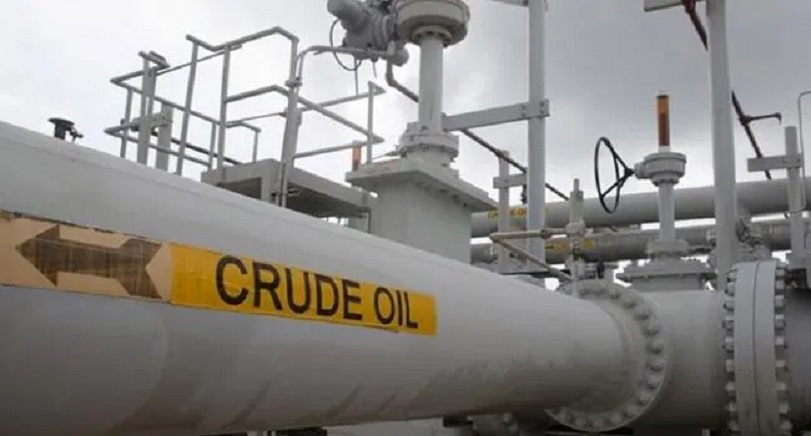
Nigeria’s Crude Output Falls 30,000 Barrels Daily to 1.43mbpd in November

Published

on

crude output Nigeria

By Adedapo Adesanya

Nigerian crude output fell by 30,000 barrels per day to 1.43 million barrels per day in November, according to data from an S&P Global Commodity Insight.

This was lower than the 1.46 million barrels produced in October by Africa’s largest oil producer and 312,000 barrels per day short of its 1.742 million barrels per day target in 2023.

Angola, Africa’s second-largest oil producer, saw output drop 20,000 barrels per day to 1.13 million barrels per day, according to the survey, compared with its quota of 1.46 million barrels per day.

The drops impacted the wider output of the Organisation of the Petroleum Exporting Countries and its allies (OPEC+) to which Nigeria is a member, as total crude production fell 110,000 barrels per day in November to 42.6 million barrels per day.

Nigeria, alongside Angola, has been at the centre of tough OPEC+ negotiations in recent months over production quotas for 2024, and they are among several countries to have had their targets slashed, much to their displeasure.

Nigeria was then handed a 1.5 million barrels per day quota for 2024 by OPEC+ at its November 30 meeting.

Iraq which recorded 110,000 barrels per day contributed the most to the decline in production for November. Despite this, the Middle East producer is still 70,000 barrels per day above its quota.

Iraq, OPEC’s second-biggest member, had its output affected by stormy weather in the month, which prevented loadings from its southern ports, as well as a lingering dispute with the semi-autonomous Kurdistan region over the payment to oil companies.

OPEC’s largest producer, Saudi Arabia, kept November production flat on the month at 9 million barrels per day. This is in line with its pledge to voluntarily cut 1 million barrels per day of crude from June levels to shore up oil prices.

The largest non-OPEC producer in the group, Russia, saw production fall by 20,000 barrels per day to 9.43 million barrels per day.

Saudi Arabia has said it will extend this cut through the first quarter of 2024 while Russia pledged to voluntarily cut exports by 300,000 barrels per day from the May-June average up to the end of 2024. It plans to deepen this cut, which it says includes crude and oil products exports, to 500,000 barrels per day in the first quarter of 2024.

The second-largest non-OPEC producer, Kazakhstan, reduced crude output by 30,000 barrels per day to 1.53 million barrels per day in November, as storms affected loading at its key CPC export route.

OPEC production falls were partially offset by gains in Iran and Venezuela. The two sanctioned countries are exempt from quotas and have seen production grow significantly in recent months.

Libya and non-OPEC Mexico also do not have quotas under the OPEC+ supply accord.

Adedapo Adesanya is a journalist, polymath, and connoisseur of everything art. When he is not writing, he has his nose buried in one of the many books or articles he has bookmarked or simply listening to good music with a bottle of beer or wine. He supports the greatest club in the world, Manchester United F.C.

Economy

Oil Market Dips Amid Uncertainty Over US Military Action

Published

on

Crude Oil Prices

By Adedapo Adesanya

The oil market edged lower on Tuesday but remained well above $100 per barrel, as investors weighed mixed signals from President Donald Trump on the resumption of military strikes against Iran.

Brent crude futures lost 0.73 per cent to trade at $111.28 per barrel, and the US West Texas Intermediate (WTI) fell 0.82 per cent to sell for $107.77 per barrel.

President Trump told reporters Tuesday that the US. might have to give Iran “another big hit” after he had previously posted that his administration would ‘hold off’ on a planned military attack, renewing the threat after he said he called off the attack scheduled for Tuesday at the request of the leaders of Qatar, Saudi Arabia and the United Arab Emirates (UAE).

The American President also said that Iran has a “limited period of time” to agree to a deal, giving options “two or three days, maybe Friday, Saturday, Sunday, something, maybe early next week.”

Iran’s latest peace proposal to ​the US involves ending hostilities on all fronts, including Lebanon, the exit of US forces from areas close to Iran and reparations for destruction caused by the war.

Meanwhile, the US imposed sanctions on an Iranian foreign currency exchange house and what it said were front companies overseeing transactions on behalf of Iranian banks. It also blocked 19 vessels, which it said were involved in shipping Iranian petroleum and petrochemicals to foreign customers. It also seized an oil tanker linked to Iran in the Indian Ocean overnight.

US Treasury Secretary Scott Bessent extended a sanctions waiver by 30 ​days to allow “energy-vulnerable” countries ⁠to continue purchasing Russian seaborne oil.

Oil markets continue to price in persistent supply disruptions in the Middle East, with analysts noting that hopes that China would help broker progress during recent Trump-Xi talks failed to materialise.

Goldman Sachs forecasts that every month the Strait of Hormuz remains closed adds $10 to the price of oil at year’s end, while ING said some shipping activity through the Strait of Hormuz has resumed, including several crude tankers and a Vietnamese-bound Iraqi oil shipment, though flows remain well below normal levels and could deteriorate quickly.

The American Petroleum Institute (API) estimated that crude oil inventories in the US fell by 9.1 million barrels in the week ending May 15. In the week prior, US crude oil inventories fell by 2.188 million barrels. Official data from the US Energy Information Administration (EIA) will be released later on Wednesday.

Continue Reading

Economy

All Set for Champion Breweries’ 50th AGM on Thursday

Published

on

2025 Champion Breweries AGM

By Aduragbemi Omiyale

Barring any last-minute changes, the 50th Annual General Meeting (AGM) of Champion Breweries Plc will take place on Thursday, May 21, 2026, at the Oriental Hotel, Victoria Island, Lagos, at 11:00 am.

At the yearly shareholders’ gathering, some of the key statutory and governance matters to be considered will include the Audited Financial Statements for the year ended December 31, 2025, alongside the Reports of the Directors, Auditors, and the Audit Committee.

Other agenda items are the declaration of dividends, election and re-election of Directors, authorisation for Directors to determine the remuneration of the Auditors, and election/re-election of shareholders’ representatives to the Audit Committee.

In line with its commitment to transparency, accountability, and shareholder engagement, the AGM will be held physically while also being accessible to stakeholders via the company’s official website: www.championbreweries.com.

This year’s AGM comes at a defining moment in the organisation’s corporate journey, following a transformative year marked by strategic expansion initiatives, including the acquisition of Bullet Energy Drink and its successful engagement with the capital market to raise growth capital.

These developments reinforce Champion Breweries Plc’s commitment to strengthening its competitive positioning, expanding its portfolio, and delivering long-term shareholder value.

The brewer has strengthened its transition into a group structure with the acquisition of an 80 per cent stake in enJOYbev B.V., a strategic move already delivering early earnings contribution and validating its international expansion drive.

The subsidiary’s results are now being consolidated into the Group accounts for the first time, with enJOYbev B.V. already contributing positively to earnings through operating profitability within the reporting period, an early validation of the group’s expansion strategy.

“This AGM reflects a defining chapter in our journey as a Company. The acquisition of Bullet, our successful capital market engagement, and the integration of enJOYbev B.V. into our group structure all signal a deliberate strategy for sustainable growth and diversification.

“These milestones position Champion Breweries Plc for stronger performance, broader market reach, and enhanced shareholder value. We remain committed to disciplined execution, operational excellence, and the highest standards of corporate governance,” the chairman of Champion Breweries, Mr Imo Abasi Jacob, said.

Continue Reading

Economy

NRS Launches Unified Tax ID System

Published

on

tax guidelines

By Adedapo Adesanya

The Nigeria Revenue Service (NRS) has unveiled a unified Taxpayer Identification (Tax ID) system for all taxable persons across the country as part of efforts to strengthen tax administration and improve transparency.

The agency announced the development in a public notice issued jointly with the Joint Revenue Board (JRB) on Monday.

According to the notice, the initiative is backed by Sections 6, 7, and 8 of the Nigeria Tax Administration Act, 2025, which mandate every taxable person in Nigeria to obtain a Tax ID, in a wider move to expand the country’s tax base.

The NRS said the new framework is designed to create a centralised and harmonised taxpayer database that would enhance interactions between taxpayers and revenue authorities at both federal and sub-national levels.

“The Tax ID will serve as a single, unified identity for all taxpayers, enabling seamless interaction with tax authorities at both federal and sub-national levels. It is designed to consolidate taxpayer records, eliminate duplication, and ensure more efficient management of tax-related information,” the agency stated.

The revenue agency explained that the new system would simplify tax compliance procedures, including taxpayer registration, filing of returns, and payment processes.

According to the NRS, the framework is also expected to improve accountability and reduce leakages in tax collection by creating better visibility and tracking of taxpayer information nationwide.

“The initiative will simplify tax compliance processes, including registration, tax filing, and payment procedures. The system will improve transparency by enabling better visibility and tracking of taxpayer records while reducing leakages and improving accountability in tax collection. The framework will also harmonise taxpayer information across all levels of government,” the notice added.

The agency further disclosed that the new Tax ID system would replace the existing Tax Identification Number (TIN) Validation API currently used by Ministries, Departments and Agencies (MDAs), financial institutions, and other organisations for taxpayer verification.

Continue Reading

Trending