Connect with us

Economy

Nigeria’s Oil Reserves to Last 59 Years at Current Output—NUPRC

Published

on

oil reserves

By Adedapo Adesanya

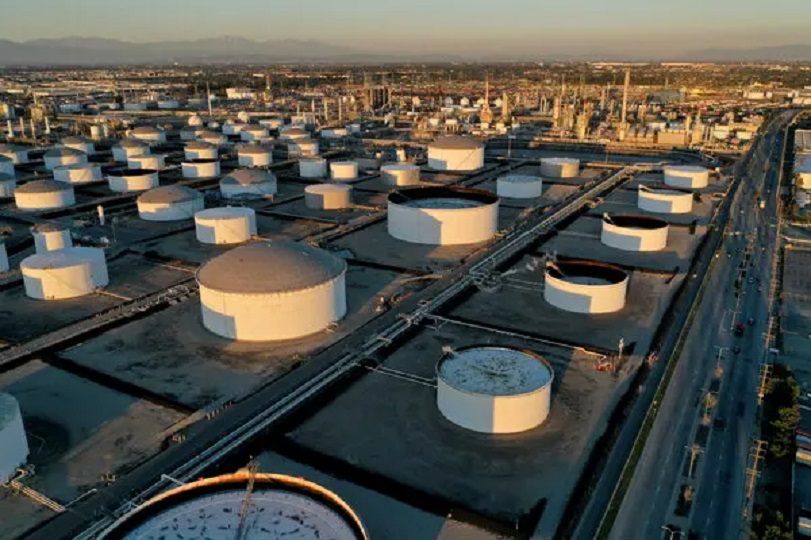
If Nigeria continues producing crude oil at its current pace, its proven reserves would be exhausted in about 59 years, according to the Nigerian Upstream Petroleum Regulatory Commission (NUPRC).

The regulator disclosed this on Wednesday in Abuja, as it released the nation’s official petroleum reserves position as of January 1, 2026.

In a statement signed by its chief executive, Mrs Oritsemeyiwa Eyesan, the commission said Nigeria’s total oil and condensate reserves stand at 37.01 billion barrels, while total gas reserves are about 215.19 trillion cubic feet.

“The Nigerian Upstream Petroleum Regulatory Commission, in keeping with its mandate, is committed to improving upstream sector performance, enhancing the growth of oil and gas reserves, and ensuring stable production for shared prosperity via the operationalisation of the Petroleum Industry Act, 2021, and implementation of the strategic pillars of the commission,” she said.

Providing a breakdown, she stated that “2P crude oil and condensate reserves stand at 31.09 billion barrels and 5.92 billion barrels, respectively, amounting to a total of 37.01 billion barrels.”

On gas, she said, “2P associated gas and non-associated gas reserves stand at 100.21 trillion cubic feet and 114.98 trillion cubic feet, respectively, resulting in total gas reserves of 215.19 trillion cubic feet.”

Explaining the changes recorded within the period, Mrs Eyesan noted that crude volumes declined slightly due to production activities during the previous year.

While Nigeria’s reserves life index stands at 59 years for oil, it was put at 85 years for gas, indicating the estimated duration the resources would last at current production levels.

“The Reserves Life Index is 59 Years and 85 Years for Oil and Gas, respectively. The reason for the slight change in 1.1.2026 oil and condensate reserves by 0.74 per cent is attributable to production in 2025 and reserves update due to field performance and technical evaluation based on subsurface studies.

“The reason for the increase in 1.1.2026 AG and NAG reserves by 2.21 per cent is largely because reserves update is based on discoveries and the result of robust reservoir studies,” she said.

In contrast, she said gas reserves increased on the back of fresh discoveries and improved technical assessments.

“The reason for the increase in 1.1.2026 associated gas and non-associated gas reserves by 2.21 per cent is largely because the reserves update is based on discoveries and the result of robust reservoir studies,” she added.

Declaring the figures official, Mrs Eyesan said, “Consequently, and in furtherance of the provisions of the Petroleum Industry Act, I hereby declare the total oil and condensate reserves of 37.01 billion barrels and total gas reserves of 215.19 trillion cubic feet as the official national petroleum reserves position as of 1st January 2026.”

Findings show that Nigeria’s reserves position in 2026 reflects a modest shift from 2025, when total oil and condensate reserves were slightly higher at about 37.3 billion barrels, while gas reserves stood at approximately 210–211 trillion cubic feet.

The 2026 data, therefore, indicates a 0.74 per cent decline in oil reserves, largely driven by sustained production and limited new oil discoveries, while gas reserves expanded by 2.21 per cent due to ongoing exploration success and renewed focus on gas development.


Adedapo Adesanya is a journalist, polymath, and connoisseur of everything art. When he is not writing, he has his nose buried in one of the many books or articles he has bookmarked or simply listening to good music with a bottle of beer or wine. He supports the greatest club in the world, Manchester United F.C.

Click to comment

Leave a Reply

Your email address will not be published. Required fields are marked *

Economy

Nigeria Runs to World Bank for Fresh $1.25bn Loan

Published

on

dampen growth in Nigeria

By Adedapo Adesanya

Nigeria is currently in talks with the World Bank for a fresh $1.25 billion loan in June 2026.

According to a document titled Nigeria Actions for Investment and Jobs Acceleration, the proposed loan will finance ongoing economic reforms, job creation, and competitiveness.

Already, talks are at the critical stage for the loan facility expected to be presented for approval on June 26, 2026. The loan has progressed beyond the initial concept and appraisal phases.

If approved, it will come off as the second-largest loan facility after the approval of the ‘$1.5bn Reforms for Economic Stabilisation to Enable Transformation Development Policy Financing’ approved by the Bank in June 2024.

The borrower is listed as the Federal Republic of Nigeria, while the Federal Ministry of Finance will serve as the implementing agency.

This comes as the country’s debt profile remains high. As of December 31, 2025, external debt stood at $51.86 billion, while Nigeria’s total public debt in dollars is currently at $110.97 billion

The loan is now at the decision-meeting stage of the World Bank’s project cycle, a point at which the lender’s management reviews the final appraisal package and determines whether the project should proceed to the Board of Executive Directors for approval.

This stage comes after appraisal and negotiations have been concluded, with key policy actions, financing terms, and reform commitments already agreed in principle between the borrower and the World Bank team.

In the World Bank process, the decision meeting represents a near-final internal clearance, after which the project is prepared for formal Board consideration, where final approval is granted.

The World Bank document stated, “The review did authorise the team to appraise and negotiate,” meaning the project has successfully passed earlier internal checks and is advancing toward final approval.

According to the global lender, the loan is designed “to support the government’s efforts to expand access to finance, digital, and electricity services, and strengthen competitiveness through tax, trade, and agriculture reforms.”

Under President Bola Tinubu, the World Bank has approved about $9.35 billion in loans and credits for Nigeria between June 2023 and May 2026.

These approvals span multiple sectors, including power, education, healthcare, agriculture, social protection, renewable energy, MSME financing, and economic reform support.

Key packages include the $2.25 billion RESET and ARMOR reform financing in June 2024, $1.57 billion for HOPE and SPIN programmes in September 2024, and $1.08 billion for education and resilience programmes in March 2025.

Continue Reading

Economy

FrieslandCampina Wamco, CSCS Lift NASD OTC Market by 1.05%

Published

on

FrieslandCampina WAMCO

By Adedapo Adesanya

The duo of FrieslandCampina Wamco Nigeria Plc and the Central Securities Clearing System (CSCS) Plc boosted the NASD Over-the-Counter (OTC) Securities Exchange by 1.05 per cent on Monday, May 11.

FrieslandCampina Wamco added N13.07 to sell N146.00 per share versus the previous price of N132.98 per share, and CSCS Plc rose by 10 Kobo to close at N76.00 per unit compared with last Friday’s N75.90 per unit.

As a result, the market capitalisation increased by N26.20 billion to N2.514 trillion from N2.488 trillion, and the NASD Unlisted Security Index (NSI) went up by 48.80 points to 4,202.57 points from 4,158.77 points.

The volume of securities bought and sold by market participants decreased by 55.2 per cent yesterday to 236,921 units from 528,891 units, the value of securities slid by 51.5 per cent to N16.5 million from N34.0 million, and the number of deals contracted by 20 per cent to 20 deals from 25 deals.

Great Nigeria Insurance (GNI) Plc ended the day as the most traded stock by value on a year-to-date basis, with 3.4 billion units traded for N8.4 billion, followed by CSCS Plc with 60.5 million units exchanged for N4.1 billion, and Okitipupa Plc with 27.8 million units transacted for N1.9 billion.

GNI Plc also closed the session as the most traded stock by volume on a year-to-date basis with 3.4 billion units worth N8.4 billion, followed by Resourcery Plc with 1.1 billion units valued at N415.7 million, and Infrastructure Guarantee Credit Plc with 400 million units sold for N1.2 billion.

Continue Reading

Economy

FX Pressure Weakens Naira to N1,373/$ at Official Market

Published

on

Foreign-reserves-decline-to-35.92bn-as-naira-gains-N1.50k.jpg

By Adedapo Adesanya

The Naira opened the week on a negative note on Monday after it depreciated against the US Dollar in the Nigerian Autonomous Foreign Exchange Market (NAFEX) by 0.86 per cent or N11.77 to sell for N1,373.16/$1 compared with the preceding session’s value of N1,361.39/$1.

It also weakened against the Pound Sterling in the official market during the session by N17.39 to quote at N1,871.07/£1 versus last Friday’s rate of N1,853.68/£1, and against the Euro, it slumped by N15.78 to close at N1,618.41/€1 versus N1,602.63/€1.

At the black market, the Nigerian currency lost N5 against the Dollar yesterday, settling at N1,385/$1 compared with the previous rate of N1,380/$1. At the GTBank forex desk, it depreciated by N3 to sell at N1,375/$1 compared with the previous value of N1,372/$1.

Nigeria’s external reserves have fallen below $48.4 billion as of May 8, driven by interventions and external obligations by the Central Bank of Nigeria (CBN). In the first three weeks of April, the country’s FX reserves lost about $731 million.

Softer liquidity conditions have also dampened foreign investors’ appetite, with data from the FMDQ Securities Exchange showing that total foreign exchange inflows declined by 30.1 per cent month-on-month to $2.86 billion in April from $4.09 billion in March. Out of this, foreign inflows weakened by 21.9 per cent to $1.63 billion from $2.09 billion in March.

As for the cryptocurrency market, prices were largely up as global equity markets and other risk assets came under pressure. Rising oil prices, higher treasury yields and renewed US-Iran tensions, along with a key inflation report from the world’s largest economy due on Tuesday, applied pressure.

Binance Coin (BNB) jumped 1.5 per cent to $662.80, Solana (SOL) appreciated by 0.9 per cent to $96.63, Dogecoin (DOGE) added 0.7 per cent to close at $0.1104, Bitcoin (BTC) improved by 0.5 per cent to $81,221.78, and Ripple (XRP) gained 0.5 per cent to sell at $1.46.

On the flip side, Ethereum (ETH) went down by 0.9 per cent to $2,310.49, Cardano (ADA) weakened by 0.4  per cent to $0.2776, and TRON (TRX) slid by 0.3 per cent to $0.3487, the US Dollar Tether (USDT) and the US Dollar Coin (USDC) closed flat at $1.00 each.

Continue Reading

Trending