Economy
NUPRC Woos Investors to Explore Nigeria’s Oil, Gas Reserves
By Adedapo Adesanya
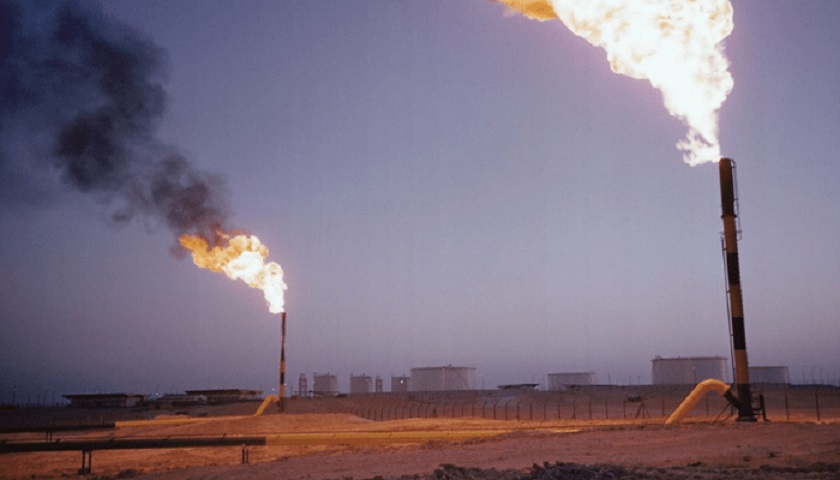
The Nigerian Upstream Petroleum Regulatory Commission (NUPRC) has announced that the country’s gas reserves currently stand at 208.83 trillion cubic feet, offering potential investors a huge potential.
According to the Chief Executive of NUPRC, Mr Gbenga Komolafe, following the declaration of the year 2020-2030 as Nigeria’s decade of gas, the country became ripe for more investment.
He said Nigeria has a proven reserve of 36.966 billion barrels of oil and condensate, opening a large opportunity for investments in the upstream oil and gas sector.
Mr Komolafe spoke at the ongoing Nigerian Oil and Gas Opportunity Fair (NOGOF 2023) organized by the Nigerian Content Development and Monitoring Board (NCDMB) in Yenagoa, the Bayelsa State capital, with the theme, Oil and Gas Industry: Catalyst for Fuel for the Industrialisation of Nigeria.
“Nigeria’s role as a major player in the global oil and gas industry is certainly not in doubt, as we are currently the highest oil producer in Africa and the second highest in terms of proven oil reserves with a huge potential for growth.
“As of January 1, 2023, Nigeria boasts 36.966 billion barrels of oil and condensate reserves and 208.83 trillion cubic feet of natural gas reserves, opening a large opportunity for investments in the upstream oil and gas sector.
“You will agree with me that despite the global clamour for decarbonization and energy transition, oil and gas remain relevant in the global energy mix to guarantee energy security for our teaming population.
“In order to deliver on her commitments towards reduction of carbon footprints, Nigeria has adopted gas as a transition fuel and expects to significantly increase gas consumption during the Decade of Gas declared by the President, Muhammadu Buhari.
“This adoption of natural gas as a transition fuel is a boost for Nigeria; our gas reserves can be harnessed to help the country’s transition to Net Zero by 2060 while driving economic growth and development, thereby simultaneously tackling energy poverty and meeting the commission has intensified efforts climate ambition.”
Represented by the Executive Commissioner, Economic Regulation and Strategic Planning, Mr Kelechi Ofoegbu, the NUPRC boss assured of the Commission’s commitment to growing gas reserves, boosting production and eliminating routine gas flares in all upstream operations across the value chain while also dealing with methane capture and other fugitive gas emissions.
“The significance of this is that more gas would be available for domestic utilization as Liquefied Petroleum Gas (LPG), feedstock for power generation plants, fertilizer plants and petrochemicals, among others.
“Each of these areas shows that gas would truly be the catalyst and fuel for industrialisation as well as provide unique entry points for willing investors and constitute opportunities to build capacity locally.
“The commission, as the upstream petroleum industry regulator, has embarked on the development of a regulatory framework for carbon-make businesses pay for their emissions and pricing system to incentivize emission reductions through carbon credits.
“Accordingly, a new department called Energy Transition and Carbon Monetisation has been created in the Commission to coordinate the drive towards energy transition in the Nigeria oil and gas sector. The new department will drive the focused implementation of the robust regulatory framework for the decarbonisation of upstream operations.
“It will introduce clean mechanisms in field development, mitigate the impact of energy transition and ensure sustained investments in upstream operations whilst improving the environmental credentials of oil and gas. It is our hope that in months to come; we should be able to share the vital lessons from the Nigerian transition success story with the global community.”
Also speaking, the Managing Director of Chevron Nigeria Limited, Mr Richard Kennedy, announced that the company had spent over $1 billion on Nigerian suppliers and service providers in the last few years.
Mr Kennedy, in his goodwill message, said CNL had made significant investments in Nigeria in the last 60 years, assuring that the company remains committed to the NOGICD Act and will continue to build local capacity.
Economy
Spike in Energy Prices Raises Nigeria’s Inflation to 15.38% in March
By Adedapo Adesanya
Nigeria’s inflation rate increased in March 2026 to 15.38 per cent from 15.1o per cent in February, data from the National Bureau of Statistics showed on Wednesday.
The Consumer Price Index (CPI) increased to 135.4 in March 2026, higher than the 130.0 in the preceding month by 5.4 points. The spike was likely stoked by the US-Israeli war on Iran, that’s pushed up the cost of fuel and has had a ripple effect in other areas.
At 15.38 per cent, the inflation numbers beat expectations of analysts at Meristem Research, which projected that the inflation rate in Nigeria for the month should come in at 13.59 per cent, after the price of crude oil on the global market soared as a result of the war in Iran, with prices of items growing in Nigeria.
The March 2026 headline inflation rate showed an increase of 0.32 per cent compared to the February 2026 headline inflation rate. However, on a month-on-month basis, the headline inflation rate in March 2026 was 4.18 per cent, which was 2.17 per cent higher than the rate recorded in February 2026 at 2.01 per cent.
This means that last month, the rate of increase in the average price level was higher than the rate of increase in the average price level a month earlier.
Food inflation rate in the review month stood at 14.31 per cent on a year-on-year basis versus 25.22 per cent in the same month of last year. However, on a month-on-month basis, the food inflation rate in March 2026 was 4.17 per cent, which is 0.52 per cent lower than the 4.69 per cent achieved in February 2026.
According to the stats office, “This can be attributed to the rate of change in the average prices of the following products: Yam, Ginger (Fresh), Cassava Tuber, Groundnuts (Shelled), Irish Potatoes, Avenger (Ogbono/Apon) – Dried Ungrinded, Tomatoes (fresh), Cassava Flour sold loose, etc.”
The average annual rate of food inflation for the twelve months ending March 2026 over the previous twelve-month average was 18.21 per cent, which was 17.81 per cent lower than the average annual rate of change recorded in March 2025 at 36.02 per cent.
On a year-on-year basis, in March 2026, the urban inflation rate was 14.64 per cent, and 3.16 per cent on a month-on-month basis, which is 0.61 per cent higher than the 2.55 per cent in February 2026.
As for the rural inflation rate, it was 17.22 per cent in the month under consideration and on a month-on-month basis, it stood at 6.73 per cent versus 0.71 per cent a month earlier.
Economy
Nigeria Inks $1bn Steel Investment Deal with India’s Rashmi Metaliks
By Adedapo Adesanya
The federal government has signed a Memorandum of Understanding (MoU) with an Indian conglomerate, Rashmi Metaliks Group, to boost Nigeria’s steel production.
The agreement, signed by the Minister of Steel Development, Mr Shuaibu Abubakar Audu, on Tuesday in Kolkata, India, was for a projected investment of $1 billion over three years.
This followed the Minister’s tour of the steel plant in Kolkata, where he commended the scale of the operations and advanced technology deployed at the facility.
He also lauded the company’s integrated operations — spanning Direct Reduced Iron (DRI), pig iron, billets, and finished ductile iron pipes — describing them as a strong example of industrial efficiency and excellence in modern steel production.
According to the Minister, Nigeria’s proactive investment drive is already attracting significant global capital.
He noted that the MoU signed with the company represents a major milestone in Nigeria’s efforts to reposition the steel sector, reaffirming President Bola Tinubu’s commitment to revitalising the industry, creating employment opportunities, and conserving foreign exchange through strategic import substitution.
He added that the efficiency of the facility underscored the importance of value addition, innovation, and sustainability in modern steel production, emphasising that the visit further reflected the strengthening economic ties between Nigeria and India in the areas of steel, mining, and manufacturing.
In signing the MoU, Audu highlighted Nigeria’s vast steel potential, noting that the country is transitioning from a raw minerals exporter to a value-adding industrial economy.
He disclosed that Nigeria possesses well over 3 billion tonnes of iron ore reserves, with some deposits grading as high as approximately 67 per cent iron content (Fe), while domestic steel consumption is estimated at about $10 billion annually.
He said that Nigeria aims to become a leading steel hub in Africa under President Tinubu’s Renewed Hope Agenda, which targets crude steel production of approximately 10 million tonnes per annum by 2030.
This is evidenced by recent Foreign Direct Investments in the sector, including a $400 million Stellar Steel plant in Ewekoro, Ogun State and a Chinese-Nigerian joint venture for a modern hot-rolled coil steel plant scheduled to commence operations by November 2026.
Also, African Industries Group (AIG) is completing a fully integrated iron-and-steel plant at Gujeni in Kaduna State. The company has invested $300 million in the Direct Reduced Iron (DRI) and steel unit of the project, and the galvanising and fabrication plant in Ikorodu, Lagos, which was recently commissioned by the Minister.
Energy infrastructure is also being developed to support the growth of the industry. The Nigerian National Petroleum Company (NNPC) Limited, the Ministry of Steel Development, and their partners recently broke ground on five mini-LNG plants in Ajaokuta, Kogi State — a $500 million project aimed at boosting gas supply to the steel industry, with a combined capacity of approximately 97 million standard cubic feet per day.
Mr Audu used the visit to invite additional Indian investors to explore opportunities within Nigeria’s steel sector.
He highlighted prospects for establishing integrated steel plants in Nigeria, deploying Direct Reduced Iron and electric-arc furnace technologies, and developing full value chains for automotive, construction, and infrastructure steel.
He further assured prospective investors that the Nigerian Government remains committed to providing an enabling environment through policy stability, fiscal incentives, and ongoing ease-of-doing-business reforms aimed at protecting investments.
“We are open to credible investors willing to partner with us for mutual growth,” the Minister said.
On his part, the Vice Chairman of Rashmi Metaliks Group, Mr Sunil Kumar Patwari, on behalf of the company, expressed appreciation to the Nigerian delegation for the successful visit to their facilities in Kolkata.
He emphasised that the visit reflects the priority placed on the partnership by the Nigerian Government and assured that, with the necessary support from the Nigerian government, Rashmi Group is committed to delivering on the projects envisioned in the MoU.
Economy
Meristem Projects Nigeria’s March 2026 Inflation at 13.59%
By Aduragbemi Omiyale
Analysts at Meristem Research have projected that the inflation rate in Nigeria for March 2026 should further moderate to 13.59 per cent on a year-on-year basis from the 15.06 per cent recorded in February 2026.
The company, in a note sighted by Business Post, explained that easing in the average prices of goods and services for last month would be impacted by a high base from the same period of 2025, but noted that on a month-on-month basis, the rate will spike.
Last month, energy prices soared after the price of crude oil on the global market soared as a result of the war in Iran, with prices of items growing in Nigeria.
“However, month-on-month pressures are likely to pick up, driven by the renewed increases in energy prices, which should nudge headline inflation higher.
“Core inflation is also likely to edge higher, reflecting second-round effects from higher transportation and production costs, although the relative stability of the Naira should help moderate the pace of increase.
“Food inflation is also expected to rise on a month-on-month basis, driven by higher logistics and distribution costs, as well as recent increases in staple food prices,” a part of the report noted.
The National Bureau of Statistics (NBS) is expected to release the inflation numbers later today.
Nigeria’s headline inflation rate moderated marginally by 0.04 per cent to 15.06 per cent in February 2026 from 15.10 per cent in January 2026, though on a month-on-month basis, inflationary pressures accelerated.
-
Feature/OPED6 years agoDavos was Different this year
-
Travel/Tourism10 years ago
Lagos Seals Western Lodge Hotel In Ikorodu
-
Showbiz3 years agoEstranged Lover Releases Videos of Empress Njamah Bathing
-
Banking8 years agoSort Codes of GTBank Branches in Nigeria
-
Economy3 years agoSubsidy Removal: CNG at N130 Per Litre Cheaper Than Petrol—IPMAN
-
Banking3 years agoSort Codes of UBA Branches in Nigeria
-
Banking3 years agoFirst Bank Announces Planned Downtime
-
Sports3 years agoHighest Paid Nigerian Footballer – How Much Do Nigerian Footballers Earn