Economy
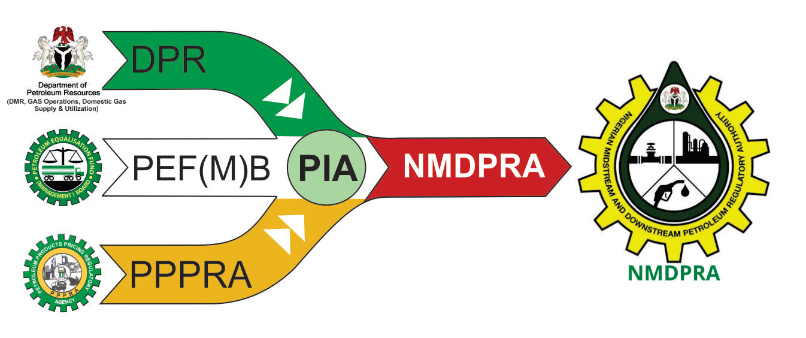
NMDPRA Tightens Retail Oversight, Warns Stakeholders on PIA Compliance
By Adedapo Adesanya
The Nigerian Midstream and Downstream Petroleum Regulatory Authority (NMDPRA) has intensified regulatory oversight of gas and liquid petroleum retail outlets, warning operators to comply strictly with the provisions of the Petroleum Industry Act (PIA) and health and safety standards.
The stricter enforcement of PIA provisions and HSSE standards is expected to enhance operational integrity, reduce safety incidents, and improve consumer confidence in Nigeria’s downstream petroleum market.
Economy
Oil Prices Jump Over 5% as Iran Halts Indirect Talks with America
By Adedapo Adesanya
Oil prices were up by more than 5 per cent on Monday after Iran reportedly halted indirect negotiations with the United States, stoking fears of a renewed escalation of the tension that has gripped the markets.
Brent crude futures soared by $4.80 or 5.2 per cent to $95.92 a barrel, while the US West Texas Intermediate (WTI) crude futures rose $5.46 or 6.2 per cent to $92.82 a barrel.
According to a report from Iran’s state-affiliated Tasnim news agency, Iranian negotiators will immediately stop exchanging messages with the US through intermediaries. The dramatic pivot is reportedly a direct retaliation for ongoing ceasefire violations, specifically homing in on Israel’s military operations against the Iran-backed militia Hezbollah in Lebanon.
Plans are also being made for Iranian forces and their allies to completely block the Strait of Hormuz and take action elsewhere, including another key shipping route.
However, US President Donald Trump shrugged off the suspension of indirect talks with Iran in an interview with CNBC on Monday, saying he did not care if they were over.
Iran and the US have traded strikes in recent days, and Israel ordered troops to move further into Lebanon in its battle with the Tehran-backed Hezbollah militant group.
The Iranian government said the delay in the diplomatic process to end the war can be explained by a lack of trust as well as the Trump administration’s contradictory positions and Israel’s attacks on Lebanon.
The US has reviewed the draft agreement with advisers before sending it back for changes, with discussions expected to continue for at least another week. The latest proposal reportedly includes a 60-day cessation of hostilities, provisions to reopen the Strait of Hormuz, and a framework for future nuclear negotiations.
However, major sticking points remain, including the fate of Iran’s highly enriched uranium stockpile, the scope of sanctions relief, and the guarantees that Iran is demanding before signing a final agreement.
Alongside oil supply concerns, economic data from China over the weekend showed that stalling factory activity has added to fears the world’s second-largest economy is losing momentum.
Reuters also reported that Saudi Arabia is likely to cut its official selling prices for crude oil to Asia in July for a second consecutive month.
Economy
Nigerian Private Sector Sustains Growth Momentum in May
By Aduragbemi Omiyale
A new report by Stanbic IBTC Bank Nigeria has revealed that in May 2026, growth momentum strengthened in the Nigerian private sector, with the Purchasing Managers’ Index (PMI) rising to an impressive 54.1 points from 52.4 points in April.
It was disclosed that output and new orders increased in the month under review, with firms ramping up their purchasing accordingly, though expansions in employment remained muted.
On the price front, higher fuel costs continued to cause sharp increases in input costs and output prices, but rates of inflation softened from April.
The rise in headline PMI signalled a solid monthly improvement in business conditions and one that was the most pronounced since August 2025. The health of the private sector has now strengthened in four consecutive months.
Central to the solid improvement in business conditions were marked and accelerated expansions in both output and new orders during May. Rates of growth hit seven- and nine-month highs respectively. Anecdotal evidence pointed to improving customer demand and the launch of new products.
Output growth was recorded across all four broad sectors covered by the survey. Improving demand, and the prospect of further growth in the months ahead, led companies to expand their purchasing activity and inventories in May.
Here too, rates of expansion quickened from April and were sharp. Efforts to secure inputs were helped by an improvement in vendor performance, as prompt payments, goods arrangements with suppliers and better road conditions helped to speed up deliveries.
Employment continued to rise only slightly midway through the second quarter, although sustained job creation has now been recorded in each month for a year. Meanwhile, backlogs of work increased for the fourth successive month amid customer payment delays, material shortages and power failures.
“Private sector activity in Nigeria improved to its best level in nine months, with the headline PMI rising to an impressive 54.1 points in May from 52.4 points in April.
“This impressive business condition was primarily due to accelerated expansion in both output (56.6 vs April: 53.4) and new orders (57.0 vs May: 54.6) as evidence pointed to improving customer demand and the launch of new products. Input prices maintained an uptrend, but the pace of increase eased for the second consecutive month.
“This is also reflected in higher output prices with the steepest increase seen in the manufacturing and agriculture sectors,” the Head of Equity Research West Africa at Stanbic IBTC Bank, Mr Muyiwa Oni, commented.
Last month, the National Bureau of Statistics (NBS) disclosed that the Nigerian economy grew by 3.89 per cent year-on-year in the first quarter of 2026.
Economy
Private Credit Overtakes Equity as Preferred Funding Model in Africa—Report
By Adedapo Adesanya
Private credit is rapidly replacing equity-led growth as the dominant financing model across Africa, marking a fundamental shift in how businesses on the continent access capital, according to a new industry report released by TheBoardroom Africa.
The report, which draws insights from 30 senior executives, founders, investors and policymakers across more than 20 sectors, indicates that investors are increasingly prioritising cash flow stability and operational resilience over ambitious growth narratives and market-size projections.
According to the findings, the shift comes as global venture capital funding continues to contract and exit opportunities become more limited, forcing African businesses to adapt to a new financing reality.
Recall that the composition of capital has shifted meaningfully, with debt also playing a much larger role in sustaining funding volumes. In April 2026, startups raised $110 million, marking the lowest monthly funding volume since March 2025, when startups raised $52 million, and falls significantly short of the previous 12-month average of $275 million per month.
The report shared with Business Post said structured debt facilities, revenue-linked financing instruments and risk-partitioned credit solutions are gaining prominence as investors seek more predictable returns in challenging economic conditions.
The report notes that access to capital is no longer primarily driven by growth potential but by a company’s ability to demonstrate sustainable performance and financial discipline. As a result, accurate risk pricing, strong repayment records and operational credibility are becoming critical factors in attracting funding from both local and international investors.
TheBoardroom Africa, the continent’s executive search and leadership advisory firm, in the report identified four major structural shifts reshaping capital allocation, regulatory priorities and competitive positioning across African markets.
Beyond the transformation in financing models, the report highlights the growing role of artificial intelligence (AI) as an essential component of business operations. Across sectors such as financial services, healthcare, energy and compliance, AI has evolved from an experimental technology into a critical infrastructure supporting fraud detection, credit underwriting, workflow optimisation and regulatory monitoring.
The report also noted that competitive advantage is increasingly determined not by AI adoption alone but by the governance frameworks organisations establish to manage automated systems responsibly.
“Boards are increasingly expected to interrogate explainability, accountability, and automated decision-making as central governance concerns, not technical matters to delegate downward,” it said.
In healthcare, the study points to a significant transition from volume-based care models to value-based systems focused on patient outcomes and cost efficiency. Healthcare delivery is also becoming more decentralised, with outpatient centres, community-based facilities and virtual platforms playing a greater role in service provision.
The report further identifies impact investment as an important complement to public healthcare funding, helping to address financing gaps while supporting innovation and accessibility across the sector.
Another major trend identified is the evolution of corporate governance from policy-driven compliance to evidence-based accountability. Environmental, Social and Governance (ESG) considerations, AI ethics, cybersecurity and social impact metrics are increasingly converging into a single framework through which organisations are assessed.
According to the report, investors and stakeholders are placing greater emphasis on demonstrable outcomes and audit trails rather than policy statements alone, making institutional integrity a key determinant of long-term competitiveness.
Commenting on the findings, the Founder and Chief Executive Officer of TheBoardroom Africa, Ms Marcia Ashong-Sam, said Africa’s leaders are increasingly building institutions capable of demonstrating the continent’s investment potential.
She noted that many of the most significant discussions shaping Africa’s future often remain confined to boardrooms and investment committees, adding that the report seeks to bring those insights into the public domain.
The report advised that the businesses best positioned for success will be those capable of proving resilience, governance strength and sustainable performance in an increasingly demanding investment environment.
-
Feature/OPED6 years agoDavos was Different this year
-
Travel/Tourism10 years ago
Lagos Seals Western Lodge Hotel In Ikorodu
-
Showbiz3 years agoEstranged Lover Releases Videos of Empress Njamah Bathing
-
Banking8 years agoSort Codes of GTBank Branches in Nigeria
-
Economy3 years agoSubsidy Removal: CNG at N130 Per Litre Cheaper Than Petrol—IPMAN
-
Banking3 years agoSort Codes of UBA Branches in Nigeria
-
Banking3 years agoFirst Bank Announces Planned Downtime
-
Sports3 years agoHighest Paid Nigerian Footballer – How Much Do Nigerian Footballers Earn