Connect with us

Economy

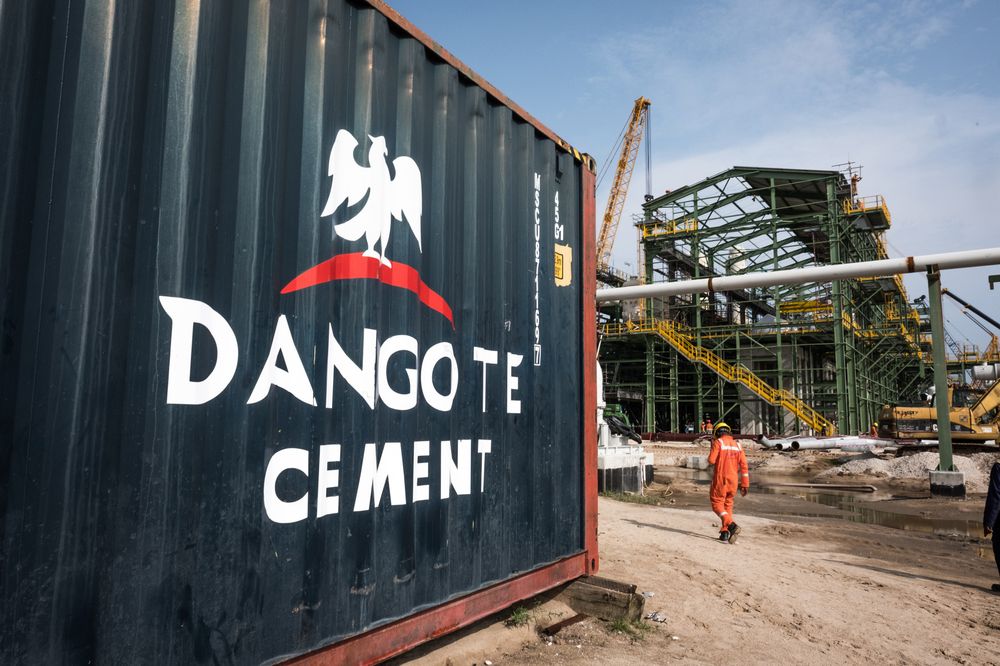
Dangote Cement Lists N119.87bn Commercial Paper on NGX

Published

on

Dangote Cement stocks

By Aduragbemi Omiyale

The Series 1 and Series 2 Commercial Papers of Dangote Cement Plc have been listed on the Nigerian Exchange (NGX) Limited.

The cement firm raised N119.87 billion from investors when it sold the debt instrument to them as part of its efforts to source funds for its working capital. It was issued under the N500 billion CP issuance programme.

The N119.87 billion CP is the first listing the NGX is recording, as most of this asset class is taken to the FMDQ Securities Exchange for listing.

The two series were admitted to trading on NGX on Wednesday, February 18, 2026, following the exchange’s introduction of the Commercial Paper listing framework last year.

The listing represents a strategic expansion of NGX’s product offerings, deepening Custom Street’s fixed income market and providing issuers with enhanced visibility, liquidity, and transparency for short-term funding instruments.

By admitting Commercial Papers to its platform, NGX is strengthening the efficiency of price discovery while broadening investment options for institutional and qualified investors seeking diversified short-term instruments.

Also, the listing reflects continued issuer engagement with NGX’s platform and supports ongoing efforts to deepen Nigeria’s domestic debt capital market. It also reinforces NGX’s commitment to innovation, product diversification, and the creation of a more robust, accessible, and globally competitive marketplace.

The Vice Chairman of Highcap Securities Limited, Mr David Adonri, described the development as a sign of growing sophistication in Nigeria’s short-term debt market.

“Dangote Cement’s Commercial Paper listing on NGX signals growing sophistication in Nigeria’s short-term debt market. The attractive yields of these instruments highlight strong investor appetite for high-quality, short-tenor corporate debt, and provide a benchmark for future issuances,” he stated.

Dangote Cement’s N19.95 billion Series 1 Commercial Paper carries a tenor of 181 days and matures on May 20, 2026, while the N99.92 billion Series 2 issuance has a tenor of 265 days and will mature on August 12, 2026.

Both series were issued at a discount and will be redeemed at par value of N1,000 upon maturity. Series 1 and Series 2 Commercial Papers were offered implied yields of 17.50 per cent and 19.00 per cent, respectively.


Economy

FrieslandCampina Wamco, CSCS Lift NASD OTC Market by 1.05%

Published

on

FrieslandCampina WAMCO

By Adedapo Adesanya

The duo of FrieslandCampina Wamco Nigeria Plc and the Central Securities Clearing System (CSCS) Plc boosted the NASD Over-the-Counter (OTC) Securities Exchange by 1.05 per cent on Monday, May 11.

FrieslandCampina Wamco added N13.07 to sell N146.00 per share versus the previous price of N132.98 per share, and CSCS Plc rose by 10 Kobo to close at N76.00 per unit compared with last Friday’s N75.90 per unit.

As a result, the market capitalisation increased by N26.20 billion to N2.514 trillion from N2.488 trillion, and the NASD Unlisted Security Index (NSI) went up by 48.80 points to 4,202.57 points from 4,158.77 points.

The volume of securities bought and sold by market participants decreased by 55.2 per cent yesterday to 236,921 units from 528,891 units, the value of securities slid by 51.5 per cent to N16.5 million from N34.0 million, and the number of deals contracted by 20 per cent to 20 deals from 25 deals.

Great Nigeria Insurance (GNI) Plc ended the day as the most traded stock by value on a year-to-date basis, with 3.4 billion units traded for N8.4 billion, followed by CSCS Plc with 60.5 million units exchanged for N4.1 billion, and Okitipupa Plc with 27.8 million units transacted for N1.9 billion.

GNI Plc also closed the session as the most traded stock by volume on a year-to-date basis with 3.4 billion units worth N8.4 billion, followed by Resourcery Plc with 1.1 billion units valued at N415.7 million, and Infrastructure Guarantee Credit Plc with 400 million units sold for N1.2 billion.

Continue Reading

Economy

FX Pressure Weakens Naira to N1,373/$ at Official Market

Published

on

Foreign-reserves-decline-to-35.92bn-as-naira-gains-N1.50k.jpg

By Adedapo Adesanya

The Naira opened the week on a negative note on Monday after it depreciated against the US Dollar in the Nigerian Autonomous Foreign Exchange Market (NAFEX) by 0.86 per cent or N11.77 to sell for N1,373.16/$1 compared with the preceding session’s value of N1,361.39/$1.

It also weakened against the Pound Sterling in the official market during the session by N17.39 to quote at N1,871.07/£1 versus last Friday’s rate of N1,853.68/£1, and against the Euro, it slumped by N15.78 to close at N1,618.41/€1 versus N1,602.63/€1.

At the black market, the Nigerian currency lost N5 against the Dollar yesterday, settling at N1,385/$1 compared with the previous rate of N1,380/$1. At the GTBank forex desk, it depreciated by N3 to sell at N1,375/$1 compared with the previous value of N1,372/$1.

Nigeria’s external reserves have fallen below $48.4 billion as of May 8, driven by interventions and external obligations by the Central Bank of Nigeria (CBN). In the first three weeks of April, the country’s FX reserves lost about $731 million.

Softer liquidity conditions have also dampened foreign investors’ appetite, with data from the FMDQ Securities Exchange showing that total foreign exchange inflows declined by 30.1 per cent month-on-month to $2.86 billion in April from $4.09 billion in March. Out of this, foreign inflows weakened by 21.9 per cent to $1.63 billion from $2.09 billion in March.

As for the cryptocurrency market, prices were largely up as global equity markets and other risk assets came under pressure. Rising oil prices, higher treasury yields and renewed US-Iran tensions, along with a key inflation report from the world’s largest economy due on Tuesday, applied pressure.

Binance Coin (BNB) jumped 1.5 per cent to $662.80, Solana (SOL) appreciated by 0.9 per cent to $96.63, Dogecoin (DOGE) added 0.7 per cent to close at $0.1104, Bitcoin (BTC) improved by 0.5 per cent to $81,221.78, and Ripple (XRP) gained 0.5 per cent to sell at $1.46.

On the flip side, Ethereum (ETH) went down by 0.9 per cent to $2,310.49, Cardano (ADA) weakened by 0.4  per cent to $0.2776, and TRON (TRX) slid by 0.3 per cent to $0.3487, the US Dollar Tether (USDT) and the US Dollar Coin (USDC) closed flat at $1.00 each.

Continue Reading

Economy

Crude Oil Prices Climb 2% as Middle East Ceasefire Prospects Fade

Published

on

Crude Oil Prices

By Adedapo Adesanya

Crude oil prices rose more than 2 per cent on Monday after US President Donald Trump said the ceasefire with Iran was “on life support,” leaving ‌the Strait of Hormuz largely closed with no clear end in sight to the war.

Brent crude futures went up by $2.92 or 2.88 per cent to $104.21 a barrel, while the US West Texas Intermediate (WTI) crude futures increased by $2.65 or 2.78 per cent to settle at $98.07 a barrel.

President Trump on Monday said the ceasefire with ​Iran was “on life support,” after dismissing Iran’s response to a US peace proposal as “stupid.”

This came after the US floated a proposal ⁠aimed at reopening negotiations with Iran. The Middle East country on Sunday released a response focused on ending the war on all fronts, including one where America’s top ally, Israel, is fighting Iran-backed ​Hezbollah militants.

Iran also demanded compensation for war damage, emphasised its sovereignty over the strait, and called on the US to end its naval blockade, guarantee no further ​attacks, lift sanctions and remove a ban on Iranian oil sales.

After this, President Trump dismissed the offer in a social media post as “totally unacceptable.”

He also emphasised that the US continues to monitor Iran’s enriched uranium stockpiles via Space Force surveillance and warned of further strikes if a real end to the nuclear issue is not reached.

The war has impacted oil output by the Organisation of the Petroleum Exporting Countries (OPEC) as it declined to its lowest level since 2000, with production falling by 830,000 barrels per day to an average of 20.04 million barrels per day in April, according to a Reuters survey published Monday.

Kuwait, Saudi Arabia, and Iraq all saw significant output decreases as they were forced to shut in production due to the war, which started in late February.

The United Arab Emirates (UAE) was the only Gulf member that was able to increase production in April. The UAE was able to leverage the Fujairah terminal on the Gulf of Oman to bypass the bottleneck, allowing it to export more crude than its peers. The Emirate is targeting a production capacity of 5 million barrels per day by 2027 after it exited OPEC and OPEC+ this month.

Continue Reading

Trending