
Economy
NNPC’ll Earn More Revenue—Kyari

By Adedapo Adesanya
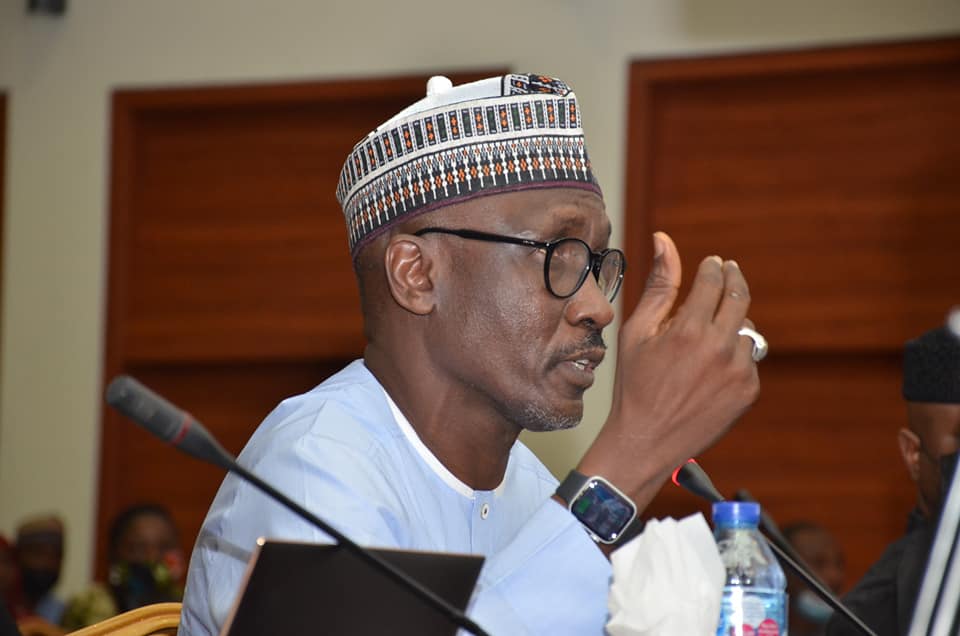
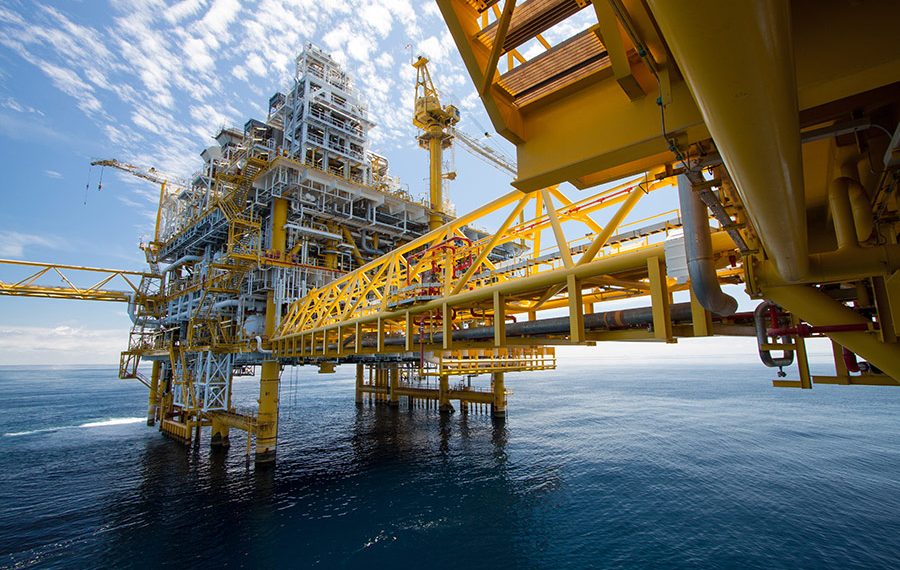
The Nigerian National Petroleum Company Limited (NNPC) is set to earn more revenue for the country as the federal government has positioned it to become the most capitalised company in Africa, says the Chief Executive Officer (CEO) of the company, Mr Mele Kyari.
This will happen as the central government has commenced full implementation of the Petroleum Industry Act (PIA) in earnest.
Mr Kyari made this assertion while addressing staff in a town hall meeting at the weekend said the PIA had put “all money-making options on the table; it is up to us to take advantage of it”.
Highlighting the significance of the PIA to the NNPC and by extension the Nigerian economy, Mr Kyari said the new legislation has raised shareholders’ expectations on the company, even as it has given it wide room to make progress.
He said as a result of the new legislation, NNPC Limited would not only shed some of its toxic liabilities but will be the largest and most capitalised company in the whole of Africa and, potentially, the most profitable on the entire continent.
The CEO charged employees of the organisation to ensure that the company becomes a commercially viable entity and a multi-billion-dollar company that will continuously deliver value to its shareholders–the over two hundred million Nigerians.
Business Post had reported that President Muhammadu Buhari recently instituted the board of NNPC Limited led by Mrs Margery Chuba Okadigbo, Chairman, Mr Mele Kolo Kyari, Chief Executive Officer, Mr Umar I. Ajiya, Chief Financial Officer, Mr Tajudeen Umar (North East), Mrs Lami O. Ahmed (North Central), Mallam Mohammed Lawal (North West), Mr Henry Obih (South East), Barrister Constance Harry Marshal (South-South), and Mr Pius Akinyelure (South West).
Others included Mr Nasir Sani Gwarzo, Permanent Secretary, Ministry of Petroleum Resources and Mr Aliyu Ahmed, Permanent Secretary, Minister, Finance, Budget and National Planning.
The President charged the board members to enforce the reforms put forward by the Petroleum Industry Act (PIA) 2021, which seeks to reposition the Nigerian petroleum industry to a commercially viable and competitive industry in line with global business dynamics and best practices.
“The Nigerian National Petroleum Company Limited is mandated to focus on profitability and continuous value creation beyond the simple fulfilment of legal and regulatory requirements.
“NNPC Limited is expected to operate at par with its industry peers across the world while acting as Enabler Company that will foster the development of other sectors of our economy,” he said.






By Dipo Olowookere
The Nigerian Exchange (NGX) Limited remained in the green territory on Wednesday after further appreciating by 0.11 per cent, driven by gains in bellwethers like MTN Nigeria, GTCO, and others.
Data from Customs Street showed that the insurance and the consumer goods sectors went up by 0.76 per cent and 0.42 per cent apiece, offsetting the 0.98 per cent loss posted by the banking index and the 0.11 per cent decline suffered by the industrial goods counter. The energy sector closed flat at the close of transactions.
When the closing gong was beaten at midweek, the All-Share Index (ASI) increased by 219.87 points to 200,925.75 points from 200,705.88 points, and the market capitalisation went up by N141 billion to N128.977 trillion from N128.836 trillion.
Investor sentiment remained strong yesterday after the bourse recorded 36 price gainers and 33 price losers, representing a positive market breadth index.
Legend Internet grew by 10.00 per cent to N7.26, Zichis gained 9.93 per cent to settle at N11.40, Premier Paints expanded by 9.93 per cent to N31.00, John Holt improved by 9.79 per cent to N15.70, and Consolidated Hallmark advanced by 6.26 per cent to N5.26.
On the flip side, Fidson declined by 9.97 per cent to N94.85, Austin Laz lost 9.89 per cent to quote at N4.01, Living Trust Mortgage Bank shrank by 7.08 per cent to N4.46, Secure Electronic Technology slumped by 7.04 per cent to N1.32, and Sterling Holdco depreciated by 5.56 per cent to N7.65.
The busiest equity for the day was Wema Bank, which transacted 104.3 million units worth N2.8 billion. Access Holdings traded 42.8 million units valued at N1.1 billion, Zenith Bank exchanged 33.9 million units for N3.6 billion, Zichis sold 26.6 million units worth N221.2 million, and GTCO recorded a turnover of 25.6 million units valued at N2.9 billion.
In all, investors bought and sold 538.0 million units for N25.4 billion in 45,641 deals on Wednesday compared with the 1.3 billion units worth N65.3 billion traded in 89,949 deals on Tuesday, implying a decrease in the trading volume, value, and number of deals by 58.62 per cent, 61.10 per cent, and 49.26 per cent apiece.

By Aduragbemi Omiyale
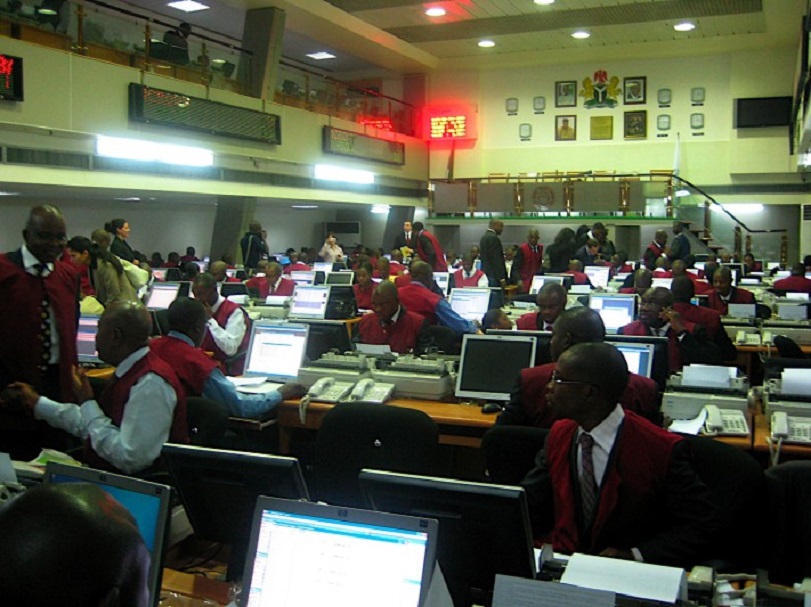
The federal government, through the Minister of Women Affairs and Social Development, is working together with the Nigerian Exchange (NGX) Group Plc to deepen the participation of women in capital markets.
The Minister of Women Affairs and Social Development, Ms Imaan Sulaiman-Ibrahim, underscored the urgency of inclusion in achieving national economic ambitions.
“The capital market reflects our collective choices, who participates, who has access, and who benefits. Women remain underrepresented in formal finance despite their critical role in Nigeria’s productivity.
“Through strategic partnerships and targeted interventions, we are working to change this narrative and expand opportunities for women across the economy.
“Achieving a one-trillion-dollar economy requires the full participation of Nigerian women,” she said at the closing gong ceremony at the NGX on Tuesday in Lagos.
She said the government was ready to partner with capital market stakeholders to expand financial access and unlock opportunities for women across the country.
Welcoming the Minister, the chairman of NGX Group, Mr Umaru Kwairanga, commended the Ministry’s leadership in promoting women’s development and economic participation.
“Women are central to Nigeria’s economic progress. As we work towards a more inclusive and resilient economy, the capital market remains a vital platform for expanding access to finance, supporting women-led enterprises, and enabling broader participation in wealth creation.
“NGX Group remains committed to partnering with the Ministry to drive sustainable impact and empower the next generation of women leaders,” he stated.
Also speaking, the Director General of the Securities and Exchange Commission (SEC), Mr Emomotimi Agama, emphasised the importance of deliberate inclusion.
“Behind every successful market are women. For Nigeria’s capital market to reach its full potential, we must be intentional about empowering women as active participants.
“Current participation levels do not yet reflect our population or potential. Collaborations like this send a strong call to action for more women across Nigeria to engage with the market and contribute to national growth,” the SEC chief stated.
On his part, the chief executive of NGX Group, Mr Temi Popoola, said, “At NGX Group, we are building a dynamic and inclusive market ecosystem that expands access to investment opportunities and supports diverse participants. Through partnerships such as this, we are unlocking new pathways for women to participate as investors, entrepreneurs, and wealth creators.”
By Adedapo Adesanya
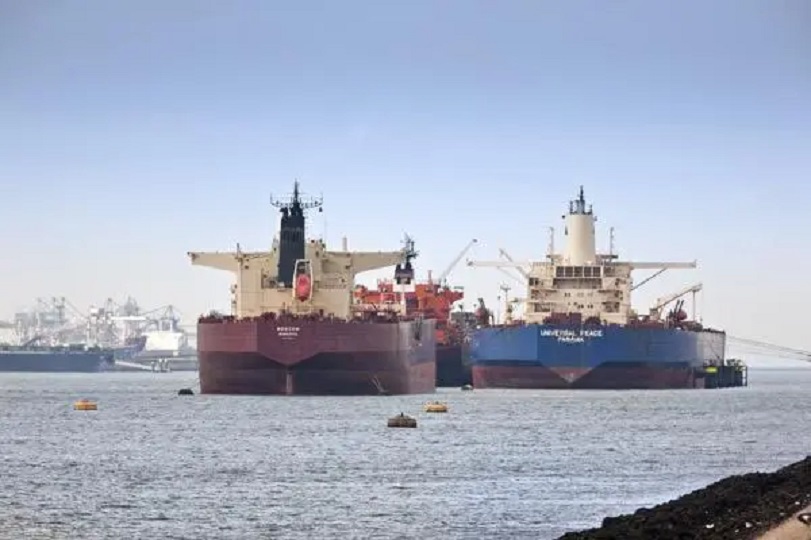
The Minister of State for Petroleum Resources (Oil), Mr Heineken Lokpobiri, has acknowledged that the country still depends on imported petroleum products as domestic refining cannot fully meet local demand.
Speaking on the state of the downstream sector at the CERAWeek by S&P Global Conference in Houston, Texas, Mr Lokpobiri acknowledged that while local refining capacity has improved significantly, it remains insufficient to fully cover national consumption.
The Minister noted that Nigeria was making measurable progress, with domestic refining contributing a growing share of supply, but added that imports remain a critical component of the country’s fuel supply mix for now.
“We are not yet at a point where local production alone can satisfy total consumption,” he said, underscoring the need to sustain imports while capacity continues to build.
The Minister emphasised that Nigeria’s daily fuel consumption stands at about 50 million litres, while domestic refining output remains below that level, making imports necessary to bridge the shortfall and ensure supply stability.
Data from the Nigerian Midstream and Downstream Petroleum Regulatory Authority (NMDPRA) aligns with this position, showing that although local refining volumes have risen in recent months, they are not yet sufficient to fully meet national demand.
Dangote refinery had earlier this year said it can supply 75 million litres of Premium Motor Spirit (PMS) daily against an estimated national consumption of 50 million litres, alongside 25 million litres of Automotive Gas Oil (AGO) compared with an estimated daily demand of 14 million litres.
It also stated that it has the capacity to supply 20 million litres of aviation fuel daily, far above the estimated maximum domestic consumption of four million litres.
According to the refinery, the availability of volumes above prevailing demand provides critical supply buffers, enhances market stability and reduces reliance on imports, particularly during periods of peak demand or logistical disruption.
The minister highlighted what he described as a fundamental shift in Nigeria’s petroleum sector following recent reforms.
He noted that Nigeria has moved away from a subsidy-driven regime that, for years, placed a heavy fiscal burden on the country and distorted the downstream market.
According to him, the removal of subsidies has not only eased pressure on government finances but also curtailed widespread fuel smuggling and arbitrage that previously thrived under price differentials.
Mr Lokpobiri said the deregulation of the downstream sector is beginning to deliver results, with a more transparent and competitive market structure emerging. This, he added, is helping to restore investor confidence and attract new investments into refining and related infrastructure.
The minister also pointed to ongoing efforts to rehabilitate existing refineries and support new refining projects, noting that these initiatives are critical to closing the gap between production and consumption.
He emphasised that while Nigeria is making steady progress toward boosting domestic refining capacity, noting that the transition will take time to sustain investment and policy consistency.
At the same time, Mr Lokpobiri underscored Nigeria’s ambition to evolve beyond meeting local demand to becoming a supplier of refined petroleum products within the West African region.
However, he maintained that achieving that goal depends first on significantly expanding domestic capacity.







-
 Feature/OPED6 years ago
Davos was Different this year
-
Travel/Tourism10 years ago
Lagos Seals Western Lodge Hotel In Ikorodu
-

 Showbiz3 years ago
Estranged Lover Releases Videos of Empress Njamah Bathing
-
 Banking8 years ago
Sort Codes of GTBank Branches in Nigeria
-

 Economy3 years ago
Subsidy Removal: CNG at N130 Per Litre Cheaper Than Petrol—IPMAN
-

 Banking3 years ago
Sort Codes of UBA Branches in Nigeria
-

 Banking3 years ago
First Bank Announces Planned Downtime
-

 Sports3 years ago
Highest Paid Nigerian Footballer – How Much Do Nigerian Footballers Earn