
Economy
NSE Reports Positive Performance Across Asset Classes

By Tenebe Anthonia
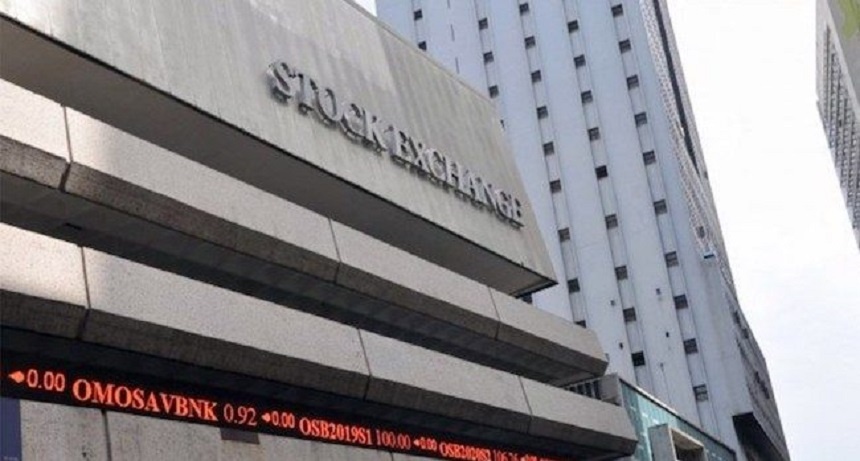
The Nigerian Stock Exchange (NSE) has remained attractive in terms of dividend yield and market valuation ratios, with the All Share Index (ASI) outperforming peer exchanges in Africa.
This was revealed by the Chief Executive Officer, NSE, Mr Oscar Onyema, during the Stakeholder Engagement Series which held on Wednesday, May 27, 2020.
Highlighting NSE’s performance so far in 2020, Mr Onyema said, “Supported by recovering oil prices, resumption of economic activities and attractive valuations, we have seen the NSE ASI rally from -20.6 percent in March to -6.1 percent return Year-to-Date.
This is particularly noteworthy when compared to other leading African exchanges including the JSE/FTSE ASI (-13.1 percent); Nairobi ASI (-15.6 percent); and BRVM Composite (-17.5 percent); EGX 30 (-27.6 percent).
“We have also experienced increased activity from domestic investors who currently represent 59 percent of equity value traded for the first time in ten years, as well as from retail participants who are taking advantage of low valuations and high dividends.”
Looking at other asset classes, Mr Onyema reported that the market capitalisation in the fixed income space has risen by 8.91 percent to N14.02 trillion ($36.32 billion) from N12.92 trillion ($35.44 billion) as at the end of 2019 as a result of increased listing activity from the federal government and Nigerian corporates.
While the ETF market has seen mixed sentiments from investors owing to activities in the equities market. Of the 10 listed ETFs, the exchange reports significant returns in the New Gold ETF with a 48.94 percent return YTD and the VETIVA S&P NIGERIA SOVEREIGN BOND ETF with 16.28 percent return YTD.
Speaking to the resilience of the capital market, the Acting Director General, Securities and Exchange Commission (SEC), Ms Mary Uduk, represented by Mr Okey Umeano, Head, Office of the Chief Economist at the SEC, said, “We are proud to report that our market continues to function seamlessly and perform positively during this pandemic.
“As the regulator of the market, we recognize that COVID-19 has ushered us into a new normal that is here to stay, and we are committed to performing our activities in the best possible way to make the Nigerian capital market attractive and responsive.”
The virtual session provided a platform for Mr Onyema to engage with existing and potential domestic and foreign investors in Nigeria’s capital market in line with the exchange’s commitment to promote market development.




By Modupe Gbadeyanka
President Bola Tinubu has been called on to use his influence to halt the passage of the proposed Customs, Excise and Tariff Amendment (CETA) Bill.
The proposed piece of legislation is currently before the National Assembly, and it seeks to introduce a percentage levy per litre of the retail price on non-alcoholic beverages.
In an outlined advertorial published in key newspapers, the Organised Private Sector of Nigeria urged the federal government to engage with the leadership of the parliament to stop the ongoing legislative process with a view to stepping down the CETA Bill, thus allowing the executive-led fiscal reforms to be fully integrated and aligned.
The OPS comprises the Manufacturers Association of Nigeria (MAN), Nigerian Association of Chambers of Commerce, Industry, Mines and Agriculture (NACCIMA), Nigeria Employers’ Consultative Association (NECA), Nigerian Association of Small Scale Industrialists (NASSI), and the Nigerian Association of Small and Medium Enterprises (NASME).
In the advertorial signed by the presidents of all members of the group, it was submitted that allowing for more talks would strengthen policy coherence, enhance predictability, and improve the effectiveness of the nation’s excise framework.
It was stressed that halting the bill would also encourage structured, evidence-based engagement with industry stakeholders, thereby ensuring that any future measures will effectively balance revenue generation, public health objectives, and economic sustainability.
“While we fully support well-designed fiscal reforms and evidence-based public health interventions, we are concerned that the Bill, in its current form, raises significant social, economic, administrative, and legal issues that could undermine Your Excellency’s broader fiscal reform objectives,” the body stated.
While calling on the government to restrain the Senate from proceeding with the process, the organisation noted that the proposed levy would therefore constitute a regressive measure, reducing consumer purchasing power without providing viable alternatives or meaningful public health support.
Commenting on the impact of such a levy on industry stability, investment, and employment, OPS stated that the sector was already under severe pressure from exchange rate adjustments, high energy costs, and rising prices of imported inputs, packaging materials, and machinery.
“An additional excise burden would further increase production costs, reduce capacity utilisation, delay or cancel planned investments, and threaten the livelihoods of thousands of small distributors, retailers, and informal traders who depend on high-volume, low-margin sales.
“These pressures would inevitably be passed on to consumers through higher prices, leading to reduced demand and potential further job losses across the value chain,” it stated.
While commending the president for the leadership and bold economic reforms undertaken since assuming office in 2023, it noted that the reforms have played an important role in restoring macroeconomic stability and rebuilding confidence within the business community.


By Adedapo Adesanya
Three stocks further weakened the NASD Over-the-Counter (OTC) Securities Exchange by 1.12 per cent on Wednesday, April 8, with the Unlisted Security Index (NSI) down by 44.43 points to 3,930.91 points from the previous day’s 3,975.34 points, and the market capitalisation went down by N26.59 to N2.351 trillion from N2.378 trillion.
MRS Oil lost N11.00 during the session to close at N161.00 per share compared with Tuesday’s closing price of N172.00 per share, Central Securities Clearing System (CSCS) Plc dipped by N3.74 to N67.95 per unit from N71.69 per unit, and Afriland Properties Plc fell by N1.10 to sell at N15.95 per share versus N17.05 per share.
There were two gainers at the midweek trading session, led by IPWA Plc, which appreciated by 55 Kobo to N6.61 per unit from N6.06 per unit, and First Trust Mortgage Bank Plc improved its value by 4 Kobo to N2.32 per share from N2.28 per share.
Yesterday, the volume of securities rose by 620.4 per cent to 5.7 million units from 797,264 units, the value of securities increased by 25.1 per cent to N32.7 million from N26.1 million, and the number of deals climbed by 12.1 per cent to 37 deals from the preceding session’s 33 deals.
Great Nigeria Insurance (GNI) Plc ended the day as the most traded stock by value on a year-to-date basis with 3.4 billion units sold for N8.4 billion, trailed by CSCS Plc with 57.2 million units exchanged for N3.9 billion, and Okitipupa Plc with 27.5 million units traded for N1.8 billion.
GNI Plc also finished the session as the most traded stock by volume on a year-to-date basis with 3.4 billion units valued at N8.4 billion, followed by Resourcery Plc with 1.1 billion units worth N415.7 million, and Infrastructure Guarantee Credit Plc with 400 million units transacted for N1.2 billion.
By Adedapo Adesanya
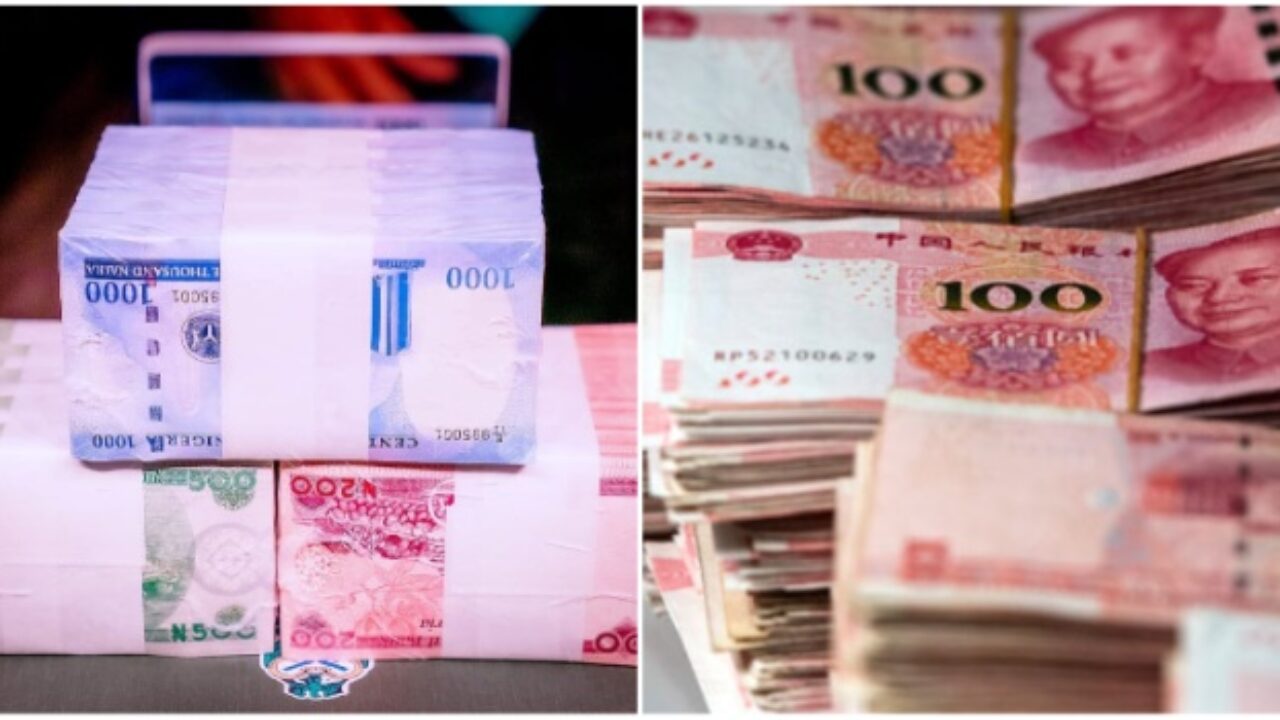
Foreign Exchange (FX) demand pressure eased on the Naira on Wednesday, April 8, in the Nigerian Autonomous Foreign Exchange Market (NAFEX) after gaining N14.84 or 1.07 per cent against the greenback to quote at N1,371.82/$1 compared with the previous day’s N1,386.66/$1.
Also, the local currency appreciated against the Euro in the same market window at midweek by N1.54 to close at N1,604.07/€1 versus Tuesday’s closing rate of N1,605.61/€1, but lost N6.26 against the Pound Sterling to trade at N1,844.83/£1 versus N1,838.57/£1.
In the parallel market, the exchange rate of the Naira to the US Dollar remained unchanged yesterday at N1,410/$1, according to data sourced by Business Post.
There were indicators that the official FX market experienced a liquidity surge, which eased worries around the dominant US Dollar on Wednesday, as the Central Bank of Nigeria (CBN) revealed interbank deals rose to 220 from 71 reported the previous day.
The domestic currency has been in strong demand from foreign portfolio investors seeking to purchase OMO bills and other fixed-income instruments.
Forecasts also show that the local currency will remain relatively stable during the second quarter of the year, trading within the N1,340 to N1,430 per Dollar band on improved FX liquidity, stronger oil earnings, and rising external reserves, which have climbed above 50 billion dollars.
As for the cryptocurrency market, it fell after an initial ceasefire-fueled rally, with markets retracing Wednesday’s “ceasefire euphoria” as cracks emerge in the US-Iran truce while the Strait of Hormuz remains effectively closed.
Global risk assets face renewed pressure as geopolitical uncertainty combines with what analysts call “uncoordinated tightening” by major central banks, reinforcing higher-for-longer interest-rate expectations.
The price of Cardano (ADA) fell by 4.7 per cent to $0.2500, Ripple (XRP) slumped 3.7 per cent to $1.33, Dogecoin (DOGE) shrank by 3.5 per cent to $0.0915, Binance Coin (BNB) slipped 2.6 per cent to $600.02, Ethereum (ETH) went down by 2.5 per cent to $2,183.82, Solana (SOL) dipped 2.5 per cent to $82.24, and Bitcoin (BTC) depreciated by 1.1 per cent to $70,995.20.
However, TRON (TRX) appreciated by 0.4 per cent to $0.3173, while the US Dollar Tether (USDT) and the US Dollar Coin (USDC) remained unchanged at $1.00 apiece.
-
 Feature/OPED6 years ago
Davos was Different this year
-
Travel/Tourism10 years ago
Lagos Seals Western Lodge Hotel In Ikorodu
-

 Showbiz3 years ago
Estranged Lover Releases Videos of Empress Njamah Bathing
-
 Banking8 years ago
Sort Codes of GTBank Branches in Nigeria
-

 Economy3 years ago
Subsidy Removal: CNG at N130 Per Litre Cheaper Than Petrol—IPMAN
-

 Banking3 years ago
Sort Codes of UBA Branches in Nigeria
-

 Banking3 years ago
First Bank Announces Planned Downtime
-

 Sports3 years ago
Highest Paid Nigerian Footballer – How Much Do Nigerian Footballers Earn