Connect with us

Economy

NSE Suspends Conoil, 10 Others

Published

on

Conoil Plc

By Dipo Olowookere

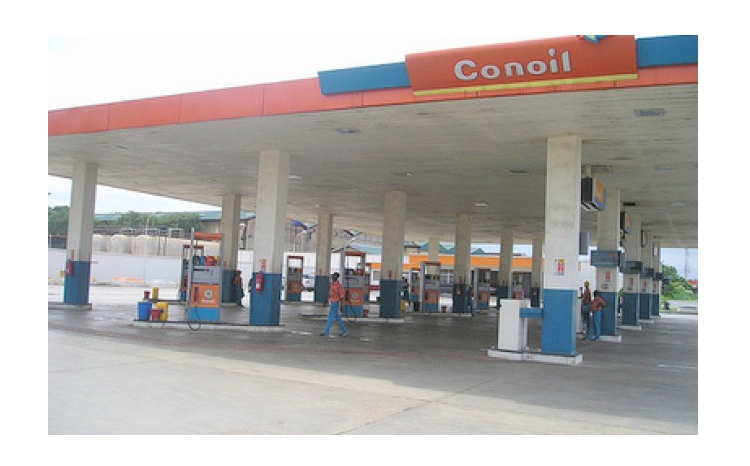
Trading in the shares of Conoil Plc and 10 other companies on the Nigerian Stock Exchange (NSE) has been suspended.

The firms were sanctioned today by the NSE, which prohibited the exchange of their equities on the platform for failing to adhere to rules of the stock market.

A statement issued on Tuesday by the Head of Listings Regulation Department at the NSE, Mr Godstime Iwenekhai, gave the names of the other companies as FTN Cocoa Processors Plc, Goldlink Insurance Plc, Guinea Insurance Plc and Lasaco Assurance Plc.

Others are Niger Insurance Plc, R.T. Briscoe (Nigeria) Plc, Resort Savings & Loans Plc, Royal Exchange Plc, Standard Alliance Insurance Plc and Universal Insurance Plc.

Mr Iwenekhai explained in the statement that the suspended firms specifically failed to submit their financial statements as required by the listing rules.

“Dealing members are hereby notified that pursuant to Rule 3.1, Rules for Filing of Accounts and Treatment of Default Filing, Rulebook of The Exchange, which provides that; ‘If an Issuer fails to file the relevant accounts by the expiration of the cure period, the exchange will: (a) send to the issuer a second Filing Deficiency Notification within two business days after the end of the cure period; (b) suspend trading in the issuer’s securities; and (c) notify the Securities and Exchange Commission (SEC) and the market within 24 hours of the suspension.”

“The shares of the 11 under listed companies have been suspended from trading via the facilities of the exchange, effective today, Tuesday, July 2, 2019,” the statement said.

It added that, “In accordance with the rules set forth above, the suspension of the above listed companies will only be lifted upon the submission of the relevant accounts and provided the exchange is satisfied that the accounts comply with all applicable rules of the exchange.”


Dipo Olowookere is a journalist based in Nigeria that has passion for reporting business news stories. At his leisure time, he watches football and supports 3SC of Ibadan. Mr Olowookere can be reached via [email protected]

Click to comment

Leave a Reply

Your email address will not be published. Required fields are marked *

Economy

NRS, JRB Issue Guidelines for Taxation of Virtual Assets

Published

on

virtual assets taxation

By Adedapo Adesanya

The Nigeria Revenue Service (NRS) and the Joint Revenue Board (JRB) have issued new guidelines clarifying the taxation of virtual assets in Nigeria.

The guidelines provide an administrative framework for the taxation of virtual assets and specify the tax obligations of individuals and businesses operating in the sector.

According to a public notice issued by the two agencies, the framework covers registration, reporting and record-keeping requirements, valuation principles and the tax treatment of virtual asset transactions.

It applies to taxpayers, Virtual Asset Service Providers (VASPs), peer-to-peer (P2P) marketplace operators, tax practitioners and other persons engaged in virtual asset-related activities.

The NRS and JRB said the guidelines were developed in line with the provisions of the Nigeria Tax Act 2025 and the Nigeria Tax Administration Act 2025.

The two bodies said the release was aimed at providing clarity, certainty and consistency in the administration of Nigeria’s tax laws as the country’s virtual asset ecosystem continues to evolve.

The agencies added that the framework would promote voluntary compliance, enhance transparency and support the development of a fair and efficient tax system for digital asset transactions.

They urged all affected taxpayers and stakeholders to familiarise themselves with the guidelines and ensure compliance with the applicable tax obligations.

The guidelines are available on the official websites of the two agencies.

Continue Reading

Economy

Nigerian Manufacturers Still Grapple With Multiple Taxes Despite Reforms—MAN

Published

on

gazetted tax laws

By Adedapo Adesanya

Manufacturers are yet to benefit from relief on the burden of multiple taxes and levies despite the enactment of the Nigeria Tax Act 2025, according to the Manufacturers Association of Nigeria (MAN).

The association, in its Manufacturers CEO Confidence Index (MCCI) report for the second quarter of 2026, said manufacturers continued to face multiple tax collectors and regulatory agencies during the period.

Director-General of MAN, Mr Segun Ajayi-Kadir, said the new tax law, which was expected to reduce the burden of multiple taxation, had yet to deliver the intended benefits.

“Manufacturers complained that they were still met with multiple tax collectors and regulators in Q2 2026. It follows that the implementation of the Nigeria Tax Act 2025 is yet to achieve its objective of relieving manufacturers of the burden of taxes and levies,” he said.

According to the report, Nigeria’s business environment remains largely unsupportive of manufacturing growth, with local sourcing of raw materials emerging as the only indicator that recorded noticeable improvement.

MAN, however, warned that the gains in local sourcing could be undermined by worsening insecurity in parts of the country.

The association attributed the improvement largely to persistent foreign exchange constraints, which have forced many manufacturers to source inputs locally.

Despite this, it said excessive regulation and multiple taxation continue to weigh heavily on manufacturers.

The report showed that manufacturers recorded a modest increase in sales volume during the second quarter, but rising production, distribution and logistics costs continued to erode profitability.

It added that capacity utilisation, production levels, investment and employment remained broadly unchanged during the review period.

MAN further observed that although recent foreign exchange reforms had helped stabilise the naira, inadequate foreign currency supply remained a major constraint to manufacturing operations.

Other key challenges identified in the report include poor infrastructure, high production costs, raw material shortages and unfavourable trade policies.

The association said the findings underscore the continued pressure on manufacturers despite recent fiscal and foreign exchange reforms, stressing the need for more effective implementation of policies aimed at improving the operating environment for the real sector.

Continue Reading

Economy

FG Spends N3.14trn Servicing Domestic Debt in Q1 2026

Published

on

Nigeria's debt servicing N3.14trn

By Adedapo Adesanya

The federal government spent N3.14 trillion on servicing its domestic debt in the first quarter (Q1) of 2026, according to the Debt Management Office (DMO).

The figure, contained in the DMO’s latest domestic debt service report for Q1 2026, comprised N2.97 trillion in interest payments and N169.68 billion in principal repayments.

According to the report, the government spent N741.82 billion on domestic debt service in January before the figure rose to N967.67 billion in February.

Debt service increased further to N1.43 trillion in March, bringing total spending for the quarter to N3.14 trillion.

The March figure represented a 47.7 per cent increase from the N967.67 billion recorded in February and was 92.7 per cent higher than the N741.82 billion spent in January.

The debt office said interest payments accounted for approximately 94.6 per cent of the total domestic debt service during the quarter.

Treasury bills accounted for the largest share of interest payments at N1 trillion, while interest payments on Federal Government bonds stood at N1.96 trillion.

The government also paid N4.24 billion in interest on FGN savings bonds during the period.

The debt management body said the principal component of the debt service comprised N169.68 billion in repayments on local-denominated promissory notes.

Overall, domestic debt service rose significantly throughout the quarter, with March alone accounting for nearly half of the N3.14 trillion spent between January and March.

Continue Reading