Connect with us

Economy

NSE Updates Lotus Islamic Index Rules

Published

on

NSE Lotus Islamic Index

By Modupe Gbadeyanka

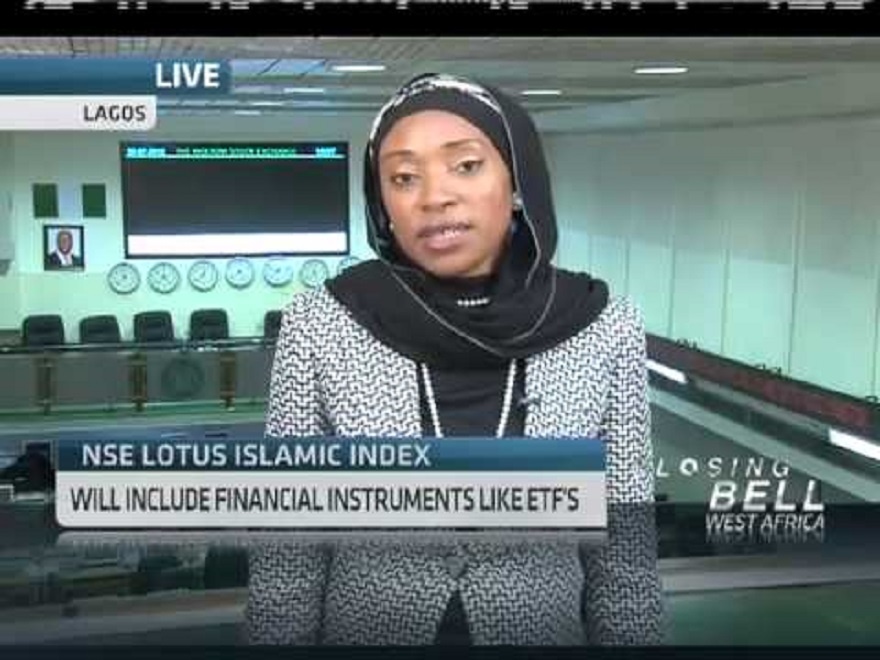
The Index Governance Committee of the Nigerian Stock Exchange (NSE) has announced an update to the rules guiding the NSE Lotus Islamic Index.

The NSE Lotus Islamic Index is one of the indices created by the stock exchange to track stocks of companies listed on the local bourse that are compliant with Islamic or Shariah laws.

For instance, companies trading their shares on the stock exchange dealing with pork, alcohol, gambling, tobacco, and banks do not qualify to be part of the index.

In a notice to the investing community on Monday, January 6, 2020 and signed by Chairman, Index Governance Committee, Abimbola Babalola, it was stated that the update done on the index removed the limit on the number of constituent stocks in the category.

“The Index Management Committee has updated the index rules for the NSE Lotus Islamic Index and will

remove the limit on the number of constituent stocks in the index commencing January 1, 2020,” the notice said.

“This will enable the NSE Lotus Islamic Index to be more representative of the investible universe of Shari’ah compliant stocks as the market expands,” the notice obtained by Business Post explained.

Last week, the NSE announced a review of the market indices for 2019 and in the new composition, MTN Nigeria and Forte Oil were added to the NSE Lotus Islamic Index, with GlaxoSmithKline, CAP and Presco booted out.

The NSE Lotus Islamic Index helps the Islamic investor community (as well as other interested investors) identify and invest in businesses that are compliant with laws of the religion.

“In a nutshell, this specialty index provides Shari’ah -friendly businesses an opportunity to reach out to more potential investors. The Index also offers Islamic investors a chance to participate in the businesses of the companies included in the index, without compromising their beliefs,” the NSE explained in one of its notes.


Modupe Gbadeyanka is a fast-rising journalist with Business Post Nigeria. Her passion for journalism is amazing. She is willing to learn more with a view to becoming one of the best pen-pushers in Nigeria. Her role models are the duo of CNN's Richard Quest and Christiane Amanpour.

Click to comment

Leave a Reply

Your email address will not be published. Required fields are marked *

Economy

Nigeria Mulls 5% Revenue Fines for Anti-Competitive Midstream, Downstream Operators

Published

on

impose fines

By Adedapo Adesanya

The Nigerian Midstream and Downstream Petroleum Regulatory Authority (NMDPRA) could impose fines of up to five per cent of the annual turnover of petroleum operators found guilty of serious anti-competitive practices in the midstream and downstream sectors.

This was contained in the draft regulations of the proposed Midstream and Downstream Petroleum Prevention of Anti-Competitive Practices and Behaviour Regulations, 2026.

According to the proposal, errant companies of serious offences such as price-fixing, bid-rigging, market allocation, abuse of market dominance and other conduct capable of causing significant harm to competition could be fined between three and five per cent of their annual turnover.

It further proposed that persistent or serious offenders may also have their licences suspended or revoked, while the NMDPRA may impose daily penalties on operators that fail to comply with its orders or continue prohibited conduct after being directed to stop.

The draft regulation stated: “Where the Authority determines, after investigation and due process, that a licensee or any other person has engaged in anti-competitive conduct or breached any provision of this Regulation or the Act, it may impose administrative fines as provided herein.

The maximum administrative fine shall not exceed five per cent of the annual turnover of the offending undertaking for the preceding financial year.

“For purposes of these regulations, ‘annual turnover’ means gross revenues or sales derived from the regulated business activities in Nigeria. Where multiple entities or group structures are involved, the Authority may consider the turnover of the group, subsidiary, or segment most directly involved in the infringement.”

“Where a licensee or person fails to comply with an order or directive of the Authority, a daily penalty may be imposed for each day the violation continues.

“Where a prohibited practice continues after a final order, the daily penalty could rise to between N10m and N50m. Before imposing a fine, the NMDPRA would issue a Notice of Intention to Fine setting out the facts and findings, the nature of the infringement, the basis for calculating the proposed fine and the proposed deadline for payment,” it proposed.

Continue Reading

Economy

Otedola Acquires Fresh 147.7 million First HoldCo Shares Worth N20.7bn

Published

on

Femi Otedola Book first holdco shares

By Adedapo Adesanya

Nigerian billionaire, Mr Femi Otedola, the chairman of First HoldCo, has acquired an additional 147.74 million shares of the financial services group through his investment vehicle, Calvados Global Services Limited.

According to a regulatory filing obtained from the Nigerian Exchange (NGX) Limited on Monday, Mr Otedola purchased the stocks valued at N20.68 billion.

The notice said the investor purchased about 147,737,699 ordinary shares at N140 per share on August 14.

The transaction increases Mr Otedola’s stake in the financial services group from 11.99 billion shares (26.1 per cent) to 12.13 billion shares (26.4 per cent).

The acquisition comes less than two weeks after the billionaire bought 138.04 million ordinary shares for about N18.11 billion.

Prior to that, Mr Otedola had said he had invested more than N600 billion of his personal wealth in the bank, describing the investment as a “long-term generational commitment” rather than a turnaround play.

Responding to speculation about increasing his stake, Mr Otedola said his investment philosophy favours majority control.

“My investment threshold is always over and above 51 per cent,” the billionaire had said.

“One of my key investment principles is that firm shareholder control, with due regard for minority interest, is a key ingredient to executing reforms and restructuring to deliver value to all stakeholders.”

The bank’s share price had recently risen to an all-time high of N140 per share, pushing its market capitalisation to N6.37 trillion.

In recent months, Mr Otedola has also made other high-profile investments outside the banking sector, including the acquisition of a luxury residence in London’s exclusive Mayfair district, further expanding his international real estate portfolio.

He is also believed to have participated in a financing arrangement involving the Dangote Refinery, providing funds to support its working capital needs as the facility scaled up operations.

Continue Reading

Economy

FrieslandCampina, CSCS Tumble NASD Exchange by 0.89%

Published

on

FrieslandCampina

By Adedapo Adesanya

The duo of FrieslandCampina Wamco Nigeria Plc and Central Securities Clearing System (CSCS) Plc pulled down the NASD Over-the-Counter (OTC) Securities Exchange by 0.89 per cent on Monday, August 17.

The price of FrieslandCampina went down by N9.85 to N160.00 per unit from N169.85 per unit, and CSCS Plc depreciated by 96 Kobo to N98.50 per share versus N99.46 per share.

As a result, the market capitalisation further lost N23.90 billion to end at N2.656 trillion, in contrast to the preceding session’s N2.68 trillion, and the NASD Security Index (NSI) dropped 39.81 points to close at 4,426.02 points from 4,465.83 points.

During the trading session, the share price of Industrial and General Insurance (IGI) Plc was up by 1 Kobo to 55 Kobo per unit from 54 Kobo per unit.

Yesterday, the volume of securities transacted by market participants decreased by 79.3 per cent to 652,081 units from 3.2 million units, the value of securities slid by 78.2 per cent to N10.7 million from N375.7 million, and the number of deals went south by 54.4 per cent to 21 deals from 46 deals.

Great Nigeria Insurance (GNI) Plc remained the most traded stock by value on a year-to-date basis, with 3.4 billion units worth N8.4 billion, followed by Infrastructure Credit Guarantee (Infracredit) Plc with 2.3 billion units valued at N6.5 billion, and CSCS Plc with 79.6 million units transacted for N5.8 billion.

GNI Plc also ended the session as the most traded stock by volume on a year-to-date basis, with 3.4 billion units exchanged for N8.4 billion, followed by Infracredit Plc with 2.3 billion units traded for N6.5 billion, and Resourcery Plc with 1.1 billion units sold for N415.7 million.

Continue Reading