Economy
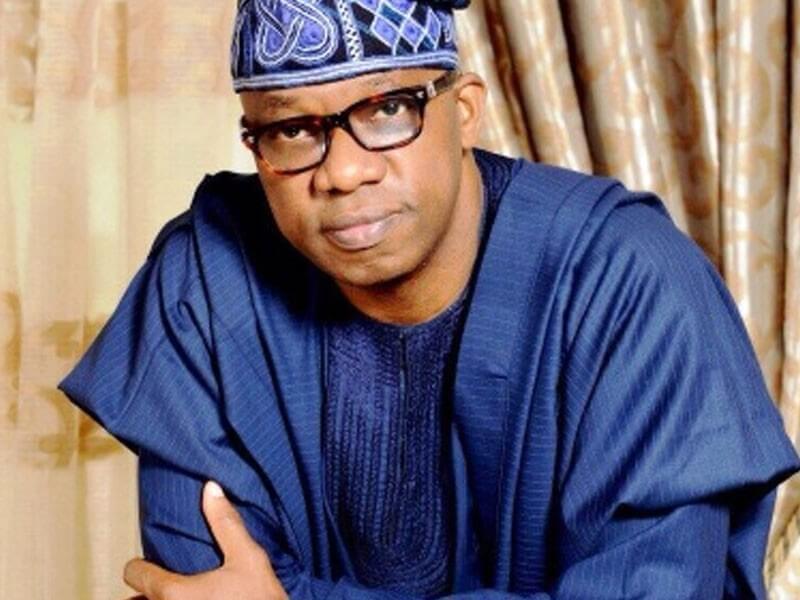
Ogun to Become Investment Hub in Nigeria—Deputy Governor
By Adedapo Adesanya
Ogun State is bracing itself to become the next epicenter of investment as the Deputy Governor of the state, Mrs Noimot Salako-Oyedele, has said the Mr Dapo Abiodun led administration was committed to making it the number one business destination in the country.
The Deputy Governor said this during a courtesy visit to Eko Supreme Resources Limited, Primera Foods Limited and Natural Prime Limited in OPIC Industrial Estate Agbara, in the state.
According to Mrs Salako-Oyedele, since the present administration assumed office, the Governor has met with Manufacturers Association of Nigeria (MAN) and related companies about five times.
She added that the administration places a high premium on the relationship between the manufacturers in the state which is responsible for his regular interface with the locally concentrated companies.
Calling on the industrialists, she said that through the private-public partnership, the state was looking at policies that would drive growth and allow businesses thrive through its initiatives.
“This visit is to see what they do, how they are working in their community, supporting our agenda with their employment of Corporate Social Responsibility (CSR) and to also request from them their support for our CSR agenda.
“The Investment Promotion Council policy of this government epitomizes what we are saying about ease of doing business because it would provide a one-stop-shop for investors into the state, help investors get the information needed for setting up a business under this umbrella,” she said.
Meanwhile, the state governor, in collaboration with his Lagos state counterpart, Mr Babajide Sanwo-Olu, are looking to put the Lagos-Ogun Joint Development Commission into operation with the aim to manage the overflow of development from Lagos State to Ogun State.
Mr Abiodun said officials of the two states have met and worked out modalities on areas of cooperation, which include agriculture, particularly on rice production; waste management and development of infrastructure at the border towns.
Economy
Nigeria Runs to World Bank for Fresh $1.25bn Loan
By Adedapo Adesanya
Nigeria is currently in talks with the World Bank for a fresh $1.25 billion loan in June 2026.
According to a document titled Nigeria Actions for Investment and Jobs Acceleration, the proposed loan will finance ongoing economic reforms, job creation, and competitiveness.
Already, talks are at the critical stage for the loan facility expected to be presented for approval on June 26, 2026. The loan has progressed beyond the initial concept and appraisal phases.
If approved, it will come off as the second-largest loan facility after the approval of the ‘$1.5bn Reforms for Economic Stabilisation to Enable Transformation Development Policy Financing’ approved by the Bank in June 2024.
The borrower is listed as the Federal Republic of Nigeria, while the Federal Ministry of Finance will serve as the implementing agency.
This comes as the country’s debt profile remains high. As of December 31, 2025, external debt stood at $51.86 billion, while Nigeria’s total public debt in dollars is currently at $110.97 billion
The loan is now at the decision-meeting stage of the World Bank’s project cycle, a point at which the lender’s management reviews the final appraisal package and determines whether the project should proceed to the Board of Executive Directors for approval.
This stage comes after appraisal and negotiations have been concluded, with key policy actions, financing terms, and reform commitments already agreed in principle between the borrower and the World Bank team.
In the World Bank process, the decision meeting represents a near-final internal clearance, after which the project is prepared for formal Board consideration, where final approval is granted.
The World Bank document stated, “The review did authorise the team to appraise and negotiate,” meaning the project has successfully passed earlier internal checks and is advancing toward final approval.
According to the global lender, the loan is designed “to support the government’s efforts to expand access to finance, digital, and electricity services, and strengthen competitiveness through tax, trade, and agriculture reforms.”
Under President Bola Tinubu, the World Bank has approved about $9.35 billion in loans and credits for Nigeria between June 2023 and May 2026.
These approvals span multiple sectors, including power, education, healthcare, agriculture, social protection, renewable energy, MSME financing, and economic reform support.
Key packages include the $2.25 billion RESET and ARMOR reform financing in June 2024, $1.57 billion for HOPE and SPIN programmes in September 2024, and $1.08 billion for education and resilience programmes in March 2025.
Economy
FrieslandCampina Wamco, CSCS Lift NASD OTC Market by 1.05%
By Adedapo Adesanya
The duo of FrieslandCampina Wamco Nigeria Plc and the Central Securities Clearing System (CSCS) Plc boosted the NASD Over-the-Counter (OTC) Securities Exchange by 1.05 per cent on Monday, May 11.
FrieslandCampina Wamco added N13.07 to sell N146.00 per share versus the previous price of N132.98 per share, and CSCS Plc rose by 10 Kobo to close at N76.00 per unit compared with last Friday’s N75.90 per unit.
As a result, the market capitalisation increased by N26.20 billion to N2.514 trillion from N2.488 trillion, and the NASD Unlisted Security Index (NSI) went up by 48.80 points to 4,202.57 points from 4,158.77 points.
The volume of securities bought and sold by market participants decreased by 55.2 per cent yesterday to 236,921 units from 528,891 units, the value of securities slid by 51.5 per cent to N16.5 million from N34.0 million, and the number of deals contracted by 20 per cent to 20 deals from 25 deals.
Great Nigeria Insurance (GNI) Plc ended the day as the most traded stock by value on a year-to-date basis, with 3.4 billion units traded for N8.4 billion, followed by CSCS Plc with 60.5 million units exchanged for N4.1 billion, and Okitipupa Plc with 27.8 million units transacted for N1.9 billion.
GNI Plc also closed the session as the most traded stock by volume on a year-to-date basis with 3.4 billion units worth N8.4 billion, followed by Resourcery Plc with 1.1 billion units valued at N415.7 million, and Infrastructure Guarantee Credit Plc with 400 million units sold for N1.2 billion.
Economy
FX Pressure Weakens Naira to N1,373/$ at Official Market
By Adedapo Adesanya
The Naira opened the week on a negative note on Monday after it depreciated against the US Dollar in the Nigerian Autonomous Foreign Exchange Market (NAFEX) by 0.86 per cent or N11.77 to sell for N1,373.16/$1 compared with the preceding session’s value of N1,361.39/$1.
It also weakened against the Pound Sterling in the official market during the session by N17.39 to quote at N1,871.07/£1 versus last Friday’s rate of N1,853.68/£1, and against the Euro, it slumped by N15.78 to close at N1,618.41/€1 versus N1,602.63/€1.
At the black market, the Nigerian currency lost N5 against the Dollar yesterday, settling at N1,385/$1 compared with the previous rate of N1,380/$1. At the GTBank forex desk, it depreciated by N3 to sell at N1,375/$1 compared with the previous value of N1,372/$1.
Nigeria’s external reserves have fallen below $48.4 billion as of May 8, driven by interventions and external obligations by the Central Bank of Nigeria (CBN). In the first three weeks of April, the country’s FX reserves lost about $731 million.
Softer liquidity conditions have also dampened foreign investors’ appetite, with data from the FMDQ Securities Exchange showing that total foreign exchange inflows declined by 30.1 per cent month-on-month to $2.86 billion in April from $4.09 billion in March. Out of this, foreign inflows weakened by 21.9 per cent to $1.63 billion from $2.09 billion in March.
As for the cryptocurrency market, prices were largely up as global equity markets and other risk assets came under pressure. Rising oil prices, higher treasury yields and renewed US-Iran tensions, along with a key inflation report from the world’s largest economy due on Tuesday, applied pressure.
Binance Coin (BNB) jumped 1.5 per cent to $662.80, Solana (SOL) appreciated by 0.9 per cent to $96.63, Dogecoin (DOGE) added 0.7 per cent to close at $0.1104, Bitcoin (BTC) improved by 0.5 per cent to $81,221.78, and Ripple (XRP) gained 0.5 per cent to sell at $1.46.
On the flip side, Ethereum (ETH) went down by 0.9 per cent to $2,310.49, Cardano (ADA) weakened by 0.4 per cent to $0.2776, and TRON (TRX) slid by 0.3 per cent to $0.3487, the US Dollar Tether (USDT) and the US Dollar Coin (USDC) closed flat at $1.00 each.
-
Feature/OPED6 years agoDavos was Different this year
-
Travel/Tourism10 years ago
Lagos Seals Western Lodge Hotel In Ikorodu
-
Showbiz3 years agoEstranged Lover Releases Videos of Empress Njamah Bathing
-
Banking8 years agoSort Codes of GTBank Branches in Nigeria
-
Economy3 years agoSubsidy Removal: CNG at N130 Per Litre Cheaper Than Petrol—IPMAN
-
Banking3 years agoSort Codes of UBA Branches in Nigeria
-
Banking3 years agoFirst Bank Announces Planned Downtime
-
Sports3 years agoHighest Paid Nigerian Footballer – How Much Do Nigerian Footballers Earn