
Economy
Oil Jumps Amid Oversupply, Russian Sanctions Worries

By Adedapo Adesanya
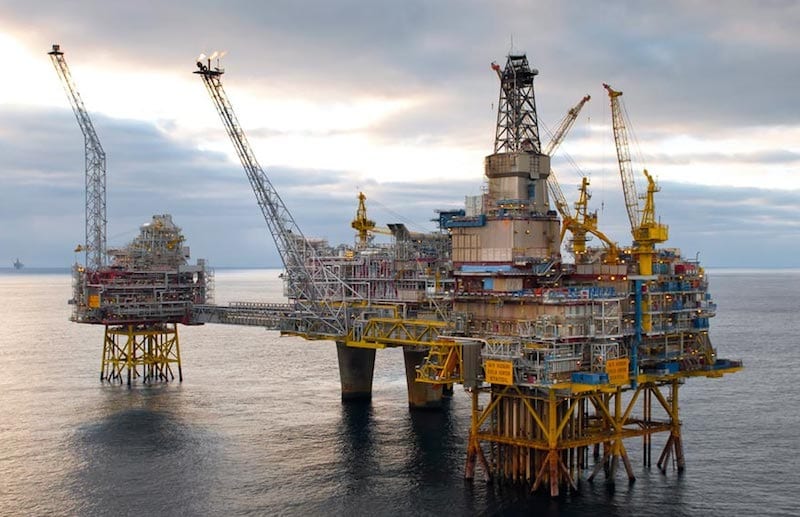
Oil gained about $1 on Tuesday on the impact of the latest US sanctions on Russian oil and the optimism over a potential end to the U.S. government shutdown, although oversupply concerns limited gains.
Brent crude increased its value by $1.10 or 1.72 per cent to $65.16 per barrel and the US West Texas Intermediate (WTI) crude climbed 91 cents or 1.51 per cent to $61.04 a barrel.
Investors continued to assess the fallout from the US sanctions on Russia, and their impact on both crude oil and refined fuel markets.
Russia’s Lukoil declared force majeure at an Iraqi oilfield it operates, marking the biggest fallout yet from the sanctions imposed last month.
Restricted fuel exports due to the sanctions are propping up oil prices in the face of a crude oil glut.
Following the October 22 US sanctions on Lukoil and Rosneft, Iraq has stopped all cash and crude payments to Lukoil. Last week, reports emerged that Iraq’s state oil marketing company SOMO had canceled three crude loadings from Lukoil this month after the US sanctioned the second-biggest Russian oil producer last month.
Following the US sanctions on Lukoil and Rosneft, oil traders and operators globally are steering clear of any cargoes of these two biggest Russian oil firms to avoid drawing the attention of the Donald Trump Administration and being slapped with secondary sanctions.
After the US sanctions on Lukoil and Rosneft, “as a result of Russia’s lack of serious commitment to a peace process to end the war in Ukraine,” Lukoil announced it would sell all of its international assets, and reached a preliminary agreement with Switzerland-based commodity trader Gunvor to sell these.
Reuters also reported that Middle Eastern producers Saudi Arabia, Iraq, and Kuwait will raise crude oil supplies to India in December as Indian refiners seek alternatives to Russian barrels.
The markets also saw support as the longest government shutdown in US history could end this week after the Senate approved a compromise that would restore federal funding. The Republican-controlled House of Representatives is due to vote on the deal later on Wednesday.
Worries about crude oversupply are curbing price gains with the main cause of this being the significant expansion of supply by the Organization of the Petroleum Exporting Countries and allies (OPEC+).
Earlier this month, OPEC+ agreed to increase December output targets by 137,000 barrels per day, but also agreed to a pause in increases in the first quarter of next year.
Market analysts noted that the alliance which also Russia, has added 2 million barrels per day of output since April, and a willingness within the group to reverse voluntary production cuts further after the first quarter pause could add an extra 1 million barrels per day in the coming year.



By Adedapo Adesanya
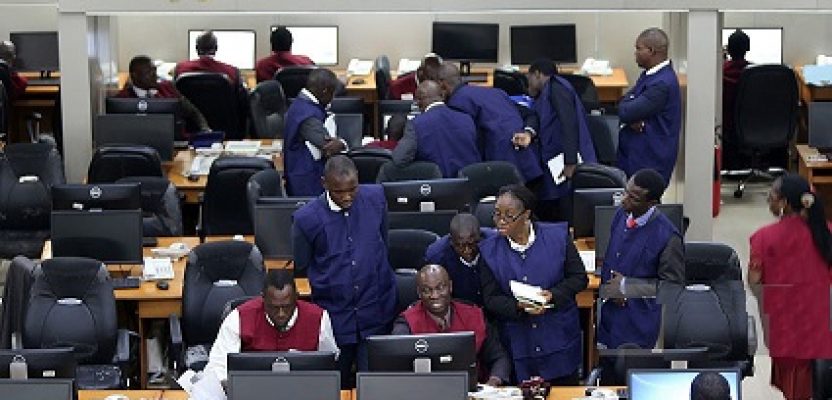
The NASD Over-the-Counter (OTC) Securities Exchange further declined by 0.23 per cent, with the Unlisted Security Index (NSI) down by 9.63 points on Tuesday, March 31, to 4,100.11 points from 4,109.74 points.
In the same vein, the market capitalisation went down by N5.76 billion to finish at N2.453 trillion from the N2.458 trillion it closed a day earlier.
The mood of the market was flat yesterday as there were three price losers and three price gainers, led by Central Securities Clearing System (CSCS) Plc, which gained N1.51 to sell at N78.68 per unit compared with the previous day’s N77.17 per unit. UBN Property Plc appreciated by 15 Kobo to N2.20 per share from N2.05 per share, and Geo-Fluids Plc improved by 3 Kobo to N3.25 per unit from N3.22 per unit.
On the flip side, 11 Plc lost N31.05 to close at N285.00 per share versus Monday’s closing price of N316.50 per share, FrieslandCampina Wamco Nigeria Plc dropped 95 Kobo to trade at N98.05 per unit versus N99.00 per unit, and Industrial and General Insurance (IGI) Plc went down by 2 Kobo to 52 Kobo per share from 57 Kobo per share.
During the trading day, the volume of securities jumped by 137.9 per cent to 50.8 million units from 21.3 million units, the number of deals rose 28.9 per cent to 49 deals from the preceding session’s 38 deals, while the value of securities went down by 65.2 per cent to N226.9 million from N651.1 million.
CSCS Plc remained the most traded stock by value (year-to-date) with 56.8 million units worth N3.8 billion, followed by Okitipupa Plc with 27.5 million units valued at N1.8 billion, and Infrastructure Guarantee Credit Plc with 400 million units traded for N1.2 billion.
Resourcery Plc was the most traded stock by volume (year-to-date) with 1.1 billion units sold for N415.7 million, followed by Infrastructure Guarantee Credit Plc with 400 million units transacted for N1.2 billion, and Geo-Fluids Plc with 183.0 million units exchanged for N673.8 million.
By Adedapo Adesanya
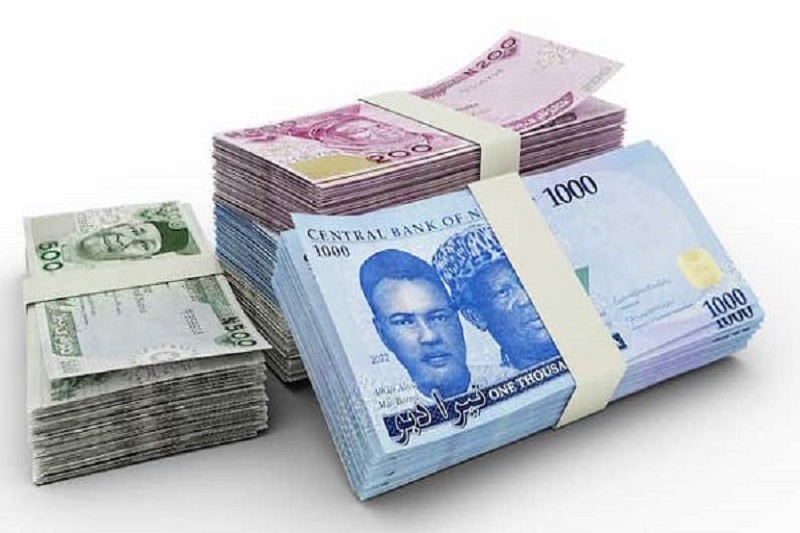
The Naira weakened against the US Dollar in the Nigerian Autonomous Foreign Exchange Market (NAFEX) on Tuesday, March 31, by 0.23 per cent or N3.14 to N1,386.72/$1 from the N1,383.58/$1 it was traded on Monday.
Similarly, the Nigerian currency depreciated against the Pound Sterling in the same market window by N14.40 to close at N1,839.34/£1 compared with the previous day’s N1,824.94/£1, and against the Euro, it lost N12.88 to settle at N1,599.16/€1 versus N1,586.28/€1.
In the same vein, the Naira stumbled against the Dollar yesterday by N1 to quote at N1,395/$1 versus N1,394/$1, and in the black market, it remained unchanged at N1,410/$1.
The Naira remains under pressure as FX liquidity shrank, as evidenced by the number of interbank FX deals published by the Central Bank of Nigeria (CBN).
Last week, forex intervention operations saw the apex bank inject $95 million into the supply side, but as high demand for the Dollar as a safe-haven asset continues, it strengthened the Dollar index, while the Euro, British Pound and other major trading partners weakened.
The country’s external reserves recorded a marginal decline, falling by 0.7 per cent to $49.48 billion, reflecting a depletion of about $350 million and signalling continued pressure on Nigeria’s FX buffer.
In the cryptocurrency market, reports of comments by Iran’s President Masoud Pezeshkian hinted at eased geopolitical tensions, which triggered gains across some assets.
Mr Pezeshkian reportedly signalled Iran would be willing to end the conflict in exchange for security guarantees, raising hopes for a diplomatic off-ramp and reducing fears of a wider regional war.
Ethereum (ETH) gained 4.4 per cent to trade at $2,150.11, Ripple (XRP) jumped 2.8 per cent to $1.36, Bitcoin (BTC) added 2.5 per cent to sell at $69,079.14, Cardano (ADA) which also rose by 2.5 per cent to $0.2518, Dogecoin (DOGE) improved by 2.4 per cent to $0.0941, Solana (SOL) grew by 1.3 per cent to $84.43, and Binance Coin (BNB) increased by 1.2 per cent to $618.86, while TRON (TRX) dipped 1.8 per cent to $0.3153, with the US Dollar Tether (USDT) and the US Dollar Coin (USDC) flat at $1.00 apiece.

By Adedapo Adesanya
The oil market was down more than $3 on Tuesday following reports that Iran’s president said the country was ready to end the war that has affected the global markets.
Brent crude depreciated by $3.42 to $103.97 per barrel, while the US West Texas Intermediate (WTI) crude lost $1.50 or 1.46 per cent to trade at $101.38 per barrel.
For Brent, it has steadily risen over the last four weeks as the Iran war has escalated, with attacks across energy infrastructure throughout the Gulf that have resulted in the worst-ever oil-and-gas supply disruption.
However, on Tuesday, Iran’s president, Mr Masoud Pezeshkian, suggested the Islamic Republic is open to ending the war if certain conditions are met.
“We possess the necessary will to end this conflict, provided that essential conditions are met, especially the guarantees required to prevent repetition of the aggression,” Mr Pezeshkian said in a phone conversation with the president of the European Council, according to a statement from his office.
The comments followed that of US Secretary of Defence Pete Hegseth, who said that the next days of the Iran war will be “decisive” while refusing to rule out US ground forces playing a role in the conflict.
In March, the market moved up and down each time US President Donald Trump suggested the military operation may be de-escalated – only to resume its upward path due to the supply impairment caused by Iran’s threats against vessels transiting the key Strait of Hormuz, the artery used to ship one-fifth of the world’s oil and gas.
Iran’s Islamic Revolutionary Guard Corps (IRGC) is only allowing vessels flying flags of “friendly” countries to transit, as traffic through the Strait of Hormuz has collapsed from more than 100 ships transiting every day to fewer than 10 per day, most of which are with critical supplies bound for China, India, and Pakistan.
President Trump has suggested other countries should intervene to open the strait, a move European nations have not wanted to take until hostilities cease.
Meanwhile, the US has removed sanctions on barrels from Russia and pledged reserve releases with a group of other nations, but those measures will only offset the supply loss for a limited period of time.
The American Petroleum Institute (API) estimated that crude oil inventories in the US rose by a staggering 10.263 million barrels in the week ending March 27. Official data from the US Energy Information Administration (EIA) will be released later on Wednesday.











-
 Feature/OPED6 years ago
Davos was Different this year
-
Travel/Tourism10 years ago
Lagos Seals Western Lodge Hotel In Ikorodu
-

 Showbiz3 years ago
Estranged Lover Releases Videos of Empress Njamah Bathing
-
 Banking8 years ago
Sort Codes of GTBank Branches in Nigeria
-

 Economy3 years ago
Subsidy Removal: CNG at N130 Per Litre Cheaper Than Petrol—IPMAN
-

 Banking3 years ago
Sort Codes of UBA Branches in Nigeria
-

 Banking3 years ago
First Bank Announces Planned Downtime
-

 Sports3 years ago
Highest Paid Nigerian Footballer – How Much Do Nigerian Footballers Earn