Connect with us

Economy

Oil Prices to Rise on Lower Demand Forecasts

Published

on

crude oil prices

By Adedapo Adesanya

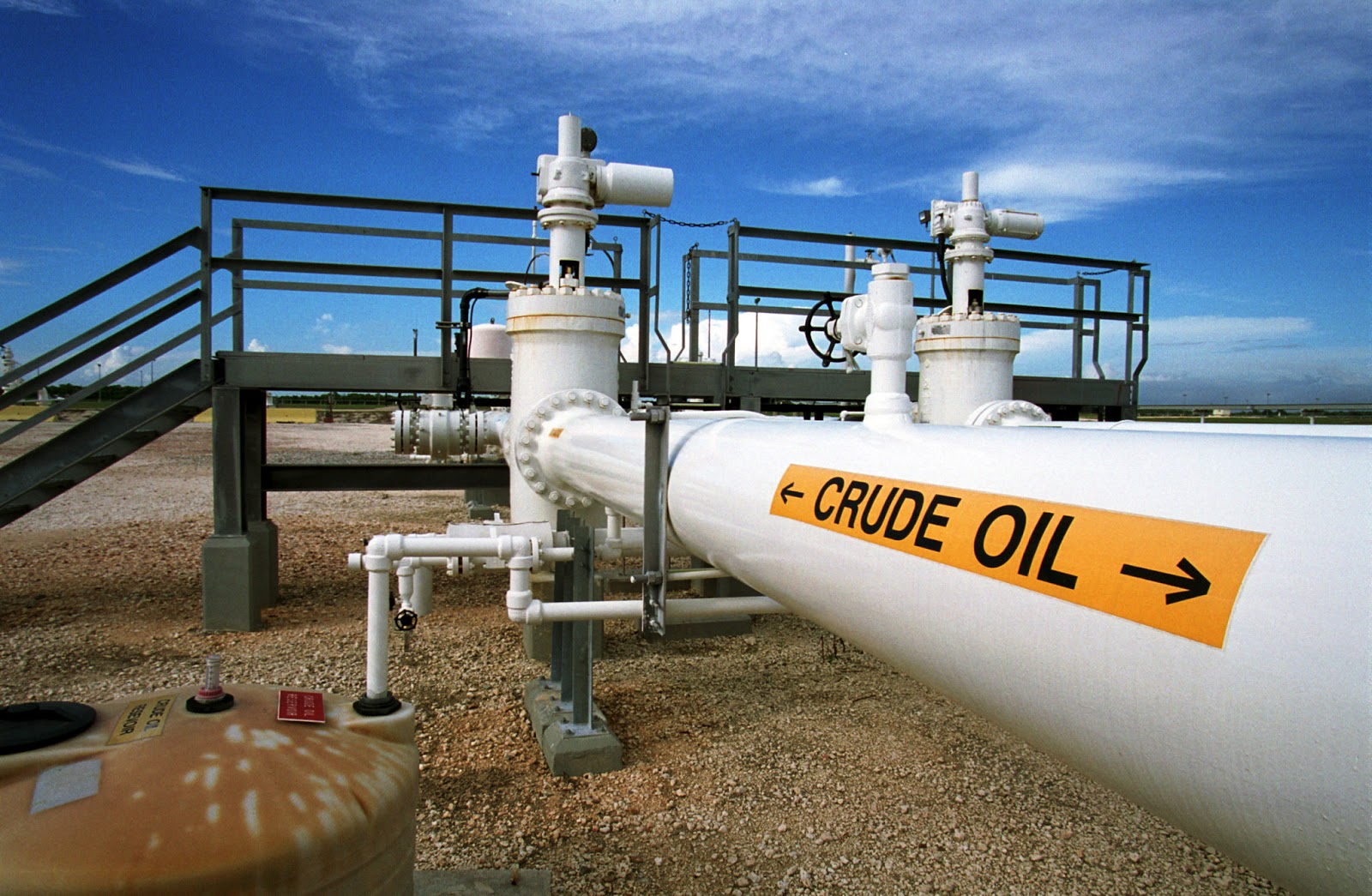
Oil prices made an average three percent recovery last week as major futures ended the week pointing up as demand improved around possibilities that the Organisation of the Petroleum Exporting Countries (OPEC) and its allies will come through with the production cuts a technical committee recommended during its meeting two weeks ago.

Also, prices were driven up as investors looked to draw up an optimistic approach despite the worsening case of the coronavirus, now named COVID-19, with the market faced with a lot of bearish outcomes into two months this year.

Brent, the International crude settled at $57.32 per barrel while the US West Texas Intermediate (WTI) crude ended the week at $52.05 per barrel.

Although it was earlier believed that China reported the lowest number of new coronavirus cases since the end of January, this eased concerns about a drop-off in demand for oil supporting prices.

However, circumstances changed later in the week after there were reports of 242 new deaths in the Hubei province, where the virus was said to have originated, doubling the number of casualties since the spread started in December.

The COVID-19 has continued to impact the demand for oil and last week, there was a huge drop in demand forecast for oil by organisations and agencies. OPEC said it now expects daily oil demand growth to be 990,000 barrels per day (bpd), which is 230,000 bpd below previous forecasts of 1.22 million barrels per day.

On its part, the International Energy Agency (IEA) said oil demand is set to fall year-on-year in the first quarter for the first time since the financial crisis in 2009, attributing this to the coronavirus outbreak in China.

For the Energy Information Administration (EIA), it said last Wednesday that crude supplies in the United States rose by 7.5 million barrels for the week ended February 7 higher than 2.9 million barrels expected.

Going into this week, Business Post analysts foresee low demand forecasts forcing OPEC and its allies, including Russia, to implement the additional production cuts of 600,000 barrels per day earlier recommended at the February impromptu meeting.

An OPEC+ joint technical committee had recommended extending the output cuts until the end of 2020, with provisions for a temporary deepening of cuts to counter the impact of the coronavirus on the oil markets.

The joint technical committee, which includes Algeria, Saudi Arabia, Russia, the UAE, Iraq, Kazakhstan, Kuwait and Nigeria, was said to have recommended additional cuts of 600,000 bpd until the second quarter of the year at the meeting, but Russia said it requires more time to assess the impact of the coronavirus on oil markets before committing to any cuts and said it will consult with other producers.

A positive response from Russia will spur prices up this week but if it continues to hold on, prices may move around gains and losses. However, if it says no to the cut, prices may plunge as low as it did during the global recession of 2009.

As at the time of this report, prices were trading up for the Brent crude at $57.35 per barrel while the US WTI crude was also pointing up at $52.10 per barrel.


Adedapo Adesanya is a journalist, polymath, and connoisseur of everything art. When he is not writing, he has his nose buried in one of the many books or articles he has bookmarked or simply listening to good music with a bottle of beer or wine. He supports the greatest club in the world, Manchester United F.C.

Click to comment

Leave a Reply

Your email address will not be published. Required fields are marked *

Economy

11 Plc, FrieslandCampina, CSCS Lift NASD Exchange by 1.38%

Published

on

NASD Exchange

By Adedapo Adesanya

Three securities lifted the NASD Over-the-Counter (OTC) Securities Exchange by 1.38 per cent on Friday, July 3, with the NASD Security Index (NSI) up by 58.80 points to 4,307.26 points from 4,248.46 points, and the market capitalisation closing higher by N35.30 billion to N2.585 trillion from N2.549 trillion.

The price gainers were led by 11 Plc, which expanded by N20.05 to close at N220.55 per share compared with the previous day’s N200.50 per share, FrieslandCampina Wamco Nigeria Plc increased by N5.36 to N151.82 per unit from N146.46 per unit, and Central Securities Clearing System (CSCS) Plc appreciated by N3.52 to N90.74 per share from N87.22 per share.

Yesterday, the value of transactions surged by 1,431.2 per cent to N160.1 million from the preceding session’s N10.5 million, and the volume of trades rose by 303.7 per cent to 1.8 million units from 440,653 units, while the number of deals decreased by 34.4 per cent to 21 deals from 32 deals.

Great Nigeria Insurance (GNI) Plc was the most traded stock by value on a year-to-date basis, with 3.4 billion units sold for N8.4 billion, followed by Infrastructure Credit Guarantee (Infracredit) Plc with 2.3 billion units worth N6.5 billion, and CSCS Plc with 70.7 million units transacted for N4.9 billion.

GNI Plc was also the most traded stock by volume on a year-to-date basis, with 3.4 billion units valued at N8.4 billion, followed by Infracredit Plc with 2.3 billion units exchanged for N6.5 billion, and Resourcery Plc with 1.1 billion units traded for N415.7 million.

Continue Reading

Economy

Nigerian Stocks Rebound by 2.19% to Halt Losing Streak

Published

on

Nigerian Stocks1

By Dipo Olowookere

The losing streak on the Nigerian Exchange (NGX) Limited was halted on Friday after the bourse closed higher by 2.19 per cent at the close of trading activities.

The gains reported by Nigerian stocks were buoyed by renewed bargain-hunting by investors, which resulted in all the key sectors of Customs Street ended in the green territory.

The banking space rose by 2.78 per cent, the insurance counter appreciated by 1.26 per cent, the energy segment expanded by 0.36 per cent, the consumer goods index chalked up 0.06 per cent, and the industrial goods sector grew by 0.05 per cent.

Consequently, the All-Share Index (ASI) went up by 4,918.37 points to 229,240.34 points from 224,321.97 points, and the market capitalisation increased by N3.156 trillion to N147.103 trillion from N143.947 trillion.

Investor sentiment was bullish after 34 stocks ended on the price gainers’ chart and 18 stocks finished on the losers’ log, representing a positive market breadth index.

The quintet of The Initiates, Universal Insurance, DAAR Communications, Omatek, and Airtel Africa surged by 10.00 per cent to sell for N25.85, 88 Kobo, N1.65, N1.76, and N5,274.00, respectively.

On the flip side, International Energy Insurance lost 9.96 per cent to trade at N4.70, Meyer shed 9.95 per cent to close at N18.55, Veritas Kapital dropped 5.07 per cent to finish at N1.31, Fidelity Bank slipped by 2.17 per cent to N18.00, and Jaiz Bank crashed by 1.84 per cent to N28.12.

During the session, a total of 414.7 million equities worth N25.1 billion exchanged hands in 47,106 deals compared with the 855.4 million equities valued at N28.4 billion transacted in the preceding day in 51,609 deals, implying a contraction in the trading volume, value, and number of deals by 51.52 per cent, 11.62 per cent, and 8.73 per cent, respectively.

Continue Reading

Economy

Naira Trades Flat at Official Market as CBN Makes Minimal FX Intervention

Published

on

naira street value

By Adedapo Adesanya

The Naira closed flat against the United States Dollar at N1,370.19/$1 in the Nigerian Autonomous Foreign Exchange Market (NAFEX) on Friday, July 3.

However, it appreciated against the Pound Sterling in the same market segment by N2.29 to settle at N1,829.88/£1 compared with the previous day’s N1,832.17/£1, and marginally depreciated against the Euro by 4 Kobo to close at N1,568.32/€1 versus Thursday’s closing price of N1,568.28/€1.

At the parallel market, the Naira also traded flat against the US Dollar at N1,390/$1, and at the GTBank forex desk, it also maintained stability at N1,832/$1.

Market conditions improved shortly after the following minimal intervention by the Central Bank of Nigeria (CBN) through modest Dollar sales, which boosted liquidity and supported stronger trading activity.

Easing pressure came after half-year profit-taking tapered down, while continued stronger policy signals from the central bank add to near-term support.

Deals executed at the official market on Friday came in at $70.430 million across 82 interbank deals, from $85.517 million the previous day.

Meanwhile, the cryptocurrency market continued its recovery after June non-farm payrolls printed at 57,000, less than half the 113,000 consensus, sending the implied probability of a September Federal Reserve rate hike from 64 per cent to 54 per cent and dragging AI stocks sharply lower.

Weak labour data reduces inflationary pressure and, by extension, the Federal Reserve’s justification for holding rates elevated. That transmission mechanism is direct: lower rate-hike odds compress the opportunity cost of holding non-yielding assets like crypto.

Bitcoin regained the $62,000 mark after it rose by 1.3 per cent to $62,475.29.

Cardano (ADA) gained 6.6 per cent to trade at $0.1759, Ripple (XRP) appreciated by 3.5 per cent to $1.14, Ethereum (ETH) expanded by 2.4 per cent to $1,756.82, Dogecoin (DOGE) improved by 2.1 per cent to $0.0768, Solana (SOL) chalked up 1.8 per cent to $82.65, TRON (TRX) increased by 1.5 per cent to $0.3235, and Binance Coin (BNB) soared by 1.4 per cent to $569.12, while the US Dollar Tether (USDT) and the US Dollar Coin (USDC) traded flat at $1.00 apiece.

Continue Reading

Trending