
Economy
Oil Recoups 1% as US Halts Plan to Tap into Reserves

By Adedapo Adesanya
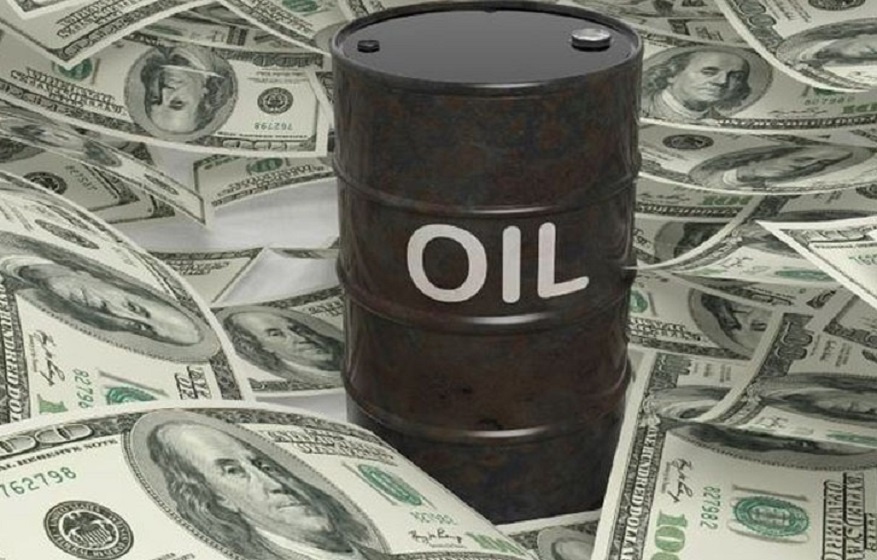
Oil recovered some previous day losses with the Brent crude rising by 1.74 per cent or $1.41 to trade at $82.49 per barrel on Thursday as the market deemed it unlikely that the United States would release emergency crude reserves or ban exports to ease tight supplies.
Also, the West Texas Intermediate (WTI) crude increased by 1.87 per cent or $1.45 yesterday to trade at $78.88 per barrel as the market breathed relief when the US Department of Energy said it was no longer considering a release of the Strategic Petroleum Reserve (SPR).
The news came shortly after Goldman Sachs estimated that if the US DoE released oil from the SPR, it would likely be limited to just 60 million barrels—posing a $3 downside risk to its year-end $90 barrel Brent forecast.
The department made the comment amid questions about whether President Joe Biden’s administration was considering tapping into its SPR or pursuing a ban on oil exports to bring down the cost of crude oil which was bringing about inflationary pressures.
A larger-than-expected rise in US crude inventories last week also weighed on prices as stocks rose by 2.3 million barrels, the US Energy Information Administration said (EIA).
Also, moves to cool record-high gas prices could ease prices as Russian President Vladimir Putin said that his country was boosting gas supplies to Europe, in response to the energy crunch and stands ready to stabilise the market amid surging prices.
Analysts say as winter approaches those gas prices could have an impact on the already tight crude market as some users switch to oil.
Earlier this week, the Organisation of the Petroleum Exporting Countries and allies (OPEC+) agreed to stick to its plan to raise output by 400,000 barrels per day in November, sending crude prices to multi-year highs.
In recent months, the White House has been in contact with OPEC over the price of oil, urging them to further ease the cuts.
The OPEC+ group, however, didn’t heed any calls from the US and other nations and proceeded earlier this week to stick to the expected plan, sending prices higher.
OPEC+’s decision was partly driven by concern that demand and prices could weaken.
Yet, major producers and the International Energy Agency (IEA) see that crude demand could rise by anywhere from 150,000 to 500,000 barrels per day in the coming months as users of natural gas switch to oil due to high gas prices.









By Modupe Gbadeyanka
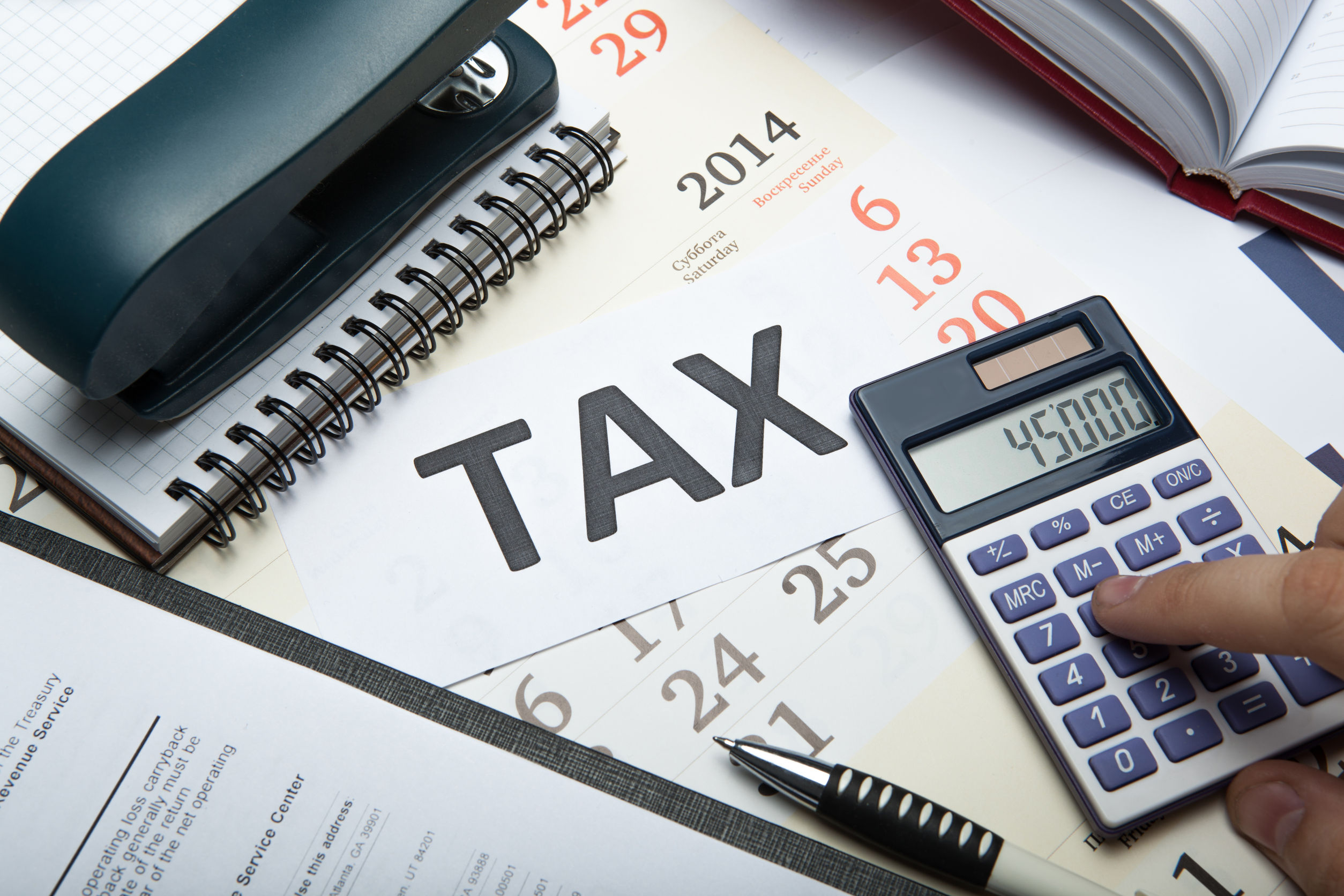
The deadline for filing individual annual income tax returns for residents of Lagos State has again been extended to April 21, 2026.
This information was revealed via a statement signed by the Head of Corporate Communications of the Lagos State Internal Revenue Service (LIRS), Mrs Monsurat Amasa-Oyelude, on Saturday.
The agency thanked some taxpayers for their continued compliance and commitment to the filing of their individual annual income tax returns, but charged those who have yet to file theirs to do so before the new deadline.
LIRS had earlier moved the deadline from its statutory period of March 31, 2026, to April 14, 2026, but due to “the overwhelming response and to enhance taxpayer convenience, while maintaining the integrity and accuracy of submissions,” the date was moved forward to April 26.
The tax-collecting organisation said it “observed a significant increase in traffic on its eTax platform as more taxpayers endeavour to meet the filing deadline.”
“In view of this development, and to ensure that all taxpayers are provided with adequate opportunity to successfully complete their filings, LIRS hereby announces a further extension of the deadline, now set for April 21, 2026,” it stated.
The agency reiterated that all filings must be completed electronically via the LIRS eTax platform: https://etax.lirs.net, which remains the only approved channel for submission.
Taxpayers were reminded that the filing of annual income tax returns remains a statutory obligation and were encouraged to take advantage of this final extension to fulfil their civic responsibility.

By Dipo Olowookere
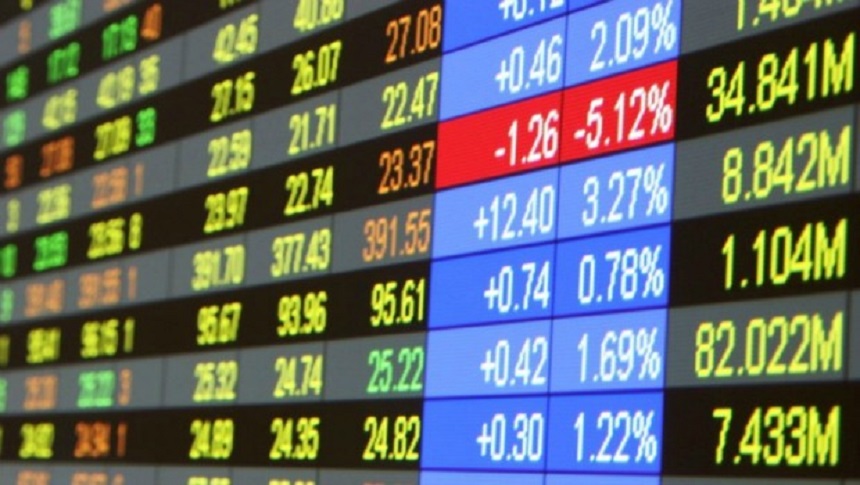
The Nigerian Exchange (NGX) Limited was in green on Friday after it closed higher by 0.30 per cent as a result of sustained bargain hunting.
Customs Street was up yesterday after three of the five major sectors came under buying pressure, with the consumer goods index up by 1.64 per cent, the industrial goods space up by 1.12 per cent, and the banking counter up by 0.64 per cent.
Business Post observed that profit-taking brought down the insurance by 2.61 per cent, and weakened the energy sector by 0.01 per cent.
At the close of business, the market capitalisation increased by N707 billion to N131.166 trillion from N130.459 trillion, and the All-Share Index (ASI) expanded by 1,097.86 points to 203,770.42 from 202,672.56 points.
Transactions by Nigerian stock investors shrank during the session, as 548.6 million shares worth N31.5 billion exchanged hands in 48,538 deals compared with the 652.9 million shares valued at N39.8 billion transacted in 51,101 deals a day earlier.
This implied that the trading volume went down by 15.98 per cent, the trading value depreciated by 20.85 per cent, and the number of deals crashed by 5.02 per cent.
Access Holdings finished the day as the busiest equity after selling 52.7 million units valued at N1.4 billion, Zenith Bank exchanged 47.8 million units worth N5.4 billion, UBA traded 38.9 million units for N1.8 billion, Secure Electronic Technology transacted 36.7 million units worth N35.5 million, and GTCO sold 34.9 million units valued at N4.6 billion.
The market breadth index was negative during the session with 20 price gainers and 38 price losers, indicating weak investor sentiment.
Trans Nationwide Express appreciated by 9.91 per cent to N3.77, International Breweries grew by 9.88 per cent to N13.35, Chams rose by 9.84 per cent to N3.35, Guinea Insurance improved by 9.38 per cent to N462.90, and Lafarge Africa gained 8.52 per cent to close at N233.20.
On the flip side, Omatek lost 10.00 per cent to trade at N2.07, Austin Laz declined by 9.93 per cent to N3.99, Coronation Insurance dipped by 9.88 per cent to N2.92, Zichis crashed by 9.58 per cent to N12.55, and Cornerstone Insurance retreated by 8.77 per cent to N5.20.
By Adedapo Adesanya
The NASD Over-the-Counter (OTC) Securities Exchange closed the last trading session of the week in the southern territory after further losing 0.59 per cent on Friday, April 10.
This happened as three price decliners weakened the NASD market due to continued sell-offs. The bourse did not finish in green this week.
11 Plc lost N24.70 to close at N222.30 per share compared with the previous day’s N247.00 per share, MRS Oil dropped N1 to settle at N164.00 per unit versus Thursday’s N165.00 per unit, and Geo-Fluids decreased by 25 Kobo to N3.00 per share from N3.25 per share.
As a result, the market capitalisation shrank by N13.79 billion to N2.315 trillion from N2.329 trillion, and the NASD Unlisted Security Index (NSI) declined by 23.05 points to 3,870.45 points from 3,893.50 points.
Yesterday, there were two price gainers led by Central Securities Clearing System (CSCS) Plc, which chalked up N1.07 to sell at N64.21 per unit versus N63.50 per share, and Impresit Bakalori Plc appreciated by 22 Kobo to N2.42 per share from N2.20 per share.
The volume of securities fell by 81.9 per cent to 188,593 units from 1.04 million units, the value of securities decreased by 36.3 per cent to N25.7 million from N40.4 million, and the number of deals remained unchanged at 26 deals.
Great Nigeria Insurance (GNI) Plc was the most traded stock by value on a year-to-date basis with 3.4 billion units valued at N8.4 billion, followed by CSCS Plc with 57.6 million units exchanged for N3.9 billion, and Okitipupa Plc with 27.6 million units worth N1.8 billion.
GNI Plc was also the most traded stock by volume on a year-to-date basis with 3.4 billion units transacted for N8.4 billion, followed by Resourcery Plc with 1.1 billion units s0ld for N415.7 million and Infrastructure Guarantee Credit Plc with 400 million units traded at N1.2 billion.
-
 Feature/OPED6 years ago
Davos was Different this year
-
Travel/Tourism10 years ago
Lagos Seals Western Lodge Hotel In Ikorodu
-

 Showbiz3 years ago
Estranged Lover Releases Videos of Empress Njamah Bathing
-
 Banking8 years ago
Sort Codes of GTBank Branches in Nigeria
-

 Economy3 years ago
Subsidy Removal: CNG at N130 Per Litre Cheaper Than Petrol—IPMAN
-

 Banking3 years ago
Sort Codes of UBA Branches in Nigeria
-

 Banking3 years ago
First Bank Announces Planned Downtime
-

 Sports3 years ago
Highest Paid Nigerian Footballer – How Much Do Nigerian Footballers Earn