
Economy
OPay Nigeria Picks Ex-CBN Director Daudu Gotring as CEO

By Adedapo Adesanya
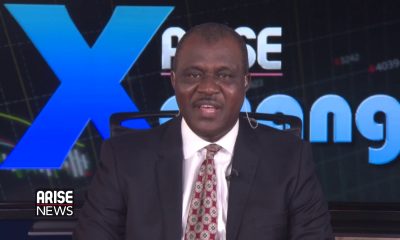
OPay Nigeria has appointed Mr Daudu Gotring, a former director at the Central Bank of Nigeria (CBN), as its chief executive following the resignation of Mr Olu Akanmu from the position after his two years stint at the company.
Mr Akanmu, who held the role of the chief executive officer (CEO) of the digital bank, stepped down from the position as the company is celebrating its 5th anniversary in the country.
The appointment of Mr Gotring is subject to regulatory approval, which is the CBN, according to a statement seen by Business Post.
The former director of the Trade and Exchange Department of the apex bank also contested for the Plateau State gubernatorial seat in the last Nigerian general elections under the People’s Democratic Party (PDP).
“Mr Gotring, a veteran in the financial services industry, will continue to steer the Opay ship in the direction of even greater strides,” the company said in the statement.
Although Mr Akanmu did not give any reason he was leaving the organisation, which he joined in November 2021, he lauded the milestones he helped carry out at the fintech company, which saw OPay grow to over 30 million users, 500,000 agents, and more than 300,000 merchants in the last five years of operation.
“My gratitude to all my colleagues for the good work we did deepening financial inclusion in Nigeria and ensuring that less and less number of people are left out in partaking out of the opportunities of the digital financial system,” he said.
In November 2021, the firm appointed Mr Akanmu, a former FCMB Executive Director for Retail Banking, as the new president and co-CEO of Opay. Prior to his appointment, Opay operations in Nigeria were led by Mr Yahui Zhou, chairman and co-CEO of Opera, and Mr Iniabasi Akpan, the then Nigeria Country Manager of Opay.
Earlier this year, during the cash crunch in Nigeria, Opay recorded remarkable growth taking a position as one of the two most downloaded finance apps on Google Play Store in Nigeria.





By Adedapo Adesanya
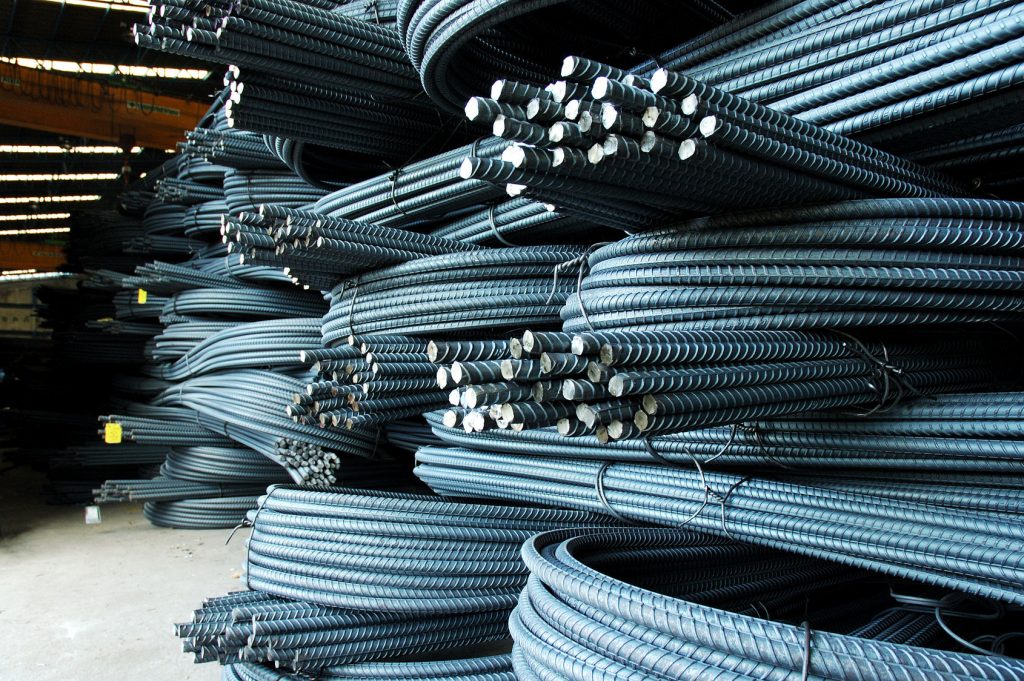
Nigeria’s Minister of Steel Development, Mr Shuaibu Abubakar Audu, has told European investors that the country’s steel sector alone consumes about $10 billion annually, presenting a huge market opportunity for serious global players.
In a statement by the Director of Information and Public Relations in the ministry, Ms Salamatu Jibaniya, it was stated that the Minister made this disclosure when he took Nigeria’s industrialisation drive to Germany, declaring that the country is ready to trade its abundant raw materials status and embrace full-scale value addition.
Addressing the Nigeria–German Economic Forum in Dortmund, Mr Audu projected Nigeria as Africa’s next industrial hub, in line with the Renewed Hope Agenda of President Bola Tinubu.
“With a population of nearly 250 million, largely youthful and energetic, Nigeria is primed for industrial take-off,” he said.
He disclosed that the country holds over three billion tonnes of iron ore, alongside vast deposits of limestone, manganese, copper, lead-zinc, lithium and rare-earth minerals, positioning Nigeria for both domestic industrial growth and export expansion.
Mr Audu urged EU investors to key into steel and aluminium production, mineral beneficiation and processing, as well as critical infrastructure development covering power, rail, gas and ports.
He stressed that beyond capital inflow, Nigeria is prioritising technology transfer and technical skills development to strengthen local capacity.
At the high-level forum, the minister was received by Germany’s Minister for Federal, International and European Affairs, Mr Nathanael Liminski; Lord Mayor of Dortmund, Mr Alexander Kalouti; President of the Dortmund Chamber of Commerce and Industry, Mr Heinz-Herbert Dustmann; and Consul General to Slovakia, Mr Klaus Wagener.


By Aduragbemi Omiyale
To boost Nigeria’s cocoa export value chain, Sunbeth Global Concepts Limited has secured approval to issue commercial papers worth N200 billion to investors.
In the first tranche, the cocoa exporter will sell the debt instrument worth about N100 billion in three series across three tenors of 180 days, 270 days and 364 days.
Subscription for the CP commenced on Friday, February 27, 2026, and will close on Thursday, March 5, 2026, with allotment and settlement scheduled for Friday, March 6, 2026.
Interested investors can purchase the commercial papers with a minimum of N5 million and in multiples of N1,000 thereafter.
The company stated that proceeds from the exercise would be used to finance contractual working capital requirements, including inventory procurement and the execution of physical and hedged offtake obligations within its export operations.
The Chief Operating Officer of Sunbeth, Mr Nzubechukwu Anisiobi, said the programme reflects the firm’s disciplined capital strategy and strong credit fundamentals.
“The establishment of our N200 billion Commercial Paper Programme reflects our disciplined capital strategy and solid credit profile.
“In a working capital-intensive export business, access to structured short-term funding strengthens liquidity, supports efficient contract execution and preserves balance sheet stability,” he stated.
Further emphasising investor confidence in the company’s governance and risk framework, he noted that, “The Programme underscores the confidence the capital markets have in our governance standards, earnings resilience and robust risk management discipline.”
Sunbeth, which is a top-five non-oil export contributor in Nigeria, was established in 2017 and has exported over 200,000 metric tonnes of cocoa beans and 60,000 metric tonnes of cashew nuts to international markets.
In 2025, it recorded over N600 billion in revenue, reinforcing its scale within Nigeria’s agricultural export ecosystem.
The organisation works directly with more than 30,000 farmers and collaborates with over 250 local buying agents across Nigeria.
Its global strategic partners include Cargill, GCB Group, JB Cocoa, Touton, Macquarie and StoneX, enabling diversified offtake and multi-destination market access across Europe, Asia and the United States.

By Adedapo Adesanya
Five price advancers buoyed the NASD Over-the-Counter (OTC) Securities Exchange by 1.88 per cent on Tuesday, March 3, as the demand for unlisted stocks continues to grow.
During the session, the market capitalisation added N46.64 billion to close at N2.524 trillion versus the Monday session’s N2.477 trillion, and the NASD Unlisted Security Index (NSI) increased by 77.94 points to finish at 4,219.47 points compared with the previous day’s 4,141.53 points.
11 Plc gained N13.23 yesterday to sell at N290.23 per share compared with the preceding session’s N277.00 per share, FrieslandCampina Wamco Nigeria Plc appreciated by N7.76 to N117.76 per unit from N110.00 per unit, Central Securities Clearing System (CSCS) Plc improved by N7.05 to N84.05 per share from N70.00 per share, First Trust Mortgage Bank Plc added 17 Kobo to close at N1.92 per unit versus N1.75 per unit, and Industrial and General Insurance (IGI) Plc advanced by 4 Kobo to settle at 49 Kobo per share versus 45 Kobo per share.
On the flip side, Food Concepts Plc dropped 37 Kobo to sell at N3.39 per unit compared with the previous day’s N3.76 per unit, and NASD Plc dipped 20 to N56.21 per share from N56.41 per share.
On Tuesday, the volume of securities went down by 19.6 per cent to 1.4 million units from 1.8 million units, but the value of securities increased by 447.2 per cent to N93.4 million from N17.1 million, and the number of deals soared by 118.5 per cent to 59 deals from 27 deals.
At the close of transactions, CSCS Plc remained the most active stock by value (year-to-date) with 35.8 million units sold for N2.2 billion, trailed by Okitipupa Plc with 6.3 million units worth N1.1 billion, and Geo-Fluids Plc exchanged 122.8 million units valued at N480.4 million.
The most active stock by volume (year-to-date) was Resourcery Plc with 1.05 billion units worth N408.7 million, followed by Geo-Fluids Plc with 122.8 million units worth N480.4 million, and CSCS Plc with 35.8 million units transacted for N2.2 billion.






-
 Feature/OPED6 years ago
Davos was Different this year
-
Travel/Tourism10 years ago
Lagos Seals Western Lodge Hotel In Ikorodu
-

 Showbiz3 years ago
Estranged Lover Releases Videos of Empress Njamah Bathing
-
 Banking8 years ago
Sort Codes of GTBank Branches in Nigeria
-

 Economy3 years ago
Subsidy Removal: CNG at N130 Per Litre Cheaper Than Petrol—IPMAN
-

 Banking3 years ago
Sort Codes of UBA Branches in Nigeria
-

 Banking3 years ago
First Bank Announces Planned Downtime
-

 Sports3 years ago
Highest Paid Nigerian Footballer – How Much Do Nigerian Footballers Earn