
Economy
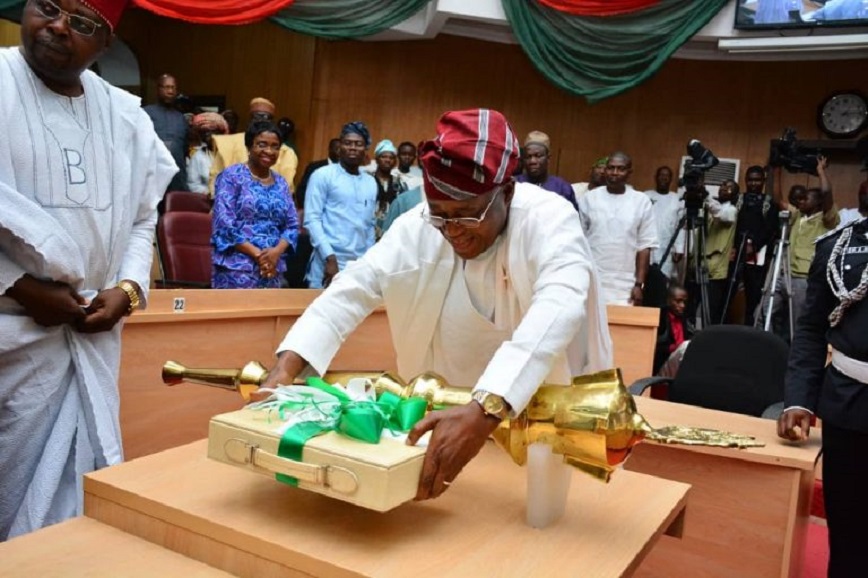
Osun Governor Presents 2019 Budget to Parliament

By Dipo Olowookere
Governor of Osun State, Mr Gboyega Oyetola, has presented a budget estimate of N152.7 billion to the state House of Assembly, lower than the N179.2 billion budgeted for the 2018 financial year.
Presenting the 2019 budget proposal to the parliament on Thursday, his first, Mr Oyetola said priority would be given to agriculture, healthcare and provision of water in the rural communities in the state.
According to him, the Budget of Hope is aimed at building on the giant strides of the immediate past administration Mr Rauf Aregbesola.
He said capital projects will take 65 percent of the total expenditure, amounting to N91.5 billion, while education has 11.36 percent, representing N10.4 billion.
Speaking on how his administration plans to generate the revenue for the year, Mr Oyetola said the state is expecting an Internally Generated Revenue (IGR) of N36 billion at a minimum N3 billion per month of the projected total revenue of N150 billion, with the remaining coming from other sources including the Federation Account, grants, aids, investment and others.
The Governor said the era of payment of modulated salaries and allowances and other benefits was over, adding that workers and pensioners were now collecting their full salaries.
On education, he said, “We shall review the school curriculum to achieve value reorientation and to create a sense of worth belonging in our youths. Consequently, History shall be re-introduced in our secondary schools while Civic Education shall be expanded to incorporate the Omoluabi ethos.
“Focused-attention shall also be given to technical and vocational education to inculcate relevant skills for the youth to make them job creators rather than job seekers.
“Our Administration remains irrevocably committed to the joint ownership and co-funding of the Ladoke Akintola University of Technology, Ogbomoso and the College of Health Sciences, Osogbo with the Oyo State Government.”
On healthcare, emphasis will be on Health insurance “to provide effective, quality and affordable services to all and sundry.”
The Health Insurance is a contributory scheme in which the government will pay three percent while the worker will contribute 1.5 percent.
There is also a plan to revitalise and equip 332 Primary Health Care (PHC) centres – one in each ward – and 57 secondary health care centres across the three senatorial districts.
The Ede Headworks water scheme is to be rehabilitated to enhance supply of portable water to at least 12 local government areas.
The Ilesa water project whose work restarted with the commitment of President Muhammadu Buhari, is to get full attention.
“Given the committed leadership this administration is bringing to the table, and the unwavering following, we have been getting from the citizenry, the state of Osun is poised to set the pace in economic independence.
“We shall put strategic in place to further promote food security, employment and create wealth by investing heavily in agriculture, mining, infrastructure, commerce and industry, education and technology.
“We shall also introduce creative and prudent management of our resources, block leakages, and eliminate wastages. We will assemble the brightest of the best minds to drive our policies as we are committed to provide equitable opportunities and people-oriented governance.
“We are committed to consolidating on the various ongoing projects and programmes by delivering on the continuous investment in education, healthcare and social welfare, unwavering attention to security of lives and property, people-oriented and good governance system that founded on zero tolerance for corruption,” the Governor told the lawmakers.




By Adedapo Adesanya
Three stocks further weakened the NASD Over-the-Counter (OTC) Securities Exchange by 1.12 per cent on Wednesday, April 8, with the Unlisted Security Index (NSI) down by 44.43 points to 3,930.91 points from the previous day’s 3,975.34 points, and the market capitalisation went down by N26.59 to N2.351 trillion from N2.378 trillion.
MRS Oil lost N11.00 during the session to close at N161.00 per share compared with Tuesday’s closing price of N172.00 per share, Central Securities Clearing System (CSCS) Plc dipped by N3.74 to N67.95 per unit from N71.69 per unit, and Afriland Properties Plc fell by N1.10 to sell at N15.95 per share versus N17.05 per share.
There were two gainers at the midweek trading session, led by IPWA Plc, which appreciated by 55 Kobo to N6.61 per unit from N6.06 per unit, and First Trust Mortgage Bank Plc improved its value by 4 Kobo to N2.32 per share from N2.28 per share.
Yesterday, the volume of securities rose by 620.4 per cent to 5.7 million units from 797,264 units, the value of securities increased by 25.1 per cent to N32.7 million from N26.1 million, and the number of deals climbed by 12.1 per cent to 37 deals from the preceding session’s 33 deals.
Great Nigeria Insurance (GNI) Plc ended the day as the most traded stock by value on a year-to-date basis with 3.4 billion units sold for N8.4 billion, trailed by CSCS Plc with 57.2 million units exchanged for N3.9 billion, and Okitipupa Plc with 27.5 million units traded for N1.8 billion.
GNI Plc also finished the session as the most traded stock by volume on a year-to-date basis with 3.4 billion units valued at N8.4 billion, followed by Resourcery Plc with 1.1 billion units worth N415.7 million, and Infrastructure Guarantee Credit Plc with 400 million units transacted for N1.2 billion.
By Adedapo Adesanya
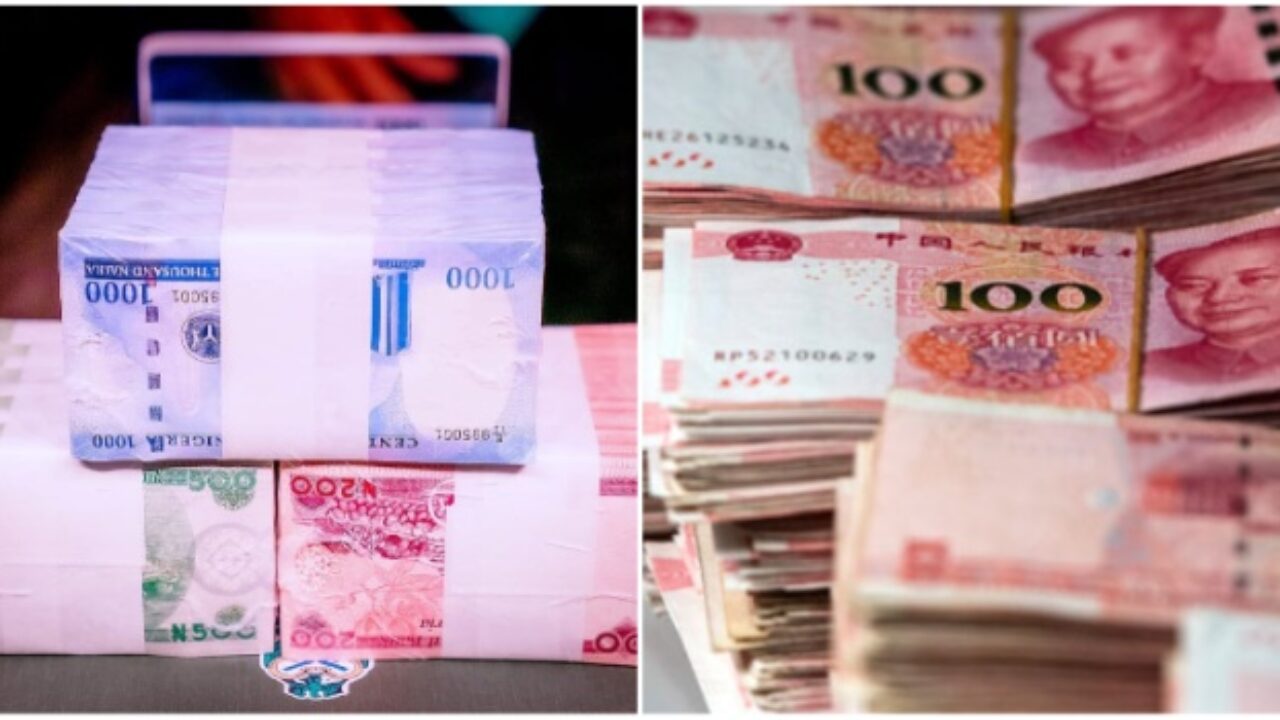
Foreign Exchange (FX) demand pressure eased on the Naira on Wednesday, April 8, in the Nigerian Autonomous Foreign Exchange Market (NAFEX) after gaining N14.84 or 1.07 per cent against the greenback to quote at N1,371.82/$1 compared with the previous day’s N1,386.66/$1.
Also, the local currency appreciated against the Euro in the same market window at midweek by N1.54 to close at N1,604.07/€1 versus Tuesday’s closing rate of N1,605.61/€1, but lost N6.26 against the Pound Sterling to trade at N1,844.83/£1 versus N1,838.57/£1.
In the parallel market, the exchange rate of the Naira to the US Dollar remained unchanged yesterday at N1,410/$1, according to data sourced by Business Post.
There were indicators that the official FX market experienced a liquidity surge, which eased worries around the dominant US Dollar on Wednesday, as the Central Bank of Nigeria (CBN) revealed interbank deals rose to 220 from 71 reported the previous day.
The domestic currency has been in strong demand from foreign portfolio investors seeking to purchase OMO bills and other fixed-income instruments.
Forecasts also show that the local currency will remain relatively stable during the second quarter of the year, trading within the N1,340 to N1,430 per Dollar band on improved FX liquidity, stronger oil earnings, and rising external reserves, which have climbed above 50 billion dollars.
As for the cryptocurrency market, it fell after an initial ceasefire-fueled rally, with markets retracing Wednesday’s “ceasefire euphoria” as cracks emerge in the US-Iran truce while the Strait of Hormuz remains effectively closed.
Global risk assets face renewed pressure as geopolitical uncertainty combines with what analysts call “uncoordinated tightening” by major central banks, reinforcing higher-for-longer interest-rate expectations.
The price of Cardano (ADA) fell by 4.7 per cent to $0.2500, Ripple (XRP) slumped 3.7 per cent to $1.33, Dogecoin (DOGE) shrank by 3.5 per cent to $0.0915, Binance Coin (BNB) slipped 2.6 per cent to $600.02, Ethereum (ETH) went down by 2.5 per cent to $2,183.82, Solana (SOL) dipped 2.5 per cent to $82.24, and Bitcoin (BTC) depreciated by 1.1 per cent to $70,995.20.
However, TRON (TRX) appreciated by 0.4 per cent to $0.3173, while the US Dollar Tether (USDT) and the US Dollar Coin (USDC) remained unchanged at $1.00 apiece.
By Dipo Olowookere
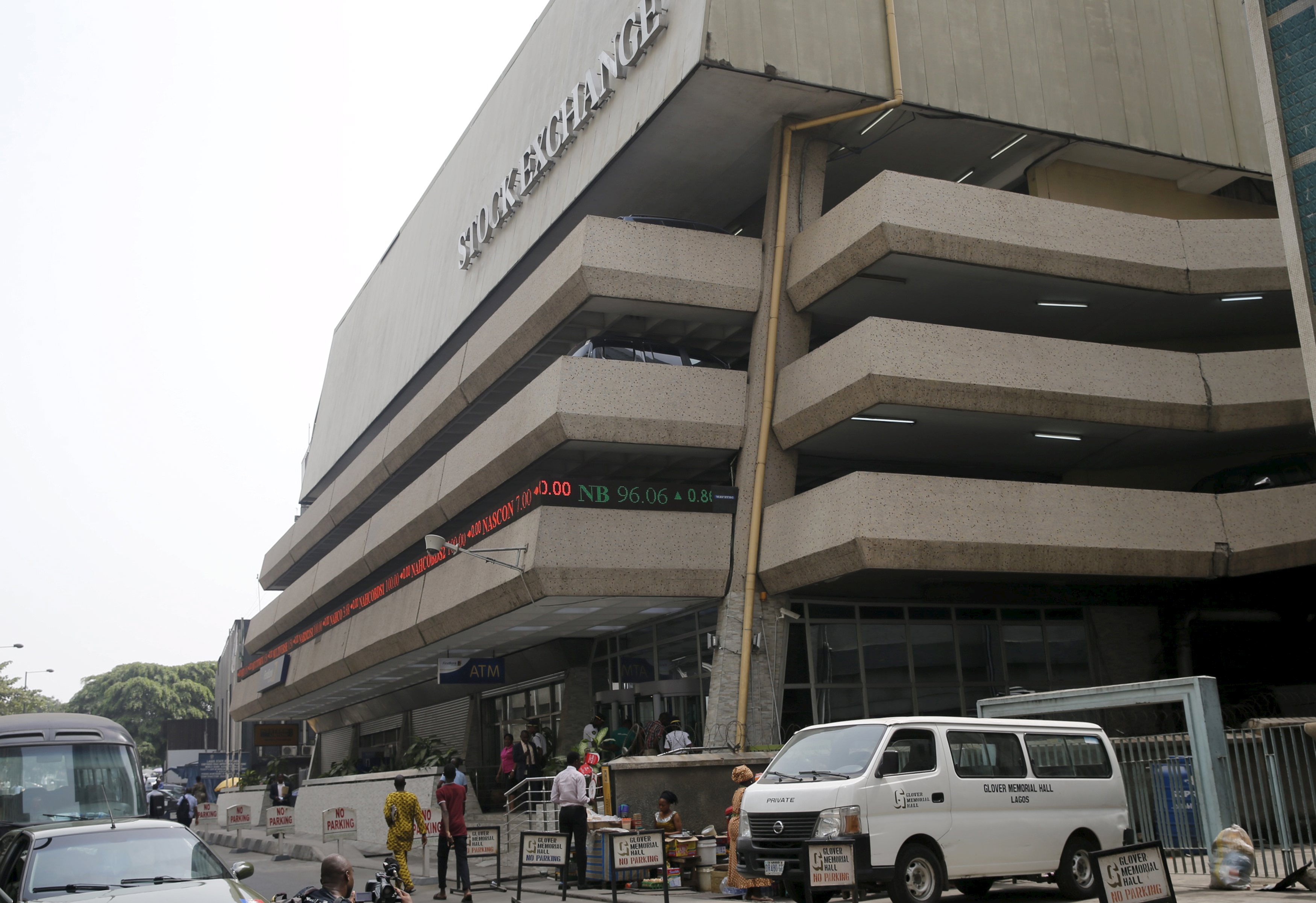
The Nigerian Exchange (NGX) Limited rallied by 0.28 per cent on Wednesday despite weak investor sentiment, as the bourse ended with 18 price gainers and 38 price losers, implying a negative market breadth index.
The growth recorded yesterday by Customs Street was influenced by the 2.11 per cent rise posted by the energy index, and the 1.79 per cent jump achieved by the banking sector.
The other sectors experienced profit-taking, with the consumer goods losing 1.07 per cent, the insurance counter down by 0.36 per cent, and the industrial goods space down by 0.19 per cent.
Universal Insurance chalked up 10.00 per cent to sell for N1.21, Omatek improved by 9.78 per cent to N2.47, VFD Group expanded by 9.71 per cent to N11.30, CWG appreciated by 9.64 per cent to N21.05, and Livestock Feeds gained 9.56 per cent to close at N7.45.
On the flip side, UPDC REIT lost 10.00 per cent to settle at N6.75, Fortis Global Insurance shed 9.92 per cent to quote at N1.18, Deap Capital depreciated by 9.85 per cent to N5.40, Chams went down by 9.47 per cent to N3.06, and Japaul declined by 8.82 per cent to N3.10.
Yesterday, the All-Share Index (ASI) went up by 562.43 points to 202,585.53 points from 202,023.10 points, and the market capitalisation advanced by N389 billion to N130.404 trillion from N130.015 trillion.
During the session, 1.0 billion stocks worth N40.6 billion exchanged hands in 52,723 deals compared with the 1.1 billion stocks valued at N40.3 billion executed in 78,006 deals a day earlier, indicating an uptick in the trading value by 0.74 per cent, and a shortfall in the trading volume and number of deals by 9.09 per cent and 32.41 per cent apiece.
The activity chart was led by Access Holdings, which sold 233.0 million units valued at N6.1 billion, Fidelity Bank exchanged 113.1 million units worth N2.2 billion, Wema Bank recorded a turnover of 103.3 million units valued at N2.7 billion, Zenith Bank transacted 60.6 million units for N6.5 billion, and Chams traded 47.5 million units worth N154.6 million.
-
 Feature/OPED6 years ago
Davos was Different this year
-
Travel/Tourism10 years ago
Lagos Seals Western Lodge Hotel In Ikorodu
-

 Showbiz3 years ago
Estranged Lover Releases Videos of Empress Njamah Bathing
-
 Banking8 years ago
Sort Codes of GTBank Branches in Nigeria
-

 Economy3 years ago
Subsidy Removal: CNG at N130 Per Litre Cheaper Than Petrol—IPMAN
-

 Banking3 years ago
Sort Codes of UBA Branches in Nigeria
-

 Banking3 years ago
First Bank Announces Planned Downtime
-

 Sports3 years ago
Highest Paid Nigerian Footballer – How Much Do Nigerian Footballers Earn