Connect with us

Economy

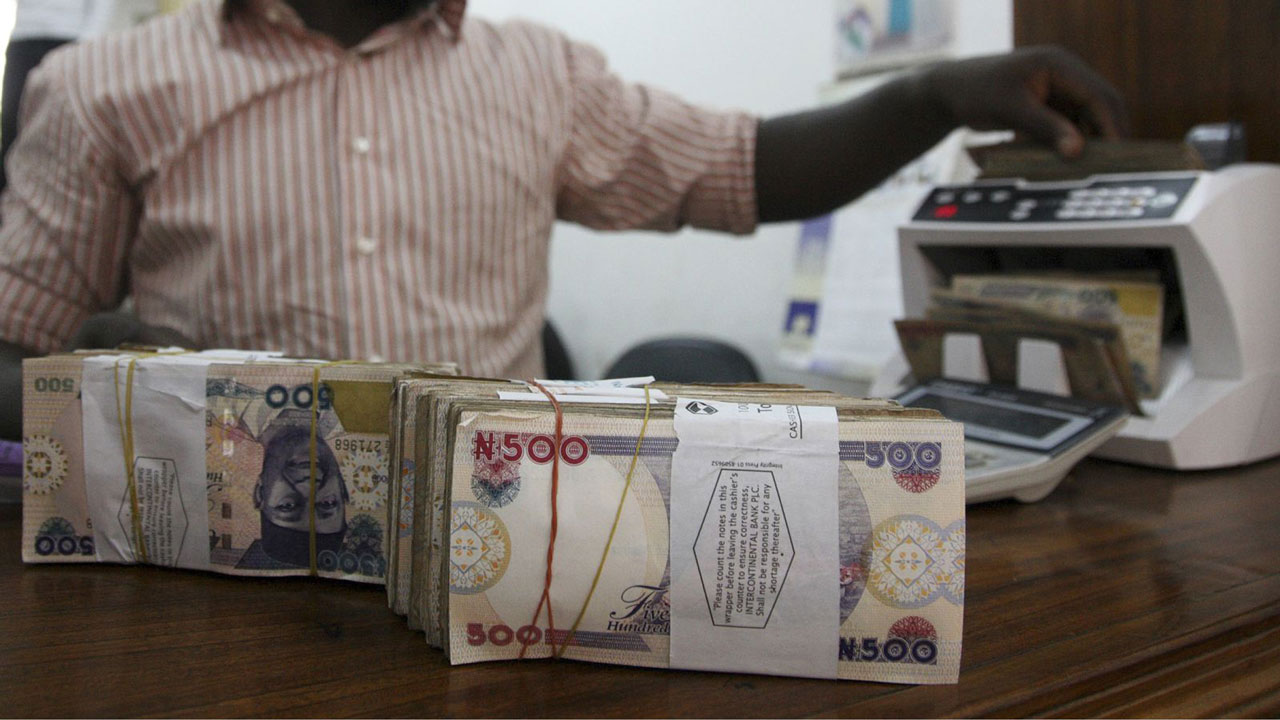
Over N2 Trillion Cash in Circulation—CBN

Published

on

By Adedapo Adesanya

Total Currency-in-Circulation (CIC) rose by 0.8 percent to N2.3 trillion as at the end of December 2018 according to the 2018 Annual Report released by the Central Bank of Nigeria (CBN) through the Currency Operations Department (COD).

This rise in circulation according to the report reflected the high dominance of cash in the economy and increase in economic activities.

In terms of volume, the proportion of higher denomination banknotes – N100, N200, N500 and N1000 in total rose from 41.9 percent to 44.3 percent while in terms of value, it rose from 96.9 percent to 97.6 percent.

On the other hand, the lower denomination currency notes – N5, N10, N20 and N50 continued to be dominant in terms of volume compared to higher notes as it constituted 55.7 percent of the total, while in value terms, it constituted only 2.4 percent of the total banknotes.

The ratio of CIC to nominal GDP, which measures the moneyness of the economy recorded slight falls by 0.1 percentage point to 1.8 percent in the period under review and according to the report, this decline occurred as a result of increase in e-payment products such as electronic payment cards.

The report also indicated that the COD during the period under review recorded significant progress in the accomplishment of its strategic objectives, which included: development of a Clean Notes Policy and Banknote Fitness Guidelines; the tiered pricing for the processing of lower denomination banknotes, increased volume of issuable banknotes and effective distribution of banknotes.

It also registered more Cash-In-Transit (CIT) and Cash Processing Companies (CPC), which encouraged private sector participation; commissioning of the temporary exhibition “Naira Our National Pride” for public enlightenment on banknote basic security features.

Other noteworthy achievements made in 2018 include the development of the Cash Activity Reporting Portal (CARP) for transmission of financial industry currency management data to Nigeria Inter-Bank Settlement System (NIBSS); approval granted by management for the establishment of mobile courts, in collaboration with Legal Services Department (LSD), for the speedy prosecution of suspects apprehended for currency-related offences; and a pilot run on recycling of banknotes waste into re-usable materials to reduce its carbon footprints and comply with environmental sustainability practices.


Adedapo Adesanya is a journalist, polymath, and connoisseur of everything art. When he is not writing, he has his nose buried in one of the many books or articles he has bookmarked or simply listening to good music with a bottle of beer or wine. He supports the greatest club in the world, Manchester United F.C.

1 Comment

Leave a Reply

Your email address will not be published. Required fields are marked *

Economy

NASD Index Rises 0.89% as Market Capitalisation Hits N2.580trn

Published

on

NASD Unlisted Securities Index

By Adedapo Adesanya

The NASD Over-the-Counter (OTC) Securities Exchange improved by 0.89 per cent on Tuesday, June 30, spurring the market capitalisation to chalk up N22.72 billion to close at N2.580 trillion, in contrast to the preceding session’s N2.557 trillion.

In the same vein, the NASD Unlisted Security Index (NSI) added 37.85 points during the session to settle at 4,2991.41 points from Monday’s 4,261.56 points.

The unlisted securities market gained weight yesterday after finishing with three price losers and gainers, led by Nipco Plc, which improved its share price by N34.24 to N384.00 per unit from N349.76 per unit. FrieslandCampina Wamco Nigeria Plc appreciated by N10.25 to close at N152.01 per share versus N141.76 per share, and Food Concepts Plc soared by 7 Kobo to settle at N2.50 per unit versus N2.43 per unit.

On the flip side, Afriland Properties Plc weakened by N1.57 to N15.17 per share from N16.74 per share, Central Securities Clearing System (CSCS) Plc lost 48 Kobo to trade at N88.00 per unit compared with Monday’s N88.48 per unit, and Geo-Fluids Plc eased by 24 Kobo to N2.37 per share from N2.61 per share.

During the session, the volume of securities traded by market participants moved up by 268.9 per cent to 846,063 units from 229,314 units, while the value of securities dropped 34.9 per cent to N15.99 million from N24.6 million, and the number of deals crashed by 26.5 per cent to 25 deals from 34 deals.

Great Nigeria Insurance (GNI) Plc remained the most active stock by value on a year-to-date basis, with 3.4 billion units worth N8.4 billion, the second spot was occupied by Infrastructure Credit Guarantee (Infracredit) Plc with 2.3 billion units valued at N6.5 billion, and the third spot was taken by CSCS Plc with 68.8 million units traded for N4.7 billion.

GNI Plc also ended the day as the most active stock by volume on a year-to-date basis, with 3.4 billion units exchanged for N8.4 billion, followed by Infracredit Plc with 2.3 billion units transacted N6.5 billion, and Resourcery Plc with 1.1 billion units sold for N415.7 million.

Continue Reading

Economy

Naira Strengthens to N1,379/1$ at Official Market

Published

on

currency in circulation eNaira

By Adedapo Adesanya

The Naira appreciated against the US Dollar by N3.95 0r 0.29 per cent to exchange at N1,379.68/$1 in the Nigerian Autonomous Foreign Exchange Market (NAFEX) on Tuesday, June 30, compared with the previous day’s N1,383.63/$1.

The positive movement was also seen against the Pound Sterling at the same official market window, where it gained N6.59 to trade at N1,825.05/£1 versus the preceding day’s N1,831.64/£1, and improved against the Euro by N5.05 to sell for N1,572.98/€1 compared with Monday’s price of N1,578.03/€1.

At the GTBank FX counter, the Nigerian Naira, however, lost N2 against the Dollar yesterday to quote at N1,389/$1, in contrast to the previous session’s N1,387/$1, and at the black market, it remained unchanged at N1,395/$1,

A look at the cryptocurrency market yesterday showed that Bitcoin (BTC) depleted for the fifth straight day, selling at $58,668.93. This sits below the levels that sparked rebounds in February and earlier in June, as well as the 50-day and 200-day moving averages.

Dogecoin (DOGE) crashed by 1.5 per cent to sell at $0.0713, Binance Coin (BNB) lost 1.4 per cent to close at $544.98, Ethereum (ETH) went down by 1.0 per cent to $1,574.60, TRON (TRX) depreciated by 0.8 per cent to $0.3164, and Ripple (XRP) dropped 0.8 per cent to finish at $1.03.

Conversely, Cardano (ADA) grew by 2.9 per cent to $0.1493, and Solana (SOL) increased by 0.3 per cent to $74.19, while the US Dollar Tether (USDT) and the US Dollar Coin (USDC) traded flat at $1.00 apiece.

Continue Reading

Economy

Oil Market Gains as Iran-US Negotiations Face Fresh Uncertainty

Published

on

global oil market

By Adedapo Adesanya

The oil market rose on Wednesday morning amid concerns that breakdowns in ‌discussions between Iran and the United States for a final agreement to end their war may extend supply disruptions in the key Middle East producing region.

Brent futures gained 33 cents or 0.45 per cent to trade at $73.28 a barrel, while the US West Texas Intermediate (WTI) crude ​climbed 34 cents or 0.49 per cent to $69.84 a barrel.

US officials arrived in Qatar for talks on the Iran war, but will meet with mediators, not Iranian negotiators. The lack of direct talks further complicates efforts to find a lasting end to the conflict and fully reopen the Strait of Hormuz.

The representatives, which include US President Donald Trump’s son-in-law Jared Kushner and envoy Steve Witkoff, arrived in ​Doha for what the White House described as “high-level” talks on Tuesday, but Iran and host Qatar said they would meet with mediators, rather than the Iranians themselves.

The Wall Street Journal reported that while hardline military officials are pushing for full control of Hormuz, Iranian civilian leaders like President Masoud Pezeshkian are aiming to get access to billions in frozen assets, indicating different priorities.

Brent fell by around $45 a barrel between the first and second quarters of this year, its largest quarterly ​loss since 2008 during the financial crisis in the US. Crude futures meanwhile fell by around $31, their largest quarterly loss since 2020, when ‌the COVID-19 ⁠pandemic crushed global oil demand.

The declines followed progress toward ending the Middle East conflict, pulling back from the sharp gains triggered earlier by the hostilities.

Analysts have cut their 2026 oil price forecasts after five straight monthly increases, as the reopening of the Strait of Hormuz eased concerns over ​prolonged supply disruptions.

Tanker traffic ​through the ⁠critical waterway has started to recover, with US Vice President JD Vance claiming that oil flows through the strait had been restored to pre-war levels.

The American Petroleum Institute (API) estimated that crude oil inventories in the US fell by 6.072 million barrels in the week ending June 26. In the week prior, US crude oil inventories fell by 765,000 barrels.

Official oil stock data from the US Energy Information Administration (EIA)will be released later on Wednesday.

Continue Reading

Trending