
Economy
PEBEC Hails CAC for Implementing Reforms to Improve Economy


By Aduragbemi Omiyale
The Corporate Affairs Commission (CAC) has been applauded by the Presidential Enabling Business Environment Secretariat (PEBEC) for implementing reforms aimed to improve the Nigerian economy.
This commendation was given during the review of the National Action Plan (NAP) 7.0 program, where it was noted that the agency has successfully implemented some far-reaching reforms.
NAP 7.0, which commenced on February 7, 2022, and concluded on May 6, 2022, is a flagship accelerator scheme initiated by PEBEC to support governmental ministries, departments and agencies in facilitating the implementation of targeted reforms.
At the evaluation of CAC’s part, the PEBEC team led by Ms Toyin Bashir said one of the implemented reforms was the application of key updates on the Company Registration Portal (CRP) designed to improve user experience in business registration.
She added that the introduction of a new policy prescribing minimum shareholder details required by public companies for filing of Return on Allotments and Annual Returns on the CRP to only shareholders with 5 per cent shareholding and above.
It was stated that CAC has deployed a resolution mechanism to address payment challenges on Remita where related complaints can now be lodged and promptly addressed via su*****@****ta.net or su*****@***********ov.ng.
According to the report, the clearing of the backlog of applications for company profile updates for the period of May 2021 to December 2021 was also executed by the agency, while Insolvency Regulations 2022 was introduced to facilitate the implementation of the insolvency reforms already entrenched in the Companies and Allied Matters Act 2020.
PEBEC also acknowledged the contributions of the private sector stakeholder community such as the Section on Business Law of the Nigerian Bar Association, Business Rescue and Insolvency Practitioners Association of Nigeria and other stakeholders in achieving the feat.
In his remarks, the Registrar General/CEO of the CAC, Mr Garba Abubakar, noted with delight the performance of the commission which he credited to the huge commitment and sacrifices made by the CAC staff, particularly the reforms championed during the period under review and restated the organisation’s commitment towards ensuring services that are in line with global best practices.





By Dipo Olowookere
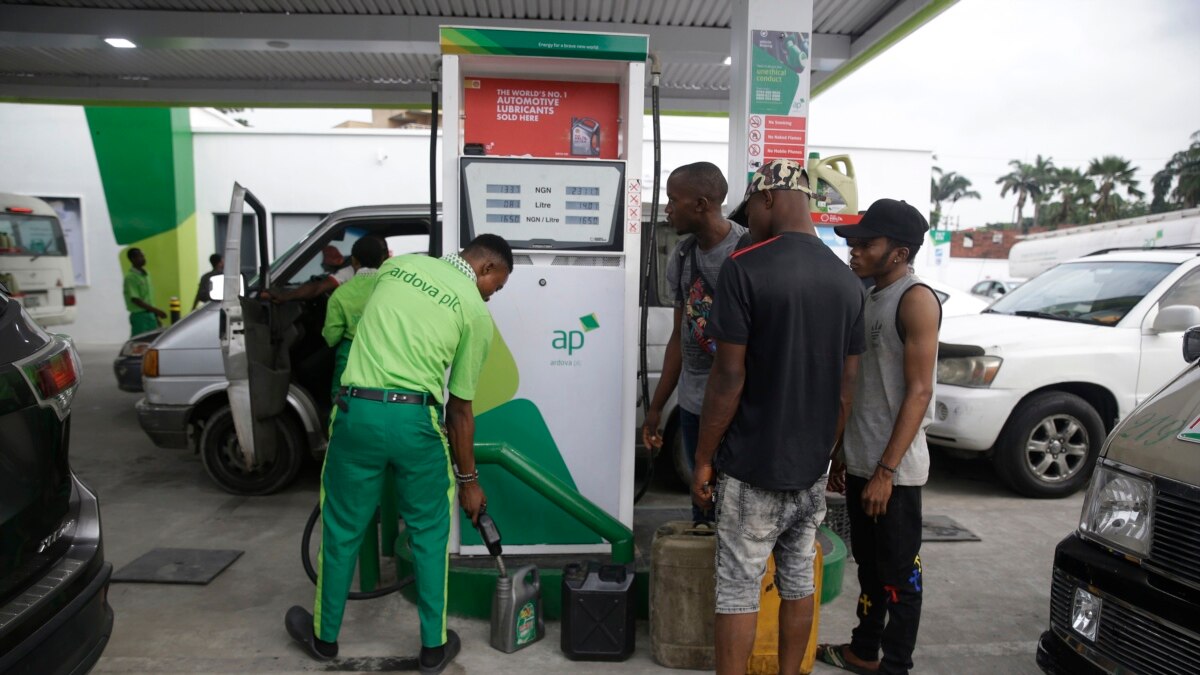
The rise in the prices of crude oil grades on the global market as a result of the attacks on Iran by the duo of the United States and Israel has triggered an increase in the price of premium motor spirit (PMS), otherwise known as petrol, in Nigeria.
This reporter observed that some petrol stations dispensing the product to consumers were selling above N1,200 on Monday evening.
In the areas monitored by Business Post yesterday in the Alimosho area of Lagos State, most of the fuel stations selling PMS did so at between N1,200 and N1,230 per litre.
A retailer around Jendol Superstores on Ipaja Road, dispensing at N1,020 to motorists, witnessed a long queue on Monday evening, causing traffic gridlock that stretched to Abesan Roundabout.
But the others selling at N1,230, especially in the Okunola area of Alimosho, had few vehicles, while many others shut their gates and were not selling.
It was gathered that the pump price rose to N1,230 per litre yesterday evening, as many of them sold at N1,050 per litre in the morning.
“The situation is crazy,” a motorist, who spoke with the newspaper, lamented.
“But why is petrol very expensive in Nigeria when we were not bombed like Saudi Arabia?” another consumer, who identified himself as Mr Tayo Goriola, queried.
An analyst speaking on Nigeria Info 99.3 FM Lagos on Monday, Mr Majeed Dahiru, said it was wrong for the government to hand off subsidy on energy because of situations like this.
“This was what some of us foresaw when we said the government cannot remove a safety net called a subsidy on energy because of times like this.
“As we speak, all others have triggered their safety mechanisms to stabilise prices, including in the UAE and Saudi Arabia, which have come under attack, unlike Nigeria, which has not been attacked,” he said on Dailies Today with Kofi Bartels yesterday.
Petrol prices went up on Monday after the crude oil hit $105 per barrel, and there are fears that the war could jack prices up to $150 per barrel, which could raise PMS to N1,500 or N2,000 per litre in Nigeria.
Meanwhile, Dangote Refinery has assured Nigerians of sufficient supply of PMS during this period, saying, “With government support and steady access to domestic crude, Dangote Refinery will continue to meet all of Nigeria’s refined fuel requirements.”
By Aduragbemi Omiyale
In January 2026, the Nigerian National Petroleum Company (NNPC) Limited recorded a 9.69 per cent rise in profit after tax amid a 46.70 per cent decline in revenue.
According to its latest monthly report summary for the first month of this year, the net profit for the period under consideration stood at N385 billion compared with the N351 billion recorded in December 2025.
The state-owned oil firm disclosed that in January 2026, it generated a revenue of N2.571 trillion, in contrast to the N4.824 trillion achieved a month earlier.
The NNPC also revealed that in the month, the crude oil and condensate production stood at 1.64 million barrels per day, higher than the 1.54 million barrels per day in the preceding month.
Also, the natural gas output increased in the month under review to 7,283 mmscf/d versus 6,914 mmscf/d in December 2025, as the upstream pipeline availability dipped to 96 per cent from 100 per cent a month earlier.
The surge in production was attributed to the completion of Turn Around Maintenance (TAM) at Agbami and Renaissance (Estuary Area – EA), though planned deliveries for January were reduced due to bad weather, evacuation, and asset integrity challenges.
As for the Ajaokuta-Kaduna-Kano (AKK) gas pipeline, the NNPC said pre-commissioning activities continued while significant progress was reported in the construction of the Block Valve Stations (BVS) and Intermediate Pigging Stations (IPS). The project is 92 per cent completed.
Giving an update on the Obiafu-Obrikom-Oben (OB3) gas pipeline, it said the drilling activities progressed as scheduled in the OB3 River Niger crossing.
The company also said the Financial Literacy Program for 2026 Batch A, Stream 1 NYSC Corps Members was successfully conducted on Sunday, January 25, 2026, via online streaming. The session reached 79,657 participants across the 36 states and the FCT, bringing the cumulative number of corps members trained under the program to 1,231,081.


By Adedapo Adesanya
A cargo of liquefied natural gas (LNG) from Nigeria has been diverted to Asia after a surge in prices created an arbitrage opportunity for traders.
According to a report by Reuters, citing data from analytics firm Kpler, the LNG tanker BW Brussels, which loaded a shipment at the Nigeria LNG Bonny Island Terminal on February 27, initially signalled a westward journey toward Europe before altering its route and heading south toward Asia via the Cape of Good Hope.
According to Reuters, Asia’s benchmark LNG price surged sharply last week as the ongoing conflict between the United States and Iran and a production suspension in Qatar tightened global supply.
The benchmark Japan-Korea Marker for spot LNG cargoes jumped by 68.52 per cent to $25.393 per million British thermal units for April delivery last Tuesday, its highest level in three years, according to S&P Global Platts.
In comparison, spot LNG prices for deliveries to northwest Europe rose by about 57 per cent to $15.479 per mmBtu for April, reflecting a strong rally but still leaving Asia as the more lucrative destination for flexible cargoes.
The widening price spread between Asia and Europe has opened arbitrage opportunities for traders to redirect LNG shipments from the Atlantic Basin to Asian buyers willing to pay a premium.
“So far, one LNG tanker that loaded in Nigeria last week has diverted to Asia from its initial Atlantic-bound course after spot prices surged. The BW Brussels LNG tanker loaded a cargo from Bonny LNG in Nigeria on February 27 and was moving west before turning to head south on March 3, data from Kpler showed.
“BW Brussels appears to have changed course from an initial signal toward France and is now heading toward Asia via the Cape of Good Hope,” Reuters reported, quoting a principal insight analyst at Kpler, Mr Go Katayama.
Spark Commodities analyst, Mr Qasim Afghan, said global front-month arbitrage opportunities had “increased significantly” and were now open to Asia across several major LNG export locations.
He added that the price differential between Asian LNG and Europe’s benchmark gas hub, the Title Transfer Facility in the Netherlands, had widened to about $5 per mmBtu in favour of Asia.
The diversion of the Nigerian cargo highlights how rapidly shifting global prices can alter LNG trade flows, particularly for shipments with flexible destination clauses.
“This likely reflects the widening Atlantic–Pacific arbitrage, with stronger Asian pricing making diversions of destination-flexible Atlantic cargoes more attractive,” Mr Katayama said, noting that more cargoes could follow if the price spread persists.
It was gathered that the tightening market has also prompted Asian buyers to scramble for alternative supplies following the disruption to Qatari exports.
Government sources told Reuters that India is scouting for alternative LNG sources to replace lost Qatari supply, while state-run energy company Petrobangla plans to issue tenders for prompt LNG cargoes.
Analysts at S&P Global Energy said Asia-Pacific buyers were likely to be the most aggressive in the near-term spot market as they compete to secure supply
However, they noted that Europe could still attract some flexible cargoes because of the deep liquidity in the TTF financial market, which allows traders to hedge risks more easily.
Qatar is one of the world’s largest LNG exporters, and Asian buyers account for more than 80 per cent of its shipments, according to Kpler data. The disruption to production there has tightened supply and triggered intense competition between the Atlantic and Pacific basins for available cargoes.
For Nigeria, the shift underscores the role of global price signals in determining cargo destinations in the highly flexible LNG market.
Industry analysts say that if Asian prices remain significantly higher than those in Europe, more LNG shipments from Atlantic producers could be redirected eastwards in the coming weeks.











-
 Feature/OPED6 years ago
Davos was Different this year
-
Travel/Tourism10 years ago
Lagos Seals Western Lodge Hotel In Ikorodu
-

 Showbiz3 years ago
Estranged Lover Releases Videos of Empress Njamah Bathing
-
 Banking8 years ago
Sort Codes of GTBank Branches in Nigeria
-

 Economy3 years ago
Subsidy Removal: CNG at N130 Per Litre Cheaper Than Petrol—IPMAN
-

 Banking3 years ago
Sort Codes of UBA Branches in Nigeria
-

 Banking3 years ago
First Bank Announces Planned Downtime
-

 Sports3 years ago
Highest Paid Nigerian Footballer – How Much Do Nigerian Footballers Earn