
Economy
PFAs to Submit Micro Pension Media Campaign Plan by January 31


By Adedapo Adesanya
Pension Fund Administrators (PFAs) are expected to submit their 2022 media campaign plan to the National Pension Commission (PenCom) on or before January 31, 2022.
The media campaign plan will detail arrangements set for the creation of awareness on the Micro Pension Plan (MPP).
First launched in 2020, the contributors in the MPP are just over 70,000, a development that moved PenCom to mandate PFAs to develop and forward an annual media campaign plan to drive subscription.
PenCom in a Framework For Enlightenment And Public Awareness For The Micro Pension Plan, sent to all pension fund administrators in the month of August 2021, said this is in line with Section 2.2 of the Circular on Service Delivery by Pension Fund Administrators.
The regulator also stated that it shall be required to develop an annual media campaign Plan for MPP on or before 31 January of each year.
PenCom noted that sequel to the release of the guidelines for the Micro Pension Plan, it identified the need to intensify public enlightenment in a sustained manner, in order to raise the level of awareness and acceptability of the MPP as a critical success factor.
It maintained that the framework spelt out the modalities for the Commission and Pension Fund Administrators to ensure effective and sustained enlightenment and public awareness drive of the MPP.
PenCom submitted that Section 2(3) of the PRA 2014 stipulates that employees of organisations with less than three employees as well as self-employed persons, shall be entitled to participate under the Scheme in accordance with Guidelines issued by the Commission, adding that Section 23 (f) of the PRA 2014 mandates the Commission to “carry out public awareness, enlightenment and education on the establishment, operations and management of the Scheme”.
The pension sector regulators said Sections 5.3.1(c) and 5.4.1(i) of the Guidelines for Micro Pension Plan 2018 stipulate that the Commission shall “create awareness by carrying out public enlightenment and education on the establishment, operations and management of MPP” and PFAs shall “conduct regular public awareness, enlightenment and education on Micro Pension Plan”, respectively.
Section 6.3.1 of the Guidelines for the Operations of Pension Fund Administrators stipulates that a PFA must obtain prior written approval of the Commission before advertising, promoting or providing information on its products and services or about its operations.
The entire material for distribution, advertising, promotion or informing the public must be submitted to the Commission for this purpose, it posited.
PenCom stated that the framework aims to achieve the following: Set minimum standards for enlightenment and public awareness on MPP and ensure adherence to best practices in Public Relations.
Ensure that PFAs set up appropriate structures to effectively carry out enlightenment and public awareness for registered and prospective Micro Pension Contributors (MPC); protect registered and prospective MPC from false and misleading information; form the basis for monitoring and evaluating the enlightenment and public awareness efforts of the Commission and PFAs on the MPP and achieve the Pension Industry’s strategic vision on expanded coverage of the CPS.
It noted that the following rules shall apply to the Commission and PFAs. PFAs shall establish a desk and appoint an officer to oversee all enlightenment and public awareness activities on the MPP in line with Section 7.1.1(i) of the Guidelines for the Micro Pension Plan, issued by the Commission.
All messages on the MPP shall be communicated in clear, explicit and easy to understand terms; the content of MPP messages shall not be false or misleading; PFAs shall, in conducting enlightenment and public awareness campaigns, comply with the Code of Ethics and Best Practices for Licensed Pension Operators issued by the Commission with emphasis on Sections 3.3 and 3.4 of the document.
All advertisements on MPP shall be in line with provisions of Section 6.0 of the Guidelines for Operations of Pension Fund Administrators, issued by the Commission and shall not violate any extant law and/or Guidelines issued by the National Broadcasting Corporation (NBC) or any other licensed body for the regulation of advertisement in Nigeria.
The Commission and PFAs shall use the most appropriate communication channels for the audience and the Commission and PFAs shall conduct impact surveys on their enlightenment and public awareness campaigns.





By Adedapo Adesanya
Oil futures settled lower on Friday ahead of talks between Iran and the United States aimed at securing a permanent ceasefire.
Brent futures lost 72 cents or 0.8 per cent to trade at $95.20 a barrel, while the US West Texas Intermediate (WTI) crude futures fell by $1.30 or 1.3 per cent to $96.57 a barrel. As a result, these benchmarks posted their biggest weekly decline since 2022.
Despite the ceasefire announced earlier this week, traffic through the critical oil chokepoint remains severely restricted and under supervision and approval by Iran’s Islamic Revolutionary Guard Corps (IRGC).
Crude futures hovered near $100 a barrel as attacks continued and the flow of oil through the Strait of Hormuz remained heavily restricted, and concerns lingered over potential supply disruptions in Saudi Arabia. Prices in the physical market were at record highs.
Market analysts noted that the key issue for the oil market is whether ship traffic through the Strait of Hormuz will resume. However, there are no signs of this happening. If oil supplies from the Persian Gulf remain blocked, oil prices are likely to rise again.
According to Reuters, traffic through the strait remained less than 10 per cent of normal volumes as Iran warned ships to keep to its territorial waters. Most ships that have sailed through the Strait in the past day were linked to Iran.
Iran also wants to charge fees for ships to pass through the Strait under a peace deal.
Oil prices could spike and hit again their peak Iran-war levels at nearly $120 per barrel if a full recovery of vessel traffic through the Strait of Hormuz takes until July, according to JP Morgan.
Attacks on Saudi energy facilities have cut the kingdom’s oil production capacity by about 600,000 barrels per day and reduced its East-West Pipeline throughput by about 700,000 barrels per day.
Meanwhile, Lebanon said it intends to take part in a meeting with the US and Israeli representatives in Washington next week to discuss and announce a ceasefire.


By Dipo Olowookere
The Minister of State for Finance, Mr Taiwo Oyedele, has finally admitted that the new controversial tax laws have some errors, which he said the federal government was working to correct.
Before becoming a Minister a few weeks ago, Mr Oyedele headed the Presidential Fiscal Policy and Tax Reforms Committee set up by President Bola Tinubu to formulate new tax laws for Nigeria.
In a post on X by the team on Friday, it was disclosed that the former employee of PwC noted that the discrepancies occurred due to manual processes and multiple stages of review, but steps were underway to correct identified issues through a proposed finance bill.
“What we need is a more transparent and reliable legislative process where every version of a law is publicly available,” he stated at the 2026 Annual Conference of the Nigerian Bar Association Section on Legal Practice.
At the event themed, From Policy to Practice: Making Sense of Nigeria’s New Tax Reforms, Mr Oyedele underscored the critical role of legal practitioners in shaping economic outcomes through tax advisory and compliance.
“The decisions lawyers help businesses make will determine investment, job creation, and revenue generation,” he said, calling for greater impact and efficiency, as Nigeria still lags behind countries like South Africa in tax collection.
“If we improve collection, we can significantly increase funding for infrastructure, education, and healthcare,” he added, urging lawyers to focus on effective implementation, stressing that the success of the reforms ultimately depends on how well they are applied in practice.
The Minister declared that enforcing Nigeria’s new tax laws would not be arbitrary, emphasising that reforms are rooted in clear policy intent, transparency, and fairness.
He stressed the importance of understanding the rationale behind tax laws rather than focusing solely on their provisions, pointing out that many professionals often overlook the underlying purpose of tax legislation, noting that policy intent should guide both interpretation and implementation.
According to him, the reform process prioritised creating incentives for businesses to formalise, while ensuring policy consistency and reducing discretion in tax administration.
On inclusivity, Mr Oyedele said the new tax framework deliberately protects low-income earners and small businesses.
He revealed that individuals earning around N1 million annually and a large portion of small businesses, estimated at 30 to 40 million, have limited capacity to pay taxes and are therefore shielded under the reforms.
“Nearly half of working Nigerians earn less than N70,000 monthly. Taxing them aggressively would be unjust,” he said, adding that the reforms also eliminate practices such as minimum tax payments on loss-making businesses, which he described as effectively taxing capital rather than profit.
The Minister noted that essential goods and services, including food, education, and healthcare, have been exempted from Value Added Tax (VAT), making the system more progressive.
He further explained that the reforms consolidated multiple tax laws into four major pieces of legislation, including the Nigeria Tax Act and the Nigeria Tax Administration Act, aimed at simplifying compliance and improving coordination among tax authorities.

By Modupe Gbadeyanka
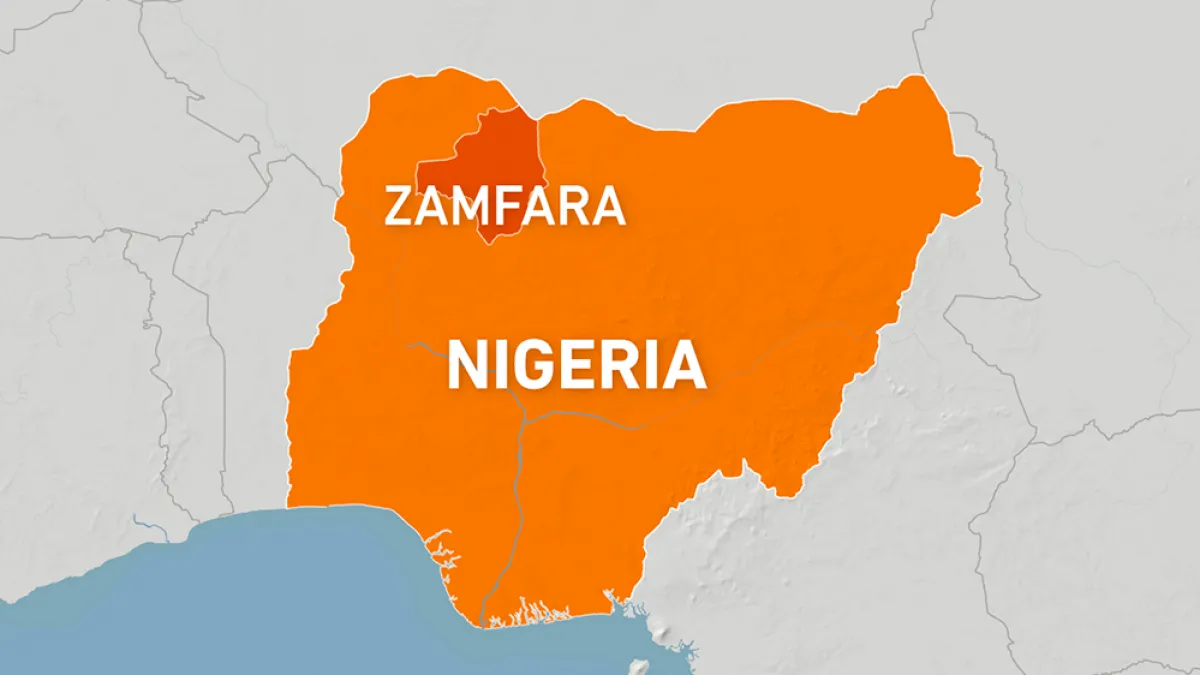
The United Nations has expressed its readiness to assist in attracting investors to Zamfara State, especially in the mining and agricultural sectors.
The Deputy Secretary General of the global body, Mrs Amina Mohammed, during a visit on Thursday, said the northern Nigerian state is now ready for business and that the UN was willing to be a genuine partner to the state.
“Investors want an enabling environment. Peace is what you need today for people to come. The Zamfara narrative focuses on conflict related to solid minerals, and this needs to change,” she was quoted as saying in a statement issued on Friday by the spokesperson for the Zamfara Governor, Mr Sulaiman Bala Idris.
The former Nigerian Minister further said, “What you show us today is first and foremost your passion for what you want us to do, and that is what investors want. They want to know what you want.
“I am happy today to be here in Zamfara, because I really want to show the world that we should pay attention to what is happening at the local level. Because this is where people are weakest, where governance is weakest, and where there are the fewest resources.
“When we visit, we give visibility to the effort that has been made and to the impact of what is happening elsewhere in the world on people who have nothing to do with what caused it in the first place.
“Zamfara State is accessible today. And it would be even more accessible because the road we travelled on is still under construction. When it is finished, it will revive the businesses and markets around it, and hopefully, by then, we will witness more peace.
“I see the mining, I see the potentials, I see the market and the demand, but I also see the leadership here who is willing to look at the institution, framework and partner to get the job done.
“There is a lot of hope and potential here. Everyone must play their role; this is not something the governor will do alone. The United Nations is willing to be a genuine partner to Zamfara State.”
On his part, Governor Dauda Lawal said Zamfara is at a turning point, with a population of 5.3 million, and the state’s economy is agriculture-driven, with 82 per cent of the population depending on agriculture.
“Zamfara’s Six-Point Rescue Agenda is a deliberate strategy to stabilise, rebuild, and transition the state toward inclusive and sustainable development,” he told his guest.
-
 Feature/OPED6 years ago
Davos was Different this year
-
Travel/Tourism10 years ago
Lagos Seals Western Lodge Hotel In Ikorodu
-

 Showbiz3 years ago
Estranged Lover Releases Videos of Empress Njamah Bathing
-
 Banking8 years ago
Sort Codes of GTBank Branches in Nigeria
-

 Economy3 years ago
Subsidy Removal: CNG at N130 Per Litre Cheaper Than Petrol—IPMAN
-

 Banking3 years ago
Sort Codes of UBA Branches in Nigeria
-

 Banking3 years ago
First Bank Announces Planned Downtime
-

 Sports3 years ago
Highest Paid Nigerian Footballer – How Much Do Nigerian Footballers Earn