Connect with us

Economy

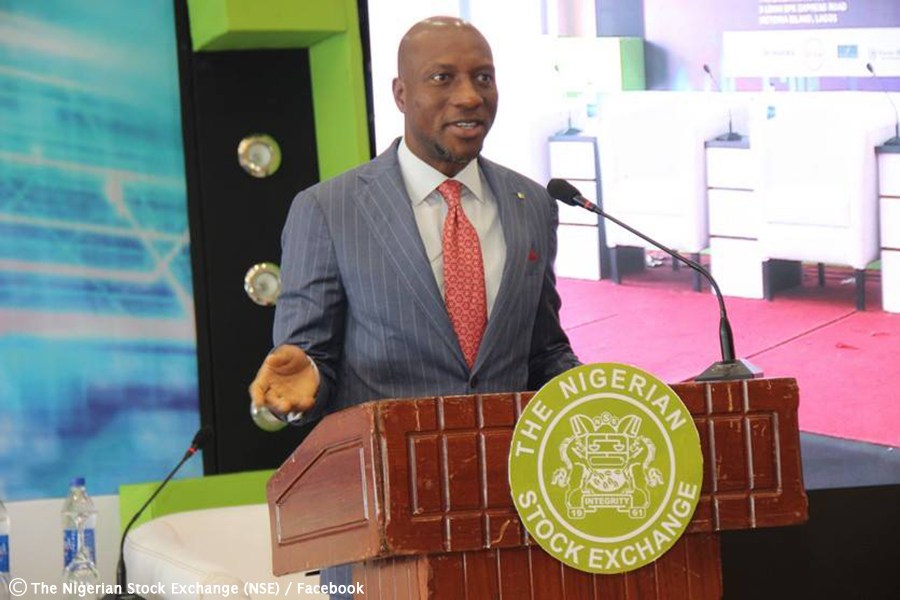
Privatisation, Avenue for Raising Productivity Bar—Onyema

Published

on

Nigerian Stock Exchange NSE Oscar Onyema

By Ahmed Rahma

The chief executive of the Nigerian Stock Exchange (NSE), Mr Oscar Onyema, has said “privatisation occupies a unique position in global economic liberalization and provides an avenue for raising the bar of productivity towards greater economic development.”

He made this disclosure during a webinar hosted by the exchange on Tuesday, November 17, 2020, in conjunction with the Nigeria Governor’s Forum (NGF) and the Nigerian Investment Promotion Commission (NIPC).

At the event themed Privatisation in Nigeria and the Outlook for Subnational Economic Development, the NSE boss stated that “in Sub-Saharan Africa between 2000 and 2008, total proceeds of privatisation were valued at $12.6 billion.”

“This contributed to the growth of the sub-region during the period. We are, therefore, excited to lay emphasis on the positive outcomes of the National Privatisation Programme in 1987, which includes the deepening and broadening of the capital market by a large body of shareholders.

“The outcomes of the programme which includes success in relieving the government of the burden of financing public enterprises, creating liquidity for the government to pay off debts and finance new expenditures, thus raising the level of investments in infrastructures,” he mentioned.

Delivering his keynote address, the Chairman of the NGF and Governor of Ekiti State, Mr Kayode Fayemi, stated that the sale of public assets has become very important at this period because both the “federal and state governments are experiencing fiscal and economic consequences occasioned by the COVID-19 pandemic which has culminated in significant vulnerabilities in our capacity to increase investment and protect business and livelihood.”

“We believe that if the private sector takes over critical segments of the economy, State Governors can focus on social investment initiatives such as health care and education.

“The discussion must, however, involve regulators and financial institutions who are central in providing a conducive environment for privatisation to work,” he concluded.

In his contribution, the Director-General of Securities and Exchange Commission (SEC), Mr Lamido Yuguda, who was represented by Executive Commissioner, Legal and Enforcement, Mr Reginald Karawusa, noted that, “Privatisation is one of such avenues governments need to explore in order to unlock economic potentials inherent in government-owned enterprises.”

The webinar several personalities contributing to the topic including the Chairman of Presidential Economic Advisory Council, Professor Doyin Salami; the Executive Secretary, NIPC, Ms Yewande Sadiku; the Governor of Lagos State, Mr Babajide Sanwo-Olu; Governor of Ogun State, Mr Dapo Abiodun; Governor of Kaduna State, Mr Nasir El-Rufai; and Governor of Bauchi State, Mr Bala Mohammed.

Others were the Director-General of Bureau of Public Enterprises, Mr Alex Okoh; CEO, Financial Derivatives and Member, Presidential Advisory Council, Mr Bismarck Rewane; CEO, Chapel Hill Denham, Mr Bolaji Balogun; MD/CEO, Nigeria Sovereign Investment Authority, Mr Uche Orji; the Partner & Chief Economist of PwC Nigeria, Dr Andrew Nevin; Chairman, Board of Directors, First Bank of Nigeria, Ms Ibukun Awosika; and CEO, InfraCredit Chinua Azubike.


Ahmed Rahma is a journalist with great interest in arts and craft. She is also a foodie who loves new ideas. She loves to travel and would love to visit other African countries someday. She is a sucker for historical movies and afrobeat.

Click to comment

Leave a Reply

Your email address will not be published. Required fields are marked *

Economy

11 Plc, FrieslandCampina, CSCS Lift NASD Exchange by 1.38%

Published

on

NASD Exchange

By Adedapo Adesanya

Three securities lifted the NASD Over-the-Counter (OTC) Securities Exchange by 1.38 per cent on Friday, July 3, with the NASD Security Index (NSI) up by 58.80 points to 4,307.26 points from 4,248.46 points, and the market capitalisation closing higher by N35.30 billion to N2.585 trillion from N2.549 trillion.

The price gainers were led by 11 Plc, which expanded by N20.05 to close at N220.55 per share compared with the previous day’s N200.50 per share, FrieslandCampina Wamco Nigeria Plc increased by N5.36 to N151.82 per unit from N146.46 per unit, and Central Securities Clearing System (CSCS) Plc appreciated by N3.52 to N90.74 per share from N87.22 per share.

Yesterday, the value of transactions surged by 1,431.2 per cent to N160.1 million from the preceding session’s N10.5 million, and the volume of trades rose by 303.7 per cent to 1.8 million units from 440,653 units, while the number of deals decreased by 34.4 per cent to 21 deals from 32 deals.

Great Nigeria Insurance (GNI) Plc was the most traded stock by value on a year-to-date basis, with 3.4 billion units sold for N8.4 billion, followed by Infrastructure Credit Guarantee (Infracredit) Plc with 2.3 billion units worth N6.5 billion, and CSCS Plc with 70.7 million units transacted for N4.9 billion.

GNI Plc was also the most traded stock by volume on a year-to-date basis, with 3.4 billion units valued at N8.4 billion, followed by Infracredit Plc with 2.3 billion units exchanged for N6.5 billion, and Resourcery Plc with 1.1 billion units traded for N415.7 million.

Continue Reading

Economy

Nigerian Stocks Rebound by 2.19% to Halt Losing Streak

Published

on

Nigerian Stocks1

By Dipo Olowookere

The losing streak on the Nigerian Exchange (NGX) Limited was halted on Friday after the bourse closed higher by 2.19 per cent at the close of trading activities.

The gains reported by Nigerian stocks were buoyed by renewed bargain-hunting by investors, which resulted in all the key sectors of Customs Street ended in the green territory.

The banking space rose by 2.78 per cent, the insurance counter appreciated by 1.26 per cent, the energy segment expanded by 0.36 per cent, the consumer goods index chalked up 0.06 per cent, and the industrial goods sector grew by 0.05 per cent.

Consequently, the All-Share Index (ASI) went up by 4,918.37 points to 229,240.34 points from 224,321.97 points, and the market capitalisation increased by N3.156 trillion to N147.103 trillion from N143.947 trillion.

Investor sentiment was bullish after 34 stocks ended on the price gainers’ chart and 18 stocks finished on the losers’ log, representing a positive market breadth index.

The quintet of The Initiates, Universal Insurance, DAAR Communications, Omatek, and Airtel Africa surged by 10.00 per cent to sell for N25.85, 88 Kobo, N1.65, N1.76, and N5,274.00, respectively.

On the flip side, International Energy Insurance lost 9.96 per cent to trade at N4.70, Meyer shed 9.95 per cent to close at N18.55, Veritas Kapital dropped 5.07 per cent to finish at N1.31, Fidelity Bank slipped by 2.17 per cent to N18.00, and Jaiz Bank crashed by 1.84 per cent to N28.12.

During the session, a total of 414.7 million equities worth N25.1 billion exchanged hands in 47,106 deals compared with the 855.4 million equities valued at N28.4 billion transacted in the preceding day in 51,609 deals, implying a contraction in the trading volume, value, and number of deals by 51.52 per cent, 11.62 per cent, and 8.73 per cent, respectively.

Continue Reading

Economy

Naira Trades Flat at Official Market as CBN Makes Minimal FX Intervention

Published

on

naira street value

By Adedapo Adesanya

The Naira closed flat against the United States Dollar at N1,370.19/$1 in the Nigerian Autonomous Foreign Exchange Market (NAFEX) on Friday, July 3.

However, it appreciated against the Pound Sterling in the same market segment by N2.29 to settle at N1,829.88/£1 compared with the previous day’s N1,832.17/£1, and marginally depreciated against the Euro by 4 Kobo to close at N1,568.32/€1 versus Thursday’s closing price of N1,568.28/€1.

At the parallel market, the Naira also traded flat against the US Dollar at N1,390/$1, and at the GTBank forex desk, it also maintained stability at N1,832/$1.

Market conditions improved shortly after the following minimal intervention by the Central Bank of Nigeria (CBN) through modest Dollar sales, which boosted liquidity and supported stronger trading activity.

Easing pressure came after half-year profit-taking tapered down, while continued stronger policy signals from the central bank add to near-term support.

Deals executed at the official market on Friday came in at $70.430 million across 82 interbank deals, from $85.517 million the previous day.

Meanwhile, the cryptocurrency market continued its recovery after June non-farm payrolls printed at 57,000, less than half the 113,000 consensus, sending the implied probability of a September Federal Reserve rate hike from 64 per cent to 54 per cent and dragging AI stocks sharply lower.

Weak labour data reduces inflationary pressure and, by extension, the Federal Reserve’s justification for holding rates elevated. That transmission mechanism is direct: lower rate-hike odds compress the opportunity cost of holding non-yielding assets like crypto.

Bitcoin regained the $62,000 mark after it rose by 1.3 per cent to $62,475.29.

Cardano (ADA) gained 6.6 per cent to trade at $0.1759, Ripple (XRP) appreciated by 3.5 per cent to $1.14, Ethereum (ETH) expanded by 2.4 per cent to $1,756.82, Dogecoin (DOGE) improved by 2.1 per cent to $0.0768, Solana (SOL) chalked up 1.8 per cent to $82.65, TRON (TRX) increased by 1.5 per cent to $0.3235, and Binance Coin (BNB) soared by 1.4 per cent to $569.12, while the US Dollar Tether (USDT) and the US Dollar Coin (USDC) traded flat at $1.00 apiece.

Continue Reading

Trending