
Economy
We Rejected SEC Forensic Audit to Protect Shareholders—Oando

By Dipo Olowookere
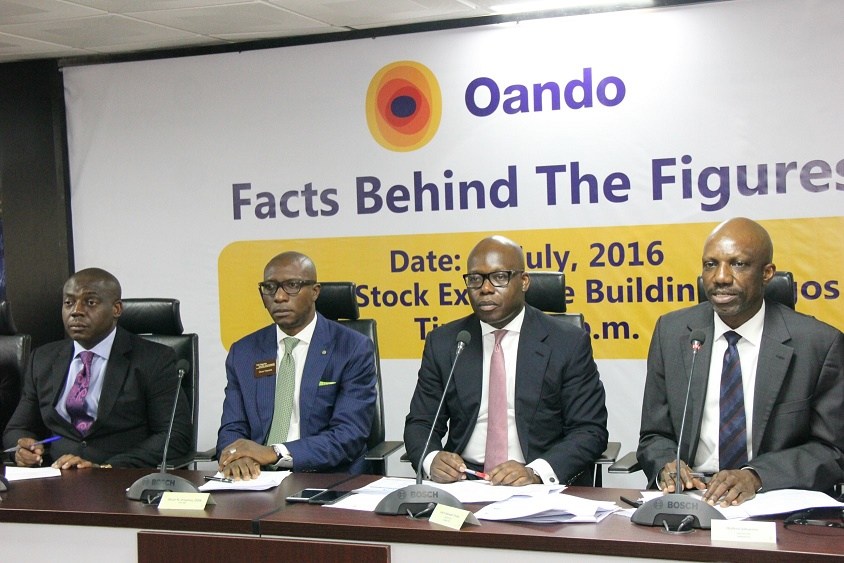
Embattled oil company, Oando Plc, has reacted to the lingering crisis it has with the Securities and Exchange Commission (SEC), which is bent looking into its books.
Oando, in a statement released on Friday, December 15, 2017, emphasised that it challenged the actions of the capital market regulator under the leadership of the suspended Director General of SEC, Mr Mounir Gwarzo, in order to protect its integrity and its shareholders.
The energy firm had approached a Federal High Court in Lagos to stop the forensic audit and suspension of its shares on the Nigerian Stock Exchange (NSE).
At the court, Oando lost, which forced it to challenge the ruling at the Court of Appeal.
In its official statement signed today its scribe and Chief Compliance Officer, Ayotola Jagun, Oando said it kicked against the decisions of SEC because it was not comfortable with actions of Mr Gwarzo, who it said was acting like he wanted the company down by all means.
Read the full statement below:
Oando Plc, as a responsible company recognizes and respects the authority of the Securities and Exchange Commission (SEC) to regulate the market as it deems fit. The Company would like to categorically state that no action taken thus far has been to undermine the authority of the SEC, but to protect the Company and its shareholders against the actions taken under the leadership of Mounir Gwarzo, the erstwhile Director General (DG) of the SEC.
On Tuesday, December 5, 2017, the Securities and Exchange Commission (SEC) officially notified the Company that a forensic audit into the affairs of Oando PLC (the Company) would commence on Wednesday, December 6, 2017.
However, the external auditors appointed by the SEC are yet to approach the Company to commence the audit.
On Friday, December 8, 2017, new evidence emerged in the media corroborating the Company’s position that under the leadership of Mounir Gwarzo actions taken by the Commission were illegal, invalid and calculated to prejudice the business of the Company.
The evidence, a signed report presented on September 18, 2017 by the Technical Committee set up by Mounir Gwarzo, was of the opinion that Oando PLC had satisfactorily responded to all the issues raised by the Petitioners and had further recommended that the responses provided by the Company and its independent external auditors should be forwarded to the Petitioners for their information and further escalation if they deemed it necessary.
The Report makes no recommendation for the shares of the Company to be suspended or for a forensic audit of the Company to be conducted; instead the Committee recommended that certain unresolved issues regarding the treatment of certain corporate transactions and other matters arising there from be forwarded to the Securities and Investment Services (SIS) department of the Commission to determine whether there was in fact a breach of the ISA or the SEC Rules.
The current state of affairs indicates that Mounir Gwarzo chose to ignore the report of the Committee but instead used the minority report of the Chairman of the Committee, who in the report called for a forensic audit to be carried out solely on the allegations of related party transactions that were claimed not to have been carried out on an arms-length basis, as the foundation for his damaging actions against the Company and its shareholders.
Following the Federal High Court’s (FHC) ruling on November 23, 2017, that it did not have the jurisdiction to entertain the Company’s complaint against the actions of the SEC, the Company has since appealed the FHC ruling and applied for an injunction to preserve the res pending the hearing and determination of the appeal. The said application has been served and duly acknowledged by the SEC officials and their lawyers and a hearing of the application took place on Wednesday, December 13, 2017.
The FHC in verbal remarks made by the presiding Judge also directed the parties to refrain from any action which would overreach the pending application for injunction until it is determined, thus a commencement of the proposed forensic audit by the SEC would be in defiance of the application for an injunction.
On Friday, December 15 2017 the FHC dismissed the application for lack of subject matter jurisdiction. We have immediately filed an application at the Court of Appeal for an injunction pending the determination of our appeal.
To date all actions taken by the Company have been predicated on our belief of bias and a lack of due process and fairness in the way in which the SEC, under the leadership and direction of Mounir Gwarzo, had carried out this investigation. The recommendations contained in the leaked Report and the subsequent penalties imposed by the Commission on Oando is further proof that the suspended DG of SEC was working to his own conclusions rather than looking at the facts before him and acting in the best interests of the Company and its minority shareholders.
In addition to the legal action taken, the Company has gone on to seek redress via petitions to the Legislature and pursuant to Section 298 of the Investment and Securities Act 2007 (ISA) the Executive on the following grounds:
- The SEC has shown bias and a lack of due process
- The legality of the SEC investigating a petition brought by an indirect shareholder
- The SEC’s jurisdiction to consider the petition of Ansbury Inc.
- Under the SEC’s rules relating to its ‘Complaints Management Framework’ it will not consider any complaints regarding matters that are already the subject of arbitration or court proceedings as such matters are ‘sub-judice’. The Company, brought to the attention of the SEC, that in addition to on-going arbitration proceedings involving one of the petitioners, Ansbury, in respect of its indirect investment in Oando PLC a high court injunction had been granted
- The Company is also aware that when the SEC investigated a complaint brought by a foreign shareholder, Petroci Holdings against MRS Oil and Gas PLC and ordered a forensic audit of MRS, it was brought to the SEC’s attention that there were ongoing arbitration proceedings in France between Petroci Holdings and MRS, and SEC suspended the forensic audit pending the finalization of the arbitration proceedings. Despite all of the above the SEC chose to still consider the petition brought by Ansbury
- The SEC ignored the wrong doing and illegal conduct of Alhaji Dahiru Mangal in not disclosing his full shareholding interest in the Company, a proportion of which was acquired as a result of market manipulation and Insider Trading activities
- The non-utilization of the Administrative Proceedings Committee (APC), the standing committee of the Commission empowered under the SEC rules to look into matters of the nature of which the petitioners alleged
- In place of using the standing committee-the APC-the setup of a Technical Committee and later a Special Task Force, all outside the express provisions of the SEC enabling laws and outside Gwarzo’s legal and administrative authority as under the Investment and Securities Act 2007 only the Board of the Commission can set up committees
- The public nature of the enquiry and disturbing leaks of sensitive information which could only have emanated from the SEC given the timing/details of same
- The SEC attempted, at the request of one of the Petitioner’s Ansbury, to order a postponement of the Company’s Annual General Meeting to the detriment of the Company and its shareholders. The SEC does not have the power to order the postponement of an AGM and the DG subsequently retracted the action
- Despite the Company’s request for a formal physical meeting the DG never met with any Oando executives but instead afforded the Petitioners a series of physical meetings and advise
- The SEC’s unilateral reclassification of one of the petitioners, Ansbury Inc. as a Whistleblower despite the fact that Ansbury brought its petition to the SEC as an indirect “shareholder” of the Company
- The copying of the two petitioners, Alhaji Dahiru Mangal and Ansbury Inc. on SEC’s official correspondence to the Company’s GCE on October 17, 2017
- There is precedence in the cases of Ikeja Hotels PLC and MRS PLC that the SEC does not suspend the shares of a Company when it embarks on a forensic audit
- The SEC has acted to all intents and purposes as a sole administrator, without any checks and balances such as a Board would have provided
- Legality of the actions taken by the DG of SEC without a Board or the approval of the supervising Minister in lieu of a Board
- Penalties that outweigh the alleged infractions
- Each of the alleged infractions has a penalty as prescribed by the respective provisions of the ISA, SEC Code, SEC Rules and Regulations, NSE Listing Rules and CAMA; none of them whether singularly or together warrants the suspension of free trading in the securities of the Company or the institution of a forensic audit
- The penalties are not fair and objective measures in the circumstances nor would they be the appropriate cure even if the allegations contained in the Petitions were to be true
- The powers of SEC under the ISA offer alternative and less disruptive remedies to address any of the issues raised by the allegations in the Petitions
- No basis for the institution of a forensic audit
- SEC claims that the actions it has taken are based on specific “findings” it has made against the Company. Yet, in a totally self-contradictory manner, SEC wants to embark on a forensic audit of the Company to confirm the veracity or otherwise of its findings. This begs the question as to how definite findings (in its’ own word
- s) could have been made when SEC itself admits that its investigation has not been concluded. If it has made reliable findings why then is there a need for further investigation in respect of the same petitions?
The Company believes that we have the right to a fair hearing before judgment can be made. We have been denied this right but instead have been judged guilty and penalized; now evidence is being sought to justify actions taken by the Commission.
Despite our objections to the forensic audit the Company would like to reiterate that we recognize and respect the authority of the Commission and in the spirit of cooperation, transparency and full disclosure, the Company will comply with the directives of the Commission whilst reserving our legal rights in this matter.
“Accordingly we welcome the appointment of Dr. Abdul Zubair as the Acting Director-General (ADG) of the SEC and see this as an opportunity for the regulator to act independently and for a new and enduring relationship to be established. We trust that he will investigate the matters raised in an independent and transparent manner and look forward to his support in ensuring due process is indeed followed.










By Adedapo Adesanya
The NASD Over-the-Counter (OTC) Securities Exchange extended its stay in the south territory with a decline of 0.56 per cent on Wednesday, April 2.
This brought down the market capitalisation by N13 billion to N2.417 trillion from N2.430 trillion, and downed the NASD Unlisted Security Index (NSI) by 22.57 points to 4,062.87 points from the previous session’s 4,062.87 points.
It was observed that the NASD exchange ended with three price gainers and three price losers during the trading day.
MRS Oil Plc depreciated by N19.00 to close at N171.00 per unit compared with the previous price of N190.00 per unit, NASD Plc lost N4.14 to trade at N37.36 per share compared with Wednesday’s N41.50 per share, and Central Securities Clearing System (CSCS) Plc gave up N2.00 to sell at N78.00 per unit versus N80.00 per unit.
On the flip side, FrieslandCampina Wamco Nigeria Plc appreciated by 19 Kobo to N93.00 per share from N92.81 per share, Food Concepts Plc expanded by 15 Kobo to N2.87 per unit from N2.72 per unit, and Great Nigeria Insurance (GNI) Plc improved by 2 Kobo to 52 Kobo per share from 50 Kobo per share.
Yesterday, the volume of securities dipped by 91.8 per cent to 260.2 million units from 3.2 billion units, the value of securities went down by 98.1 per cent to N154.2 million from N8.3 billion, while the number of deals soared by 53.3 per cent to 46 deals from 30 deals.
GNI Plc was the most active stock by value on a year-to-date basis with 3.4 billion units worth N8.4 billion, followed by CSCS Plc with 56.9 million units valued at N3.9 billion, and Okitipupa Plc with 27.5 million units traded for N1.8 billion.
The most traded stock by volume on a year-to-date basis was also GNI Plc with 3.4 billion units sold for N8.2 billion, trailed by Resourcery Plc with 1.1 billion units exchanged for N415.7 million, and Infrastructure Guarantee Credit Plc with 400 million units transacted for N1.2 billion.
By Adedapo Adesanya
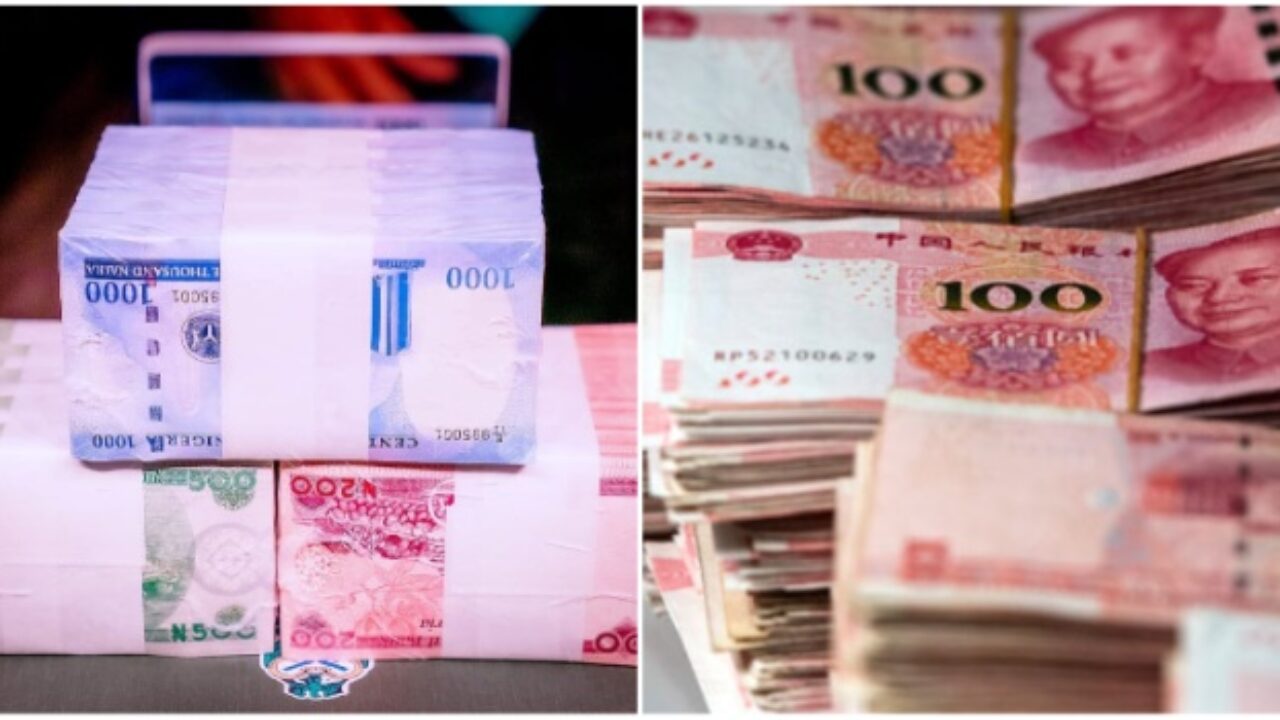
The Naira dropped N2.09 or 0.15 per cent against the United States Dollar in the Nigerian Autonomous Foreign Exchange Market (NAFEX) on Thursday, April 2, to trade at N1,380.79/$1 compared with Wednesday’s rate of N1,378.70/$1.
However, it appreciated against the Pound Sterling in the official market by N2.77 to quote at N1,824.86/£1 versus the N1,836.57/£1 it was traded at midweek, and improved its value against the Euro by N10.54 to N1,591.92/€1 from N1,602.46/€1.
Yesterday was the last trading session of the week for the local currency in the spot market, as the market will be closed on Friday and Monday for the Easter Holiday.
At the black market, the Nigerian Naira maintained stability against the greenback yesterday at N1,405/$1, but gained N8 at the GTBank FX counter to settle at N1,388/$1, in contrast to the previous session’s N1,396/$1.
Pressure eased on the domestic currency as strong policy indicators have helped calm the majority of worries within the financial systems. Particularly in the remittance segment, the apex bank has directed all International Money Transfer Operators (IMTOs) to route remittance transactions through designated Naira settlement accounts in banks, a move aimed at boosting transparency and channelling more foreign exchange into the formal market.
This helps take off pressure from the foreign reserves, which have fallen below the $50 billion mark as they are gradually decreasing rather than falling sharply.
Meanwhile, the cryptocurrency market was bullish on Thursday, as macro sentiment shifted against recent optimism after reports that Iran is drafting a protocol with Oman to manage traffic through the Strait of Hormuz, easing concerns about disruptions to a key global oil route.
The remarks came after U.S. President Trump on Wednesday night vowed to hit Iran “extremely hard” in the coming weeks and that the Strait of Hormuz would “open naturally” once the war ends.
Cardano (ADA) chalked up 1.9 per cent to trade at $0.2435, Dogecoin (DOGE) grew by 1.2 per cent to $0.0912, Ethereum (ETH) appreciated by 0.8 per cent to $2,066.37, Bitcoin (BTC) added 0.5 per cent to sell at $67,080.53, Solana (SOL) increased by 0.5 per cent to $79.91, and Ripple (XRP) jumped 0.2 per cent to $1.31.
Conversely, Binance Coin (BNB) dipped 0.7 per cent to $586.90, and TRON (TRX) depreciated by 0.3 per cent to $0.3147, while the US Dollar Tether (USDT) and the US Dollar Coin (USDC) closed flat at $1.00 each.
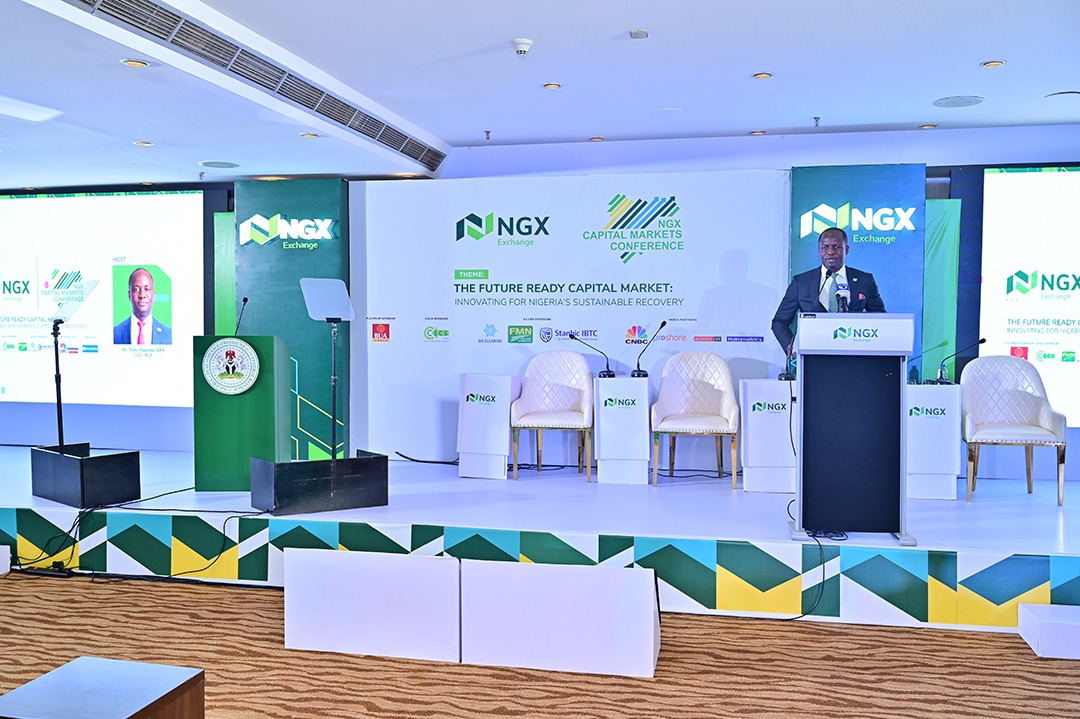
By Dipo Olowookere
The local stock market was relatively flat on Friday, as the bears and the bulls shared the spoils of war, though investor sentiment turned bullish compared with the preceding session’s bearish posture.
Data from the Nigerian Exchange (NGX) Limited showed that the All-Share Index (ASI) was marginally down by 4.66 points as it ended at 201,698.89 points versus Wednesday’s 201,703.55 points, and the market capitalisation slightly contracted by N3 billion to N129.806 trillion from N129.809 trillion.
Customs Street was shut on Friday because of the public holidays declared by the federal government today and next Monday.
Business Post reports that John Holt declined by 9.91 per cent to N15.45, Abbey Mortgage Bank shed 9.60 per cent to trade at N8.95, International Energy Insurance slipped by 6.48 per cent to N3.32, Chams shrank by 5.30 per cent to N3.75, and Tantalizers depreciated by 5.18 per cent to N4.03.
On the flip side, Unilever Nigeria improved by 10.00 per cent to N103.40, Fortis Global Insurance gained 9.82 per cent to trade at N1.23, Multiverse appreciated 9.81 per cent to N20.15, Legend Internet advanced by 9.38 per cent to N6.30, and Zichis grew by 9.02 per cent to N14.14.
The market breadth index was positive during the trading session, as there were 35 appreciating stocks and 24 depreciating stocks.
Yesterday, investors traded 560.0 million equities valued at N19.3 billion in 49,676 deals, in contrast to the 815.5 million equities worth N33.3 billion transacted in 52,641 deals in the preceding day, representing a drop in the trading volume, value, and number of deals by 31.33 per cent, 42.04 per cent, and 5.63 per cent, respectively.
Secure Electronic Technology dominated the activity log with 59.7 million shares valued at N61.1 million, Wema Bank exchanged 52.0 million equities worth N1.4 billion, VFD Group transacted 36.0 million stocks for N410.5 million, Access Holdings sold 35.3 million shares valued at N914.8 million, and Chams traded 31.0 million equities worth N115.0 million.
-
 Feature/OPED6 years ago
Davos was Different this year
-
Travel/Tourism10 years ago
Lagos Seals Western Lodge Hotel In Ikorodu
-

 Showbiz3 years ago
Estranged Lover Releases Videos of Empress Njamah Bathing
-
 Banking8 years ago
Sort Codes of GTBank Branches in Nigeria
-

 Economy3 years ago
Subsidy Removal: CNG at N130 Per Litre Cheaper Than Petrol—IPMAN
-

 Banking3 years ago
Sort Codes of UBA Branches in Nigeria
-

 Banking3 years ago
First Bank Announces Planned Downtime
-

 Sports3 years ago
Highest Paid Nigerian Footballer – How Much Do Nigerian Footballers Earn