Connect with us

General

Taking Nigerian Small Businesses to Paradise

Published

on

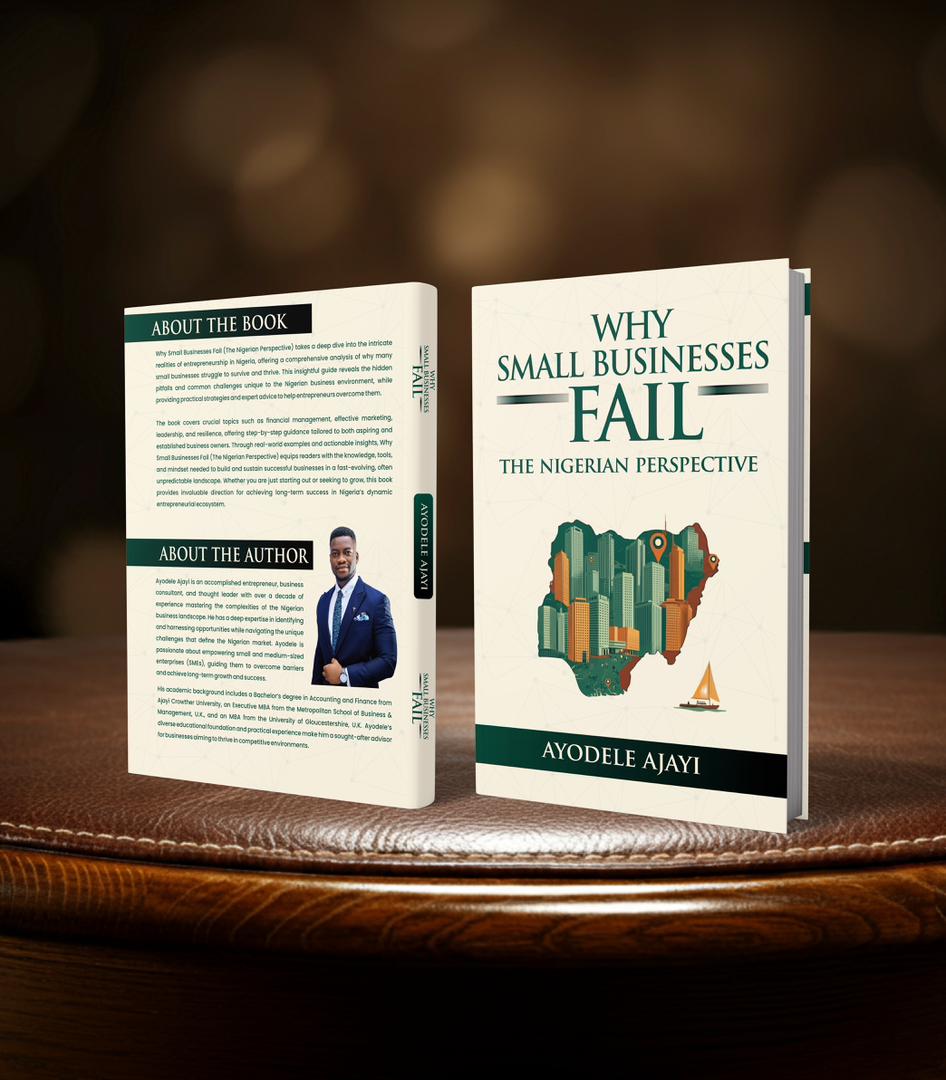
Why Small Businesses Fail

In the last 40 years, small business owners and entrepreneurs have been receiving greater recognition as drivers of economic growth all over the word. It has become a given that, to achieve long-term economic growth and prosperity, participation from entrepreneurs is very important.  Small businesses have contributed to job creation, economic growth and poverty reduction.

As we have seen in Nigeria in the last two decades, entrepreneurship is a driving force within the economy because of entrepreneurs’ innovative nature, among other factors. In developed economies, corporations and large capital significantly determine the extent of scientific, technical and production potential.

In third world countries with a market economy system, small enterprises are the most common, dynamic and flexible form of business life. In Nigeria, they contribute in stabilising the political climate. Yet not every small business will flourish

Why Small Businesses Fail in Nigeria, a seven-chapter book written by Ayodele Ajayi, provides sufficient facts why entrepreneurs in the country pack up after a while. In knowing the hidden pitfalls, as outlined by the author, the writer creates a veritable platform for small businesses to reinvent themselves and blossom.

Ajayi educates all that there is a probabilistic indicator to show that not all businesses in Nigeria surpass their first anniversary. This sounds like a spoiler alert, but the author links this to the inability to overcome teething problems and other avoidable mistakes.

Talking from experience, Ajayi, whose entrepreneurial journey has been like a yo-yo experience, says his substantial investment and unwavering effort in the paint business didn’t yield the much-expected dividends when he set out. Why Small Businesses Fall in Nigeria, therefore, seeks to empower the reader and the entrepreneur with a weapon to navigate the intricacies of Nigeria’s business environment. It is also beneficial for big businesses.

In the first chapter, Ajayi paints a realistic picture of Nigerian entrepreneurship beyond the hype on some success stories. “When considering starting a small business, one of the first decisions you must make is whether to operate online, offline, or a combination of both,” writes Ajayi.

He points out that the reality of entrepreneurship is far less glamorous than many anticipate, part of which includes supporting the lives of team members and other partners involved in the business. He recommends that, before setting out, you must study the business environment of the country, because the reality of doing business in Nigeria differs with many factors he outlined in the book (read the book).

Part of the reasons for business failures include inappropriate location, hence: “A solution to that problem may be to change the location to a more strategic area with a higher demand for the business’s products or services. The structure of the business can also make or mar it.” Another reason is faulty operation. Ajayi stresses the importance of learning from others, for nobody knows it all.

The author zeroes in on the pitfalls that crumble businesses in Nigeria. Understanding and answering the purpose of your business, he says, will help the entrepreneur navigate and avoid the landmine. Expertise is also important. The author makes a case for implementing effective corporate governance.

Explaining in detail the common reasons for small business failures in Nigeria, the author highlights inadequate market research, poor management of business resources, poor cash flow management, wrong expansion, poor marketing and sales skills.

Offering practical steps to follow to navigate these pitfalls, the author advises business owners to be disciplined, detach themselves from the businesses, plan and execute well, learn continuously, build a strong network and stay financially savvy. He encourages entrepreneurs to guide against having a single product or service in Nigeria, develop excellent customer service, and adapt to market trends. Unlike Easy Taxi that crumbled in Nigeria, the author cites Mega Chicken as one that has successfully stood out in a competitive food market.

The fourth chapter of the book emphasises on financial management.  “Financial management is a necessary skill for every business, because it deals with how you account for your money,” says the author. who goes on to furnish us with basic financial concepts that relate to small business in Nigeria.

These include budgeting, cash flow management, investment management, debt management, financial planning, risk management, bookkeeping. The book furnishes the reader with strategies for securing funding and managing debts effectively. It arms us with the right resources for maintaining financial support, literacy and mentorship in Nigeria.

Ajayi, in the fifth chapter, teaches the power of marketing and sales. This is very important. You may have a good product yet it is not selling. Like he has done throughout the book, he offers practical steps for creating a customer-centric approach and building brand loyalty, including but not limited to personal service, reward system and getting feedback from customers.

The concluding part of the book x-rays the demands of leadership. Without reading this book, you may not appreciate the gems in the publication. I recommend this book to not only businessmen anywhere in the world but those aspiring to have multiple streams of income in Nigeria.


General

Dangote Petitions ICPC, Seeks Farouk Ahmed’s Prosecution

Published

on

dangote farouk ahmed

By Aduragbemi Omiyale

A petition has been filed against the chief executive of the Nigerian Midstream and Downstream Petroleum Regulatory Authority (NMDPRA), Mr Ahmed Farouk.

The petition was written by the president of the Dangote Group, Mr Aliko Dangote, to the Independent Corrupt Practices and Other Related Offences Commission (ICPC).

Mr Dangote asked the agency to look into the finances of the head of the petroleum industry regulator, alleging the man is living far above his legitimate means as a public officer.

In the protest letter filed by his legal counsel, Mr Ogwu Onoja (SAN), the businessman claimed the NMDPRA chief spent over $7 million to educate his children, four in number, in Switzerland.

The petition, dated and submitted on Tuesday, December 16, 2025, and received by the office of the ICPC Chairman, also claimed that Mr Ahmed paid upfront for a six-month period, without any lawful source of income to justify such expenditure.

It also alleged that NMDPRA boss used his office to siphon and divert public funds for personal gain and private interests, actions which he claimed had fuelled public outrage and recent protests by various groups.

“That Engr Farouk Ahmed has grossly abused his office contrary to the extant provisions of the Code of Conduct for Public Officers and, in doing enmeshed himself in monumental corruption and unlawful spending of Public funds running into millions of dollars.

“That Engr Farouk Ahmed spent without evidence of lawful means of income humongous amount of money of over 7million dollars of Public funds, for the education of his four children in different schools in Switzerland for a period of six years upfront,” a part of the petition read.

“It is without doubt that the above facts in relation to abuse of office, breach of the Code of Conduct for public officers, corrupt enrichment and embezzlement are gross acts of corrupt practices for which your Commission is statutorily empowered under Section 19 of the ICPC Act to investigate and prosecute,” another part added.

“Any public officer who uses his office or position to gratify or confer any corrupt or unfair advantage upon himself or any relation or associate of the public officer or any other public officer shall be guilty of an offence and shall on conviction be liable to imprisonment for five (5) years without option of fine,” it reminded the ICPC, urging it to act decisively by investigating the allegations against Mr Ahmed and prosecuting him if found culpable, stressing that the matter is already in the public domain, as this would help uphold justice and protect the image of the administration of President Bola Tinubu.

Mr Dangote promised to provide evidence to substantiate his allegations of corrupt enrichment, abuse of office and impunity against the NMDPRA chief when required.

Continue Reading

General

Former Chief Justice of Nigeria Ibrahim Tanko Muhammad Passes Away at 71

Published

on

Ibrahim Tanko Muhammad

By Adedapo Adesanya

A former Chief Justice of Nigeria (CJN), Justice Ibrahim Tanko Muhammad, has died at the age of 71.

Justice Muhammad reportedly passed away at a hospital in Saudi Arabia, about two weeks before his 72nd birthday, which would have fallen on December 31.

His death was confirmed on Tuesday in Abuja by the Bauchi State Governor, Mr Bala Mohammed, in a condolence message issued on Tuesday by his Special Adviser on Media and Publicity, Mr Mukhtar Gidado.

Governor Mohammed noted that Justice Muhammad was a distinguished son of Bauchi State whose life and career were marked by dedication, integrity, and an unwavering commitment to the rule of law.

“The late jurist was a venerable and accomplished legal icon who rose through the ranks of the judiciary with diligence and distinction, serving as a Judge of the High Court, Justice of the Court of Appeal, Justice of the Supreme Court, and ultimately as Chief Justice of Nigeria from 2019 to 2022,” he said.

According to the governor, Justice Muhammad was widely respected for his legal acumen, discipline, and immense contributions to the growth and development of Nigeria’s judicial system.

He added that the conferment of the national honour of Grand Commander of the Order of the Niger (GCON) on the late jurist was a testament to his outstanding service to the nation.

Mr Mohammed extended heartfelt condolences to the family of the deceased, his friends, colleagues in the legal profession, and the people of Bauchi State and Nigeria as a whole.

Also, the Nigerian Association of Muslim Law Students (NAMLAS) lauded the former jurist in its condolence message.

In the statement titled NAMLAS Condolence Message on the Passing of Hon. Justice Ibrahim Tanko Muhammad, GCON, Former Chief Justice of Nigeria, the association described his death as a monumental loss to the Nigerian judiciary and the nation.

“The Nigerian Association of Muslim Law Students receives with profound sorrow the news of the passing of Justice Ibrahim Tanko Muhammad, GCON, former Chief Justice of Nigeria. His demise is a monumental loss to the Nigerian judiciary, the legal profession, the Muslim Ummah, and the nation at large.”

NAMLAS described the late jurist as a towering figure of integrity, humility and unwavering commitment to justice, noting that throughout his judicial career, he exemplified fairness, courage and fidelity to the rule of law.

The association said that as Chief Justice of Nigeria, Muhammad discharged his responsibilities with wisdom and restraint, leaving behind a legacy that would continue to guide generations of legal practitioners.

Beyond his judicial service, NAMLAS highlighted his role as a mentor to young Muslim law students across the country, describing him as a fatherly figure and a source of encouragement.

“To NAMLAS, the late Chief Justice was more than a jurist; he was a fatherly pillar and a source of encouragement to Muslim law students nationwide,” the statement said.

The association extended its condolences to the family of the deceased, the Nigerian judiciary, the Federal Government and the Muslim Ummah, while praying for the repose of his soul.

Justice Ibrahim Tanko Muhammad served as Chief Justice of Nigeria from 2019 until his retirement in 2022.

Continue Reading

General

Customs, NMDPRA Strengthen Interagency Efforts Against Fuel Diversion

Published

on

petrol diversion

By Adedapo Adesanya

The Nigeria Customs Service (NCS) and the Nigerian Midstream and Downstream Petroleum Regulatory Authority (NMDPRA) are strengthening their collaboration to combat the diversion of petroleum products intended for domestic use and to safeguard Nigeria’s energy security.

This renewed partnership was highlighted during a meeting between Comptroller General of Customs, Mr Adewale Adeniyi and the NMDPRA Executive Director of Distribution Systems, Storage and Retailing Infrastructure, Mr Ogbugo Ukoha, at Customs House, Maitama, Abuja.

During the engagement, Mr Adeniyi reaffirmed the service’s commitment to strengthening inter-agency cooperation, particularly in safeguarding Nigeria’s domestic energy security and ensuring that petroleum products meant for local consumption are not diverted to neighbouring countries.

He noted that collaboration between both agencies had already produced measurable results, especially through Operation Whirlwind, which he described as a model for intelligence sharing, joint enforcement and coordinated field operations.

He said the Nigeria Customs Service remains fully aligned with ongoing reforms in the petroleum regulatory space and will continue to provide technical input, operational feedback and border management expertise to support the implementation of new guidelines being developed by the NMDPRA.

He commended the Authority for its efforts to harmonise legacy processes with the Petroleum Industry Act, stressing that clear and efficient export point procedures are essential as Nigeria moves from being a net importer to an emerging exporter of petroleum products.

“We welcome every initiative that strengthens energy security and ensures that the gains made in reducing cross border diversion are not reversed. Our shared responsibility is to protect national interest, support legitimate trade and maintain a transparent system that stakeholders can rely on. We will continue to work closely with sister agencies to achieve these outcomes,” he stated.

In his remarks, the Executive Director, Mr Ukoha, said the NMDPRA enjoys a longstanding and productive working relationship with the Nigeria Customs Service, noting that Operation Whirlwind remained the high point of that collaboration.

He explained that both agencies deployed personnel, exchanged intelligence and jointly monitored petroleum products in border corridors, leading to a marked reduction in cross border diversion.

Ukoha said the purpose of the visit was to brief the CGC on newly developed guidelines for designating export points for petroleum products as Nigeria’s refining capacity expands.

He said the NMDPRA is engaging key institutions, including Customs, the Central Bank of Nigeria (CBN), the Federal Ministry of Industry, Trade and Investment, and the Nigerian Navy, to ensure the guidelines reflect operational realities before implementation.

The NMDPRA executive recalled several field operations and strategic engagements with the Customs leadership, including the joint launch of Operation Whirlwind in Yola, where both agencies reinforced their commitment to curbing diversion and securing the domestic supply chain.

He added that while enforcement had played a major role in reducing irregular movements of petroleum products, the removal of fuel subsidy had significantly reduced the economic incentive for cross border smuggling.

According to him, the authority will continue to work closely with the Customs Service to sustain progress and ensure that petroleum exports are properly regulated without exposing the country to energy security risks.

Continue Reading

Trending