Connect with us

Economy

Renaissance Targets $15bn Investment in Nigerian Oil Fields by 2029

Published

on

Marginal Oilfields

By Adedapo Adesanya

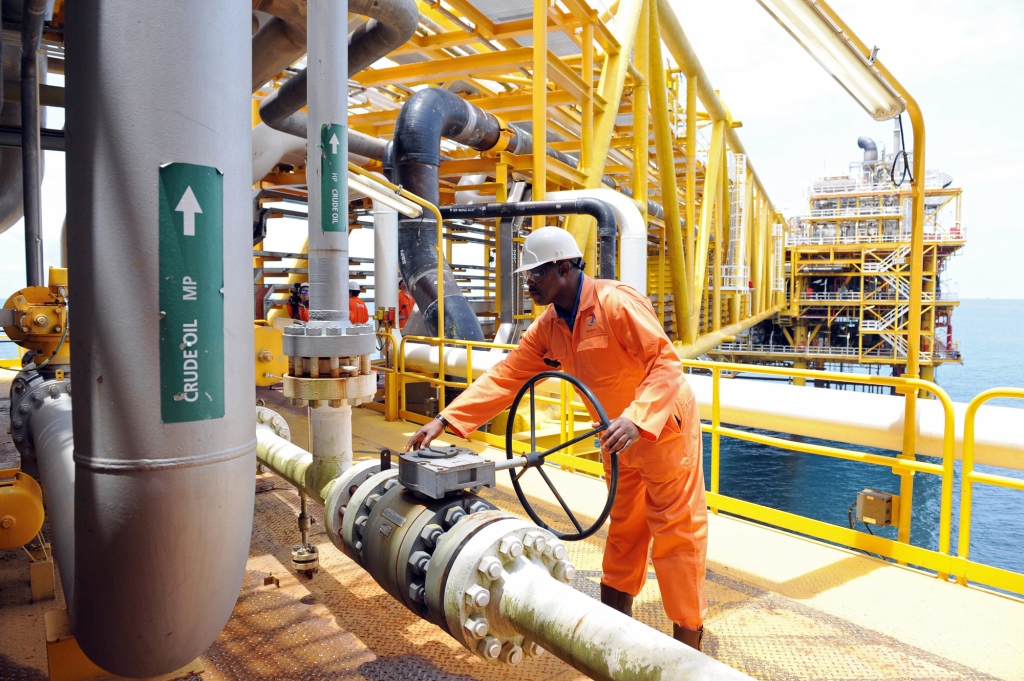
Renaissance Africa Energy Company Limited is looking to inject $15 billion in its oil fields located onshore and shallow waters of the Niger Delta region in the next five years.

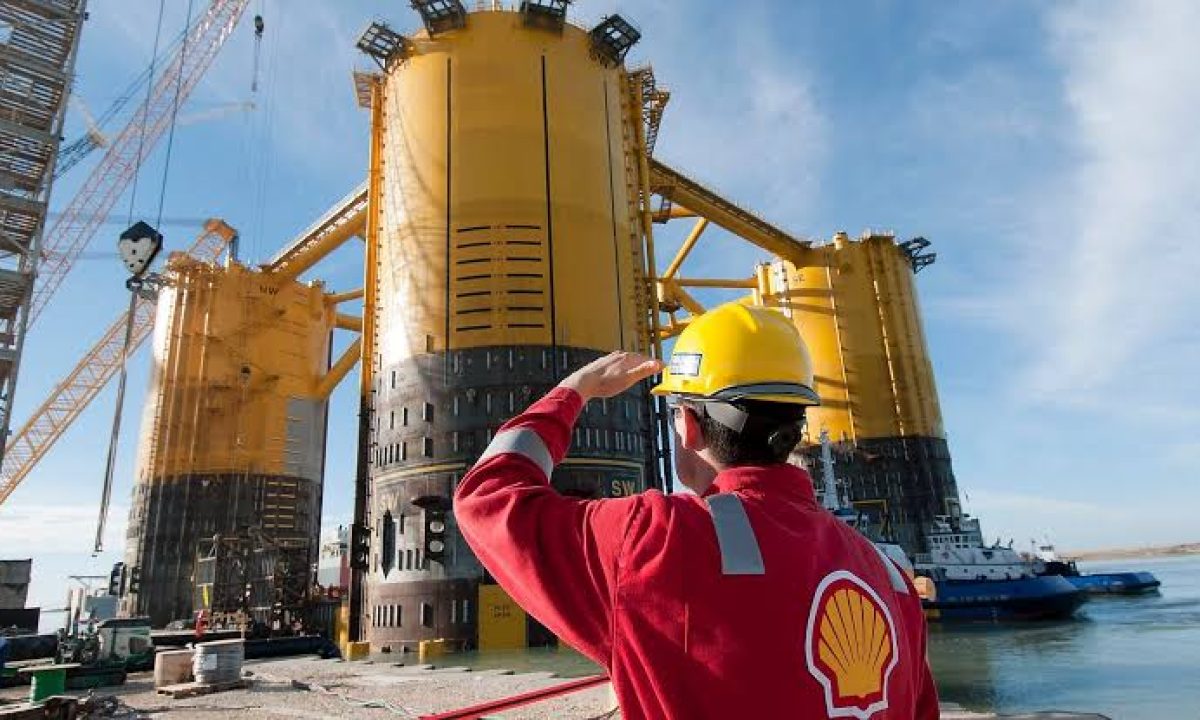
Renaissance Africa, a consortium of indigenous oil firms, recently acquired oil assets earlier held by Shell Petroleum Development Company (SPDC), following divestment by Shell UK from onshore operations in Niger Delta.

Mr Tony Attah, the Managing Director, Renaissance Africa Energy Company Limited said at the 2025 Nigeria Oil and Gas Opportunities Fair (NOGOF) on Thursday in Yenagoa, that the investment would be targeted predominantly to improve the participation of indigenous oil firms in the onshore and shallow waters oil blocks operation.

Represented by Mr Greg Akhibi, General Manager, Supply Chain he said the money would be spent on 32 projects in development of domestic gas, export gas and more crude oil production to balance the predominantly gas portfolio template hitherto operated by SPDC.

“We acquired a total of 112,000 square kilometers acreage of assets and we intend to pursue projects that will balance the assets which were tilted more to gas.

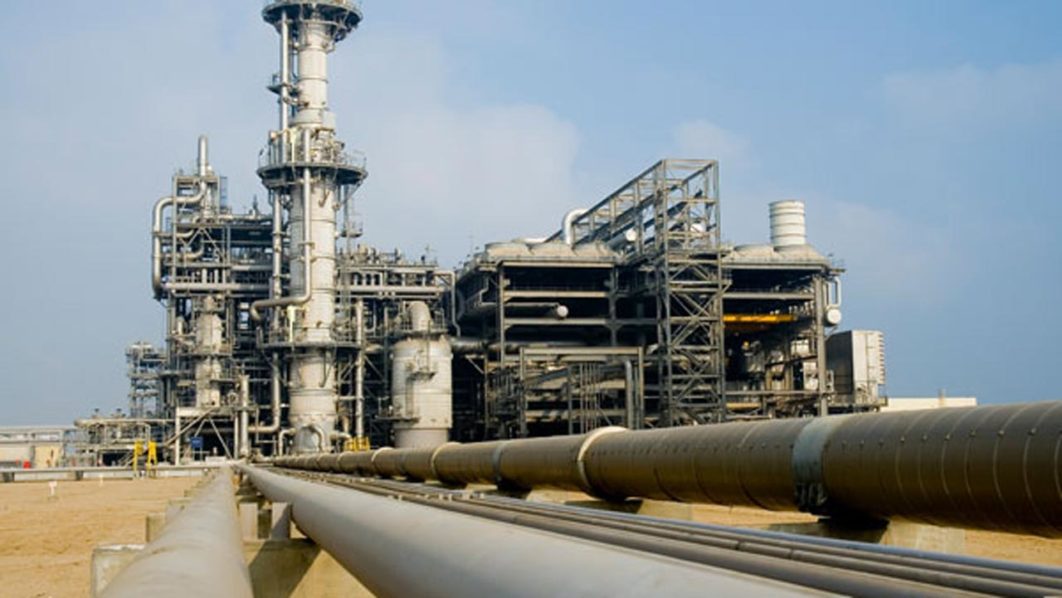
“We are focusing on four project areas to increase oil production and there are upcoming activities in drilling, rigs, pipelines and fabrication businesses.

“We are also looking at 22 projects to increase export in gas production.

“Currently our gas production is at 150 million standard cubic feet of gas per day (MMSCF/D) and we project to hit 300 MMSCF/D with the anticipated increased off-take from the AKK gas pipeline expected to further increase domestic gas utilisation,” Akhibi said.

He noted that the Renaissance Africa remains committed to partnerships with the NCDMB and Nigerian companies in the oil and gas sector to produce energy for Nigeria and the rest of African continent.

This comes as the company exceeded crude oil production targets by 40 per cent in its first month of operating the former Shell assets.

The Nigerian National Petroleum Company (NNPC) Limited hailed the performance in April 2025 as a strong signal of renewed momentum in Nigeria’s upstream sector and a promising step toward boosting national oil output and economic growth.

“This is to commend Renaissance Africa Energy Company Limited, your esteemed leadership team and staff for exceeding the production target in your JV assets for April 2025,” said NNPC in an official letter signed by its Executive Vice President, Upstream, Mr Udobong Ntia.

The state oil company expressed hope that the April milestone would inspire Renaissance “towards accelerating the realisation of the initiatives for incremental production volumes while protecting the base.”


Adedapo Adesanya is a journalist, polymath, and connoisseur of everything art. When he is not writing, he has his nose buried in one of the many books or articles he has bookmarked or simply listening to good music with a bottle of beer or wine. He supports the greatest club in the world, Manchester United F.C.

Advertisement
Click to comment

Leave a Reply

Your email address will not be published. Required fields are marked *

Economy

Tinubu Tasks Oyedele with Fiscal Reforms as Minister of State for Finance

Published

on

swear in taiwo oyedele

By Adedapo Adesanya

President Bola Tinubu has sworn in Mr Taiwo Oyedele as the new Minister of State for Finance, tasking him with fiscal reforms aimed at improving government revenue and strengthening Nigeria’s economic management framework.

He took his oath of office before the President at the Presidential Villa, Abuja, on Monday.

President Tinubu nominated Mr Oyedele for the new role on March 3, 2026, to replace Mrs Doris Uzoka-Anite, who was moved to serve as the Minister of State for Budget and National Planning.

On March 11, the Senate confirmed him after a screening session, where the tax expert pledged to pursue fiscal reforms aimed at improving government revenue, ensuring realistic budgeting, and strengthening Nigeria’s economic management framework.

He was cleared by the lawmakers through a voice vote at the Committee of the Whole, after hours of screening.

Mr Oyedele, the former chairman of the Presidential Committee on Fiscal Policy and Tax Reforms, described his nomination as a call to serve Nigeria.

“With over two decades of experience working with national governments, multilateral institutions, and global corporations, my journey across the private sector, academia, and public policy has focused on fiscal governance and economic transformation.

“However, this moment is not about personal accomplishments; it is a call to serve at a critical time when Nigeria faces significant fiscal challenges and remarkable opportunities,” the 50-year-old said in the upper chamber.

He said his decades-long experience working on “global reforms regarding the ease of doing business and taxation across 180 countries” had prepared him for the role.

“I feel my background has prepared me to help my country by understanding what works globally and how to apply those lessons to our unique context,” Mr Oyedele added.

The public policy expert, accountant, and economist was appointed by the President to chair the tax reform committee in July 2023.

This led to the creation of four bills: the Nigeria Tax Bill, the Nigeria Tax Administration Bill, the Nigeria Revenue Service (Establishment) Bill, and the Joint Revenue Board (Establishment) Bill were passed by the National Assembly last year after months of extensive debates and controversies, and assented to by Tinubu on June 26, 2025.

The former fiscal policy partner and Africa tax leader at PriceWaterhouseCoopers (PwC) attended Yaba College of Technology and bagged a Higher National Diploma (HND) in Accountancy and Finance.

Mr Oyedele also earned a BSc in applied accounting from Oxford Brookes University.

His academic journey saw him study at the London School of Economics, Yale University, the Gordon Institute of Business Science, and the Harvard Kennedy School, where he completed executive education programmes.

The ministerial nominee worked for decades with PWC, having started his career at the organisation in 2001.

He is a professor at Babcock University in Ogun State as well as a visiting scholar at the Lagos Business School.

Continue Reading

Economy

Fears Over Impact on African Nations if Iran War Drags on

Published

on

Africa nations War in Iran CNN

CNN’s Larry Madowo reports that oil price spikes triggered by the war with Iran could have a catastrophic impact on African nations. Even Africa’s most advanced economy, South Africa, is exposed to the oil price shocks, which could cause higher fuel costs, rising inflation and renewed pressure on currencies.

The government in Kenya is reassuring citizens that there are no immediate fears of a fuel shortage, and prices have not spiked. Many Governments across Africa are reassuring their citizens that they have stocks to last them for the time being. But they can’t make long-term guarantees because many African nations depend on imported refined petroleum from the Gulf.

This conflict just crossed the 12-day mark, and economist Kwame Owino tells Madowo that African nations should start preparing for a catastrophic scenario, “while no African countries are directly involved in the conflict, we still suffer quite substantially. Governments need to adjust. So, for instance, the government of Kenya has some of the highest taxes globally on fuel prices, so adjusting fiscal policy to allow for greater affordability is important, even if it means that the government will have a lower take.”

Africa’s most advanced economy, South Africa, is one of those exposed to the oil price shocks. One South African airline, Flysafair, announced it would be adding a temporary dynamic fuel surcharge after jet fuel prices rose by 70% in one week at South African airports. Other airlines, including national carrier South African Airways, said they were monitoring prices.

Nigeria is Africa’s most populous nation and one of the largest economies. It is also a crude oil producer, so it’s likely to cash in on the increase in global oil prices. But Nigeria still imports refined petroleum, so it is not immune to the shocks that the global markets are seeing.

The bigger picture here is that African economies are more fragile than stronger, more advanced economies. Owino says, “These economies are small and fragile. They are dependent on those imports. So, when there’s a global conflict, it affects these economies. And African economies also tend to recover slowly, much slower to have a slower path of recovery.”

Fuel prices are holding steady right now. But if the conflict with Iran drags on, just about everything here in Kenya and across the African continent will get more expensive, adding more pain for African consumers.

Continue Reading

Economy

Nigeria’s Headline Inflation Eases to 15.06%

Published

on

Nigeria’s Headline Inflation

By Adedapo Adesanya

Nigeria’s headline inflation rate moderated marginally by 0.04 per cent to 15.06 per cent in February 2026 from 15.10 per cent in January 2026.

This information was contained in the latest data of the National Bureau of Statistics (NBS) on Monday.

It was revealed that the Consumer Price Index (CPI), which measures changes in the average price level of goods and services, rose to 130.0 in February from 127.4 in the preceding month, representing a 2.6-point increase.

On a month-on-month basis, however, inflationary pressures accelerated.

The headline inflation rate stood at 2.01 per cent in February 2026, marking a sharp increase of 4.89 percentage points compared to the -2.88 per cent recorded in January 2026.

At 15.06 per cent, the print is higher than analysts’ expectations. Coronation Research projected over the weekend that the inflation rate for the month under review would moderate by 0.98 per cent to 14.12 per cent.

“Our projection is supported by favourable base effects, easing food price pressures, and slight appreciation of the Naira,” a part of the report said.

The organisation revealed that ongoing government interventions in the agricultural sector to improve food supply conditions were beginning to ease pressures within the food component of the consumer basket.

It further stated that “appreciation of the Naira to N1,363.40/1$ from N1,386.55/1$ in January is expected to reduce the cost of imported food items.”

However, it stressed that the ongoing US/Israel-Iran war was capable of reversing the deflationary trends because of the rising global energy prices.

The marginal moderation further lends credence to the 50-basis-point cut in interest rate at the 304th Monetary Policy Committee (MPC) meeting of the Central Bank of Nigeria (CBN) to 26.50 per cent from 27 per cent.

Continue Reading

Trending