

Connect with us

Economy

Renaissance Targets $15bn Investment in Nigerian Oil Fields by 2029

Published

on

Marginal Oilfields

By Adedapo Adesanya

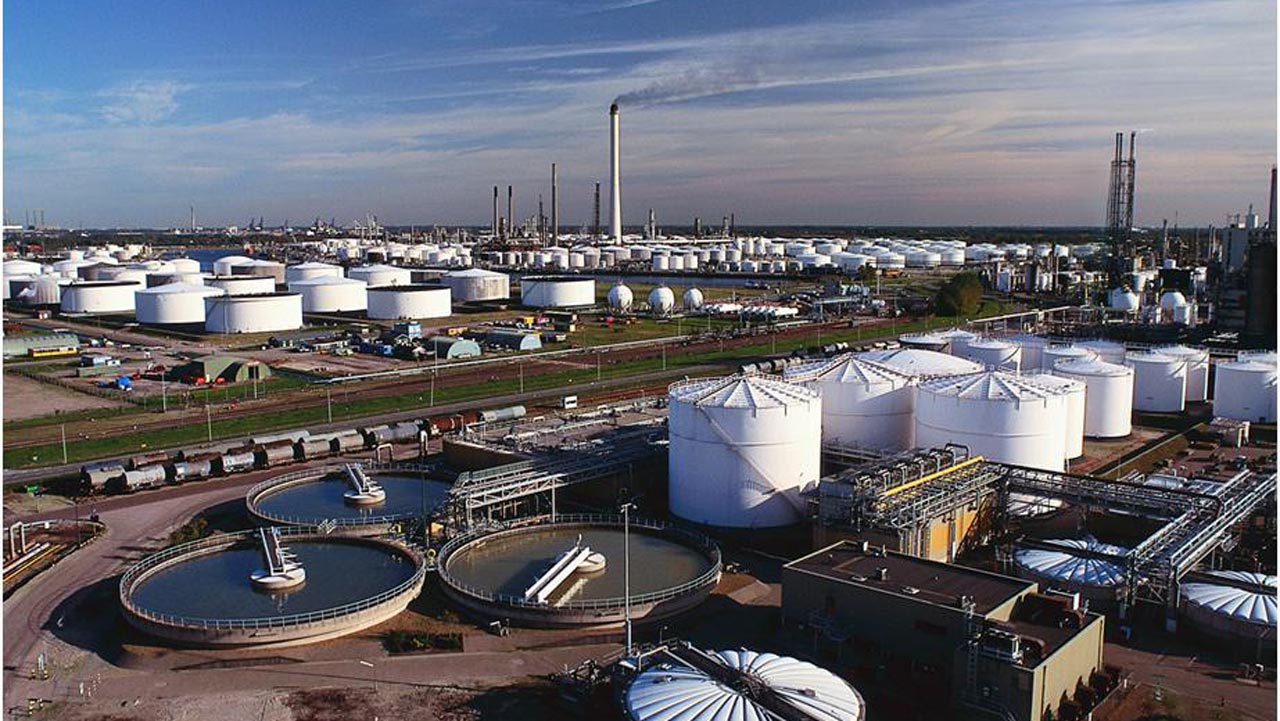
Renaissance Africa Energy Company Limited is looking to inject $15 billion in its oil fields located onshore and shallow waters of the Niger Delta region in the next five years.

Renaissance Africa, a consortium of indigenous oil firms, recently acquired oil assets earlier held by Shell Petroleum Development Company (SPDC), following divestment by Shell UK from onshore operations in Niger Delta.

Mr Tony Attah, the Managing Director, Renaissance Africa Energy Company Limited said at the 2025 Nigeria Oil and Gas Opportunities Fair (NOGOF) on Thursday in Yenagoa, that the investment would be targeted predominantly to improve the participation of indigenous oil firms in the onshore and shallow waters oil blocks operation.

Represented by Mr Greg Akhibi, General Manager, Supply Chain he said the money would be spent on 32 projects in development of domestic gas, export gas and more crude oil production to balance the predominantly gas portfolio template hitherto operated by SPDC.

“We acquired a total of 112,000 square kilometers acreage of assets and we intend to pursue projects that will balance the assets which were tilted more to gas.

“We are focusing on four project areas to increase oil production and there are upcoming activities in drilling, rigs, pipelines and fabrication businesses.

“We are also looking at 22 projects to increase export in gas production.

“Currently our gas production is at 150 million standard cubic feet of gas per day (MMSCF/D) and we project to hit 300 MMSCF/D with the anticipated increased off-take from the AKK gas pipeline expected to further increase domestic gas utilisation,” Akhibi said.

He noted that the Renaissance Africa remains committed to partnerships with the NCDMB and Nigerian companies in the oil and gas sector to produce energy for Nigeria and the rest of African continent.

This comes as the company exceeded crude oil production targets by 40 per cent in its first month of operating the former Shell assets.

The Nigerian National Petroleum Company (NNPC) Limited hailed the performance in April 2025 as a strong signal of renewed momentum in Nigeria’s upstream sector and a promising step toward boosting national oil output and economic growth.

“This is to commend Renaissance Africa Energy Company Limited, your esteemed leadership team and staff for exceeding the production target in your JV assets for April 2025,” said NNPC in an official letter signed by its Executive Vice President, Upstream, Mr Udobong Ntia.

The state oil company expressed hope that the April milestone would inspire Renaissance “towards accelerating the realisation of the initiatives for incremental production volumes while protecting the base.”


Adedapo Adesanya is a journalist, polymath, and connoisseur of everything art. When he is not writing, he has his nose buried in one of the many books or articles he has bookmarked or simply listening to good music with a bottle of beer or wine. He supports the greatest club in the world, Manchester United F.C.

Economy

S&P Upgrades Nigeria’s Credit Rating First Time Since 2012

Published

on

S&P assigns

By Adedapo Adesanya

Nigeria received its first credit rating upgrade since 2012 from S&P Global Ratings, driven by improved oil market conditions and the country’s growing ability to refine and export crude locally.

The credit ratings agency upgraded the country’s rating by one notch to B, five levels below investment grade, according to a statement on Friday.

It raised its long-term foreign and local currency sovereign credit ratings on Nigeria to ‘B’ from ‘B-‘ and affirmed its ‘B’ short-term ratings. It also raised its long- and short-term Nigeria national scale ratings on the sovereign to ‘ngA+/ngA-1’ from ‘ngBBB+/ngA-2’.

S&P also cited Nigeria’s decision to liberalise the exchange rate as crucial to the development, and changed the outlook to stable.

The decision also comes as the federal government ruled out the reintroduction of subsidies on refined petroleum products, in order to avoid a return to larger budgetary deficits and drains on foreign currency (FX) liquidity.

S&P projected the general government deficit will widen to over 4 per cent of GDP on average during 2026 and 2027, a year of a general election.

It added that the implementation of reforms to broaden the tax base from very narrow levels is underpinning a steady decline in Nigeria’s debt-to-revenue ratio to 338 per cent in 2026 versus 500 per cent in 2023.

The agency said it could raise ratings over the next two years if fiscal outcomes improve significantly, either due to fiscal consolidation or structurally higher revenue, resulting in lower debt service costs.

It, however, warned that it could also lower the ratings if the implementation of Nigeria’s reform programme, particularly the series of critical steps taken to liberalise the exchange rate in 2023, reverses.

On the oil production forecast, S&P expects 2026 production to average approximately 1.66 million barrels per day, including condensates.

Continue Reading

Economy

APM Terminals to Invest $600m in Nigeria’s Maritime Sector

Published

on

apm terminals

By Modupe Gbadeyanka

The Nigerian maritime sector may soon witness the inflow of $600 million in investment from APM Terminals.

On the sidelines of the ongoing Africa CEO Forum in Kigali, Rwanda, the Regional President of APM Terminals for Africa-Europe, Mr Igor van den Essen, informed President Bola Tinubu that his company was interested in deepening its investment in Nigeria.

According to a statement issued by the Special Adviser to the President of Information and Strategy, Mr Bayo Onanuga, the investment would be deployed in Apapa port modernisation, logistics infrastructure, and long-term private-sector investment in Nigeria’s maritime sector.

President Tinubu welcomed the investments, emphasising that Nigeria is repositioning itself for greater competitiveness through ongoing economic reforms and infrastructure modernisation.

He said the country is determined to move beyond structural bottlenecks and outdated systems, stressing the need for advanced technology, faster cargo processing, and improved operational efficiency across the nation’s ports.

He emphasised that Nigeria possesses the market scale, talent base, and economic potential to support globally competitive maritime and logistics infrastructure investments and called on other investors to take advantage of Nigeria’s reform outcomes.

Earlier, Mr Igor van den Essen lauded President Tinubu’s reform agenda and policy direction, which had strengthened investor confidence and created renewed momentum for long-term infrastructure investments.

He described Nigeria as a strategic stronghold within its African operations, referencing over 20 years of collaboration and substantial existing investments in the country’s port ecosystem.

He reaffirmed his company’s commitment to expanding investments in Nigeria and disclosed plans to support the development of world-class terminal infrastructure and technology-driven port operations.

He also commended Mr Tinubu for establishing the National Single Window (NSW), which has streamlined trade procedures, improved Customs coordination, and reduced delays in cargo clearance.

Continue Reading

Economy

Dangote Sues FG Over Fuel Import Licences

Published

on

Fifth Crude Cargo Dangote Refinery

By Adedapo Adesanya

Dangote Petroleum Refinery has filed a new lawsuit against the federal government over the fuel import licences issued to ‌marketers and the Nigerian National Petroleum Company (NNPC) Limited.

Last week, the Nigerian Midstream and Downstream Petroleum Regulatory Authority (NMDPRA) issued licences to six marketers for the importation of 720,000 metric tonnes of Premium Motor Spirit, known as petrol.

The marketers are NIPCO, AA Rano, Matrix, Shafa, Pinnacle, and Bono. The development comes amid claims by the NMDPRA that the Dangote Petroleum Refinery now supplies over 90 per cent of Nigeria’s daily petrol consumption.

Dangote said in the filing that the licences issued undermine its operations and contravene the law, which it argues allows imports only when domestic supply falls short.

Named in the suit against the country is the Attorney General and Minister of Justice, Mr Lateef Fagbemi. The federal government can only be sued via his office.

The case signals renewed tensions almost a year after Dangote withdrew an earlier lawsuit challenging similar licences. That case sought to nullify import permits issued to the NNPC and several traders.

The new filing asks the Federal High Court in Lagos to set aside import permits issued or renewed by the NMDPRA, arguing they breach an earlier order to maintain the status quo.

Dangote ⁠ended the earlier lawsuit in July 2025 without explanation, leaving unresolved questions over competition and supply in one of Africa’s largest fuel markets.

Nigeria ⁠has long relied on petrol imports due to underperforming state refineries. However, Dangote’s 650,000 barrels ⁠per day capacity refinery was touted to end that dependence.

Despite the presence of the facility, imports have continued to cover supply gaps as the refinery ramps up output.

The NMDPRA did not issue a single import licence in the first quarter of 2026 because the Dangote refinery had the capacity to meet Nigeria’s petrol demand.

Business Post gathered that only upon intervention by President Bola Tinubu were the licenses granted for the second quarter by the NMDPRA.

Continue Reading

Trending
