Economy
Rise in Petrol, Diesel Prices in Nigeria Caused by FG’s Failure to Plan—Peter Obi
By Aduragbemi Omiyale
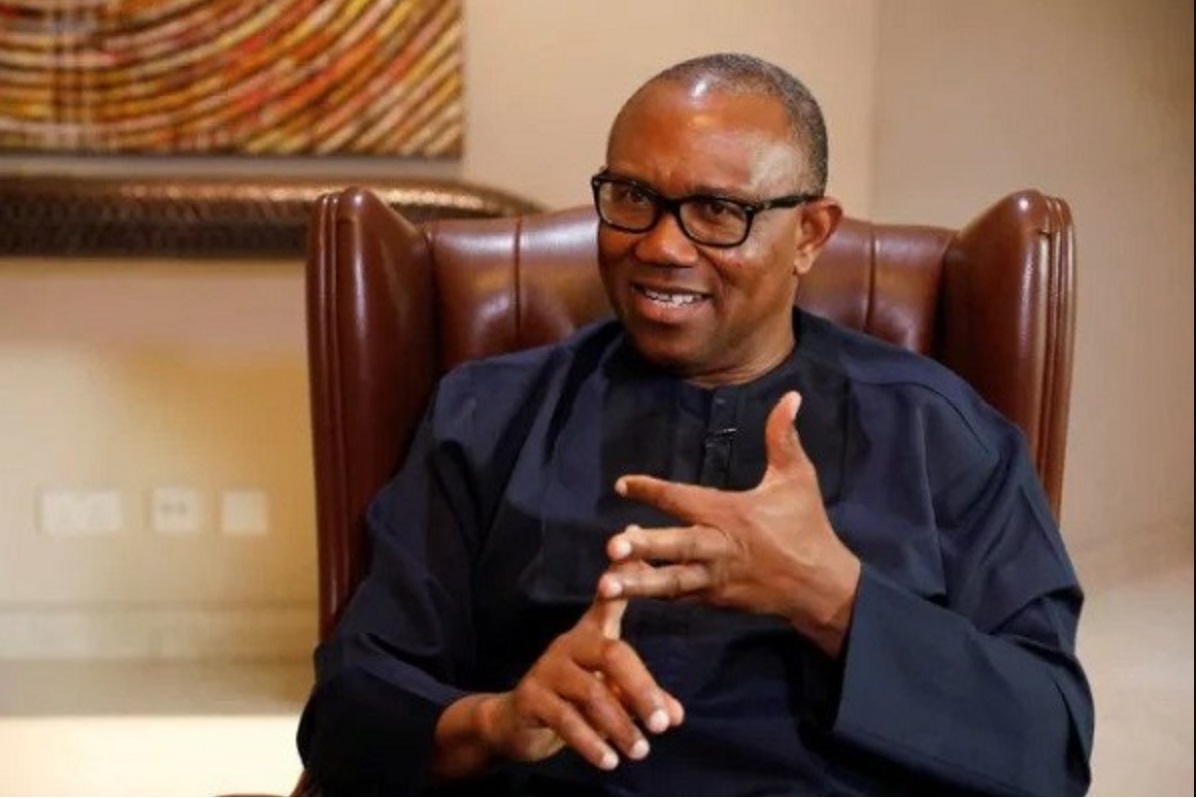
The presidential candidate of the Labour Party (LP) in the 2023 general elections, Mr Peter Obi, has blamed the federal government for the high energy costs in Nigeria.
In a post, the former Anambra State Governor said if the central government, led by President Bola Tinubu, had planned for the future, Nigerians would not be paying through their nose for premium motor spirit (PMS), otherwise known as petrol, and Automotive Gas Oil (AGO), also known as diesel.
Disruption in the supply of crude oil on the global market has caused consumers to pay more for petrol and diesel in the country.
The United States and Israel waged war against Iran, killing its Supreme Leader, Ayatollah Ali Khamenei, about two weeks ago in airstrikes.
This has triggered tension in the Middle East, with Iran firing missiles at its neighbours, and closing the Strait of Hormuz, a small water path between Iran and Oman, where one-fifth of global crude oil supply passes through.
Before the crisis, PMS was selling at N835 per litre and crude oil was below $90 per barrel. But oil rose above $100 per barrel, causing the price of petrol in Nigeria to hit over N1,200 per litre.
Reacting to the development, Mr Obi said Nigeria felt the shock despite not being attacked because the government failed to plan.
“Many people wonder why any adverse development in the global economy quickly impacts Nigeria. A recent example is the tension involving Iran, which led to an increase in global oil prices and, subsequently, a rise in petroleum prices in Nigeria.
“A few weeks ago, petrol was selling for less than N1,000 per litre, but today it costs over N1,200 per litre. Diesel, which was also priced below N1,000 per litre, is now over N1,500 per litre. These rapid increases illustrate how quickly external shocks can affect the Nigerian economy.
“The reason for this is straightforward: most countries, whether they are oil-producing or non-oil-producing, maintain strategic petroleum reserves to cushion against supply or price shocks. This means that when there is a disruption in the global oil market, they can release part of these reserves to stabilise supply. However, Nigeria lacks such a buffer, so the impact is felt almost immediately.
“The underlying issue is a lack of planning. Countries that engage in planning create buffers against shocks, while those that do not remain vulnerable to them. The old maxim remains true: when a country fails to plan, it has already planned to fail,” he wrote.
Earlier this week, the Minister of Finance, Mr Wale Edun, said the country’s economy was strong enough to absorb external shocks, saying the over 4 per cent growth in the gross domestic product (GDP) in the fourth quarter of last year was a testament to that.
Economy
Is Headway Broker Safe and Legit? A Detailed Look at Regulation and Trust
In the competitive world of online trading, finding a trading brokerage partner that balances reliability, technological innovation, and accessible conditions is essential. Headway broker has emerged as a significant player, currently serving over 4 million users globally.
In this article, we take a detailed look at what makes this broker for trading a notable option for both novice and experienced traders.
Headway Regulatory Foundation and Safety
Safety is the cornerstone of any trading relationship. Headway broker operates under the regulation and licensing of the Financial Sector Conduct Authority (FSCA). This regulatory oversight ensures that the broker adheres to strictly defined standards for transparency and operational conduct, providing traders with an added layer of security and confidence when managing their portfolios.
Trading Platforms and Instruments
Efficiency in trading Forex and other markets is driven by the tools at your disposal. Headway provides a robust technological trading ecosystem:
Industry-Standard Platforms: The broker fully supports MetaTrader 4 (MT4) and MetaTrader 5 (MT5), the most widely used platforms for technical analysis and automated trading.
Proprietary Mobile App: For traders who prioritize mobility, Headway offers its own custom-built trading app. It is readily available for download on both Google Play and the App Store, allowing for seamless account management and trading on the go.
Diverse Market Access: Traders have a wide range of opportunities with access to over 300 trading instruments, ensuring plenty of choice for different strategies and asset classes.
Trading Account Types Offered by Headway
Headway broker understands that every trader enters the market with a different level of experience:
Three Account Tiers: To ensure inclusivity, the broker offers three distinct types of accounts (Cent, Standard and Pro), tailored to suit different levels of expertise and capital requirements.
Demo Account: For those looking to refine their skills without financial risk, Headway provides a comprehensive demo trading account. This is the perfect environment to practice strategies, understand how the platform works, and gain confidence before transitioning to live trading.
Customer Support and Incentives
Headway supports its user base with comprehensive resources and financial incentives:
24/7 Technical Support: Market fluctuations happen at any time. Headway provides round-the-clock technical support for the traders, ensuring that help is always available whenever a question or issue arises.
150$ No Deposit Bonus: To help new traders get started, Headway offers a $150 no deposit bonus. This is an excellent way to test the broker’s execution speed and trading environment with zero initial risk.
IB Partnership Program: Beyond individual trading, Headway fosters growth through its Introducing Broker (IB) partnership program. This allows partners to build their business and earn commissions by referring new traders to the platform.
Conclusion
With its combination of FSCA regulation, a vast range of instruments, and modern platforms like MT4, MT5, and its own proprietary app, Headway FX broker provides a comprehensive environment for modern traders. Whether you are using the demo account to hone your skills or taking advantage of the 150 no deposit welcome bonus, this broker offers the stability and tools needed for your trading journey.
Economy
Buying Interest Lifts NASD OTC Exchange by 0.40%
By Adedapo Adesanya
The NASD Over-the-Counter (OTC) Securities Exchange rose by 0.40 per cent on Monday, July 13, buoyed by buying interest in 11 Plc, Central Securities Clearing System (CSCS) Plc and UBN Property Plc, which offset the profit-taking in Food Concepts Plc, the parent company of Chicken Republic.
11 Plc gained N20.69 to end at N227.64 per share compared with last Friday’s price of N206.95 per share, CSCS Plc grew by N1.83 to N91.48 per unit from N89.65 per unit, and UBN Property Plc added 1 Kobo to sell at N1.81 per share versus N1.80 per share.
On the flip side, Food Concepts Plc depreciated by 24 Kobo to close at N2.45 per unit, in contrast to the preceding session’s N2.69 per unit.
As a result, the market capitalisation increased by N9.2 billion to N2.587 trillion from N2.578 trillion, and the NASD Security Index (NSI) improved by 15.33 points to 4,311.67 points from 4,296.34 points.
Yesterday, the volume of securities traded by investors surged by 615.9 per cent to 9.1 million units from the previous 1.3 million units, and the value of securities rose by 997.1 per cent to N320.4 million from the preceding session’s N29.2 million, while the number of deals decreased by 12.5 per cent to 28 deals from last Friday’s 32 deals.
At the close of trades, Great Nigeria Insurance (GNI) Plc remained the most active stock by value on a year-to-date basis, with 3.4 billion units valued at N8.4 billion, followed by Infrastructure Credit Guarantee (Infracredit) Plc with 2.3 billion units worth N6.5 billion, and CSCS Plc with 73.9 million units exchanged for N5.2 billion.
GNI Plc also closed the session as the most traded stock by volume on a year-to-date basis, with 3.4 billion units sold for N8.4 billion, followed by Infracredit Plc with 2.3 billion units traded for N6.5 billion, and Resourcery Plc with 1.1 billion units transacted for N415.7 million.
Economy
Naira Maintains Stability Against US Dollar at Official Market
By Adedapo Adesanya
The Naira maintained stability against the US Dollar in the Nigerian Autonomous Foreign Exchange Market (NAFEX) on Monday, July 13, at N1,379.65/$1.
However, it appreciated against the Pound Sterling in the official market by N2.44 to exchange at N1,848.18/£1 compared with the previous rate of N1,850.62/£1, and lost 73 Kobo against the Euro to sell at N1,576.39/€1 versus last Friday’s N1,575.66/€1.
At the GTBank fore counter, the Naira declined by N2 to settle at N1,388/$1, in contrast to the previous session’s rate of N1,386/$1, and at the black market, it traded flat at N1,400/$1.
Market analysts expect the Naira to trade within a relatively stable range, supported by sustained FX inflows and a continued market intervention by the Central Bank of Nigeria (CBN), although persistent underlying FX demand is likely to keep depreciation pressures elevated.
According to Monday’s trading data, interbank FX turnover surged by 21.14 per cent to $86.136 million from $71.044 million at the previous trading session on Friday.
However, interbank deal counts declined to 85 from 87 on Monday, reflecting the absence of pressure from US Dollar payments against local units. Last week, total foreign exchange inflows amounted to $0.97 billion, according to a Coronation Merchant Bank research report.
Analysts reported that foreign portfolio investors (FPIs) remained the largest source of inflows, contributing 30.29% or $0.29 billion, closely followed by Exporters and Importers at 30.14 per cent.
Non-bank corporates accounted for 26.49 per cent or $0.26 billion, while the CBN contributed 6.93 per cent or $0.07 billion. Other sources made up the remaining 5.4 per cent of total inflows.
In the cryptocurrency market, major coins came under pressure following heightened expectations for a Federal Reserve interest-rate increase as soon as July, just ahead of key US inflation data and congressional testimony from Chairman Kevin Warsh came into focus.
Bitcoin (BTC) fell by 0.2 per cent to $62,627.03, Solana (SOL) dipped by 1.5 per cent to $75.18, TRON (TRX) depreciated by 0.2 per cent to $0.3248, Ripple (XRP) slumped by 0.6 per cent to $1.06, and Cardano (ADA) lost 0.6 per cent to close at $0.1589.
On the flip side, Ethereum (ETH) appreciated by 0.5 per cent to $1,784.26, Dogecoin (DOGE) grew by 0.2 per cent to $0.073, and Binance Coin (BNB) jumped by 0.2 per cent to $569.23, while the US Dollar Tether (USDT) and the US Dollar Coin (USDC) traded flat at $1.00 apiece.